investing

Turning Fifty: The Inflection Point

Article #464

I turned 50 on the second of July. That includes nearly 30 in the workforce, 26 years as a financial adviser, 20 as a husband and 18 as a father. Do the maths and I'm roughly two-thirds through my optimal earning window, if we call 65 the end of the innings. It’s made me stop and do the thing I always ask of clients: take an honest look at where I am now, and where the next 15 years are heading.

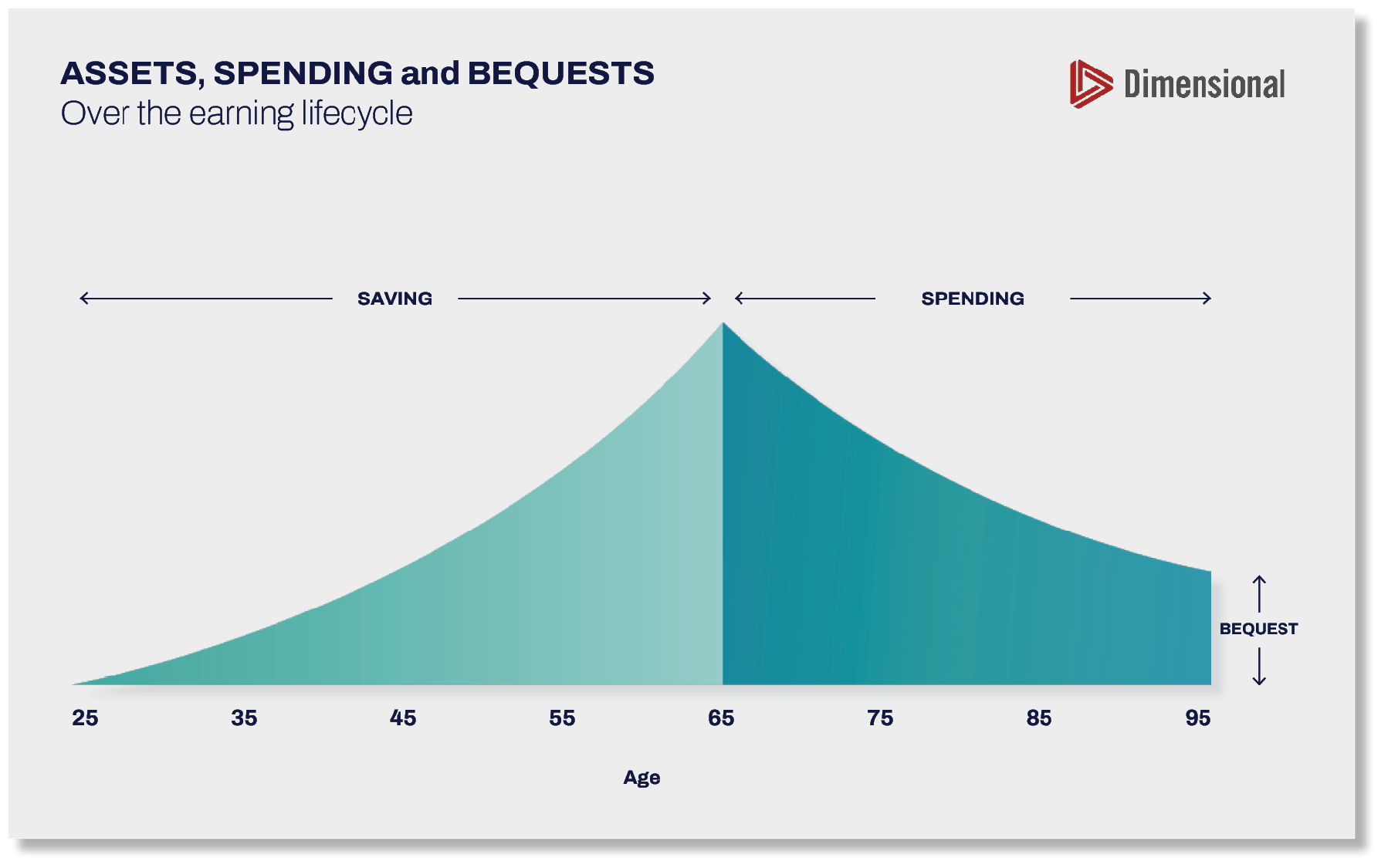
Most of us never think about the shape of our earning life, but it follows a pattern. The 20s are for learning a trade, finding your feet in a profession, perhaps marrying, often still paying off the student loan. The 30s bring children, a mortgage and the long grind of deepening a career. By the 40s the income finally lifts and a little pressure comes off. Then the 50s and 60s arrive, and many people start thinking about the golden years to come. Here’s the rub: a fit and healthy 65-year-old has not just finished their best earning years; for many, the earning stream has stopped altogether. The way we’re living these days, those earnings now need to carry us all the way through to our 90s. That’s three decades of withdrawals from a jar you stopped filling, so you need to put a lot of cookies in that jar to sustain yourself for 30 years.

For most of human existence, 50 was the end of the road. In 1900, life expectancy for men in New Zealand sat in the late fifties [1]. A man of 50 in those days really was winding down, because he was nearly done. The Victorians built their whole idea of a life stage around it - you worked until your body gave out, and the gap between the two was mercifully short. Today, a healthy 50-year-old can reasonably expect another 35 years or more, and an increasing number of us will see ninety [1]. We’ve held on to the old instinct that 50 is the beginning of the end, while living an entirely different reality. The body tells us we have arrived. The maths tells us we are barely halfway.
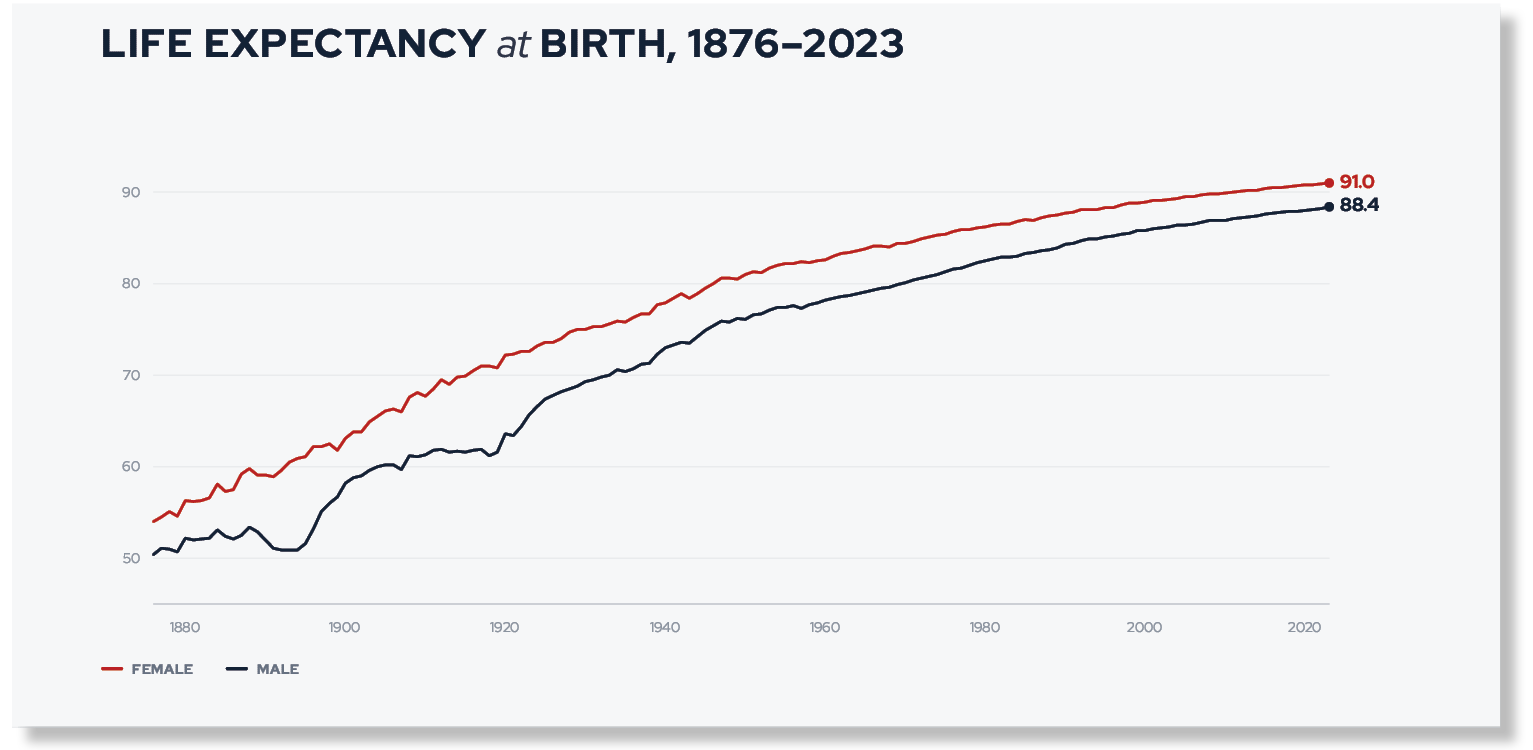
Source data: New Zealand cohort life tables: March 2025 update | Stats NZ

This is where I see good people stumble, though rarely through recklessness. The kids are nearly gone, the mortgage is finally in retreat, and “finally” becomes the word of the moment. Finally, we can do a few things for ourselves! The bucket list, the holidays, the trips deferred for 20 years while school fees and braces and first cars ate every spare dollar. It feels earned, and it feels good, because it is and it does. Behavioural research calls this ‘present bias’; a hard-wired habit of overweighting the reward we can have today against the one we must wait for [2]. But that freed-up cash flow is being enjoyed at the precise moment it should be doing its hardest work. The next 15 years from 50 are prime accumulation time, not the victory lap people imagine them to be.

Most balance sheets tend to be the same at 50: top-heavy with lifestyle assets. The house, the cars, the bach with its rates, maintenance and insurance quietly eroding spare cash or savings each year. It has been the Kiwi dream for as long as I can remember, and there is nothing wrong with wanting that dream. But while the numbers look perfectly reasonable on the surface, the cash flow underneath is poor. The assets that produce real income and liquidity - the ones that will still pay you when your salary stops - are too small to move the needle in this scenario. You’re carrying a great deal of weight that does not work for you, and worse – it's costing you to hold it.

This is where knowing values is crucial. At 50, you need to be clear on what matters and what you must build over the next fifteen years – because every goal is built on cash flow, and cash flow comes from the assets you have accumulated. Get the values right and the rest follows in a straight line. Leave them vague and you’ll inevitably keep spending on what feels good now, instead of what carries you through your 70s, 80s and 90s. The order in which your returns arrive in the early retirement years can make or break a 30-year drawdown, and a poor first few years while you are drawing down does damage that a good average return never quite repairs [3].
It can feel uncomfortable to take such a frank look at your present and future, but it’s fairly straightforward. Do your lifestyle assets fit what you are trying to build? Are you protecting your peak earning stream as the engine that funds everything else? Is your cash flow working backwards, servicing debt on things that do not compound, or forwards, building assets that do?

The gap between what New Zealanders expect to retire on and what they have set aside remains stubbornly wide. It widens fastest for those who assume there is still plenty of time [4]. At 50, most people can still materially change their later years by engaging and making a few incremental course adjustments. These changes don’t have to be dramatic, but they do need to be early. A small correction to a flight path early in the journey lands you in a completely different place.

Often, the best co-pilot on such a journey is a professional financial advisor. And if you think professional advice is expensive, try using an amateur – see what it costs you. Unfortunately, the most expensive amateur you can ever hire is usually yourself; timing the market with optimism and a spreadsheet doesn’t tend to get the same results as methodical, proven strategies and a steady pair of hands at the wheel. Time in the market is the one advantage you cannot buy back later at any price [5].

This is the fiduciary truth of it, and it is the part I care about most after 26 years. Seeking wise counsel at 50 is not an admission of weakness. It’s the best way to understand your own position; we’re all the worst judges of our own blind spots, but an unbiased third party can see the whole scene with clarity.

A good adviser is not there to take the holidays away. They are there to make sure the holidays at 70 are still possible.

50 is the inflection point where you can still move the dial in a way you simply cannot at 65. The runway is shorter than it was, but you’ve got a good bit of tarmac left before earnings come to a stop. The question is not whether the time for preparation has passed (it hasn’t), but whether you will use what remains of it. A burden shared is a burden halved.

Nick Stewart

(Ngāi Tahu, Ngāti Huirapa, Ngāti Māmoe,
Ngāti Waitaha)

Financial Adviser and CEO at Stewart Group

  • Stewart Group is a Hawke's Bay and Wellington based CEFEX & BCorp certified financial planning and advisory firm providing personal fiduciary services, Wealth Management, Risk Insurance & KiwiSaver scheme solutions.

  • The information provided, or any opinions expressed in this article, are of a general nature only and should not be construed or relied on as a recommendation to invest in a financial product or class of financial products. You should seek financial advice specific to your circumstances from a Financial Adviser before making any financial decisions. A disclosure statement can be obtained free of charge by calling 0800 878 961 or visit our website, www.stewartgroup.co.nz

  • We do not hold or advise on any private credit or private equity investments.


REFERENCES

  1. Stats NZ. (n.d.). Life expectancy. https://www.stats.govt.nz/information-releases/new-zealand-cohort-life-tables-march-2025-update/

  2. ScienceInsights. (n.d.). What is present bias? How it shapes your decisions. https://scienceinsights.org/what-is-present-bias-how-it-shapes-your-decisions/

  3. Sequence of returns risk: Why the order of returns matters in retirement. The Long Math. https://www.thelongmath.com/articles/investing-and-financial-literacy/sequence-of-returns-risk/

  4. Te Ara Ahunga Ora. (2022). Annual report 2022. https://assets.retirement.govt.nz/public/Uploads/Annual-Report/TAAO-RC-Annual-Report-2022.pdf

  5. Dai, W., & Dong, A. (2023, October 31). We found 30 timing strategies that “worked”—and 690 that didn't. Dimensional Fund Advisors. https://www.dimensional.com/sg-en/insights/we-found-30-timing-strategies-that-worked-and-690-that-didnt
Private Assets: You're Not Joining the Club, You're Funding It

Article # 463

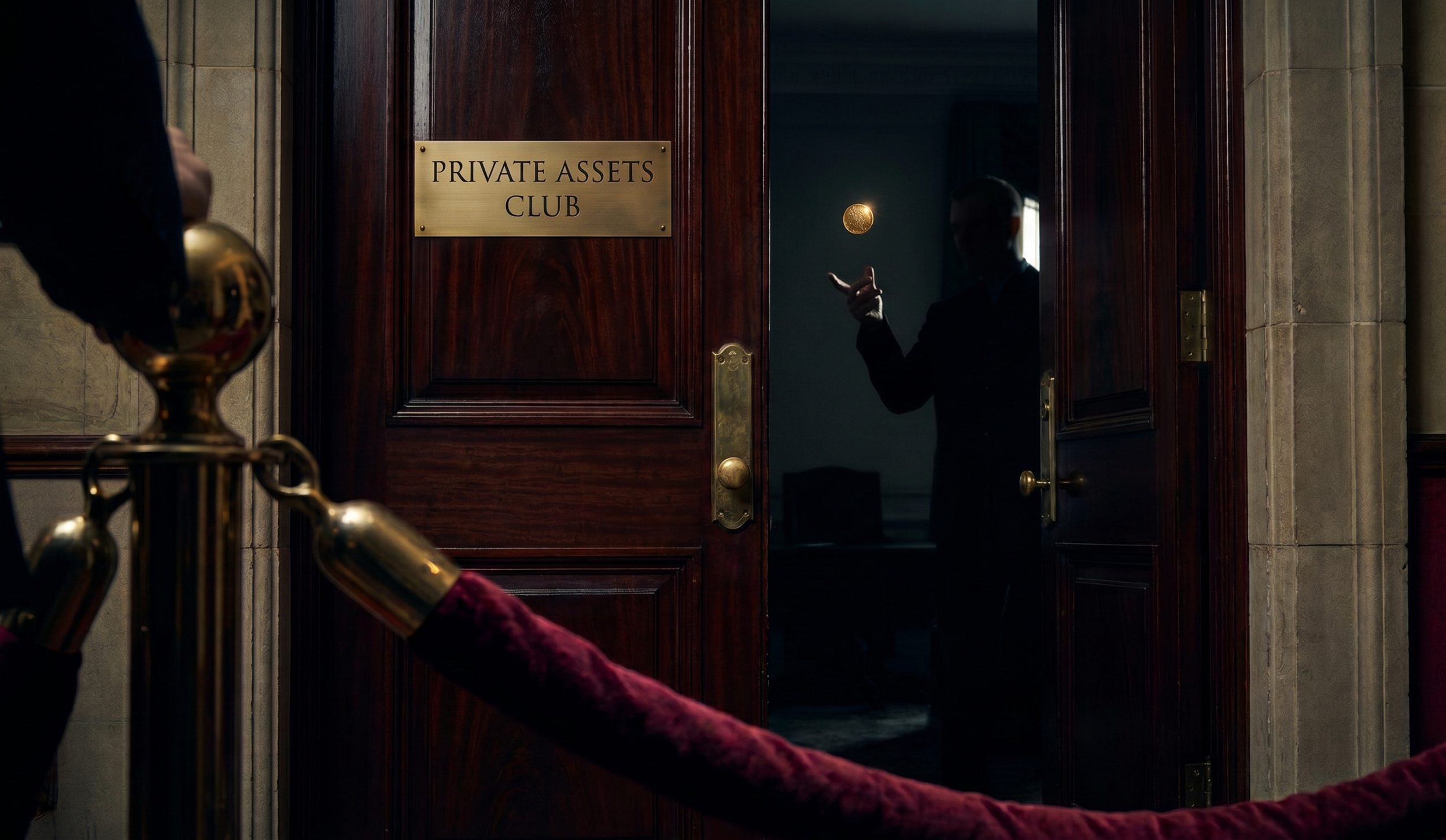
Private. Special. Exclusive. Three words that do a lot of heavy lifting in finance. They frame private equity and private credit as access and privilege. Yet beneath the velvet-rope marketing sits a familiar set of trade-offs: high fees, illiquidity, and a lack of transparency. For decades that rope kept ordinary investors out. It was quietly removed, and nobody sent a memo.

Historically, these markets belonged to pension funds, endowments and family offices with eight figures to commit and twelve years to wait. Ordinary investors didn't get a seat at the table. They are now being offered one, through KiwiSaver growth funds, UK Long-Term Asset Funds dropped inside tax-advantaged ISAs, and the family trust portfolios they signed off on last year [1]. The FMA confirmed in April that most KiwiSaver providers expect to materially lift their private asset allocations over the next three years, aligning with global investment trends [2]. The industry calls it democratisation. Governments call it unlocking growth.

This week the trend turned local and concrete. Simplicity committed $30 million to a new Kiwi deep tech and health sciences venture fund, becoming a cornerstone investor [3]. The fund holds a small number of early-stage companies, including pre-revenue biotech automating cancer-cell therapy manufacturing. It is not fully funded on day one; it is a capital-call vehicle, drawn down over the life of the fund. The parent is US-headquartered, and the capital base includes migrant investors using it as a pathway to residency. None of that is hidden, and backing clever Kiwi innovation is a perfectly defensible thing to do. But it is a useful reminder of what this asset class is once you look inside the wrapper: a long-dated, illiquid, concentrated bet that you cannot easily value or exit.

About that 40-year outperformance

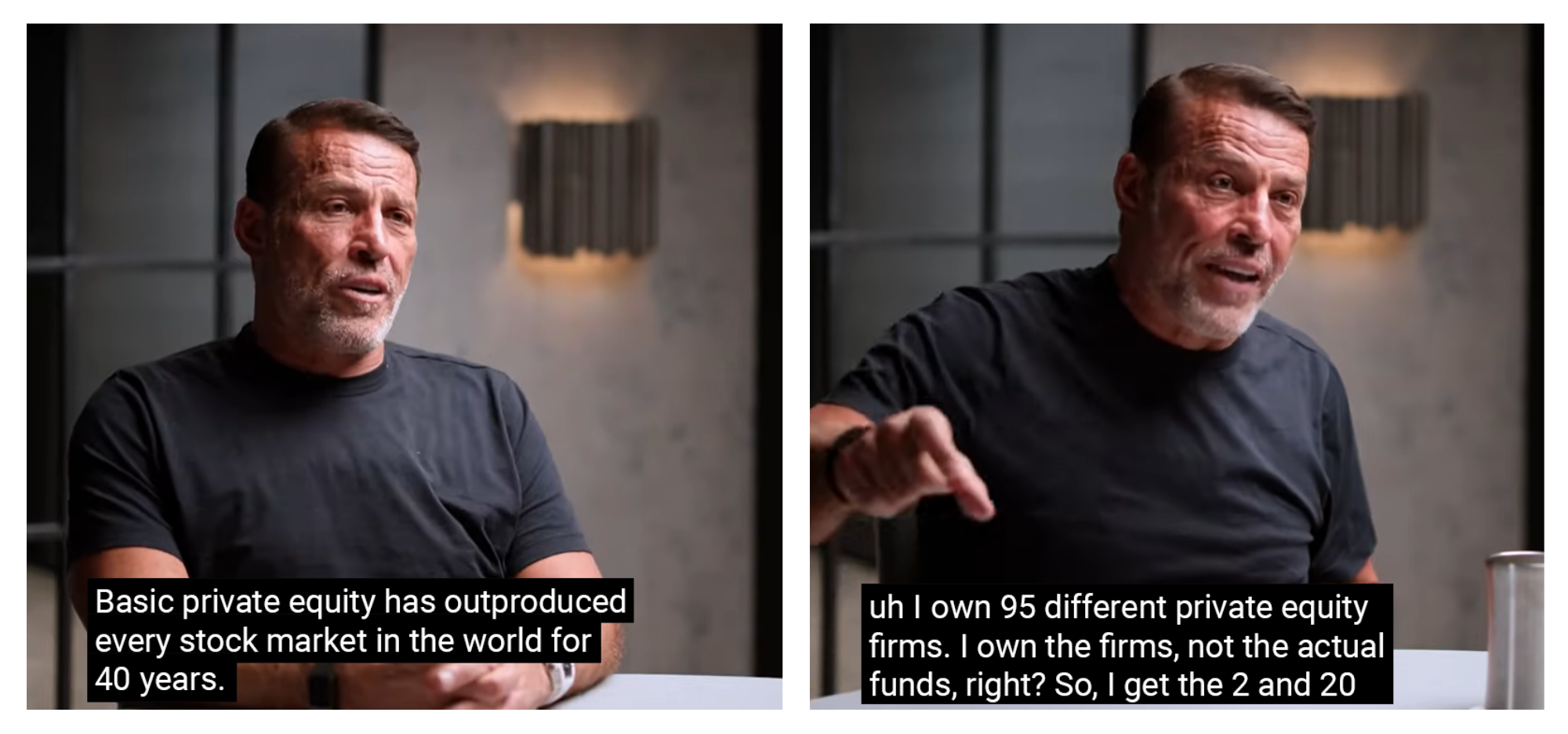
In January, Tony Robbins told millions of viewers on The Diary of a CEO that private equity has outperformed every stock market globally for 40 years, and that ordinary investors have been locked out [4]. He is right on the data. The data, however, deserves a closer look before you remortgage the bach.

First, it has been cherry-picked by survivorship. The funds that blew up quietly drop out of the long-run series, so what you are shown is the record of the survivors, a bit like judging parachutes by interviewing the people who landed. Second, much of the return is leverage, not skill; borrow heavily against a stable business and you amplify the good years, and the bad. Third, and least discussed, is the illiquidity premium. You are tying your money up for a decade or more in a speculative bet on a handful of companies you cannot sell when you want to. You would expect to be paid more for taking on more risk and less liquidity. That extra return is not evidence of genius; it is the rent on your patience. Strip out dead funds, borrowed money and locked-up capital, and the heroic outperformance narrows sharply, and that is before fees [5].

What Robbins is less keen to dwell on is that he co-owns CAZ Investments, which buys stakes in private equity management companies, and that he personally holds stakes in 95 PE firms; the firms themselves, not the funds [6]. He collects the "2 and 20" on each: two percent of assets every year, plus twenty percent of profits above a hurdle [4]. Draw your own conclusions about the shape of those incentives.

The cycle, and the cautionary tale

On the credit side, JPMorgan chief Jamie Dimon used his April shareholder letter to flag what the more enthusiastic salespeople tend to leave in the bag: the credit cycle still exists [7]. Lending standards loosened during the boom. Covenant-lite deals became common in private credit too [8]. When the cycle turns, losses will not stay gated.

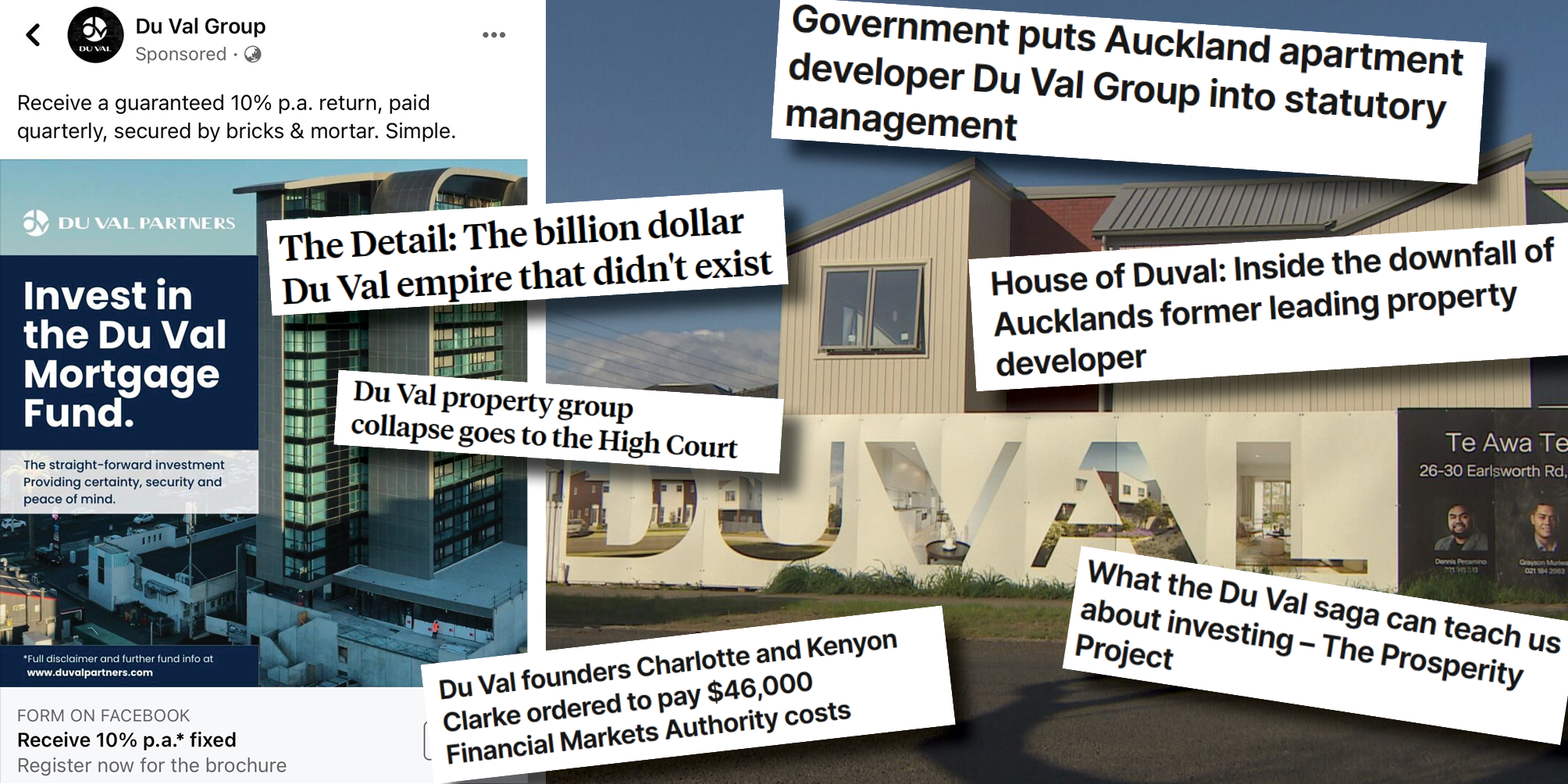
In August 2024, the Government placed Du Val Group, an Auckland property developer, into statutory management. This is only the third time that lever has ever been pulled, following Equiticorp in 1989 and Allan Hubbard's vehicles in 2010 [9].

The Du Val Mortgage Fund had been marketed as wholesale-only at around 10% per annum, pitched as comparing favourably to bank term deposits. That label is not a marketing flourish but a regulatory category: an offer made only to wholesale investors is excluded from the disclosure regime built to protect ordinary investors, so there is no product disclosure statement and no entry on the public Disclose register [9]. Roughly 120 to 150 investors are now owed close to $306 million [9]. When investors tried to sue the FMA for failing to protect them, the High Court ruled in Lindeman Investments v FMA that the regulator owes no duty of care to individual wholesale investors [10]. The safety net does not stretch that far, and by design: the wholesale regime switches off most of the retail protections long before any loss is incurred.

Every newborn, a private asset owner

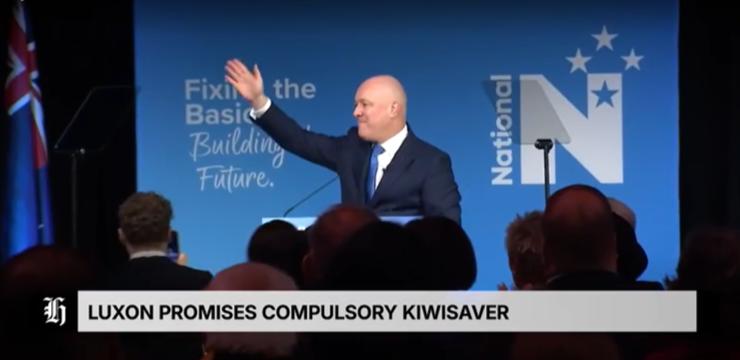
Fisher Funds has committed more than $1 billion of KiwiSaver money to private equity, the largest publicly announced commitment to date [11]. Most other major providers also carry exposure, and per the FMA report most plan to lift those allocations over the next three years [2]. On Sunday, Christopher Luxon announced that, if re-elected, KiwiSaver would become compulsory from 2028, every newborn would be auto-enrolled with a $1,500 Baby Boost defaulted into a high-growth fund, and the combined contribution rate would reach 12% by 2032 [12]. Every newborn New Zealander would begin their financial life with a private asset exposure they did not choose, in a vehicle they cannot exit until at least 2090.

Structure is not the same as transparency

None of this makes private assets an inherently bad asset class. The issue is the layering, the marketing, and the question of who benefits from the door opening now. Where the exposure is plainly structured, a named partnership backing identifiable businesses with disclosed allocations, the picture is more straightforward than where it runs through layered offshore fund-of-funds with opaque manager economics. But structure on paper is not the same as transparency in practice. Diligent managers have tried to look through some of the better-regarded local vehicles and come up short on what is actually held and how it is valued. If the people whose job is to see inside cannot, the ordinary member certainly cannot. We do not invest our own clients in this asset class, for precisely these reasons. It would be premature to suggest New Zealand has quietly cracked private assets when the same transparency, valuation and liquidity questions remain.

Here is what matters most, and what the marketing almost never spells out: understand whether your commitment is fully funded on day one or subject to future capital calls. Some private equity is paid up front, with no further obligation, clean and simple. Much of it is not. A commitment of thirty cents on the dollar today can trigger calls for the remaining seventy cents in the years ahead. Your disclosed allocation now will not reflect your actual exposure tomorrow; as the calls arrive, your percentage holding and your real risk are multiplied. A trustee who signs off on what looks like a modest five percent allocation can find the true commitment is several times that once the fund draws down. I have watched exactly this happen to a community trust, where a decision made by earlier trustees carried obligations that only became visible years later.

For trustees, this is not simply an investment preference; it is a governance question.

Under the Trusts Act 2019, trustees of family and charitable trusts inherit a look-through duty [13]. Few today can name the private asset exposures they are responsible for, let alone the unfunded commitments sitting behind them. Asking the question is the first part of discharging the duty.

Four questions for any provider, adviser, or co-trustee:

  1. What are the all-in fees across every layer?

  2. How are the underlying assets valued: how often, and by whom?

  3. Is the commitment fully funded, or subject to future capital calls?

  4. In whose interest is the allocation being recommended?

The answers should be plain and confident. If they aren't, that itself is a flag you shouldn't ignore.

Robbins is right that private equity has outperformed historically. Dimon is right that the credit cycle still exists. What is less often spoken about is who benefits from unlocking the door now, and why.

Private. Special. Exclusive. Useful words for the fee machine; less useful for the person handing over their money. You are not joining the club; you are funding it.


Nick Stewart

(Ngāi Tahu, Ngāti Huirapa, Ngāti Māmoe,
Ngāti Waitaha)

Financial Adviser and CEO at Stewart Group

  • Stewart Group is a Hawke's Bay and Wellington based CEFEX & BCorp certified financial planning and advisory firm providing personal fiduciary services, Wealth Management, Risk Insurance & KiwiSaver scheme solutions.

  • The information provided, or any opinions expressed in this article, are of a general nature only and should not be construed or relied on as a recommendation to invest in a financial product or class of financial products. You should seek financial advice specific to your circumstances from a Financial Adviser before making any financial decisions. A disclosure statement can be obtained free of charge by calling 0800 878 961 or visit our website, www.stewartgroup.co.nz

  • We do not hold or advise on any private credit or private equity investments.


REFERENCES

  1. Financial Conduct Authority (UK). Long-Term Asset Fund regime, FCA Handbook COLL 15. HM Treasury (2025). Inclusion of LTAFs in stocks and shares ISAs. gov.uk.

  2. Financial Markets Authority (2026, 15 April). Private assets in managed funds: Investment landscape and valuation practices. Accompanying media release: “FMA anticipates KiwiSaver providers will increase investment in private assets.” Source: FMA.

  3. Simplicity (2026, 24 June). “Simplicity backs ambitious Kiwi innovators with $30m investment.” Details: $30m cornerstone commitment to Bridgewest Venture Fund I (Deep Tech and Health Sciences Fund). Provider disclosure context: Booster, Milford, Generate, Pathfinder, ANZ Investments and others carry private asset allocations across growth and high-growth options.

  4. The Diary of a CEO with Steven Bartlett (2026, 15 January). “Tony Robbins: No One Is Ready For What’s Coming.” Details: transcript references Robbins’ stakes in 95 private equity firms, the firms, not the funds, receiving the “2 and 20” on each.

  5. Bain & Company (2025). Global Private Equity Report 2025. Details: fee conventions of 1–1.5% management plus 10–20% carry above a preferred return. Supporting context: MSCI, Chicago Booth Review and NBER research on buyout outperformance of roughly 3–5% per year over public market equivalents, with debate over the role of leverage, survivorship bias and the illiquidity premium.

  6. CAZ Investments. Firm overview and GP-stakes strategy. Robbins, T., Zook, C. and Mallouk, P. (2024). The Holy Grail of Investing. Simon & Schuster.

  7. JPMorgan Chase & Co. (2026). Annual Letter to Shareholders 2025. Author: Jamie Dimon. Released April 2026. Source: JPMorgan Chase & Co.

  8. Reserve Bank of New Zealand (2026, May). Financial Stability Report. Details: private credit market concerns. Source: Reserve Bank of New Zealand.

  9. Financial Markets Authority (2024, 21 August). “Du Val Group: statutory management ordered.” Source: FMA. Supporting coverage: BusinessDesk (2025, 4 August), “A year since raids, FMA yet to prosecute over Du Val collapse.”

  10. Lindeman Investments Limited v Financial Markets Authority [2025] NZHC. Judgment date: 11 July 2025. Summary source: Cooney Lees Morgan, “The FMA safety net has limits when it comes to wholesale investor groups.”

  11. NZ Herald, The Prosperity Project (2025, 4 August). “The rise of KiwiSaver investing in private equity and what it means for you.” Details: Fisher Funds committing more than $1 billion of KiwiSaver funds to private equity.

  12. New Zealand National Party (2026, 21 June). “National To Further Boost Kiwis’ Financial Security.” Details: press release, annual conference, Lower Hutt. Coverage: NZ Herald, RNZ, 1News, Newsroom and Scoop (21–22 June 2026). Estimated fiscal cost: $1.1 billion over four years.

  13. New Zealand Parliament (2019). Trusts Act 2019, ss 30–31.


We Need to Talk About Envy

When a newspaper tells you how to hate someone, it reveals more about itself than its target.


Article #462

“Envy was once considered to be one of the seven deadly sins before it became one of the most admired virtues under its new name, ‘social justice’.”

Thomas Sowell, The Quest for Cosmic Justice (1999) [1]

Last week the New Zealand Herald reported, plainly, that Elon Musk had become the world’s first trillionaire after shares in SpaceX leapt as much as 30% on debut, the largest initial public offering in history. [2,3] That is the news. What happened next is the story.

Canada’s Globe and Mail ran an opinion piece under the headline: ‘SpaceX IPO makes Elon Musk the first trillionaire. Here’s how to properly hate him.’ After a day of ridicule, the paper swapped it for the more respectable ‘Is that a bad look for capitalism?’ and tacked on a note conceding the original ‘did not meet The Globe’s editorial standard.’ [4] The mask slipped, then was hastily refitted. But we all saw the face beneath.

Closer to home, the chorus is familiar. Oxfam Aotearoa tells us four New Zealand billionaires hold more wealth than 1.8 million of their countrymen, and calls it ‘obscene.’ [5] Academics line up on talkback to lament inequality. Polls are cited showing most New Zealanders want the ultra-rich taxed more, and we are reminded that Musk alone is worth almost as much as every New Zealander combined [6,7]. The sentiment is always the same: someone has too much, and that is a problem to be corrected rather than a phenomenon to be understood.

Musk is not, in fact, the first trillionaire. Under Robert Mugabe, Zimbabwe's central bank printed a hundred-trillion-dollar note that on its first day was worth about US$30, and within weeks nothing at all; at the peak, prices doubled every day [8]. In that sense, many Zimbabweans became trillionaires on paper yet still could not buy a loaf of bread. That is the distinction worth dwelling on.

A trillion earned by building what people want is the opposite of a trillion conjured by a collapsing state: one is value created, the other value destroyed.

I want to make the unfashionable case. Not for Musk the man, he hardly needs my help, but for what the exception represents: the rare individual who turns the stuff of science fiction into things we use every day without a second thought, the smartphone in your pocket, the satellite that carries your call, the online payment that clears in seconds, the electric car at the lights, the cloud software that runs the small business down the road.

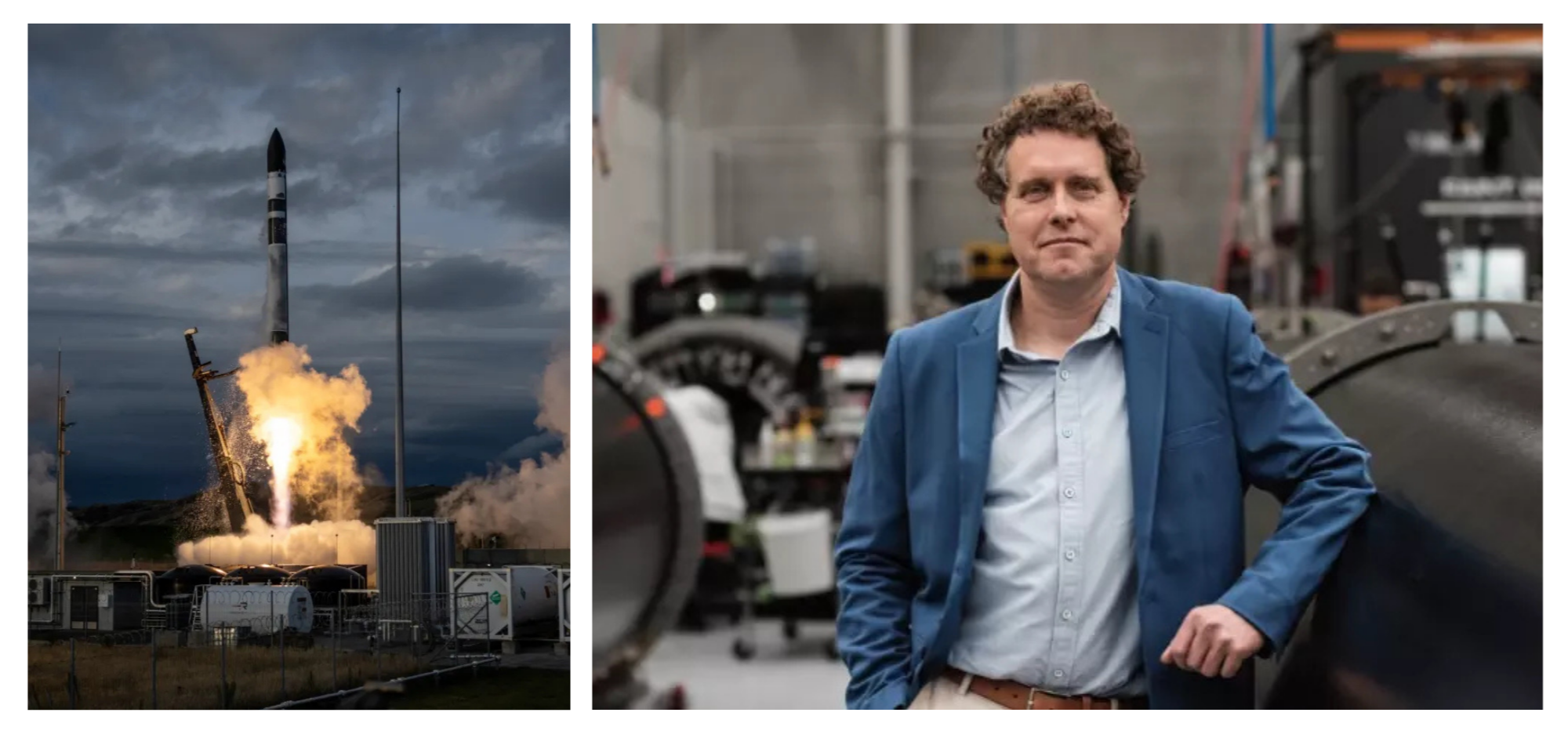
Consider the funnel. Many people have ideas. Fewer act on them. Fewer still build something that turns a profit. And a vanishingly small number, statistical outliers, take an idea and deliver it at scale. New Zealand has produced our own precious few: the Mowbray siblings, whose toy and consumer-goods firm Zuru, started in a shed in 2003, now tops the Rich List at an estimated $20 billion; Trade Me, Xero, Rocket Lab, the family-owned Gallagher Group, which grew from a Waikato farm shed and the world's first electric fence into a security firm operating in some 160 countries, and Fisher & Paykel Healthcare, built and headquartered here and exporting respiratory care to around 120 countries [9,10,11].

And the same pattern holds inside the companies we reduce too easily to a single famous name. Gwynne Shotwell joined SpaceX as its eleventh employee in 2002 and helped build it, as president, into the company that just floated; she now sits, according to Forbes, among the richest self-made women in the world, with a stake estimated at around US$2.5 billion [12]. The builders are plural, and the rewards often follow competence more than celebrity.

Here is the part the zero-sum brigade often misses: the same SpaceX listing that minted the world's first trillionaire also turned more than 4,400 current and former staff into millionaires, by the New York Times' reckoning – some 400 of them past the $100 million mark. The reach went a long way down the org chart. One was a welder who joined in 2015 on about US$28 an hour and took part of his pay in stock; his holding is now worth close to a million dollars [13]. The trillionaire headline and the newly wealthy welder came from the very same event. The pie did not get carved up. It got bigger.

The question for New Zealand is whether we are willing to learn from that. The NBR Rich List has swelled 23-fold in forty years to a record $129 billion, with Rocket Lab's Sir Peter Beck alone leaping from about $650 million to $11 billion in a single year as his company's shares soared [14]. And yet our productivity has barely moved in thirty years. We are very good at debating how to carve the pie, and strangely uninterested in baking a larger one.

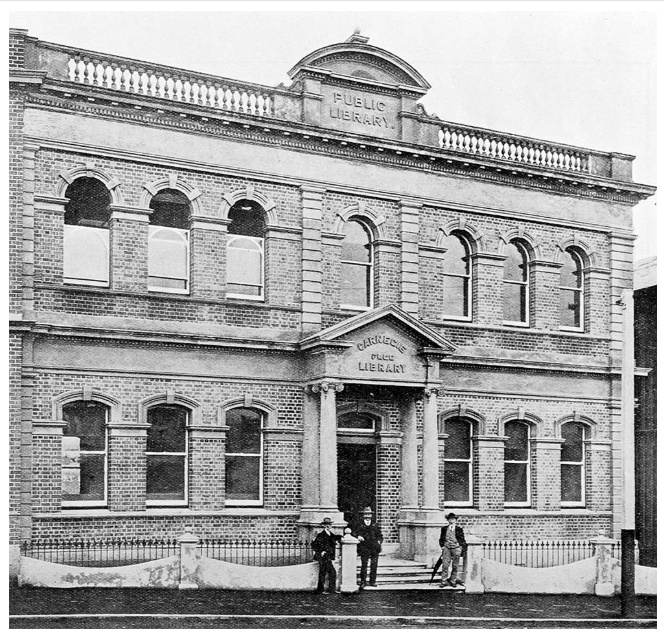
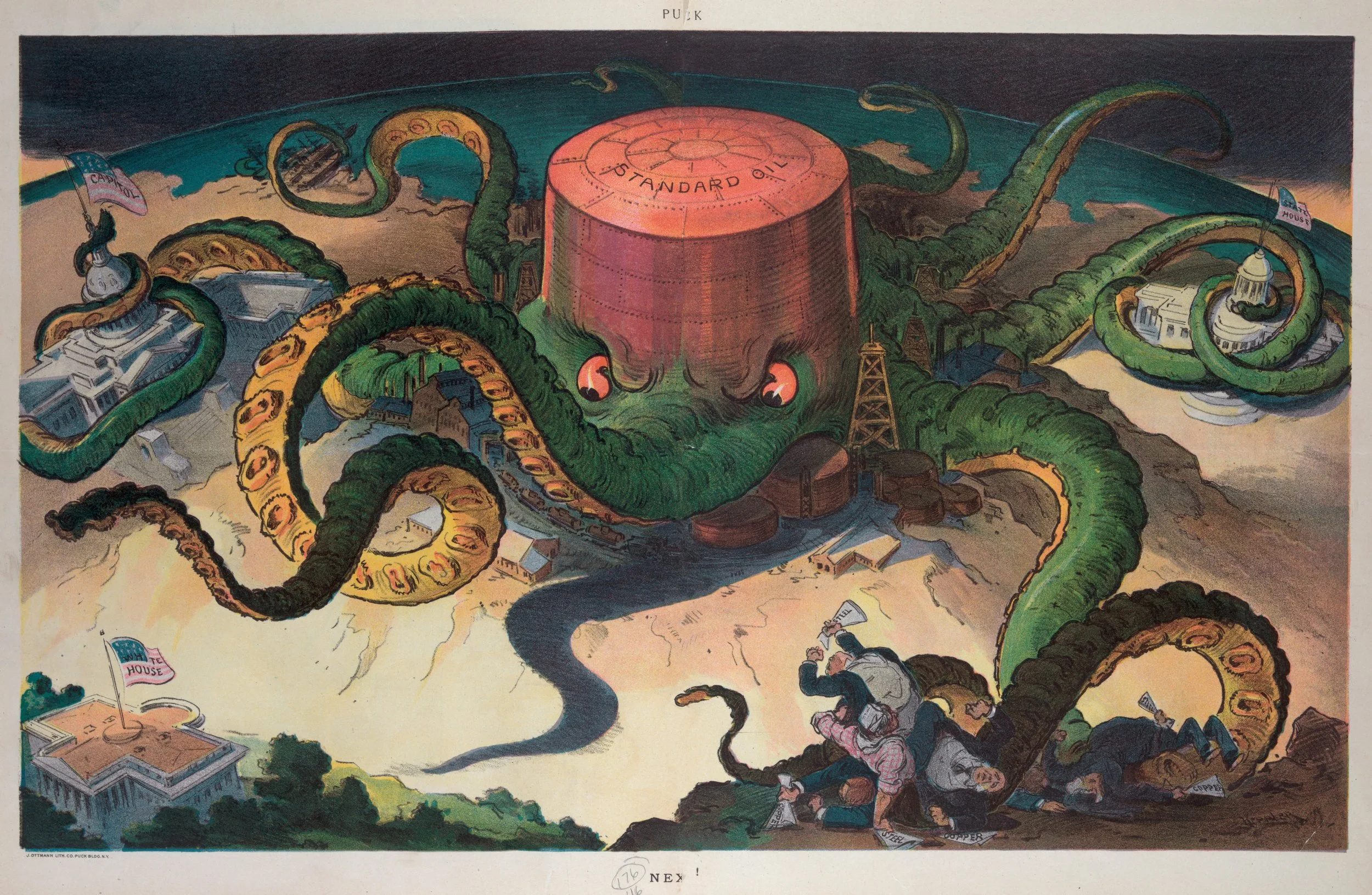
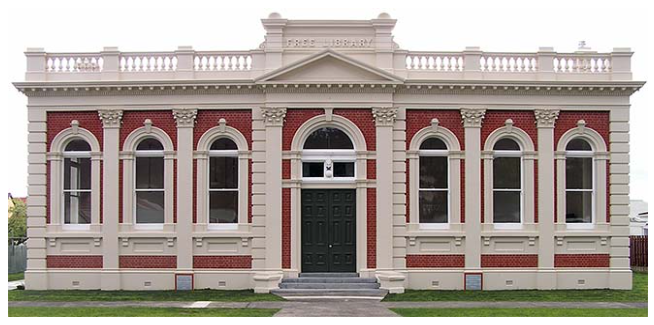
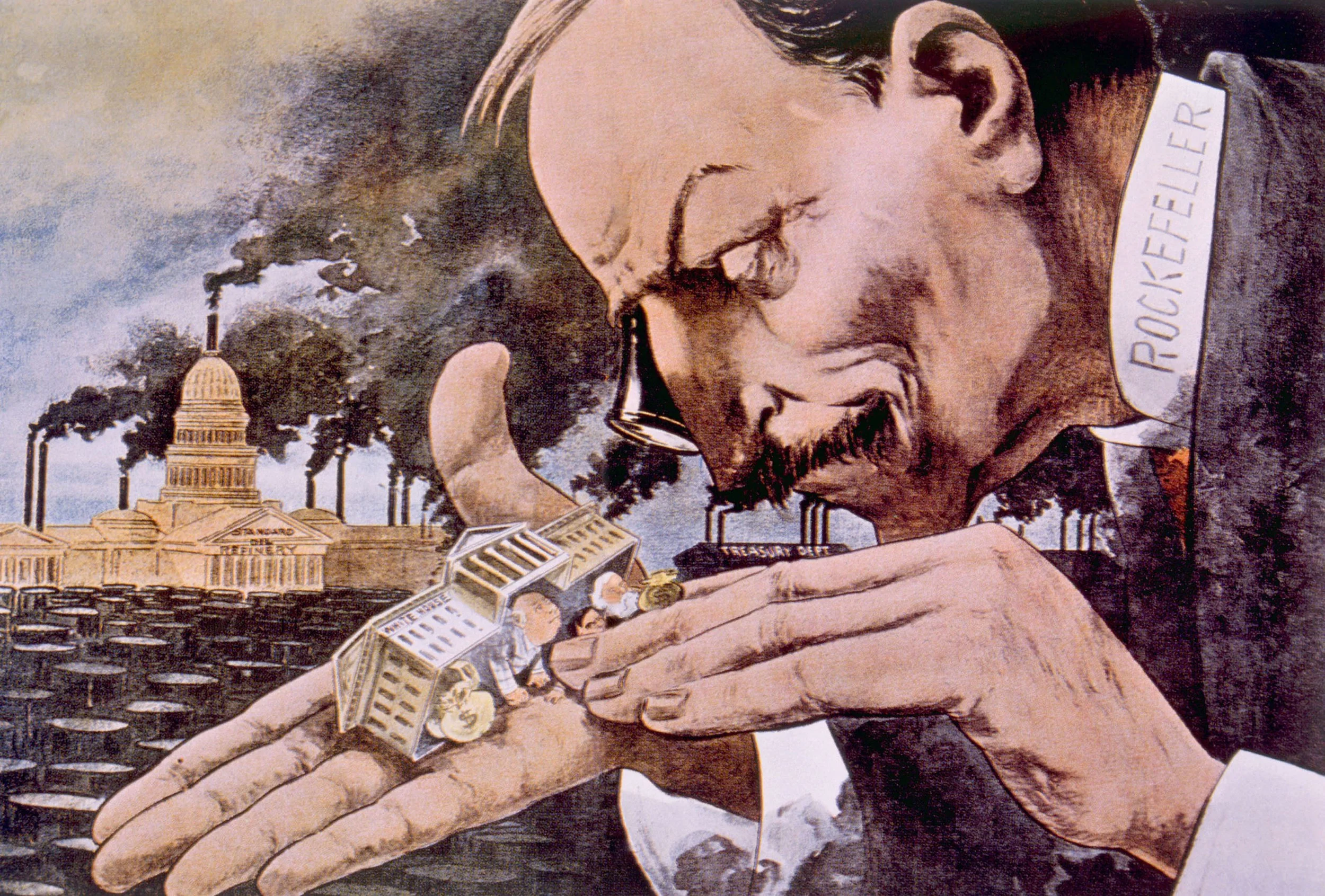
None of this is new. Andrew Carnegie and John D. Rockefeller were the titans of their age, reviled in their time as robber barons, cartoonish villains of the popular press. The cartoonists drew them as bloated octopuses with the nation in their tentacles. Carnegie ground out his fortune in steel and, in his later years, gave most of it away, seeding free public libraries across the world, more than 2,500 of them, eighteen in New Zealand alone [15]. Rockefeller's money built the University of Chicago and funded the medical research that helped tame yellow fever and hookworm [16]. The resentment faded. The libraries, the universities, the cures remain. That is the part the wreckers never see: the wealth was temporary, but the institutions it built endured, and we are still drawing on them a century later.

Great fortunes gather, they crest, and in time they disperse through families, philanthropy, taxation and the simple passage of generations. Marriages fail and children inherit and quarrel; fortunes fracture along fault lines no one planned for. Jeff Bezos parted with roughly a quarter of his Amazon stake in a single divorce [17]. Wealth scatters faster than any succession plan can contain it. No one takes it with them. They are only ever the custodian of their wealth for the span of their life, and perhaps a generation or two beyond, if they are fortunate.

I make the same point to those who fret about foreigners buying New Zealand farms and businesses. A buyer cannot pack up a farm, or a company, and carry it home in a box to their country of origin. The land stays. The business stays. The jobs, the buildings and the economic activity all remain here, in New Zealand. The buyer is a custodian, nothing more. So too with the great fortunes: the enterprises outlast the individual, and we are the beneficiaries.

And here is what the envious rarely pause to weigh: the cost of building any of it. The outlier does not arrive at scale by working office hours. Musk's own biographers record the toll: Walter Isaacson, who shadowed him for years, documents a leader hands-on in redesigning rocket components and welding design to production, while Ashlee Vance describes the hundred-hour weeks and nights spent sleeping on factory floors [18,19]. He risked ruin, repeatedly; Tesla and SpaceX both came within weeks of collapse in 2008, and he poured in his own money to keep them breathing. For every founder who makes it, a great many do not: they mortgage the house, burn the savings, lose the marriage, and end up with nothing but the lesson. Most of us, honestly, would not want that life if it were handed to us, and that is no shame. But it ought to buy a little humility before we throw stones over the fence at grass we have decided, from a distance, must be greener.

Some will say the fortune was really built on government largesse: the contracts, the green credits [20]. But the credits were no handout. Every carmaker operated under the same zero-emission rules; the money came from rival manufacturers who lagged on electric cars, not from the taxpayer; and Tesla profited simply because it built cleaner cars faster than anyone else. The same scheme runs in Europe and China. That is not a subsidy. That is winning the game everyone was playing.

As for the calls to tax such people into their place, success is already taxed, and handsomely. That is how it works. But a culture that treats achievement as a crime to be punished rather than a feat to be studied will get less of it. The numbers bear it out: resentment is not a growth strategy.

There is a fiduciary truth in all of this, the same one I return to with clients. Tearing others down builds nothing. The job, mine, yours, the nation’s, is stewardship: to grow what we are given, to think in decades rather than headlines, and to leave more behind than we found. A country that celebrates its builders is a healthier place than one that polices its winners. Glass half full beats glass half empty, every time.

So before we are told, yet again, how to properly hate someone for the sin of succeeding, it is worth asking the more useful question. Not how do we cut them down to size, but what will we leave standing when we are gone?

Winter never lasts; the snows always melt.


Nick Stewart

(Ngāi Tahu, Ngāti Huirapa, Ngāti Māmoe,
Ngāti Waitaha)

Financial Adviser and CEO at Stewart Group

  • Stewart Group is a Hawke's Bay and Wellington based CEFEX & BCorp certified financial planning and advisory firm providing personal fiduciary services, Wealth Management, Risk Insurance & KiwiSaver scheme solutions.

  • The information provided, or any opinions expressed in this article, are of a general nature only and should not be construed or relied on as a recommendation to invest in a financial product or class of financial products. You should seek financial advice specific to your circumstances from a Financial Adviser before making any financial decisions. A disclosure statement can be obtained free of charge by calling 0800 878 961 or visit our website, www.stewartgroup.co.nz


REFERENCES

  1. Thomas Sowell, The Quest for Cosmic Justice (1999), source of the epigraph.

  2. New Zealand Herald, ‘Elon Musk becomes world’s first trillionaire as SpaceX shares jump’ (June 2026).

  3. RNZ, ‘SpaceX launches US$2 trillion market debut, the largest IPO in history’ (June 2026).

  4. The Globe and Mail, Chris Gay, ‘SpaceX IPO makes Elon Musk the first trillionaire. Here’s how to properly hate him’ (headline since amended with editor’s note, June 2026).

  5. Oxfam Aotearoa, statement on billionaire wealth concentration in New Zealand (2026).

  6. RNZ / Talbot Mills poll, ‘New Zealanders support more taxes on ultra-rich, new poll shows’ (Wellbeing Economy Alliance Aotearoa; 68% backed higher taxes on the ultra-rich, 2026).

  7. RNZ, ‘Elon Musk only marginally less wealthy than all New Zealanders combined’ (June 2026).

  8. Reserve Bank of Zimbabwe / BBC, the Z$100 trillion note, issued 16 January 2009, worth about US$30 on its first day; one of history’s worst hyperinflations, with prices doubling daily at the November 2008 peak.

  9. Zuru / NBR Rich List 2026, founded by Nick, Mat and Anna Mowbray in 2003; estimated at $20b, the top spot on the 2026 NBR Rich List.

  10. Gallagher Group, Hamilton-based, family-owned; from the world’s first electric fence (1938) to integrated security solutions in around 160 countries.

  11. Fisher & Paykel Healthcare, New Zealand-headquartered respiratory-care manufacturer; sells in around 120 countries, with roughly 1% of revenue from domestic sales (publicly listed; majority institutional ownership).

  12. Forbes, ‘America’s Richest Self-Made Women’ (2026 list), featuring SpaceX president Gwynne Shotwell.

  13. The New York Times, reporting via Hill.com analysis that SpaceX’s IPO would turn more than 4,400 employees into millionaires, including a welder hired in 2015 (June 2026).

  14. NBR Rich List 2026, 40th edition; total listed wealth a record $129b (up from $102.1b), a 23-fold rise in 40 years; Rocket Lab’s Sir Peter Beck up from ~$650m to ~$11b (reported via RNZ / NZ Herald / Scoop, June 2026).

  15. Carnegie Corporation of New York, historical record of Carnegie free public library endowments.

  16. Rockefeller Foundation / University of Chicago, record of Rockefeller’s ~$36m founding gift to the University of Chicago and Foundation-led campaigns against hookworm and yellow fever (first yellow-fever vaccine, 1935).

  17. Bezos / Scott divorce (2019), widely reported transfer of roughly a quarter of Jeff Bezos’ Amazon stake to MacKenzie Scott.

  18. Walter Isaacson, Elon Musk (2023), on Musk’s hands-on engineering role across his companies.

  19. Ashlee Vance, Elon Musk: Tesla, SpaceX, and the Quest for a Fantastic Future (2015), on the 100-hour weeks and factory-floor work ethic.

  20. RNZ, ‘How much of Elon Musk’s wealth comes from government help? Virtually all of it’ (June 2026), cited here as the claim being answered; on ZEV regulatory credits, see the Union of Concerned Scientists and CNBC explainers (credits are traded between automakers, not paid by the taxpayer).


IMAGE CREDITS

  • John D. Rockefeller depicted in the political cartoon 'The Trust Giant's Point of View' by Horace Taylor in 'The Verdict, ' 1900

  • “Standard Oil Octopus” - Keppler, Udo J., 1872-1956, artist. Published September 1904

  • Carnegie Free Library, Thames - Coromandel Heritage Trust. Photograph by David Wilton.

  • Auckland City Libraries – Tāmaki Pātaka Kōrero, Sir George Grey Special Collections (AWNS-19080716-13-6)

The Era of the Colossal IPO, and the Small Investor

Article #461

In August 1602, the Dutch East India Company pinned up posters in Amsterdam announcing that any resident of the Low Countries could buy a share in their new venture. By month's end, 1143 investors had put in roughly 6.4 million guilders. One was a maid named Neeltgen Cornelis. She put in 100 guilders, around half a guilder a day in wages, more than half a year's earnings. The world's first IPO had its first ordinary shareholder.

Four centuries later the dance is the same, but the music is louder. Within 12 months we'll likely see the three largest technology listings in history, landing one after another.

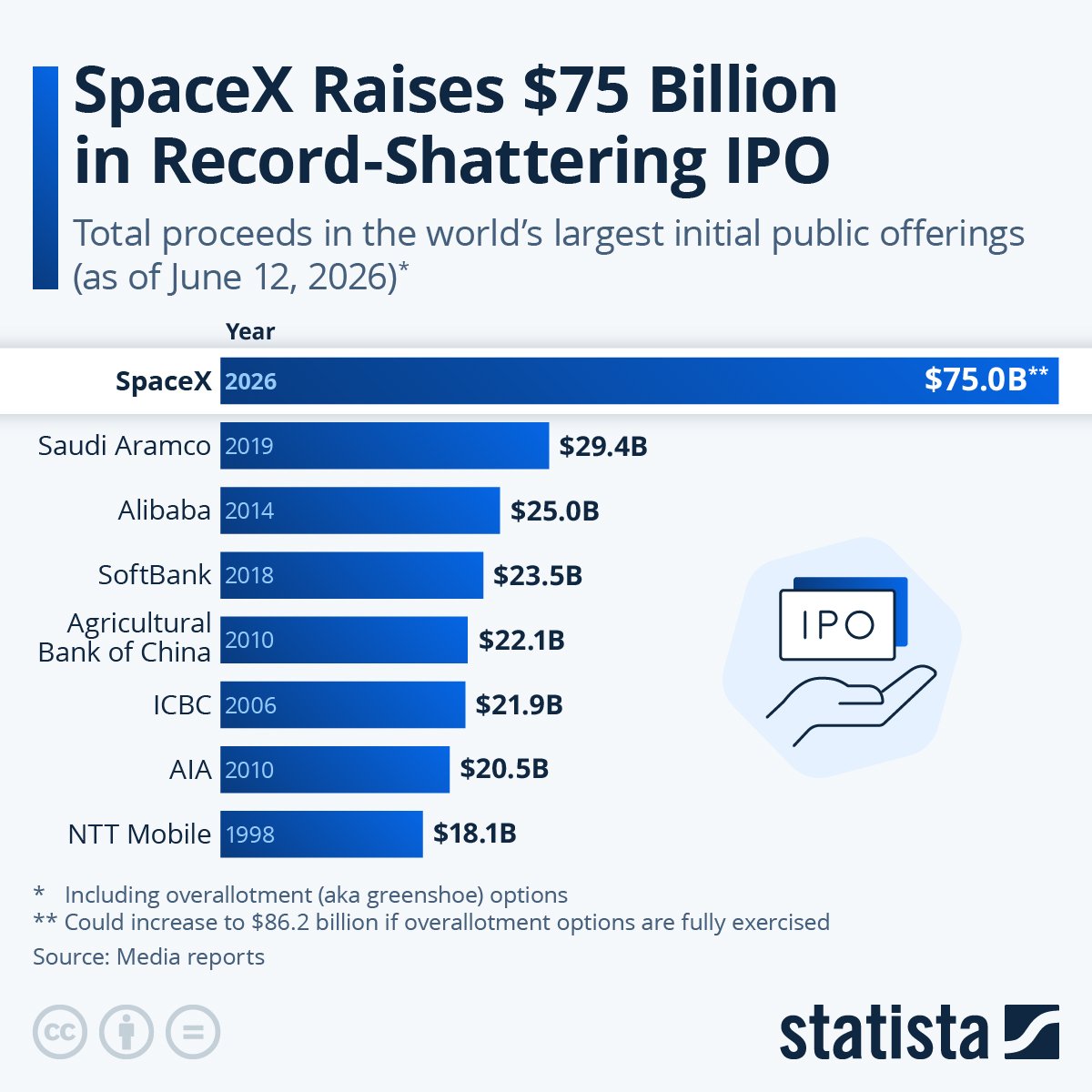
SpaceX lists on the Nasdaq today under SPCX, in what is set to be the largest IPO in history. The company has raised USD 75 billion, pricing 555.6 million shares at USD 135 each, at a valuation approaching USD 2 trillion. For context, the previous record-holder, Saudi Aramco in 2019, raised USD 29.4 billion. Retail orders alone reportedly exceeded USD 100 billion. Elon Musk retains 85 percent of the voting control and stands on the verge of becoming the world's first trillionaire. Roughly 30 percent of the offer has been earmarked for retail through Robinhood, Schwab, Fidelity, E*Trade and SoFi, an unusually generous allocation designed to put ordinary investors at the front of the queue from day one.

The mechanics deserve a look. The raise implies a free float in the low single digits, perhaps three to four percent of the company. The retail offer is distributed through institutions including Goldman Sachs as lead, with Morgan Stanley, Bank of America, Citigroup and JPMorgan in support. Musk's 85 percent voting control comes through a dual-class structure that the New York and California state pension funds have publicly criticised as 'extreme'.

The numbers behind the headline are sobering. SpaceX posted a Q1 2026 net loss of USD 4.3 billion on revenue of USD 4.69 billion. The Connectivity unit (Starlink) made USD 1.19 billion, while the Space unit lost USD 619 million and the AI unit lost USD 2.5 billion.

Starlink is single-handedly carrying the company.

The S-1 also claims a USD 28.5 trillion total addressable market, and includes a vesting condition for 1 billion of Musk's performance shares that requires SpaceX to establish a permanent human colony on Mars with at least 1 million inhabitants. This is a remuneration trigger.

OpenAI is queueing up directly behind. The ChatGPT maker confidentially filed in late May at a USD 852 billion valuation, with Goldman Sachs and Morgan Stanley leading, targeting a September quarter listing. But there is a tell. The Wall Street Journal reports CFO Sarah Friar has told colleagues the company may need more time, while CEO Sam Altman has been eager to push ahead. The CFO, the person responsible for the numbers, is the one urging caution. OpenAI has reportedly missed multiple internal revenue and user targets, and its lead is now under threat from Anthropic, whose tools are being adopted across the workforce at pace. OpenAI is going public partly because it needs to, having committed more than USD 1.4 trillion to physical infrastructure. The phrase 'stolen a charity', used by Musk in the recently dismissed trial alleging OpenAI improperly converted from a nonprofit research lab, will hang over the prospectus regardless of the verdict. Anthropic is preparing its own listing.

Three deals, perhaps USD 200 billion of equity issuance, in a single year. As a fiduciary, not as a fan of rockets or large language models, my answer is the same as it would have been to a client asking about the South Sea Company in 1720. Probably not, and almost certainly not at the open.

The unromantic data

Jay Ritter at the University of Florida, known in finance circles as 'Mr IPO', has been cataloguing initial public offerings since 1980. US IPOs have, on average, trailed the broader market by roughly two percentage points a year over the three years after listing. Almost two thirds underperform.

Dimensional Fund Advisors found the same in a study of more than 6,000 US IPOs from 1991 to 2018. Dimensional's response is instructive. Their funds deliberately wait, sitting out the first year or so after a listing so that the early froth settles, the lock-ups expire, and at least one to two years of audited public-company financials accumulate before they buy. Dull, patient, and on the evidence, profitable.

Read Dimensional’s study HERE.

Two New Zealand parables

We do not have to travel to Starbase, Texas for the lesson. Two recent local listings sit at opposite ends of the IPO spectrum.

Napier Port listed in August 2019 at $2.60 a share, rose sharply on debut, touched $4.28 by year-end, and today trades in the low $3 range with a steady dividend stream. Not spectacular, but it is what a 150-year-old infrastructure business with predictable cargo volumes is supposed to look like. Decades of audited accounts. A board that knew what it owned. A business you can model on the back of an envelope.

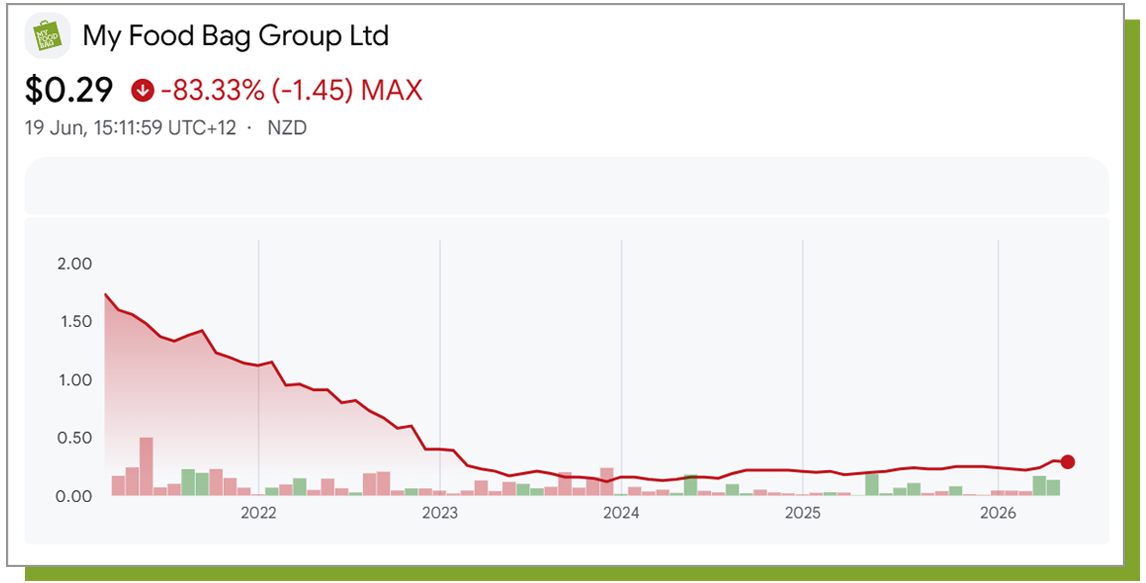
My Food Bag tells the other story. It listed in March 2021 at $1.85, the largest New Zealand IPO by amount raised since 2014. The prospectus glittered. Retail investors, including many existing customers, were warmly invited. The shares fell on day one and kept falling. Today they trade around 29 cents, an 85 percent loss for anyone who bought at issue. A classic private equity exit, with the existing owners taking $51 million in repaid shareholder loans and a $7.1 million pre-listing dividend off the table on the way out. The question not asked loudly enough was the only one that mattered: who is selling, and why now?

The fiduciary filter

Three principles we keep returning to when a client asks about a hot IPO. First, wait for the audited financials. The Dimensional approach of holding off until at least two years of statutory accounts exist as a listed entity is not market timing, it is risk management. Pre-IPO numbers are produced under different incentives.

Second, read who is selling. Founders and venture funds with five-year-old positions do not list out of generosity. Lock-up provisions and use of proceeds tell you more than the forward revenue projection. Third, recognise the window. Ritter's research shows IPOs cluster in optimistic markets and underperform most when issued in those hot windows. Three trillion-dollar AI and aerospace deals queued up in a single year is the textbook definition.

And so, to Amsterdam

Neeltgen Cornelis did rather well. The VOC paid its first dividend in 1610, mostly in spices, and continued paying for the better part of two centuries. But she bought into a business with existing ships, warehouses, a 21-year charter and a recognisable revenue model.

She was not buying a million Martians.

The colossal IPOs of 2026 may yet reward their early shareholders handsomely. Some will. Most, on the historical evidence, will not. When the noise gets loud, seek advice and wise counsel.

Or, if you prefer the older formulation - ask the person who has read the prospectus three times and is still not buying.


Nick Stewart

(Ngāi Tahu, Ngāti Huirapa, Ngāti Māmoe,
Ngāti Waitaha)

Financial Adviser and CEO at Stewart Group

  • Stewart Group is a Hawke's Bay and Wellington based CEFEX & BCorp certified financial planning and advisory firm providing personal fiduciary services, Wealth Management, Risk Insurance & KiwiSaver scheme solutions.

  • The information provided, or any opinions expressed in this article, are of a general nature only and should not be construed or relied on as a recommendation to invest in a financial product or class of financial products. You should seek financial advice specific to your circumstances from a Financial Adviser before making any financial decisions. A disclosure statement can be obtained free of charge by calling 0800 878 961 or visit our website, www.stewartgroup.co.nz


REFERENCES

  1. Bloomberg Evening Briefing Americas, 11 June 2026, 'The world's first almost-trillionaire'. SpaceX priced 555.6 million shares at USD 135 each, raising USD 75 billion. Retail orders reportedly exceeded USD 100 billion.

  2. Bloomberg Evening Briefing Americas, 20 May 2026, 'SpaceX Files Publicly for Nasdaq IPO Under Symbol SPCX'.

  3. The Economist, World in Brief, 21 May 2026, 'SpaceX reaches for the stars'.

  4. Morning Brew, 21 May 2026, 'SpaceX shows its finances and future in IPO filing'. SpaceX S-1 prospectus, 20 May 2026: Q1 2026 revenue USD 4.69 billion, net loss USD 4.3 billion; Musk 85 percent voting control; Mars 1 million inhabitants vesting condition; total addressable market claim USD 28.5 trillion; retail distribution via Robinhood, Schwab, Fidelity, E*Trade, SoFi.

  5. BusinessDesk (WSJ syndication), 21 May 2026, 'OpenAI is preparing to file for an IPO very soon'. CFO Sarah Friar reportedly told colleagues OpenAI may need more time; Anthropic growing faster on workforce tool adoption.

  6. CNBC and Wall Street Journal, 20 May 2026, 'OpenAI to confidentially file for IPO as soon as Friday', valuation USD 852 billion.

  7. Ritter, J.R., 'Initial Public Offerings: Underpricing', 1980 to 2025 dataset, University of Florida, Warrington College of Business.

  8. Black, S. and Green, K., 'IPOs: Profiles Are High. What About Returns?', Dimensional Fund Advisors, 2019, study of 6,000+ US IPOs 1991 to 2018.

  9. RNZ, 'Will your My Food Bag investment ever recover?', May 2025.

  10. NZX disclosures, Napier Port Holdings (NPH) and My Food Bag Group (MFB), historical share data.

  11. Worldsfirststockexchange.com, Dutch National Archives, VOC charter 20 March 1602, Article 10.

The Downsides of DIY Investing

With home ownership out of reach for many people, we’re seeing shifts in investing priorities that align with generational differences, particularly from Millennials and Gen Z. Following on from Boomers, who are tipped as the wealthiest generation in history, things are tough in a world where costs keep rising and outpacing income.