Investor Emotions

We Need to Talk About Envy

When a newspaper tells you how to hate someone, it reveals more about itself than its target.


Article #462

“Envy was once considered to be one of the seven deadly sins before it became one of the most admired virtues under its new name, ‘social justice’.”

Thomas Sowell, The Quest for Cosmic Justice (1999) [1]

Last week the New Zealand Herald reported, plainly, that Elon Musk had become the world’s first trillionaire after shares in SpaceX leapt as much as 30% on debut, the largest initial public offering in history. [2,3] That is the news. What happened next is the story.

Canada’s Globe and Mail ran an opinion piece under the headline: ‘SpaceX IPO makes Elon Musk the first trillionaire. Here’s how to properly hate him.’ After a day of ridicule, the paper swapped it for the more respectable ‘Is that a bad look for capitalism?’ and tacked on a note conceding the original ‘did not meet The Globe’s editorial standard.’ [4] The mask slipped, then was hastily refitted. But we all saw the face beneath.
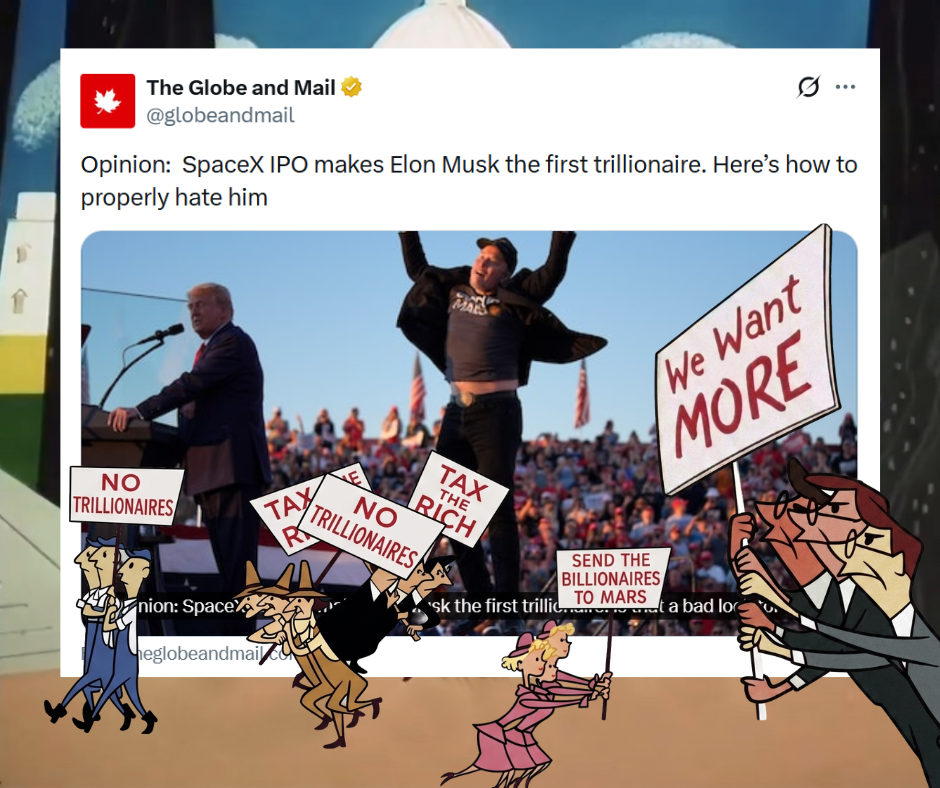
Closer to home, the chorus is familiar. Oxfam Aotearoa tells us four New Zealand billionaires hold more wealth than 1.8 million of their countrymen, and calls it ‘obscene.’ [5] Academics line up on talkback to lament inequality. Polls are cited showing most New Zealanders want the ultra-rich taxed more, and we are reminded that Musk alone is worth almost as much as every New Zealander combined [6,7]. The sentiment is always the same: someone has too much, and that is a problem to be corrected rather than a phenomenon to be understood.

Musk is not, in fact, the first trillionaire. Under Robert Mugabe, Zimbabwe's central bank printed a hundred-trillion-dollar note that on its first day was worth about US$30, and within weeks nothing at all; at the peak, prices doubled every day [8]. In that sense, many Zimbabweans became trillionaires on paper yet still could not buy a loaf of bread. That is the distinction worth dwelling on.
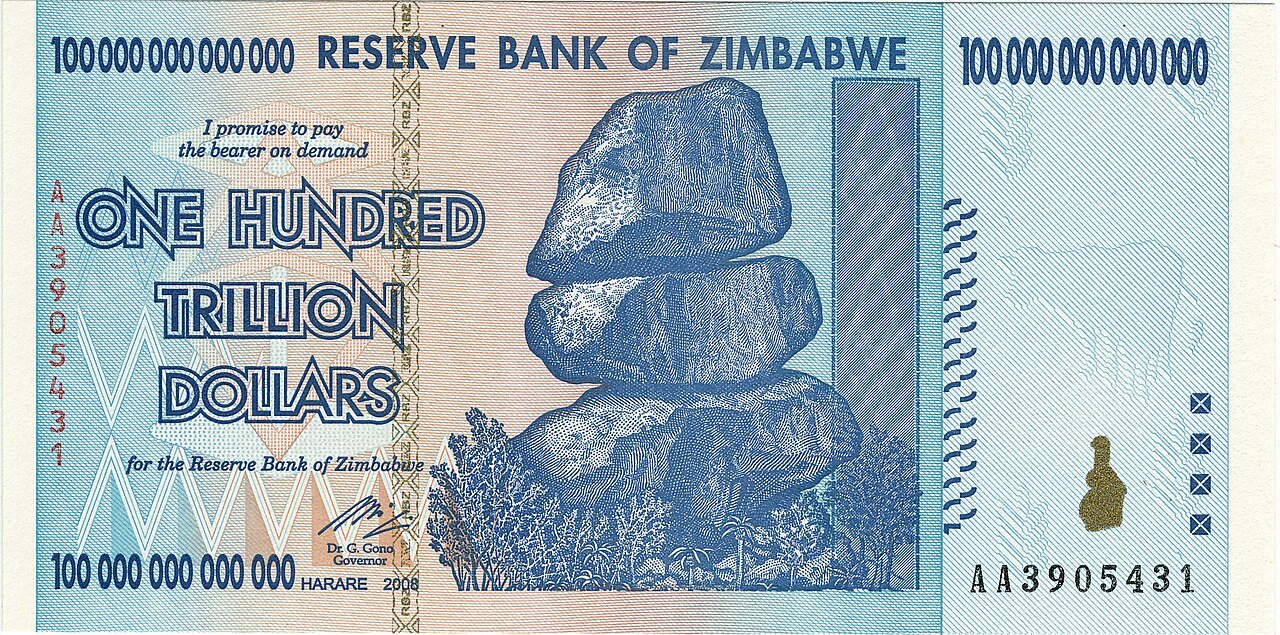
A trillion earned by building what people want is the opposite of a trillion conjured by a collapsing state: one is value created, the other value destroyed.

I want to make the unfashionable case. Not for Musk the man, he hardly needs my help, but for what the exception represents: the rare individual who turns the stuff of science fiction into things we use every day without a second thought, the smartphone in your pocket, the satellite that carries your call, the online payment that clears in seconds, the electric car at the lights, the cloud software that runs the small business down the road.

Consider the funnel. Many people have ideas. Fewer act on them. Fewer still build something that turns a profit. And a vanishingly small number, statistical outliers, take an idea and deliver it at scale. New Zealand has produced our own precious few: the Mowbray siblings, whose toy and consumer-goods firm Zuru, started in a shed in 2003, now tops the Rich List at an estimated $20 billion; Trade Me, Xero, Rocket Lab, the family-owned Gallagher Group, which grew from a Waikato farm shed and the world's first electric fence into a security firm operating in some 160 countries, and Fisher & Paykel Healthcare, built and headquartered here and exporting respiratory care to around 120 countries [9,10,11].

And the same pattern holds inside the companies we reduce too easily to a single famous name. Gwynne Shotwell joined SpaceX as its eleventh employee in 2002 and helped build it, as president, into the company that just floated; she now sits, according to Forbes, among the richest self-made women in the world, with a stake estimated at around US$2.5 billion [12]. The builders are plural, and the rewards often follow competence more than celebrity.
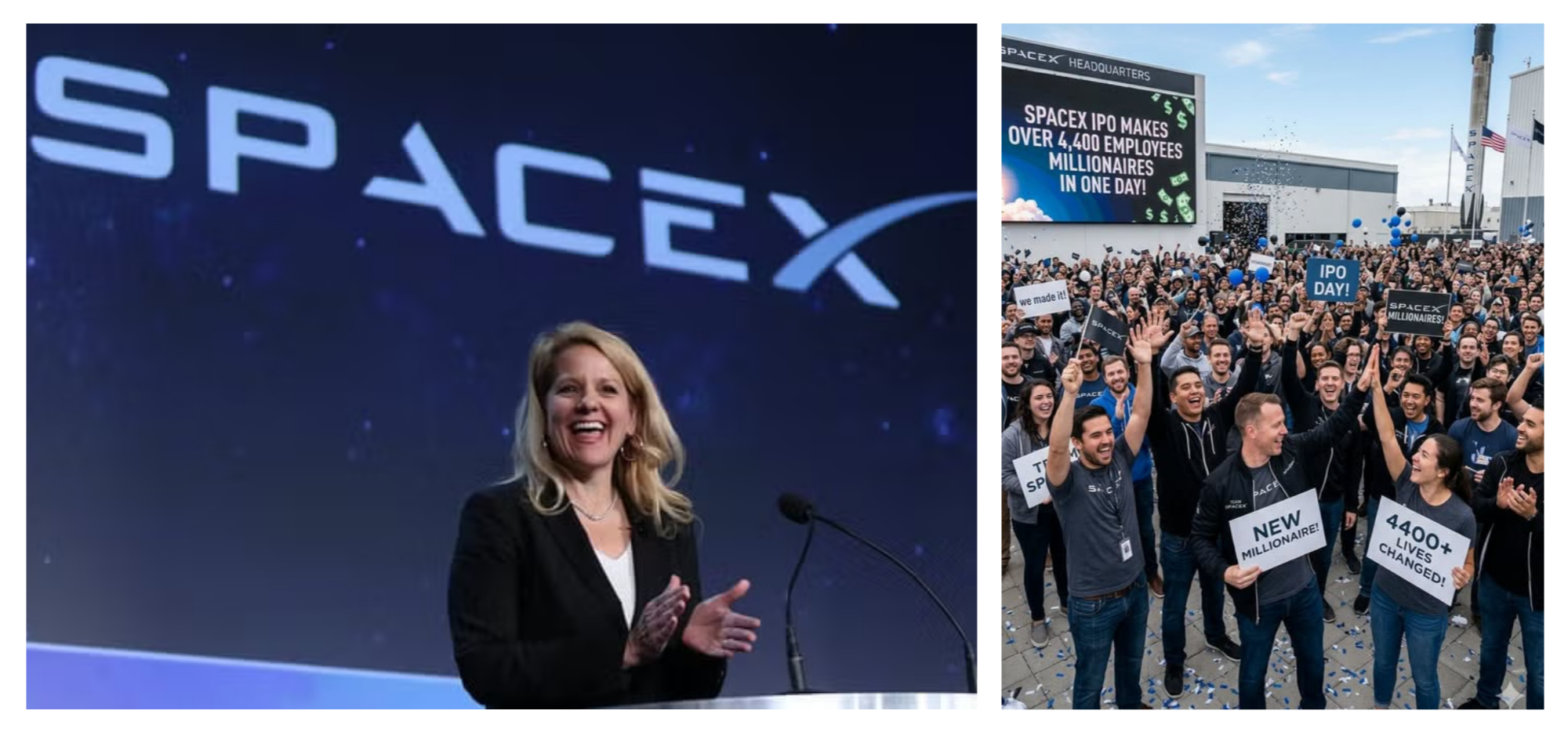
Here is the part the zero-sum brigade often misses: the same SpaceX listing that minted the world's first trillionaire also turned more than 4,400 current and former staff into millionaires, by the New York Times' reckoning – some 400 of them past the $100 million mark. The reach went a long way down the org chart. One was a welder who joined in 2015 on about US$28 an hour and took part of his pay in stock; his holding is now worth close to a million dollars [13]. The trillionaire headline and the newly wealthy welder came from the very same event. The pie did not get carved up. It got bigger.
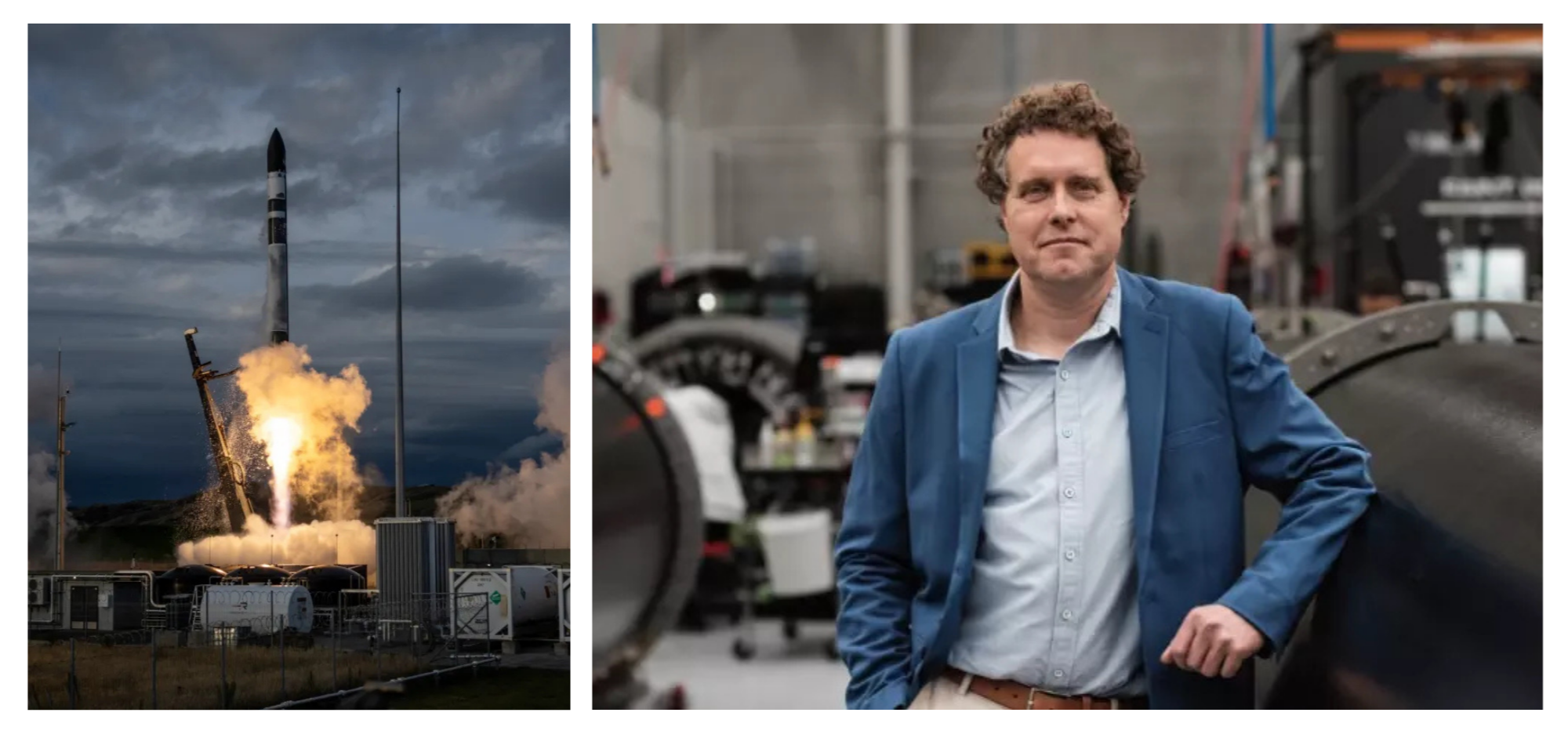
The question for New Zealand is whether we are willing to learn from that. The NBR Rich List has swelled 23-fold in forty years to a record $129 billion, with Rocket Lab's Sir Peter Beck alone leaping from about $650 million to $11 billion in a single year as his company's shares soared [14]. And yet our productivity has barely moved in thirty years. We are very good at debating how to carve the pie, and strangely uninterested in baking a larger one.

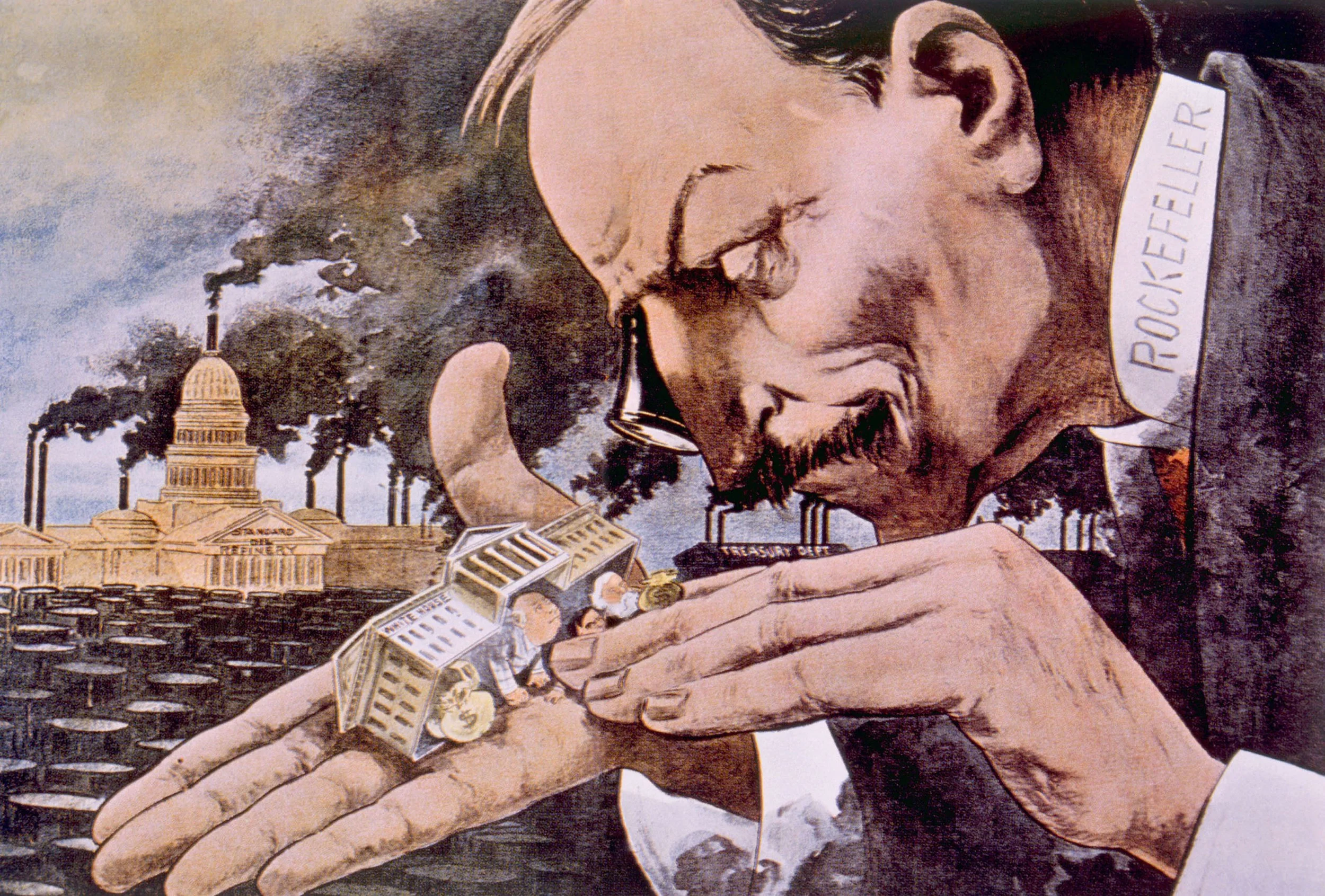
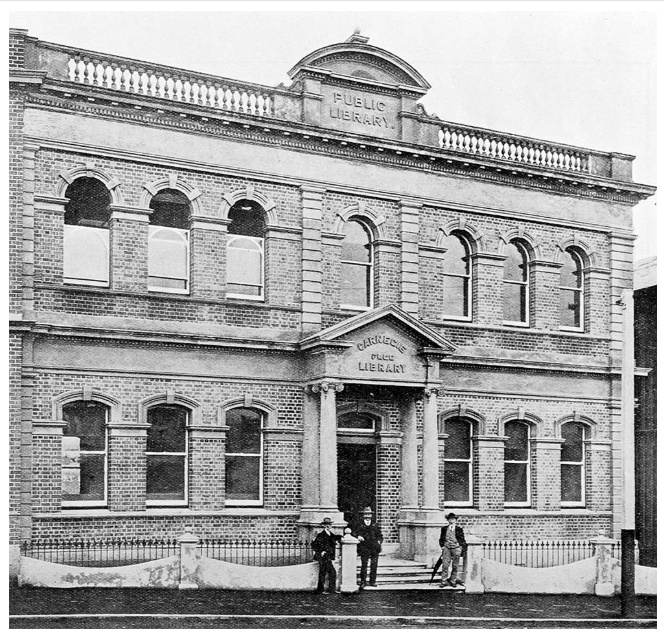
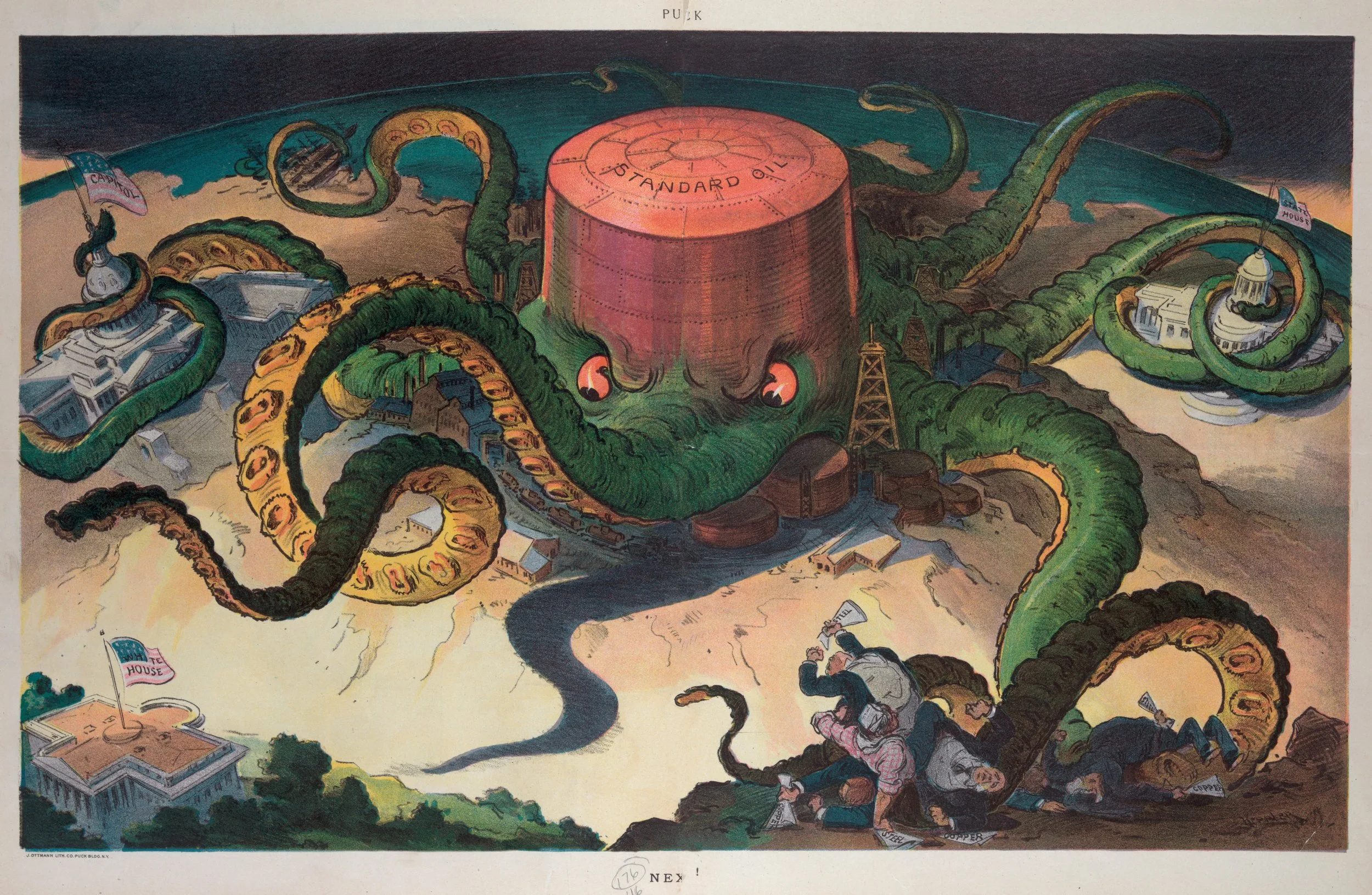
None of this is new. Andrew Carnegie and John D. Rockefeller were the titans of their age, reviled in their time as robber barons, cartoonish villains of the popular press. The cartoonists drew them as bloated octopuses with the nation in their tentacles. Carnegie ground out his fortune in steel and, in his later years, gave most of it away, seeding free public libraries across the world, more than 2,500 of them, eighteen in New Zealand alone [15]. Rockefeller's money built the University of Chicago and funded the medical research that helped tame yellow fever and hookworm [16]. The resentment faded. The libraries, the universities, the cures remain. That is the part the wreckers never see: the wealth was temporary, but the institutions it built endured, and we are still drawing on them a century later.
Great fortunes gather, they crest, and in time they disperse through families, philanthropy, taxation and the simple passage of generations. Marriages fail and children inherit and quarrel; fortunes fracture along fault lines no one planned for. Jeff Bezos parted with roughly a quarter of his Amazon stake in a single divorce [17]. Wealth scatters faster than any succession plan can contain it. No one takes it with them. They are only ever the custodian of their wealth for the span of their life, and perhaps a generation or two beyond, if they are fortunate.

I make the same point to those who fret about foreigners buying New Zealand farms and businesses. A buyer cannot pack up a farm, or a company, and carry it home in a box to their country of origin. The land stays. The business stays. The jobs, the buildings and the economic activity all remain here, in New Zealand. The buyer is a custodian, nothing more. So too with the great fortunes: the enterprises outlast the individual, and we are the beneficiaries.

And here is what the envious rarely pause to weigh: the cost of building any of it. The outlier does not arrive at scale by working office hours. Musk's own biographers record the toll: Walter Isaacson, who shadowed him for years, documents a leader hands-on in redesigning rocket components and welding design to production, while Ashlee Vance describes the hundred-hour weeks and nights spent sleeping on factory floors [18,19]. He risked ruin, repeatedly; Tesla and SpaceX both came within weeks of collapse in 2008, and he poured in his own money to keep them breathing. For every founder who makes it, a great many do not: they mortgage the house, burn the savings, lose the marriage, and end up with nothing but the lesson. Most of us, honestly, would not want that life if it were handed to us, and that is no shame. But it ought to buy a little humility before we throw stones over the fence at grass we have decided, from a distance, must be greener.

Some will say the fortune was really built on government largesse: the contracts, the green credits [20]. But the credits were no handout. Every carmaker operated under the same zero-emission rules; the money came from rival manufacturers who lagged on electric cars, not from the taxpayer; and Tesla profited simply because it built cleaner cars faster than anyone else. The same scheme runs in Europe and China. That is not a subsidy. That is winning the game everyone was playing.

As for the calls to tax such people into their place, success is already taxed, and handsomely. That is how it works. But a culture that treats achievement as a crime to be punished rather than a feat to be studied will get less of it. The numbers bear it out: resentment is not a growth strategy.

There is a fiduciary truth in all of this, the same one I return to with clients. Tearing others down builds nothing. The job, mine, yours, the nation’s, is stewardship: to grow what we are given, to think in decades rather than headlines, and to leave more behind than we found. A country that celebrates its builders is a healthier place than one that polices its winners. Glass half full beats glass half empty, every time.

So before we are told, yet again, how to properly hate someone for the sin of succeeding, it is worth asking the more useful question. Not how do we cut them down to size, but what will we leave standing when we are gone?

Winter never lasts; the snows always melt.

Nick Stewart

(Ngāi Tahu, Ngāti Huirapa, Ngāti Māmoe,
Ngāti Waitaha)

Financial Adviser and CEO at Stewart Group

  • Stewart Group is a Hawke's Bay and Wellington based CEFEX & BCorp certified financial planning and advisory firm providing personal fiduciary services, Wealth Management, Risk Insurance & KiwiSaver scheme solutions.

  • The information provided, or any opinions expressed in this article, are of a general nature only and should not be construed or relied on as a recommendation to invest in a financial product or class of financial products. You should seek financial advice specific to your circumstances from a Financial Adviser before making any financial decisions. A disclosure statement can be obtained free of charge by calling 0800 878 961 or visit our website, www.stewartgroup.co.nz


REFERENCES

  1. Thomas Sowell, The Quest for Cosmic Justice (1999), source of the epigraph.

  2. New Zealand Herald, ‘Elon Musk becomes world’s first trillionaire as SpaceX shares jump’ (June 2026).

  3. RNZ, ‘SpaceX launches US$2 trillion market debut, the largest IPO in history’ (June 2026).

  4. The Globe and Mail, Chris Gay, ‘SpaceX IPO makes Elon Musk the first trillionaire. Here’s how to properly hate him’ (headline since amended with editor’s note, June 2026).

  5. Oxfam Aotearoa, statement on billionaire wealth concentration in New Zealand (2026).

  6. RNZ / Talbot Mills poll, ‘New Zealanders support more taxes on ultra-rich, new poll shows’ (Wellbeing Economy Alliance Aotearoa; 68% backed higher taxes on the ultra-rich, 2026).

  7. RNZ, ‘Elon Musk only marginally less wealthy than all New Zealanders combined’ (June 2026).

  8. Reserve Bank of Zimbabwe / BBC, the Z$100 trillion note, issued 16 January 2009, worth about US$30 on its first day; one of history’s worst hyperinflations, with prices doubling daily at the November 2008 peak.

  9. Zuru / NBR Rich List 2026, founded by Nick, Mat and Anna Mowbray in 2003; estimated at $20b, the top spot on the 2026 NBR Rich List.

  10. Gallagher Group, Hamilton-based, family-owned; from the world’s first electric fence (1938) to integrated security solutions in around 160 countries.

  11. Fisher & Paykel Healthcare, New Zealand-headquartered respiratory-care manufacturer; sells in around 120 countries, with roughly 1% of revenue from domestic sales (publicly listed; majority institutional ownership).

  12. Forbes, ‘America’s Richest Self-Made Women’ (2026 list), featuring SpaceX president Gwynne Shotwell.

  13. The New York Times, reporting via Hill.com analysis that SpaceX’s IPO would turn more than 4,400 employees into millionaires, including a welder hired in 2015 (June 2026).

  14. NBR Rich List 2026, 40th edition; total listed wealth a record $129b (up from $102.1b), a 23-fold rise in 40 years; Rocket Lab’s Sir Peter Beck up from ~$650m to ~$11b (reported via RNZ / NZ Herald / Scoop, June 2026).

  15. Carnegie Corporation of New York, historical record of Carnegie free public library endowments.

  16. Rockefeller Foundation / University of Chicago, record of Rockefeller’s ~$36m founding gift to the University of Chicago and Foundation-led campaigns against hookworm and yellow fever (first yellow-fever vaccine, 1935).

  17. Bezos / Scott divorce (2019), widely reported transfer of roughly a quarter of Jeff Bezos’ Amazon stake to MacKenzie Scott.

  18. Walter Isaacson, Elon Musk (2023), on Musk’s hands-on engineering role across his companies.

  19. Ashlee Vance, Elon Musk: Tesla, SpaceX, and the Quest for a Fantastic Future (2015), on the 100-hour weeks and factory-floor work ethic.

  20. RNZ, ‘How much of Elon Musk’s wealth comes from government help? Virtually all of it’ (June 2026), cited here as the claim being answered; on ZEV regulatory credits, see the Union of Concerned Scientists and CNBC explainers (credits are traded between automakers, not paid by the taxpayer).


IMAGE CREDITS

  • John D. Rockefeller depicted in the political cartoon 'The Trust Giant's Point of View' by Horace Taylor in 'The Verdict, ' 1900

  • “Standard Oil Octopus” - Keppler, Udo J., 1872-1956, artist. Published September 1904

  • Carnegie Free Library, Thames - Coromandel Heritage Trust. Photograph by David Wilton.

  • Auckland City Libraries – Tāmaki Pātaka Kōrero, Sir George Grey Special Collections (AWNS-19080716-13-6)
The Era of the Colossal IPO, and the Small Investor

Article #461

In August 1602, the Dutch East India Company pinned up posters in Amsterdam announcing that any resident of the Low Countries could buy a share in their new venture. By month's end, 1143 investors had put in roughly 6.4 million guilders. One was a maid named Neeltgen Cornelis. She put in 100 guilders, around half a guilder a day in wages, more than half a year's earnings. The world's first IPO had its first ordinary shareholder.

Four centuries later the dance is the same, but the music is louder. Within 12 months we'll likely see the three largest technology listings in history, landing one after another.

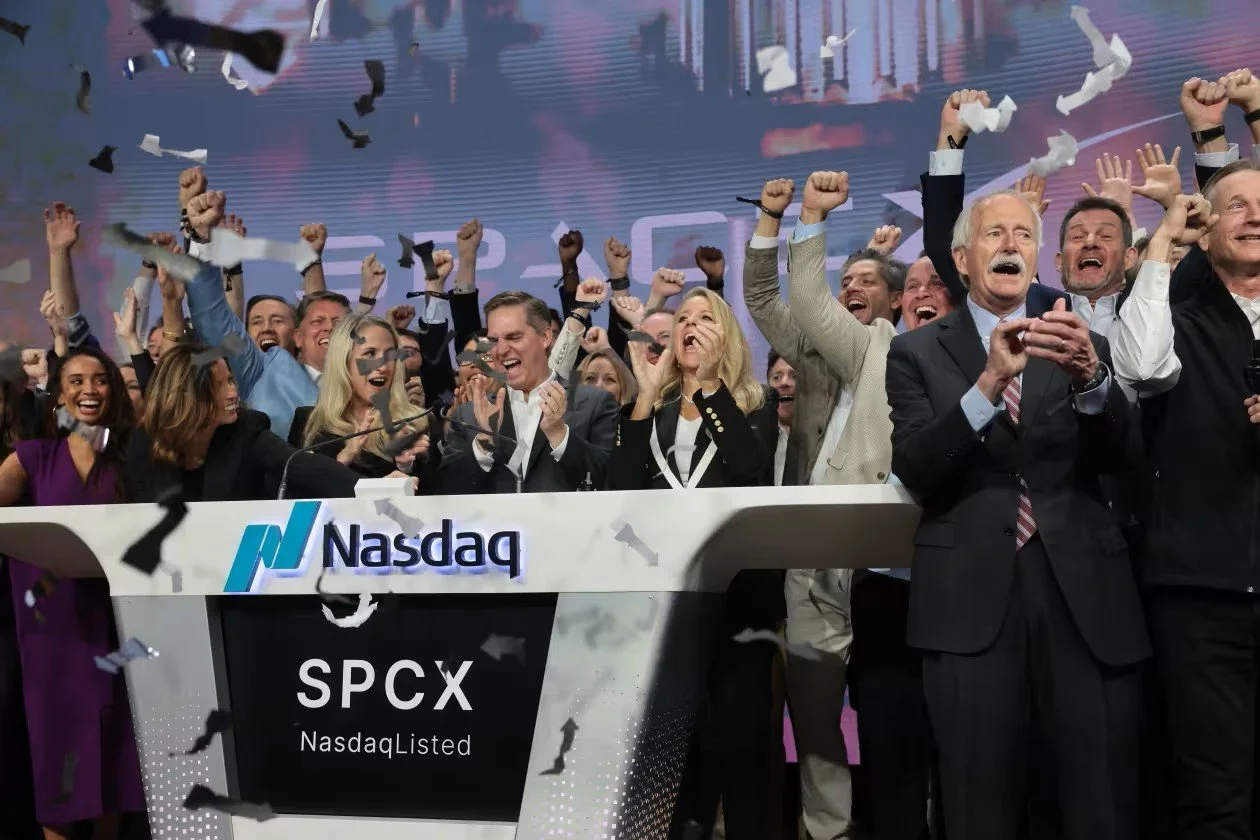
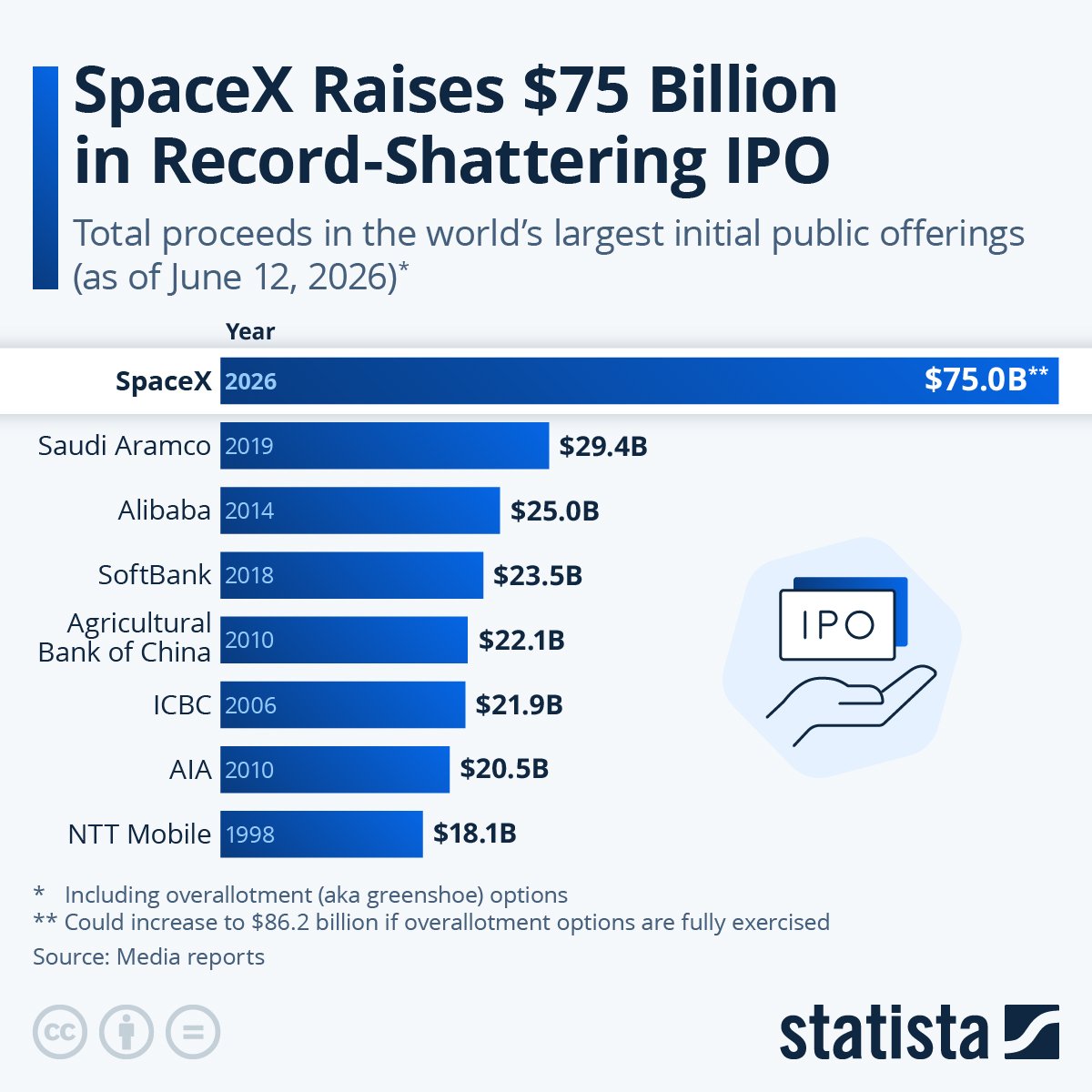
SpaceX lists on the Nasdaq today under SPCX, in what is set to be the largest IPO in history. The company has raised USD 75 billion, pricing 555.6 million shares at USD 135 each, at a valuation approaching USD 2 trillion. For context, the previous record-holder, Saudi Aramco in 2019, raised USD 29.4 billion. Retail orders alone reportedly exceeded USD 100 billion. Elon Musk retains 85 percent of the voting control and stands on the verge of becoming the world's first trillionaire. Roughly 30 percent of the offer has been earmarked for retail through Robinhood, Schwab, Fidelity, E*Trade and SoFi, an unusually generous allocation designed to put ordinary investors at the front of the queue from day one.

The mechanics deserve a look. The raise implies a free float in the low single digits, perhaps three to four percent of the company. The retail offer is distributed through institutions including Goldman Sachs as lead, with Morgan Stanley, Bank of America, Citigroup and JPMorgan in support. Musk's 85 percent voting control comes through a dual-class structure that the New York and California state pension funds have publicly criticised as 'extreme'.

The numbers behind the headline are sobering. SpaceX posted a Q1 2026 net loss of USD 4.3 billion on revenue of USD 4.69 billion. The Connectivity unit (Starlink) made USD 1.19 billion, while the Space unit lost USD 619 million and the AI unit lost USD 2.5 billion.

Starlink is single-handedly carrying the company.

The S-1 also claims a USD 28.5 trillion total addressable market, and includes a vesting condition for 1 billion of Musk's performance shares that requires SpaceX to establish a permanent human colony on Mars with at least 1 million inhabitants. This is a remuneration trigger.

OpenAI is queueing up directly behind. The ChatGPT maker confidentially filed in late May at a USD 852 billion valuation, with Goldman Sachs and Morgan Stanley leading, targeting a September quarter listing. But there is a tell. The Wall Street Journal reports CFO Sarah Friar has told colleagues the company may need more time, while CEO Sam Altman has been eager to push ahead. The CFO, the person responsible for the numbers, is the one urging caution. OpenAI has reportedly missed multiple internal revenue and user targets, and its lead is now under threat from Anthropic, whose tools are being adopted across the workforce at pace. OpenAI is going public partly because it needs to, having committed more than USD 1.4 trillion to physical infrastructure. The phrase 'stolen a charity', used by Musk in the recently dismissed trial alleging OpenAI improperly converted from a nonprofit research lab, will hang over the prospectus regardless of the verdict. Anthropic is preparing its own listing.

Three deals, perhaps USD 200 billion of equity issuance, in a single year. As a fiduciary, not as a fan of rockets or large language models, my answer is the same as it would have been to a client asking about the South Sea Company in 1720. Probably not, and almost certainly not at the open.

The unromantic data

Jay Ritter at the University of Florida, known in finance circles as 'Mr IPO', has been cataloguing initial public offerings since 1980. US IPOs have, on average, trailed the broader market by roughly two percentage points a year over the three years after listing. Almost two thirds underperform.

Dimensional Fund Advisors found the same in a study of more than 6,000 US IPOs from 1991 to 2018. Dimensional's response is instructive. Their funds deliberately wait, sitting out the first year or so after a listing so that the early froth settles, the lock-ups expire, and at least one to two years of audited public-company financials accumulate before they buy. Dull, patient, and on the evidence, profitable.

Read Dimensional’s study HERE.

Two New Zealand parables

We do not have to travel to Starbase, Texas for the lesson. Two recent local listings sit at opposite ends of the IPO spectrum.

Napier Port listed in August 2019 at $2.60 a share, rose sharply on debut, touched $4.28 by year-end, and today trades in the low $3 range with a steady dividend stream. Not spectacular, but it is what a 150-year-old infrastructure business with predictable cargo volumes is supposed to look like. Decades of audited accounts. A board that knew what it owned. A business you can model on the back of an envelope.

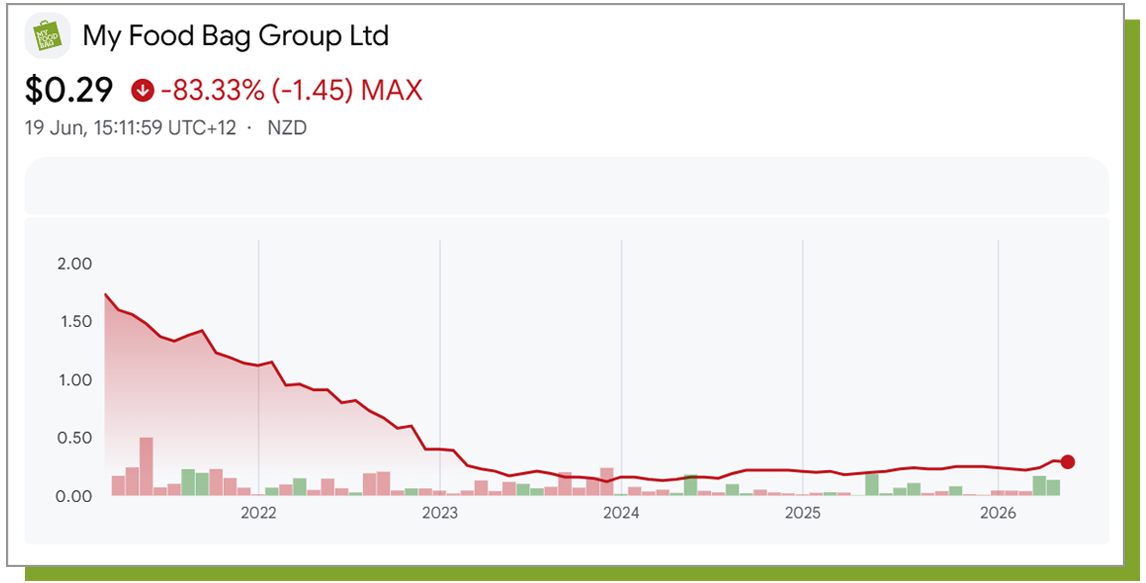
My Food Bag tells the other story. It listed in March 2021 at $1.85, the largest New Zealand IPO by amount raised since 2014. The prospectus glittered. Retail investors, including many existing customers, were warmly invited. The shares fell on day one and kept falling. Today they trade around 29 cents, an 85 percent loss for anyone who bought at issue. A classic private equity exit, with the existing owners taking $51 million in repaid shareholder loans and a $7.1 million pre-listing dividend off the table on the way out. The question not asked loudly enough was the only one that mattered: who is selling, and why now?

The fiduciary filter

Three principles we keep returning to when a client asks about a hot IPO. First, wait for the audited financials. The Dimensional approach of holding off until at least two years of statutory accounts exist as a listed entity is not market timing, it is risk management. Pre-IPO numbers are produced under different incentives.

Second, read who is selling. Founders and venture funds with five-year-old positions do not list out of generosity. Lock-up provisions and use of proceeds tell you more than the forward revenue projection. Third, recognise the window. Ritter's research shows IPOs cluster in optimistic markets and underperform most when issued in those hot windows. Three trillion-dollar AI and aerospace deals queued up in a single year is the textbook definition.

And so, to Amsterdam

Neeltgen Cornelis did rather well. The VOC paid its first dividend in 1610, mostly in spices, and continued paying for the better part of two centuries. But she bought into a business with existing ships, warehouses, a 21-year charter and a recognisable revenue model.

She was not buying a million Martians.

The colossal IPOs of 2026 may yet reward their early shareholders handsomely. Some will. Most, on the historical evidence, will not. When the noise gets loud, seek advice and wise counsel.

Or, if you prefer the older formulation - ask the person who has read the prospectus three times and is still not buying.


Nick Stewart

(Ngāi Tahu, Ngāti Huirapa, Ngāti Māmoe,
Ngāti Waitaha)

Financial Adviser and CEO at Stewart Group

  • Stewart Group is a Hawke's Bay and Wellington based CEFEX & BCorp certified financial planning and advisory firm providing personal fiduciary services, Wealth Management, Risk Insurance & KiwiSaver scheme solutions.

  • The information provided, or any opinions expressed in this article, are of a general nature only and should not be construed or relied on as a recommendation to invest in a financial product or class of financial products. You should seek financial advice specific to your circumstances from a Financial Adviser before making any financial decisions. A disclosure statement can be obtained free of charge by calling 0800 878 961 or visit our website, www.stewartgroup.co.nz


REFERENCES

  1. Bloomberg Evening Briefing Americas, 11 June 2026, 'The world's first almost-trillionaire'. SpaceX priced 555.6 million shares at USD 135 each, raising USD 75 billion. Retail orders reportedly exceeded USD 100 billion.

  2. Bloomberg Evening Briefing Americas, 20 May 2026, 'SpaceX Files Publicly for Nasdaq IPO Under Symbol SPCX'.

  3. The Economist, World in Brief, 21 May 2026, 'SpaceX reaches for the stars'.

  4. Morning Brew, 21 May 2026, 'SpaceX shows its finances and future in IPO filing'. SpaceX S-1 prospectus, 20 May 2026: Q1 2026 revenue USD 4.69 billion, net loss USD 4.3 billion; Musk 85 percent voting control; Mars 1 million inhabitants vesting condition; total addressable market claim USD 28.5 trillion; retail distribution via Robinhood, Schwab, Fidelity, E*Trade, SoFi.

  5. BusinessDesk (WSJ syndication), 21 May 2026, 'OpenAI is preparing to file for an IPO very soon'. CFO Sarah Friar reportedly told colleagues OpenAI may need more time; Anthropic growing faster on workforce tool adoption.

  6. CNBC and Wall Street Journal, 20 May 2026, 'OpenAI to confidentially file for IPO as soon as Friday', valuation USD 852 billion.

  7. Ritter, J.R., 'Initial Public Offerings: Underpricing', 1980 to 2025 dataset, University of Florida, Warrington College of Business.

  8. Black, S. and Green, K., 'IPOs: Profiles Are High. What About Returns?', Dimensional Fund Advisors, 2019, study of 6,000+ US IPOs 1991 to 2018.

  9. RNZ, 'Will your My Food Bag investment ever recover?', May 2025.

  10. NZX disclosures, Napier Port Holdings (NPH) and My Food Bag Group (MFB), historical share data.

  11. Worldsfirststockexchange.com, Dutch National Archives, VOC charter 20 March 1602, Article 10.

Should I Invest in What I Love? Product Affection vs Investment Logic

Personal product preferences are often the worst possible guide to investment decisions.

I remember when my family first got a GoPro. Revolutionary technology, stunning footage – everyone wanted one. Naturally, I thought: "This company is going places. Maybe I should buy shares." It's a seductive logic: if I love the product, surely others will too. A decade later, I'm thankful I didn't act on that impulse.

This instinct to invest in what we know and love feels intuitive. We use the products, we understand them, we see their value. But this emotional connection – what behavioural economists call "familiarity bias" – is precisely what makes it dangerous.

Back in 2014, GoPro went public and quickly hit a market capitalization of $10 billion with virtually no competition. Today? The stock trades around $1.87 per share – down 98% from its peak, with over $9.7 billion in market value lost.

What went wrong?

Smartphones killed the action camera star. Modern phones became waterproof, gained multiple lenses, and developed image stabilisation that rivals dedicated cameras. GoPro thought they were competing against other action cameras when they were actually competing against the most successful consumer device in history.

But here's the deeper lesson: loving a product tells you nothing about the company's competitive position or long-term viability. A great product is necessary but far from sufficient for investment success. In GoPro's case, every smartphone manufacturer became their competitor, each with deeper pockets and products consumers were already buying.

The Pattern Repeats Closer to Home

This isn't just an overseas story. Take My Food Bag – during COVID lockdowns, it seemed genius. The company went public in March 2021 at $1.85 per share, raising $342 million. Customers loved the service and bought shares. Many retail investors had enjoyed watching co-founder Nadia Lim cook on TV for years – hardly grounds for a wise investment decision. The result? Shares now trade around 25 cents – an 86% decline. As one fund manager noted, "It was a classic private equity exit, which has seen a lot of retail investors lose out."[1]

The timing seemed perfect. Lockdowns had created new habits. People were cooking at home more. The convenience model made sense. But investors failed to ask: what happens when lockdowns end? Is this a permanent behaviour shift or a temporary adaptation? How defensible is the business model? These are the uncomfortable questions that emotional attachment prevents us from asking.

As one fund manager noted, "It was a classic private equity exit, which has seen a lot of retail investors lose out."

Then there's Ryman Healthcare, beloved by many Kiwi families for good reason. My own family experienced the amazing care and kindness shown towards my late father during his time in the dementia care unit at Ryman in Havelock North. The quality of their villages is genuinely impressive. Yet despite these strengths, the stock hit $10.87 in December 2019 and now trades around $2.87 – down 74%. The investment thesis crumbled under construction delays and regulatory challenges, demonstrating that exceptional service doesn't automatically translate into strong investment returns.

This one hits close to home because the service was excellent. But gratitude and investment logic operate in different domains. A company can deliver outstanding customer experiences while simultaneously facing operational headwinds that undermine shareholder returns.

These three examples share a common thread: product or service quality created an emotional connection that clouded rational investment analysis.

The Evidence Against Emotional Investing

Behavioural finance research identifies "familiarity bias" as a major driver of poor investment decisions, where investors favour what they know rather than what performs best.[2] This bias is particularly pronounced amongst long-term investors who believe they're securing against volatility when they're actually concentrating risk.

The evidence against stock picking is overwhelming:

An Arizona State University study by Professor Hendrik Bessembinder examining over 28,000 stocks from 1926 to 2024 found that just 4% of firms created all net wealth in the U.S. stock market. The remaining 96% collectively matched Treasury bills over their lifetimes, and the majority of individual stocks actually reduced shareholder wealth compared to holding cash.[3]

Think about that. If you picked a stock at random, you'd have better than even odds of underperforming cash. The market's impressive returns come from a tiny fraction of companies – and identifying them in advance is nearly impossible.

Professional fund managers fare no better. S&P Dow Jones Indices' SPIVA Scorecard shows that after 10 years, approximately 85% of large-cap funds underperform the S&P 500, and after 15 years, around 90% trail the index.[4] Even Warren Buffett admits: "In 58 years of Berkshire management, most of my capital-allocation decisions have been no better than so-so."[5]

These aren't amateur investors. These are professionals with research teams, Bloomberg terminals, insider access, and decades of experience. If they can't beat a simple index fund, what makes individual investors think they can, especially when driven by product affection rather than analysis?

The Smart Money Questions

Instead of asking "Do I love this product?", evidence-based investors ask: How big is the addressable market? What prevents competitors from copying this? How strong are the financials? Is the company innovating fast enough? What could make this product obsolete?

These questions are deliberately uncomfortable because they force you to look beyond your emotional attachment. They require research, analysis, and a willingness to acknowledge uncertainty. Most importantly, they shift the focus from "I like this" to "can this company maintain a durable competitive advantage?"

The answers usually point to the same solution: diversification. Diversified index funds consistently outperform stock picking over the long term, providing market-matching returns while reducing the risk of catastrophic losses from individual stock failures.[6]

Diversification isn't glamorous. There's no story to tell at dinner parties about your clever stock pick. But it's precisely this lack of excitement that makes it effective. By owning the entire market, you guarantee you'll own the 4% of companies that generate all the wealth creation, without needing to predict which ones they'll be.

As a fee-only adviser working with evidence-based strategies, the real value isn't in chasing hot stocks or validating product obsessions. It's in building a robust financial plan grounded in decades of research, then maintaining discipline through market noise and emotional temptation.

This discipline is harder than it sounds. When GoPro was soaring, when My Food Bag was listing during lockdowns, when you're genuinely grateful for care received – the emotional pull to invest is powerful. It feels like you have special insight. You don't. You have an emotional connection clouding your judgment.

The most valuable thing a good adviser provides isn't stock tips or market predictions. It's the voice of reason when your emotions are screaming at you to invest in what you love. It's the person who asks the uncomfortable questions: "Have you analyzed the competitive landscape? What's your exit strategy? How does this fit your overall plan?" These questions aren't exciting, but they're essential.

Seek wise counsel, commit to a plan that aligns with your goals, and redirect that energy from stock-picking to living your life. Enjoy the products you love. Be grateful for excellent service. Just don't confuse these feelings with investment insight.

Your future self will thank you for choosing evidence over emotion.

Nick Stewart

(Ngāi Tahu, Ngāti Huirapa, Ngāti Māmoe, Ngāti Waitaha)

Financial Adviser and CEO at Stewart Group

  • Stewart Group is a Hawke's Bay and Wellington based CEFEX & BCorp certified financial planning and advisory firm providing personal fiduciary services, Wealth Management, Risk Insurance & KiwiSaver scheme solutions.

  • The information provided, or any opinions expressed in this article, are of a general nature only and should not be construed or relied on as a recommendation to invest in a financial product or class of financial products. You should seek financial advice specific to your circumstances from a Financial Adviser before making any financial decisions. A disclosure statement can be obtained free of charge by calling 0800 878 961 or visit our website, www.stewartgroup.co.nz

  • Article no. 437


References

  1. My Food Bag Group Limited. (2024-2025). Financial Results and Market Updates. NZX Announcements. Retrieved from https://investors.myfoodbag.co.nz/

    • Devon Funds Management. (2025). "My Food Bag Investment Analysis." RNZ Business Interview, May 22, 2025.

  2. Huberman, G. (2001). Familiarity breeds investment. Review of Financial Studies, 14(3), 659–680. https://doi.org/10.1093/rfs/14.3.659

    • Chew, S.H., Li, K.K., & Sagi, J. (2023). Home bias explained by familiarity, not ambiguity. Social Science Research Network. https://papers.ssrn.com/sol3/papers.cfm?abstract_id=3870716

    • De Vries, A., Erasmus, P.D., & Gerber, C. (2017). The familiar versus the unfamiliar: Familiarity bias amongst individual investors. Investment Analysts Journal, 46(1), 24-39.

  3. Bessembinder, H. (2024). Shareholder wealth enhancement, 1926 to 2022 (Updated through 2024). Arizona State University, W.P. Carey School of Business. Retrieved from https://wpcarey.asu.edu/department-finance/faculty-research/do-stocks-outperform-treasury-bills

    • Bessembinder, H. (2018). Do stocks outperform Treasury bills? Journal of Financial Economics, 129(3), 440-457.

  4. S&P Dow Jones Indices. (2024). SPIVA U.S. Scorecard Year-End 2024. Retrieved from https://www.spglobal.com/spdji/en/documents/spiva/spiva-us-year-end-2024.pdf

  5. Berkshire Hathaway Inc. (2022). Letter to Shareholders. Annual Report 2022.

  6. Malkiel, B.G. (2019). A random walk down Wall Street: The time-tested strategy for successful investing (12th ed.). W.W. Norton & Company.

    • Bogle, J.C. (2017). The little book of common sense investing: The only way to guarantee your fair share of stock market returns (10th anniversary ed.). John Wiley & Sons.

    • Fama, E.F., & French, K.R. (2010). Luck versus skill in the cross-section of mutual fund returns. The Journal of Finance, 65(5), 1915-1947.


Markets, Science, & the Chicago Legacy: Why Evidence Matters More Than Ever

Standing outside the University of Chicago Booth School of Business recently, I was struck by how this building represents something far more valuable than bricks and mortar.

The building bears the name of David Booth, founder of Dimensional Fund Advisors (DFA), whose $300 million donation in 2008 recognised the profound influence this institution has had on how we understand investing. It was the largest gift to any business school in history at the time—and for good reason. The University of Chicago has produced 97 Nobel Prize laureates, making it one of the world’s great centres of economic thought.

I’ve just returned from the United States, where I attended a conference and met with some of the most innovative wealth management firms operating today. What struck me most wasn’t the technology or the marketing—it was the unwavering commitment to letting science, not emotion, drive investment decisions.

The Chicago Revolution

The University of Chicago fundamentally changed how we understand markets. In the 1960s and 70s, Eugene Fama developed the Efficient Market Hypothesis, which challenged the prevailing wisdom that active stock pickers could consistently beat the market. His research, along with work by Harry Markowitz on portfolio theory and Merton Miller on corporate finance, created a scientific framework for understanding how markets actually work rather than how we wish they would work.

 These weren’t armchair theories. They were rigorously tested hypotheses backed by decades of data. Fama won the Nobel Prize in 2013.[1] More recently, Douglas Diamond, who serves as a director at DFA, won the Nobel Prize in 2022 for his groundbreaking research on banks and financial crises.[2] The message is clear: markets are remarkably efficient at incorporating information into prices, making it extraordinarily difficult for active managers to consistently outperform after fees.


From Theory to Practice

This is where David Booth’s story becomes fascinating. After studying under these pioneers at Chicago, he co-founded DFA in 1981 with a radical idea: academic research should drive investment strategy. Rather than trying to pick winners or time markets, DFA built portfolios that captured the dimensions of return that academic research had identified—company size, relative price, and profitability.

The firm’s commitment to its academic foundation remains extraordinary. Eugene Fama himself serves as a director and consultant to DFA, alongside Nobel laureate Douglas Diamond and numerous other distinguished academics.[3] This isn’t window dressing—these researchers actively shape the firm’s investment approach. Today, DFA manages over $850 billion globally and works exclusively with around 1,800 financial advisers and institutions worldwide who share their evidence-based philosophy.[4]

We’ve been fortunate to be part of that community since 2003. Over more than two decades, I’ve had the privilege of meeting David Booth himself, along with many of DFA’s esteemed researchers and team members. These aren’t just business relationships—they’re ongoing dialogues about how markets work and how we can best serve our clients.

But philosophy alone doesn’t pay the bills. The real work happens in translating these academic insights into portfolios that work for real New Zealanders with real goals. Our investment committee builds portfolios that harness these evidence-based principles while respecting each client’s individual circumstances. For some, that means incorporating ESG considerations—ensuring investments align with values without sacrificing returns. For others, it’s about smart tax planning, understanding how PIE funds, FIF rules, and portfolio location decisions can significantly impact after-tax wealth over time. The science tells us what works in markets; our job is to implement it in a way that works for you.


The Emotional Trap

During my US trip, I sat through presentations from wealth management firms managing billions in client assets. A common theme emerged: the biggest threat to investor success isn’t market crashes or economic recessions—it’s investor behaviour itself.

We’re hardwired for emotional responses that work against us in financial markets. We panic when markets fall and become euphoric when they rise. We chase last year’s winners and abandon sound strategies at precisely the wrong moment. We believe we can spot the next big thing, despite overwhelming evidence that even professionals cannot consistently do so.

The firms I met with have built their practices around protecting clients from themselves. They use science-based portfolio construction, maintain discipline during volatility, and focus on what investors can control: costs, diversification, tax efficiency, and most importantly, behaviour.


The New Zealand Reality

Here’s something I hear often: “But surely New Zealand is different?”

It’s not. Market principles are universal. New Zealand shares trade on the same fundamental dynamics as shares in New York, London, or Tokyo. The temptation to believe “it’s different here” often leads to home bias and concentrated portfolios that increase risk without increasing expected returns.

The evidence is unequivocal, regardless of geography. Studies consistently show that the average investor significantly underperforms the very funds they invest in, purely due to poor timing decisions. Research from Morningstar found that investors typically lag their own investments by 1-2% annually simply by buying high and selling low.[5] This behaviour penalty applies equally to investors in Auckland as it does in Austin.

Think about that: a 1-2% annual drag from poor timing decisions alone. Over a 30-year investment horizon, that’s the difference between retiring comfortably and struggling to make ends meet. And it has nothing to do with market returns or fund performance—it’s entirely self-inflicted through emotional decision-making.


What This Means for You

As your advisers, our role isn’t to predict the future or pick winning stocks. It’s to help you stay invested in sensibly constructed, evidence-based portfolios through all market conditions. The science tells us that markets reward patient investors who remain diversified and resist the urge to react to short-term noise.

This matters now more than ever. With 24/7 news cycles, social media investment “gurus,” and the constant temptation to react to market movements, maintaining discipline has never been harder—or more important.

When markets inevitably experience volatility (and they will), remember this: every market downturn in history has eventually been followed by recovery. The investors who stayed disciplined and remained invested captured those recoveries. Those who sold in panic and tried to time their re-entry typically bought back in after much of the recovery had already occurred.

Standing outside that Chicago building, I felt grateful for the legacy of rigorous thinking that continues to shape how we invest today. But the principles that emerged from those halls decades ago remain as relevant now as ever: markets work, diversification matters, costs compound, and behaviour determines outcomes.

The challenge isn’t knowing what to do—science has answered that. The challenge is doing it consistently, especially when markets test our resolve. That’s where good advice becomes invaluable.


Nick Stewart

(Ngāi Tahu, Ngāti Huirapa, Ngāti Māmoe, Ngāti Waitaha)

Financial Adviser and CEO at Stewart Group


References

 [1] The Nobel Prize, “Eugene F. Fama - Facts,” 2013, [nobelprize.org](http://nobelprize.org)

 [2] University of Chicago Booth School of Business, “Douglas W. Diamond Wins Nobel Prize in Economic Sciences,” October 2022, [chicagobooth.edu](http://chicagobooth.edu)

 [3] Dimensional Fund Advisors, “Leadership and Board of Directors,” [dimensional.com](http://dimensional.com)

 [4] Dimensional Fund Advisors SEC Form ADV, showing $835.7 billion in discretionary assets under management as of March 31, 2025

 [5] Morningstar, “Mind the Gap: The Behavior of the Average Investor,” various years, [morningstar.com](http://morningstar.com)

 [6] University of Chicago News, “Alumnus David Booth gives $300 million; University of Chicago Booth School of Business named in his honor,” November 2008, [news.uchicago.edu](http://news.uchicago.edu)​​​​​​​​​​​​​​​​

Beyond 2020 and Elections

On the night of October 17, 2020, I like five million other Kiwis, watched the general election results roll in. Based on pre-election polls there was little doubt that Labour would form the government again. the New Zealand markets were unrattled by the result and looked pretty steady with investors relaxed after the Labour Party secured a historic majority in the general election.

Should you expect unexpected returns with FAANG stocks?

Investment returns have two parts: the expected return and the unexpected return. The expected return is the best guess of what will happen based on all the information currently available. The unexpected return is the surprise, the difference between what does happen and what was expected. Investors should base their portfolio decisions on expected returns, not realised returns, and the two can differ by a lot.

A second-wave wobble | COVID-19 special focus

By now, most people are aware that our world – especially the situation with COVID-19 pandemic – is changing and developing lightning fast. A mystery COVID-19 outbreak in Auckland on 11 August has forced the government to postpone the dissolution of parliament as the country’s alert levels changed at noon on 12 August.

The cost of short-sighted investing | COVID-19 Special Focus

If you are frequently checking the portfolio balance, then you may see a rise in your anxiety and stress levels. Behavioural finance studies confirm that investors tend to be more cautious when they check portfolios regularly, with adverse long-term consequences for their investing goals.

Investing FOMO | Covid-19 Special Focus

Investing FOMO is when you watch a share price soar to new highs, and you realise you missed out on the opportunity. You might spend the next hours, days, weeks thinking about what could have been the returns. This type of self-talk and do-it-yourself financial planning is damaging to your mental health and retirement goals.