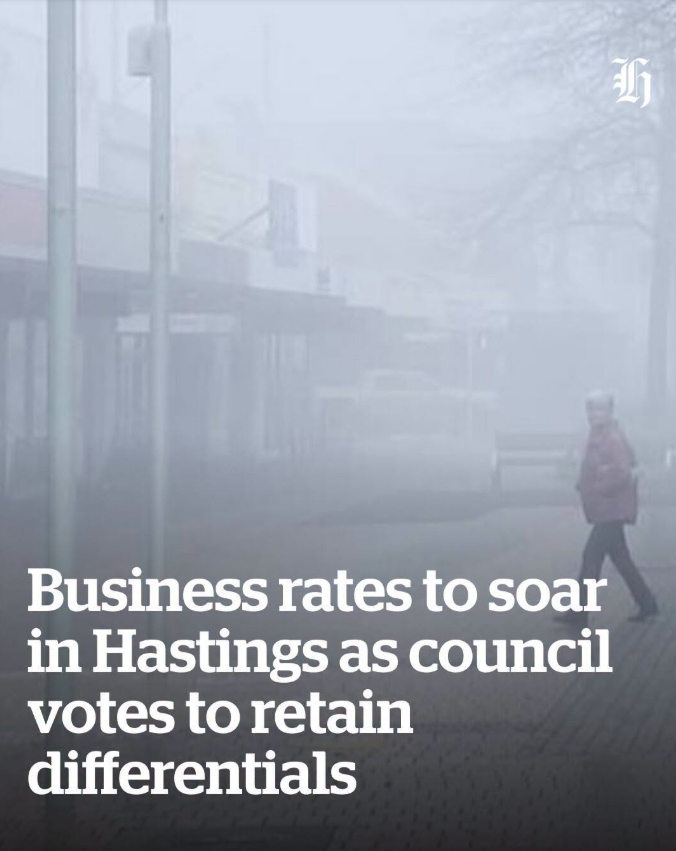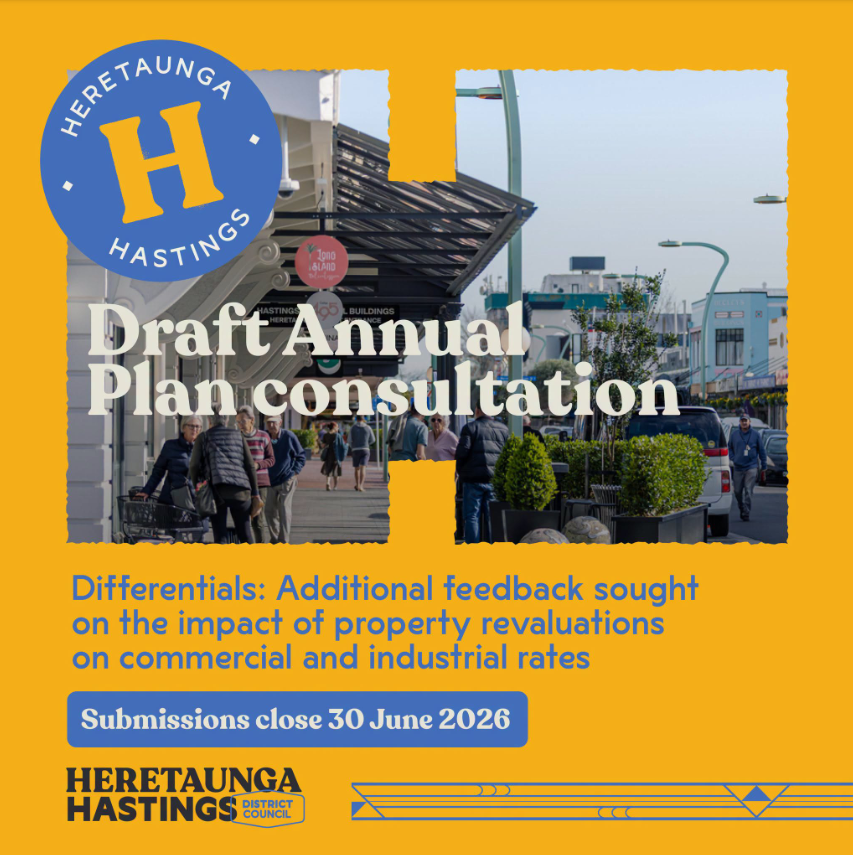
On 20 April 2026, Hastings District Council responded to my Official Information Act request regarding the fiscal implications of the McCain and Heinz Wattie's closures.
Air New Zealand: The Worst of Both Worlds
Article #452
Fifty percent government-owned, operating like a budget carrier, charging premium prices, Air New Zealand occupies the most uncomfortable position in aviation. It’s neither fish nor fowl: not quite private, not quite public, delivering neither the efficiency of true competition nor the service standards of genuine public ownership.¹
Welcome to the warm embrace of collectivism. It’s getting warmer, and not in a good way.
The Flightless National Carrier
The symbolism writes itself. Air New Zealand, like the kiwi, has become a flightless bird, grounded by contradictions, unable to soar because it refuses to commit. Government ownership was supposed to protect the national interest. Instead, it has created an airline that enjoys privileges without facing consequences: government contracts, preferential treatment, implicit bailout guarantees, all without the full discipline of the market or the scrutiny of complete public accountability.¹
When things go wrong, taxpayers are on the hook. When things go right, shareholders collect the dividends.
New Zealanders know this intimately: the airline received NZ$2.3 billion in Crown support during COVID-19.² The structural trap was set long before the current crisis.
The World is on Fire. Air NZ has a Newsletter.
On 8 April 2026, CEO Nikhil Ravishankar sent customers a carefully worded email. “Kia ora Nick,” it began warmly. He wanted to update customers on jet fuel prices. Fuel had surged from around US$85–90 a barrel to above US$200, effectively doubling Air New Zealand’s daily fuel bill from NZ$4 million to NZ$8.5 million. Schedule cuts for May and June were confirmed. More were promised to be “deliberate and carefully considered.”³
Warm. Reassuring. Human, even, which is ironic, given what you encounter when you actually try to contact the airline.
This crisis is not Air New Zealand’s alone. Iran’s effective closure of the Strait of Hormuz, through which over 20% of global seaborne jet fuel normally flows, has sent shockwaves through the entire industry.⁴ More than 14,000 flights globally have been cancelled since late February 2026.⁵
Ryanair’s Michael O’Leary has predicted summer cancellations of 5–10% across Europe.⁶ United Airlines’ CEO Scott Kirby has warned his carrier’s fuel bill could double to US$20 billion.⁷ Lufthansa’s CEO has assigned teams to contingency planning.⁸ SAS has cancelled over 1,000 flights in April alone.⁹ Energy analysts at Kpler warn that even if the Strait reopened tomorrow, prices would not fall quickly: production has been taken offline, and the market hangover could last well into 2027.¹⁰
The difference between Air New Zealand and those carriers is structural. Most are pure private enterprises; they face consequences. Air New Zealand faces a shareholder with a printing press.
The Numbers are Brutal
Forsyth Barr’s March 2026 report is stark: Air New Zealand could book a net loss of $226 million in FY2026, and $148 million in FY2027 if fuel costs remain elevated.¹¹ Macquarie analysts warn that capacity cuts will fall primarily on domestic and Tasman routes.¹² The share price has reflected the outlook, trading near its 52-week low at $0.48, down sharply from $0.64.¹³
The airline has already trimmed near-term capacity by 5%, with more reductions almost certain.
Watch for the Capital Raise
Here is what the CEO’s warm email does not say: if losses of this magnitude materialise over two financial years, Air New Zealand will need to raise capital. When it does, the New Zealand government, as 50.1% shareholder, faces an unavoidable choice. Participate, and write another substantial cheque from the public purse to protect its stake. Or decline, dilute, and begin the slow retreat from an ownership position it has held for decades.
Either outcome implicates taxpayers. Either outcome exposes the central absurdity of the current arrangement. Budget 2026… hold your breath.
Chatbots and Contempt
Try contacting Air New Zealand’s customer service, and you will discover the true face of modern collectivist enterprise: woeful service, declining standards, and a corporate structure that treats human interaction as an inconvenience to be automated away.
You are more likely to engage with a chatbot than a human, and the human, when you eventually find one, operates like a chatbot anyway—scripted, bounded, unable to resolve anything of substance. The airline’s answer to its service failures is not better people or better training, but better systems for apologising for the absence of both.
The Hospital Pass
That’s what recommending Air New Zealand has become, and nowhere is the gap between price and product more vivid than in business class, where Air New Zealand’s structural contradictions are most expensive to observe firsthand.
The airline’s new Business Premier cabin, rolling out across its Boeing 787 fleet through 2026, retains a herringbone configuration. Passengers sit angled toward the aisle rather than toward the window, the opposite of the reverse herringbone suites now standard on Qatar Airways, Singapore Airlines and Cathay Pacific.¹⁴ Standard Business Premier seats come equipped with a sliding privacy screen. Not a door: a screen.
A door costs extra. Specifically, NZ$820 (approximately US$487) extra on long-haul.¹⁵ There are four of them on the entire retrofitted aircraft.¹⁶ Aviation analysts reviewing the product have described the standard offering as “fairly underwhelming” compared to what the competition offers.¹⁷
You’d book Qantas if you could, but with Emirates disrupted by Iranian airspace closures, rerouting flights away from Gulf hubs, alternatives from New Zealand are thinner than they have been in years.¹⁸
Choose
New Zealand deserves better than this muddled middle ground. Our national carrier should be either a source of genuine pride (fully public, properly accountable, serving citizens) or a true competitor, privately owned and driven to excel.
Full public ownership means genuine accountability: real service obligations, routes chosen for public benefit, consequences for failure. Full privatisation means real competition, no bailouts, market discipline for a product that currently charges a premium for the privilege of facing a stranger across a narrow aisle.
What we have instead is the comfortable middle ground that serves nobody.
Make a choice. Commit to something. Because right now, our national carrier charges like Singapore Airlines, seats you in a layout from 2005, asks NZ$820 extra for a door, deploys a chatbot when you complain, and may shortly be asking the government for more money.
That’s not the warm embrace of collectivism. That’s the slow squeeze.
Nick Stewart
(Ngāi Tahu, Ngāti Huirapa, Ngāti Māmoe,
Ngāti Waitaha)
Financial Adviser and CEO at Stewart Group
Stewart Group is a Hawke's Bay and Wellington based CEFEX & BCorp certified financial planning and advisory firm providing personal fiduciary services, Wealth Management, Risk Insurance & KiwiSaver scheme solutions.
The information provided, or any opinions expressed in this article, are of a general nature only and should not be construed or relied on as a recommendation to invest in a financial product or class of financial products. You should seek financial advice specific to your circumstances from a Financial Adviser before making any financial decisions. A disclosure statement can be obtained free of charge by calling 0800 878 961 or visit our website, www.stewartgroup.co.nz
$3 at the Pump — Crisis, Panic, or a Lesson We Refused to Learn?
Article #449
The average price of unleaded 91 jumped 14 NZD cents over a single weekend — and suddenly, commentators are reaching for the kind of language we last heard during COVID. Back then, we fought over toilet paper. Today, the panic commodity is petrol.
Let us first take a breath and assess.
The cause: Iran’s effective closure of the Strait of Hormuz (which handles about a quarter of the world’s seaborne oil trade). This of course follows retaliatory strikes after a US and Israeli attack on Iran in late February. [1]
The effect: Global oil prices have surged past US $100 per barrel, with Brent and WTI hitting around US$110 to US$114 at the height of the crisis. That pain is not contained to the petrol forecourt. It is flowing into every corner of our economy simultaneously, because energy is embedded in the cost of producing virtually everything. [1]
The most visible casualty so far is Air New Zealand, another unfortunately familiar occurrence. Our majority state-owned carrier has cancelled approximately 1,100 flights through early May, impacting around 44,000 passengers. In USD, jet fuel spiked from around $85 per barrel before the conflict to between $150 and $200, with the refinery crack spread (the margin between crude oil and refined jet fuel) blowing out from $22 to as high as $115 per barrel. That’s a structural blow to an airline already recording losses, and it has suspended its full-year earnings guidance entirely because the numbers no longer make sense. [2–5]
Finance Minister Nicola Willis has cited New Zealand's 50 days of fuel supply as a form of reassurance, but the public must read the fine print carefully. That figure includes fuel still sitting on tankers at sea, in transit from the very region in crisis. The fuel physically on New Zealand soil is closer to 28–33 days, depending on the product. [6]
More concerning still, that onshore storage is heavily concentrated around the former Marsden Point site in the north. That means regional centres and the entire South Island operate effectively on just-in-time supply and sit at the end of an extra coastal-shipping leg that adds its own layer of vulnerability. If supply were completely cut off today, New Zealand could sustain itself for roughly a month. [6,7]
That is not 50 days — and it should reframe the conversation entirely.
Muldoon-era carless days, last deployed between July 1979 and May 1980, are being discussed as a last resort. The mere fact we’re having this conversation in 2026 should give everyone pause. [8]
This is where a Canny View requires plain speaking.
Energy is not a lifestyle choice. It is the oxygen of economic activity. Every business—whether moving freight, running a dairy farm, manufacturing product, or providing professional services—consumes energy somewhere in its cost structure. When that cost surges sharply and suddenly, the business faces exactly three options:
Pass the increase to the customer.
Absorb it through productivity gains and efficiency.
Close their doors.
There is no fourth option. This is precisely why energy price shocks are so broadly inflationary. They don’t strike one sector. They strike all sectors at once.
For shareholders and business owners, the message is clear. A viable business must pay its bills, pay its staff, and generate sufficient return to keep capital engaged. When a major uncontrollable cost input (like energy) doubles overnight, that margin compresses fast.
The businesses weathering this shock best are those that made deliberate investments in energy resilience during the quieter years. Fleet operators who transitioned to hybrid or electric vehicles, alongside conventional petrol and diesel workhorses, are finding their total fuel bill meaningfully lower today. Those with suitable rooftops or landholdings who installed solar are generating their own daytime electricity, reducing grid dependency when traditional energy costs are most volatile.
Neither investment requires ideological conviction, only the basic financial discipline of stress-testing a cost structure and acting before the stress arrives.
Resilience is built in calm weather, not in a storm.
Now to the harder conversation — one that goes well beyond oil.
New Zealand's coal reserves exceed 15 billion tonnes, spread across Waikato, Taranaki, the West Coast, Otago and Southland. Our West Coast bituminous coal is internationally prized for its exceptionally low sulphur, low ash, and low phosphorus content — a premium quality product valued by the global steel industry. Yet Genesis Energy's Huntly Power Station sources most of its coal from Indonesia, with imports surging 311% in 2024 as domestic gas supply fell faster than expected. [9–11]
We export quality. We import what we need to keep the lights on. It’s a paradox, not a viable strategy.
The same logic applies offshore. Geological surveys estimate a 90% probability that New Zealand holds undiscovered oil reserves of at least 1.9 billion barrels, with a 50% probability that the figure reaches 6.5 billion barrels. We are not a Saudi Arabia. But we are far from a barren rock. [12]
Which brings us to the captain's calls demanding accountability — plural, because there were more than one.
In 2018, then-Prime Minister Jacinda Ardern unilaterally banned all new offshore oil and gas exploration permits—no parliamentary vote, no Select Committee process, no national conversation. One announcement. Then, under the same Ardern government, New Zealand's only oil refinery at Marsden Point was closed and permanently decommissioned in 2022. The owner has since confirmed there is no prospect of restarting it; it would take billions of dollars and years of work to rebuild what took decades to establish. Associate Energy Minister Shane Jones described the closure as having fatally wounded New Zealand's fuel security. It’s difficult to argue otherwise this week. [13,14]
An uncomfortable but instructive parallel comes to mind. During Stalin's forced collectivisation in Ukraine in the early 1930s, a nation sitting atop some of the world's most productive agricultural land experienced a devastating famine while grain continued to be exported across its borders. The resources existed, and the policy choices negated them.
New Zealand is not Ukraine, and this is not the Holodomor, but the underlying dynamic—voluntarily denying access to domestic resources while importing vulnerability from abroad—is a pattern worth acknowledging.
A nation surrounded by grain, starving. A nation surrounded by hydrocarbons, panicking at the pump.
Muldoon would be baffled. His Think Big programme in the early 1980s was explicitly designed to convert New Zealand's own natural gas into synthetic fuels, fertiliser and methanol, and reduce oil import dependency following the 1973 energy shock. Think Big was expensive and its outcomes were mixed. But the underlying instinct — that a small, geographically isolated nation at the bottom of the world needs to take energy sovereignty seriously — wasn’t wrong. [15]
Domestic production does not fully insulate a small open economy from global prices. But it reduces the foreign exchange drain of pure import dependency, supports local employment, generates royalties and tax revenue for the Crown, and critically – reduces exposure to the shipping disruptions and geopolitical shocks we are living through right now. In times of crisis, a country with some domestic production and refining capacity is materially more resilient than one with neither.
The toilet paper panic of 2020 passed, and we learned almost nothing from it. Let us use this one differently: we need to have the serious, unsentimental conversation about energy sovereignty that we should have started long before Ardern's captain's call made it more urgent than it ever needed to be. We’ve missed the boat on energy resilience, and the storm has arrived; all we can do now is fortify ourselves to better weather the next one.
Nick Stewart
(Ngāi Tahu, Ngāti Huirapa, Ngāti Māmoe,
Ngāti Waitaha)
Financial Adviser and CEO at Stewart Group
Stewart Group is a Hawke's Bay and Wellington based CEFEX & BCorp certified financial planning and advisory firm providing personal fiduciary services, Wealth Management, Risk Insurance & KiwiSaver scheme solutions.
The information provided, or any opinions expressed in this article, are of a general nature only and should not be construed or relied on as a recommendation to invest in a financial product or class of financial products. You should seek financial advice specific to your circumstances from a Financial Adviser before making any financial decisions. A disclosure statement can be obtained free of charge by calling 0800 878 961 or visit our website, www.stewartgroup.co.nz
References
NZ Herald, Petrol prices expected to hit at least $3 a litre in some places, March 2026
Flight Global, Fuel price volatility prompts Air New Zealand to suspend earnings guidance, March 2026
Global Banking & Finance Review, Air New Zealand cut flights, fuel price surge wreaks havoc, March 2026
AeroTime, Air NZ to cut 1,100 flights amid soaring fuel prices, March 2026
NZX Announcement, Air New Zealand suspends FY2026 guidance, March 2026
RNZ, How much fuel does NZ have — and what happens if we run out?, March 2026
Infonews, NZ Fuel Situation — South Island Vulnerabilities, March 2026
NZ Herald, Carless days are no solution to an oil shock (Liam Dann), March 2026
Wikipedia, Coal in New Zealand, citing USGS and MBIE data
USGS Fact Sheet 2004-3089, New Zealand Coal Resources
Ministry of Business, Innovation & Employment, Energy in New Zealand 2025 — Coal
New Zealand Parliament, The Next Oil Shock?, citing Institute of Geological and Nuclear Sciences 2009
NZ Herald, First look: Inside Northland's Marsden Point oil refinery post-shutdown, November 2024
NZ Herald, Inquiry into reopening New Zealand's only oil refinery, March 2024
Wikipedia, Think Big, New Zealand Third National Government economic strategy
Iran, Oil, and Your Retirement Savings: Separating the Signal from the Noise
Article # 447
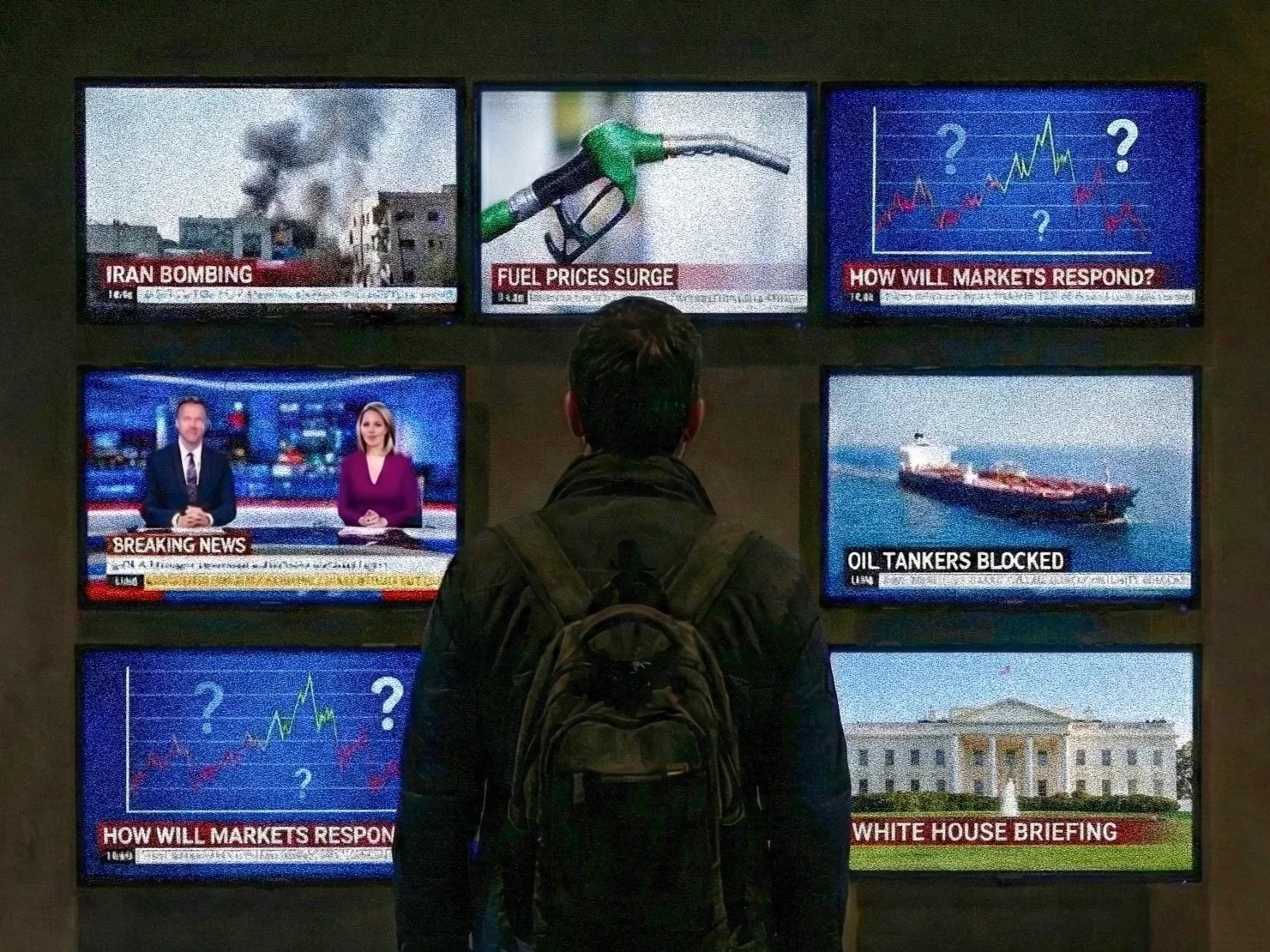
The New Zealand media has had a busy week connecting the US and Israeli strikes on Iran to your wallet. Some of it is legitimate. Some of it is noise dressed up as financial guidance. Knowing which is which - now that’s useful.
Let's start with what’s real.
The Strait of Hormuz: A known pressure point
The Strait of Hormuz is a roughly 33km-wide chokepoint between the Persian Gulf and the Gulf of Oman. Around 20% of the world's daily oil supply and a similar share of global liquefied natural gas trade passes through it every single day, mostly bound for China, India, Japan, and South Korea.¹
This waterway has been a pressure point for decades. Iran mined it during the Iran-Iraq War in the 1980s, prompting direct US military intervention in what became known as the Tanker War (during which more than 500 vessels were damaged or destroyed).² In December 2011, Iran threatened closure in response to Western sanctions, triggering the deployment of a US-British-French naval flotilla. In 2019, tanker seizures and attacks on shipping spiked tensions again. In June 2025, Israel's strikes on Iranian nuclear facilities prompted Iran's parliament to pass a motion recommending closure, though that did not materialise into a full blockade.³
The point is this: the Strait of Hormuz has been a geopolitical instrument for Iran for more than 40 years. Successive US administrations, allies, and global energy markets have navigated those threats repeatedly. Every episode generated alarming coverage. Yet every episode passed. That does not make the current situation trivial, but it does provide context that breathless headlines rarely bother to include.
New Zealand's real exposure
Importantly, New Zealand has direct and specific economic exposure to this conflict.
According to the Meat Industry Association (MIA), nearly all of New Zealand's red meat exports to the Gulf Cooperation Council (Bahrain, Kuwait, Oman, Qatar, Saudi Arabia, and the UAE) travel through the Strait of Hormuz. In 2025, that trade was valued at $298 million, including $166 million in chilled exports, which are the most time-sensitive.⁴
Supply chain firm Kotahi, which handles freight on behalf of Fonterra and Silver Fern Farms, has confirmed that all major shipping lines have suspended services through the strait, with some 4,000 containers of New Zealand export cargo currently in transit.⁴
Fuel prices are also a legitimate concern. New Zealand no longer imports crude directly from the Middle East, but petrol is priced in a global market. Brent crude spiked more than 8% when trading opened after the weekend strikes.⁵ Analysts at JPMorgan and Citigroup have warned that sustained disruption could embed a significant geopolitical premium for weeks.
The New Zealand Ministry of Foreign Affairs and Trade has noted that rising fuel costs do not just show up at the pump. They pervade the economy through transport, logistics, and consumer prices – and may force the Reserve Bank to respond with always-dreaded interest rate adjustments.⁶
One lesser-discussed exposure: approximately one-third of the world's fertiliser trade also passes through the Strait of Hormuz, meaning prolonged disruption could eventually flow through to agricultural input costs. This is directly relevant to a primary-export economy like New Zealand's. ⁷
So yes, there are real and specific things worth monitoring here. Beyond fearmongering, we must consider geography and economic forces decades in the making.
Now for the noise...
Here’s where some of the coverage starts to serve the headline more than the reader.
At 7:56 am on Monday, 2 March, before Wall Street had even opened for the day, 1News published a piece headlined "Iran attack sparks warning for KiwiSaver, fuel, inflation."
Readers were told to brace for volatility, expect red ink in their KiwiSaver, and anticipate a flight to safer assets.⁸ By the time New Zealand investors had read that article over their morning coffee, absorbed the alarm, and perhaps reached for their phones to switch funds... Wall Street had opened, dipped 1.2%, and was already recovering. The S&P 500 closed that Monday virtually unchanged, finishing the session up just 0.04%.⁹
The warning had outrun the facts by an entire trading day.
Alarming coverage is produced in real time, often ahead of the facts. By the time reality arrives, in this case, a market that largely shrugged off the initial shock and bought the dip, most people have already absorbed the panic as truth and may have acted on it.
Advising the average investor to urgently check their KiwiSaver balance and consider switching funds is, for most people, bad advice dressed up as financial concern. This applies equally to any well-constructed investment portfolio underpinned by a comprehensive financial plan.
The latest data from the Retirement Commission puts the average KiwiSaver balance at $37,079 and the average member age at approximately 44.¹⁰ That means the typical New Zealand investor has roughly 20 to 25 years of accumulation ahead before they reach 65. Long-term KiwiSaver growth funds have historically returned between 7% and 9% annually.¹¹ Across that kind of horizon, even a meaningful short-term market dip is a rounding error in the final outcome.
The pattern markets have seen repeatedly, last June's brief Israel-Iran exchange being a useful recent reference point, is as follows:
Equity markets sell off sharply on geopolitical shock.
They recover once it becomes clear the worst-case scenario has not materialised.
Investors who switched to conservative funds during that episode locked in losses they then missed recovering as markets rebounded.
The same logic applies whether you hold KiwiSaver, managed funds, or a direct share portfolio.
A comprehensive financial plan is engineered to withstand volatility. Abandoning it because of a week of alarming headlines is not a financial decision; it is an emotional one.
Four genuine reasons to review your investments
The right time to review your asset allocation or contribution settings is when your circumstances change — not when the news cycle does.
Has your income shifted significantly?
Are you approaching 65 and still in an aggressive growth fund that no longer reflects your timeline?
Has your risk tolerance genuinely changed — not because of a week of coverage, but because of a considered, honest look at your financial position and goals?
Are there changes to your broader financial plan that warrant a portfolio rebalance? These are all valid triggers for a conversation with your financial adviser.
But if your goals, your timeline, your income, and your broader financial picture are the same today as they were a fortnight ago, and for most people they are, the rational position is to stay the course.
A well-built investment portfolio is designed to absorb decades of global volatility. Many such portfolios have weathered the Global Financial Crisis, the COVID-19 crash, the 2022 rate shock, and last June's regional conflict. Each of those episodes generated similar headlines. Each time, disciplined investors who stayed the course came out ahead of those who did not.
When others are running from the fire
Warren Buffett has made a career of running towards financial fires, not away from them. Writing in the depths of the Global Financial Crisis, his philosophy spoke to financial discipline over the furore of the day: "Whether we're talking about socks or stocks, I like buying quality merchandise when it is marked down."¹²
The irony of a market downturn? Precisely when assets go on sale is when most investors want nothing to do with them; it’s when they are expensive and rising that everyone wants in. Buffett's instruction has always been the opposite: be fearful when others are greedy, and greedy when others are fearful. That’s not a comfortable stance when headlines are blaring an alarm. But discomfort and bad decision-making are not the same thing.
This is where a structured, disciplined rebalancing strategy earns its keep.
When equities fall, and fixed income or defensive assets hold their ground, a rebalancing framework triggers a deliberate, rules-based response: trim what has held up, add to what has fallen. Not because of a hunch. Not because of a headline. Because the plan said so before any of this happened.
That’s the discipline Buffett is describing. Not panic, not paralysis — but a pre-committed process that removes emotion from the equation and replaces it with structure. The investors who do best through periods like this are not the ones who predicted the conflict or called the bottom. They’re the ones who had a plan, stuck to it, and let systematic rebalancing do what it was designed to do.
Discipline pays off
The media's job is to make you read the next paragraph. Your financial plan's job is to compound quietly over decades. These two objectives are not aligned – and it’s worth remembering that when the very same article explaining why oil prices are rising pivots abruptly to urging you to check your KiwiSaver.
There is genuine news here worth following closely: shipping disruptions, petrol prices, fertiliser costs, red meat export disruptions, and what unfolds in the Strait of Hormuz over the coming weeks are all legitimately important to New Zealand households and businesses. Read those stories. Understand the exposure.
But when the coverage drifts into urging reactive investment decisions based on today's headlines, that is where you put the phone down, flick on the kettle, and make yourself a brew instead of making rash investment decisions.
Your future self will thank you.

Nick Stewart
(Ngāi Tahu, Ngāti Huirapa, Ngāti Māmoe,
Ngāti Waitaha)
Financial Adviser and CEO at Stewart Group
Stewart Group is a Hawke's Bay and Wellington based CEFEX & BCorp certified financial planning and advisory firm providing personal fiduciary services, Wealth Management, Risk Insurance & KiwiSaver scheme solutions.
The information provided, or any opinions expressed in this article, are of a general nature only and should not be construed or relied on as a recommendation to invest in a financial product or class of financial products. You should seek financial advice specific to your circumstances from a Financial Adviser before making any financial decisions. A disclosure statement can be obtained free of charge by calling 0800 878 961 or visit our website, www.stewartgroup.co.nz
Article no. 447
References
[1] US Energy Information Administration. (2024). Strait of Hormuz — World's Most Important Oil Chokepoint. https://www.eia.gov/international/analysis/special-topics/World_Oil_Transit_Chokepoints
[2] Ratner, M., Lawson, A., & Brock, J. (2025). Iran Conflict and the Strait of Hormuz: Oil and Gas Market Impacts. Congressional Research Service. https://www.congress.gov/crs-product/R45281
[3] Times of Israel. (2026, March 1). Strait of Hormuz: Key Oil Route in Middle of Iran Crisis. https://www.timesofisrael.com/strait-of-hormuz-key-oil-route-in-middle-of-iran-crisis/
[4] Meat Industry Association NZ / Kotahi NZ. (2026, March 1). Statements on Strait of Hormuz shipping disruption. Reported in NZ Herald. https://www.nzherald.co.nz/business/us-iran-conflict-threatens-nz-red-meat-exports-via-strait-of-hormuz
[5] Franck, T., & Imbert, F. (2026, February 28). Markets Brace for Impact After US Strikes Iran. CNBC. https://www.cnbc.com/2026/02/28/markets-brace-for-impact-following-us-military-strikes-against-iran.html
[6] New Zealand Ministry of Foreign Affairs and Trade. (2025, July). NZ Economy Not Immune to Conflict in the Middle East. https://www.mfat.govt.nz/en/trade/mfat-market-reports/nz-economy-not-immune-to-conflict-in-the-middle-east-july-2025
[7] Stojanovic, U., & Bradshaw, T. (2026, March 1). Strait of Hormuz: If the Iran Conflict Shuts the World's Most Important Oil Chokepoint, Global Economic Chaos Could Follow. The Conversation. https://theconversation.com/strait-of-hormuz-if-the-iran-conflict-shuts-worlds-most-important-oil-chokepoint-global-economic-chaos-could-follow-277199
[8] Edmunds, S. (2026, March 2). Iran Attack Sparks Warning for KiwiSaver, Fuel, Inflation. RNZ / 1News. Published 7:56am. https://www.1news.co.nz/2026/03/02/iran-attack-sparks-warning-for-kiwisaver-fuel-inflation/
[9] CNBC Markets Desk. (2026, March 2). Stock Market Today: S&P 500 Ends Monday Just Above the Flatline, Rebounding from Sharp Declines. CNBC. https://www.cnbc.com/2026/03/01/stock-market-today-live-update.html
[10] Reyers, M. (2025, March). KiwiSaver Member Data — December 2024. Te Ara Ahunga Ora Retirement Commission / Melville Jessup Weaver. Reported in: Edmunds, S. What Average KiwiSavers' Balances Are at Your Age. RNZ News. https://www.rnz.co.nz/news/business/545015/what-average-kiwisavers-balances-are-at-your-age
[11] MoneyHub NZ. (2024). Average KiwiSaver Balance by Age. https://www.moneyhub.co.nz/average-kiwisaver-balance-by-age.html
[12] Buffett, W. (2008). Berkshire Hathaway Inc. Chairman's Letter to Shareholders. Berkshire Hathaway. https://www.berkshirehathaway.com/letters/2008ltr.pdf
28 Investment Principles That Actually Work When Markets Don't Cooperate
Article # 442
I've watched families navigate decades of volatility: crashes, recoveries, euphoria, panic. The ones who preserve wealth across generations don't have secret information or perfect timing. They follow simple rules, consistently.
February has 28 days. To ring it in, here are 28 guiding principles that have stood the test of time regardless of market activity.
1. The market rewards patience, not prediction.
Most noise isn't information. The constant stream of commentary, analysis, and breaking news creates the illusion that staying informed means staying ahead. It doesn't. The market moves on fundamentals that reveal themselves slowly, not on headlines that change hourly.
2. Focus on what you can control: Costs, discipline, diversification, behaviour.
You cannot control returns. You cannot control when recessions arrive or when bull markets end. But you can control how much you pay in fees, how consistently you invest, how broadly you spread your risk, and how you respond when fear or greed takes hold.
3. You don't need to beat the market. You just need to capture it.
The obsession with outperformance drives investors towards complexity, higher costs, and ultimately, disappointment. Capturing market returns through low-cost, diversified portfolios has built more wealth over time than the pursuit of alpha ever has.
4. The simplest portfolio is often the smartest.
Complexity rarely adds value. It adds cost, confusion, and opportunity for error. A straightforward allocation across global equities and bonds, rebalanced systematically, has outperformed the vast majority of elaborate strategies.
5. Volatility is the price of admission.
Don't demand returns without accepting the ride. Equities deliver premium returns over time, because of fluctuations in the short term. If you cannot stomach the volatility, you don't deserve the returns.
6. Time in the market matters more than timing the market. Always.
Missing just the 10 best days over a 20-year period can cut your returns nearly in half. Funnily enough, the best days often follow the worst ones – so it’s hard to capture them after getting cold feet on the downswing. Staying invested through the chaos is what separates wealth-builders from market-timers.
7. Diversification is a dark horse.
Its power is revealed over decades, not days. When one asset class stumbles, another steadies the ship. The benefit isn't dramatic in any one year, but over a lifetime of investing, it's the difference between weathering storms and being swept away by them.
8. Your plan should be built on evidence, not emotion.
Especially when emotions run high. When markets crash, fear whispers that this time is different and worse than any before. When markets soar, greed tells you that you're missing out. Evidence and decades of market history tell a different story – a much more trustworthy one.
9. Chasing performance is a tax on impatience.
Last year's winners become this year's laggards with predictable regularity. By the time a fund or strategy appears on a "best performer" list, the opportunity has usually passed. Avoid getting swept up in the furore.
10. The market has already priced in what everyone knows.
You don't need to outguess it. If information is public, it's already reflected in prices. Your edge as an investor isn't superior information, it's superior behaviour.
11. A disciplined strategy beats a brilliant prediction. Every time.
Predictions fail. Discipline endures. The investor who follows a consistent plan through all market conditions will outperform the ‘strategist’ who tries to predict turning points.
12. Your behaviour matters more than your products.
Panic is more expensive than fees: selling in a downturn locks in losses, while buying at market peaks locks in mediocre returns. Managing your behaviour by staying calm, and staying invested, matters far more than optimising your expense ratio by a few measley basis points.
13. You don't need the perfect moment.
The moment you start is perfect enough. Markets climb over time. Waiting for a correction before investing often means waiting forever. Start now. Adjust as you go.
14. Rebalancing is the quiet hero of long-term returns.
It forces buy-low, sell-high. When equities surge, rebalancing trims them back. When they crash, rebalancing buys more. It's counter-intuitive, uncomfortable… and extraordinarily effective over time.
15. The best portfolios feel boring.
Boredom is not a bug, it's a feature. If your portfolio keeps you up at night with excitement, you’re probably taking on unnecessary risk. Wealth is built slowly, quietly, and without drama.
16. Markets recover more often than they collapse.
History is your friend. Every bear market in history has eventually given way to a new bull market. Crashes feel permanent in the moment. They never are – as the adage goes, “this too shall pass.”
17. Ignore headlines.
They're written to sell attention, not build wealth. Financial media thrives on urgency and alarm. Your portfolio should thrive on patience and perspective.
18. Compounding works best when you don't interrupt it.
Let time do the heavy lifting. Albert Einstein allegedly called compound interest the eighth wonder of the world. But, it only works if you leave it alone – every time you exit the market, you reset the clock.
19. Costs compound too.
Costs compound just like returns. Pay for advice that adds value, not for products that don't. The difference between value and waste always reveals itself in the fullness of time.
20. Bad days don't destroy portfolios. Bad decisions do.
Markets fall. That's normal, and things will swing back the other way. Selling during the fall, abandoning your plan, or fleeing to cash – those are the decisions that inflict permanent damage.
21. Not every risk deserves a reward.
Factor premiums do. Stocks are riskier than bonds, so they should deliver higher returns. Small-cap and value stocks have historically outperformed over long periods. These are risks worth taking. Concentrated bets on individual stocks or sectors? Not so much.
22. Your portfolio should be built around you, not around the news cycle.
Your goals, your time horizon, and your risk tolerance should dictate your allocation. Not the latest economic forecast or geopolitical crisis.
23. You don't need to predict the future.
…But you do need a strategy that survives it. Robust portfolios aren't built on forecasts. They're built on diversification, discipline, and the recognition that uncertainty is permanent.
24. Stay invested, stay diversified, stay disciplined.
The rest is commentary. If you do these three things consistently, you will be fine. Better than fine, in fact. You'll be wealthier than the vast majority of investors who spend their lives chasing the next opportunity.
25. Wealth isn't created in moments of excitement.
It's created in years of consistency. The investors who succeed aren't the ones who make brilliant trades or perfectly time the market. They're the ones who show up, year after year, regardless of conditions. Consistency compounds.
26. Your worst investing day feels catastrophic. Your best investing decade feels inevitable.
Perspective matters. In the moment, a 20% drawdown feels like the end. Twenty years later, it's a footnote. Keep the long view. Stay the course.
27. Successful investors are more patient than ‘smart’.
Intelligence helps, but temperament wins out every time. The ability to sit still, to do nothing when everyone else is panicking or euphoric, is worth more than any financial qualification.
28. Markets don't care about your timeline. Build a plan that doesn't care about the markets.
You might need money in five years for a house deposit or in thirty years for retirement. The market will do what it does regardless. Structure your portfolio around your needs, not market predictions, and you'll sleep better through every cycle.
Remember: Markets will always be chaotic. Your response doesn't have to be.
Follow the rules (and seek professional advice)
These principles work. But they work best when you have someone in your corner who isn't conflicted by commissions, product sales, or institutional agendas.
Seek independent, impartial advice that puts you first and foremost. You are the sun, not the moon: your financial plan should orbit around you, your goals, your circumstances. Not around what someone else needs to sell.
Nick Stewart
(Ngāi Tahu, Ngāti Huirapa, Ngāti Māmoe, Ngāti Waitaha)
Financial Adviser and CEO at Stewart Group
Stewart Group is a Hawke's Bay and Wellington based CEFEX & BCorp certified financial planning and advisory firm providing personal fiduciary services, Wealth Management, Risk Insurance & KiwiSaver scheme solutions.
The information provided, or any opinions expressed in this article, are of a general nature only and should not be construed or relied on as a recommendation to invest in a financial product or class of financial products. You should seek financial advice specific to your circumstances from a Financial Adviser before making any financial decisions. A disclosure statement can be obtained free of charge by calling 0800 878 961 or visit our website, www.stewartgroup.co.nz
Article no. 442
Reflecting on 2025: A Final Canny View for the Year
As we close the books on another eventful year, I want to share some final reflections before I put away my pen and keyboard for a well-earned break.
The Year That Was
2025 has been a masterclass in the unpredictable nature of markets.
We began the year with President Trump's inauguration and the subsequent tariff theatre that sent shockwaves through global markets in March and April. Despite a sharp -19% drawdown that tested even the most seasoned investors' resolve, global equity markets have delivered another year of above-average returns.
It's a powerful reminder that short-term turbulence is simply the price we pay for long-term prosperity.
The Dog in the Kennel
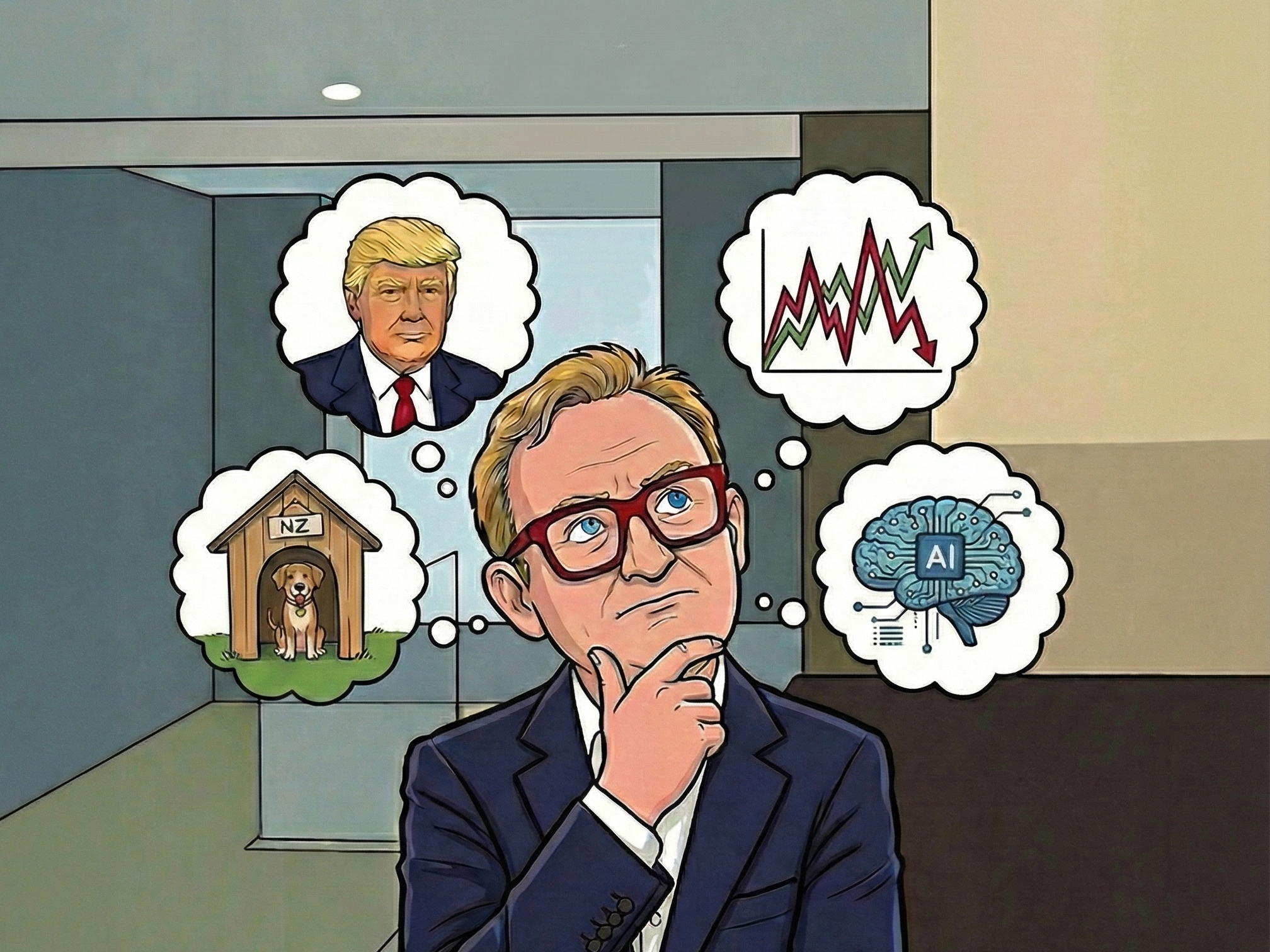
While many global markets have been out having fun (celebrating AI breakthroughs, peace deals, and strong returns) our New Zealand market has been in the kennel, watching the party from afar. It's been a challenging period for local investors who've seen the disparity between domestic and international performance grow increasingly stark.
Yet – every dog has its day. Recent economic data suggests our dog might be stirring. The balance of trade is looking favourable, and commodity markets for our protein exports remain strong.
These are the foundations that future returns are built upon. Markets move in cycles, and what seems forgotten can suddenly become fashionable again. The New Zealand market won't stay in the kennel forever. Patient investors who maintain diversified portfolios will be positioned to benefit when our local market eventually has its turn in the sun.
Three Lessons Worth Keeping
First, overvalued markets can still grow. The commentators warning about stretched valuations at the start of the year weren't wrong about the numbers; they were just wrong about what those numbers meant for forward returns. Valuation tells us little about timing, and waiting for the "perfect" entry point often means missing out entirely.
Second, knowing what will happen doesn't tell you how markets will react. The tariff announcements in April proved this brilliantly. Everyone knew they were coming, yet the market's bottom came not when clarity arrived, but when uncertainty was at its absolute peak. This is why we plan rather than predict.
Third, long-term planning beats short-term prediction every time. We're living through an AI revolution that will reshape everything, yet we cannot know exactly how or when. The solution isn't better predictions, it's better preparation. A solid financial plan with appropriate asset allocation, a margin of safety, and the discipline to stay invested remains your best defence against an unknowable future.
The Permanent Condition
Uncertainty isn't new, it's the permanent condition of investing. The headlines change, the crises evolve, but the fundamental truth remains: we cannot predict, but we can prepare.
Those who stayed invested through April's anxiety have been rewarded. Those who will stay invested through next year's inevitable turbulence will likely say the same thing in December 2026.
A Time for Gratitude
As I reflect on another year of writing, research, and market commentary, I'm grateful for the readers who engage thoughtfully with these ideas. Whether you're a long-time follower or stumbled across this column recently, thank you for your time and attention.
My aim has always been to cut through the noise and shine a light on the principles that actually matter when it comes to building and protecting wealth. If these weekly reflections have helped you think more clearly about your financial future, make smarter decisions with your capital, or simply feel more confident staying the course during turbulent times, then the effort has been worthwhile.
Safe Travels!
To those of you travelling nationally or abroad over the holiday period, safe travels. To those staying home, enjoy the slower pace and time with loved ones. Whatever your plans, I hope you find moments of rest and renewal.
As for me, I'll be stepping away from the keyboard for two weeks to recharge. Our first article of 2026 will land on 10 January as we look forward to the year ahead. Until then, this will be my last dispatch for 2025.
Whatever 2026 has in store, we'll navigate it together.
See you in the new year.
Nick Stewart
(Ngāi Tahu, Ngāti Huirapa, Ngāti Māmoe, Ngāti Waitaha)
Financial Adviser and CEO at Stewart Group
Stewart Group is a Hawke's Bay and Wellington based CEFEX & BCorp certified financial planning and advisory firm providing personal fiduciary services, Wealth Management, Risk Insurance & KiwiSaver scheme solutions.
The information provided, or any opinions expressed in this article, are of a general nature only and should not be construed or relied on as a recommendation to invest in a financial product or class of financial products. You should seek financial advice specific to your circumstances from a Financial Adviser before making any financial decisions. A disclosure statement can be obtained free of charge by calling 0800 878 961 or visit our website, www.stewartgroup.co.nz
Article no. 438
When Ideology Replaces Analysis: The Sparrow Lesson for Investors
It's fairly well known that Mao Zedong's Great Leap Forward (1958–1962) ended in one of history's deadliest famines: tens of millions died, villages emptied by hunger, fields stripped bare. What's less well known is how a war on sparrows helped set the catastrophe in motion. [1]
‘Ed Brown’ by Michael Parekowhai, 2000 - A favourite of Nick’s that hangs on the wall at home.
In 1958, Mao launched the Four Pests Campaign, targeting rats, flies, mosquitoes… and sparrows. The tiny birds, he decreed, were "enemies of the people" for daring to eat the people's grain. [2]
And so, an entire civilisation mobilised against the feathered menace. Schoolchildren banged pots and pans in the streets, peasants drummed on washbasins, and factory sirens screamed for hours to keep the birds in flight until they fell dead from exhaustion. Nests were torn down, eggs smashed, and chicks stomped into the earth.
The results were biblical. In Beijing alone, more than a million sparrows were killed in a matter of weeks. Rural communes competed to see who could pile the highest mountain of avian corpses, a kind of grotesque festival of progress.
But victory, when it came, was short-lived. The sparrows, it turned out, had been eating more insects than grain. Within a year, the skies were empty, and the earth was crawling. Locusts rose like living clouds, devouring fields from horizon to horizon. Peasants watched in horror as the crops disappeared into the mandibles of an unstoppable plague of their own making.
Rather than admit his mistake, Mao doubled down on absurdities. He replaced the sparrows with imported Soviet "science" – the theories of Trofim Lysenko, an agronomist who believed that crops could be re-educated through hard labour. Genetics was bourgeois nonsense, Lysenko said; what mattered was enthusiasm. If you ploughed deeper, planted closer, and shouted revolutionary slogans loudly enough, the harvest would multiply.
So, fields were churned to depths that eviscerated the biome, seedlings were planted shoulder to shoulder until none could breathe, and bureaucrats inflated yields to impossible heights. Mountains of fake grain were reported; much of the real grain was exported to show socialist success.
By 1960, China was starving. Whole provinces were dying in silence. Still, the propaganda blared: "The people's communes are good!"
A survivor later put it simply: "We killed the birds, and then the insects ate everything else."
New Zealand's Sacred Cow
We have our own version of Lysenko's ideology. You've heard it at every barbecue, every family gathering, every pub conversation about money:
"You can't go wrong with bricks and mortar."
"Buy land – God's not making any more of it."
"Rent money is dead money."
"Safe as houses."
"Property always goes up."
For two decades, these mantras proved prophetic. House prices in Auckland rose 500% between 2000 and 2021. Kiwi households saw their home become their retirement plan, their children's inheritance, their ticket to prosperity. Property investment became a religion, complete with its own prophets (real estate agents), its own evangelists (property coaches), and its own scripture (Rich Dad Poor Dad).
The scriptures were simple: leverage to the hilt, buy multiple rentals, negative gear against your income, and watch the capital gains roll in. Interest rates were at historic lows (and surely they'd stay there forever). The government needed house prices to keep rising; from pensioners to banks, the entire economy seemed to float on residential property values.
Alas - ideology, no matter how many believers it has, eventually meets mathematical reality.
When the Locusts Arrived
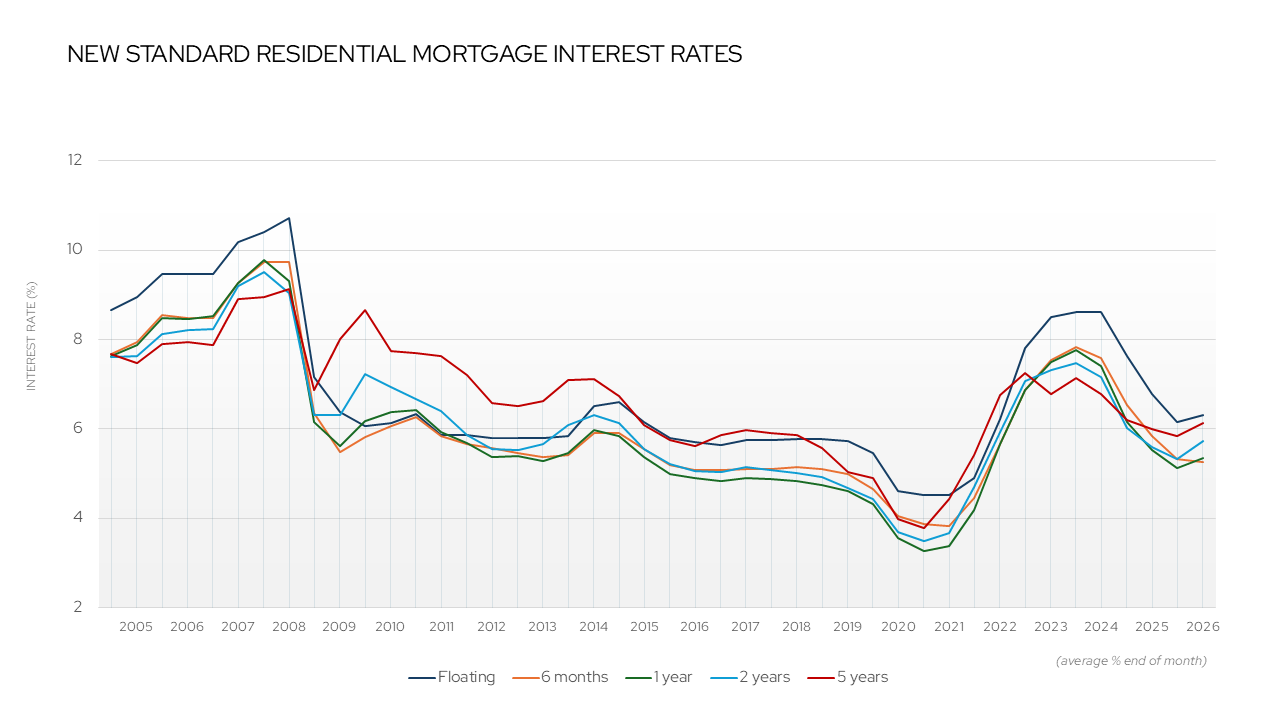
When the Reserve Bank lifted the Official Cash Rate from 0.25% to 5.5% between 2021 and 2023, the proverbial locusts began to swarm and feast. [3]
Investors who'd stretched to buy rental properties on interest-only loans at 2.5% suddenly faced repayments double what they'd planned for. Those who'd bought at the peak in 2021, with the assumption that prices would continue relentlessly marching upward, now watched their equity disappear into the maw of change.
The median house price in New Zealand has fallen 18% from its 2021 peak according to CoreLogic, with steeper declines in some regions. In Wellington, prices dropped over 20%. [5], [4]
Investors who bought at the top, banking on endless capital gains to compensate for negative cash flow, are now holding properties worth less than their mortgages. Negative equity isn't just an American problem from the 2008 crisis anymore; it's arrived in Epsom and Island Bay, in Christchurch and Hamilton. [5]
Mortgage stress has become a daily reality for thousands of New Zealand families. What was affordable at 2.5% is crushing at 7%. Property gambles that made sense when you could lock in cheap debt for years, now bleed money every month.
The Property Value Fundamentals We Ignored
Like Mao's bureaucrats ignoring the ecology of pest control, New Zealand ignored the fundamentals that underpin property values:
1. Debt serviceability
We convinced ourselves record-low interest rates were the new normal; a pleasantly permanent feature of the economic landscape.
They weren't. They were weather, not climate.
Anyone who'd stress-tested their mortgage at 7% rates had a good idea what this would look like, but most didn't bother. After all, the Reserve Bank had signalled rates would stay low until 2024, hadn't they? (They had. They were wrong.)
2. Yield vs. cost
Rental properties returning 3% gross yield while mortgages cost 7% represents what economist Hyman Minsky termed "Ponzi finance"—where income flows cover neither principal nor interest charges, requiring continuous new debt or capital appreciation to survive [6]. When prices stopped rising, the mathematics became unavoidable. You can't lose money every month and call it investing just because you hope the asset will appreciate.
3. Supply and demand
Yes, God's not making more land. But man is making more zoning laws, more construction, and more high-density housing. Auckland's recent upzoning has added the potential for tens of thousands of new dwellings. National's push for urban intensification is changing the supply equation.
Supply does respond to price eventually. The assumption that demand would endlessly outstrip supply was ideology, not analysis.
4. Demographic and economic shifts
Net migration swings wildly:
We saw massive outflows to Australia when its economy boomed.
Birth rates are falling.
Working from home changed where people want to live, making provincial cities more attractive.
How to Avoid Being the Sparrow Killer
No investment is exempt from fundamental analysis – not even the quarter-acre Kiwi dream. Here’s what you need to do:
Test your assumptions first
Before buying property (or any investment), ask the hard questions: Can I afford this if interest rates hit 8%? What if the property stays vacant for three months? What if it needs a $30,000 roof replacement? What if prices don't rise for a decade—can I still hold on? If your investment only works under best-case scenarios, you're not investing—you're gambling with borrowed money.
Recognise ideology masquerading as wisdom
When someone says "you can't go wrong with property”: ask them about Japan, where house prices fell for fifteen consecutive years after 1991 with Tokyo property losing 60% of its value. Or Ireland, where property crashed 50% in 2008-2012. Or Detroit, where homes now sell for less than second-hand cars. [6]
The phrase "you can't go wrong" is the most dangerous in investing. You absolutely can go wrong with property, shares, bonds, or any other asset – when you pay too much, borrow too heavily, or ignore the fundamentals.
Understand that all assets are priced relative to alternatives
When term deposits paid 0.5%, property's 3% gross yield looked attractive by comparison. At 5.5% risk-free rates from the bank, suddenly that leveraged rental property earning 3% gross (maybe 1% after rates, insurance, maintenance, and management) looks substantially less clever. Capital always flows to its best risk-adjusted return. When safe returns become attractive again, risky assets must reprice.
Seek Wise Counsel
Honest, professional financial advice isn’t just valuable in these situations; it’s essential.
Not the mate at the barbecue repeating what worked in 2015. Not the property spruiker selling $5,000 weekend seminars on wealth creation. Not the Instagram influencer with a Lamborghini, a course to sell, and a P.O. box in the Cayman Islands.
Find an adviser who'll tell you hard truths instead of comfortable lies. Someone who'll stress-test your assumptions, challenge your thinking, and ask the questions you don’t want to acknowledge:
What if you're wrong?
What if rates stay high for five years?
What if prices don't recover for a decade?
What does your portfolio look like if this happens?
The best financial advice often sounds boring. That’s because it is boring: it involves diversification across asset classes, appropriate leverage you can service in bad times, understanding what you own and why, and planning for scenarios you hope won't happen.
It's not a catchy slogan you can repeat at a dinner party. It's certainly not exciting enough to build a social media following around.
Instead, it's mathematics, discipline, humility, and the wisdom to know that "everyone's doing it" has never – not once in the history of markets – been a sound investment strategy. Quite the opposite; when everyone's doing it, that’s usually a good moment to step back and ask why.
Mao surrounded himself with yes-men who told him what he wanted to hear. The sparrows paid the price. Then the insects thrived. Then the people paid the price. The echo chamber produced catastrophe because ideology replaced observation, and enthusiasm replaced analysis.
The Bottom Line for Kiwi Investors
Don't let your financial future be decided by mantras. Don't let social ‘proof’ substitute for due diligence. And crucially, don't assume what has worked for the past twenty years will work for the next twenty.
Instead, seek counsel that respects the complexity of markets, acknowledges uncertainty honestly, understands risk as well as reward, and helps you build wealth on foundations stronger than popular sentiment or revolutionary enthusiasm.
The fundamentals always win. Always. The only question is whether you'll be positioned to weather the fallout, or whether you’ll be left exposed in the fields.
The locusts are always waiting.
Nick Stewart
(Ngāi Tahu, Ngāti Huirapa, Ngāti Māmoe, Ngāti Waitaha)
Financial Adviser and CEO at Stewart Group
Stewart Group is a Hawke's Bay and Wellington based CEFEX & BCorp certified financial planning and advisory firm providing personal fiduciary services, Wealth Management, Risk Insurance & KiwiSaver scheme solutions.
The information provided, or any opinions expressed in this article, are of a general nature only and should not be construed or relied on as a recommendation to invest in a financial product or class of financial products. You should seek financial advice specific to your circumstances from a Financial Adviser before making any financial decisions. A disclosure statement can be obtained free of charge by calling 0800 878 961 or visit our website, www.stewartgroup.co.nz
Article no. 432
References
[1] F. Dikötter, *Mao's Great Famine: The History of China's Most Devastating Catastrophe, 1958–-1962*.. London: Bloomsbury Publishing, 2010.
[2] J. Shapiro, *Mao's War Against Nature: Politics and the Environment in Revolutionary China*.. Cambridge: Cambridge University Press, 2001.
[3] Reserve Bank of New Zealand, “Official Cash Rate decisions and historical data,”, 2024. [Online]. Available: https://www.rbnz.govt.nz
[4] Real Estate Institute of New Zealand (REINZ), “Historical house price data and market statistics,”, 2024. [Online]. Available: https://www.reinz.co.nz
[5] CoreLogic New Zealand, “House price indices and market analysis reports,”, 2024. [Online]. Available: https://www.corelogic.co.nz
[6] H. P. Minsky, “The Financial Instability Hypothesis,”, The Jerome Levy Economics Institute Working Paper No. 74, 1992.
The Magnificent 7: Why Yesterday’s Winners May Not Be Tomorrow’s Champions
Financial advisers are facing intense pressure from clients: should portfolios be loaded up on the Magnificent 7 stocks (Apple, Microsoft, Amazon, Alphabet, Meta, NVIDIA, and Tesla)?
These tech giants have delivered spectacular returns and now dominate America’s largest companies. Clients’ friends are bragging about gains, financial media breathlessly covers every earnings report, and the fear of missing out is palpable.
But financial lessons tell us to look beyond the headlines and recent performance – and market history suggests this caution is warranted.
The Illusion of Permanence
When we look at today’s market leaders, it’s easy to assume they’ll remain on top indefinitely. These companies have massive cash reserves, dominant market positions, and appear to be shaping our technological future. But market history tells a different story.
Consider this statistic from Dimensional Fund Advisers’ analysis: of the 10 largest US companies in 1980, only three made it to the top 10 by 2000.[1] Even more striking, none of those 1980 giants appears in today’s top 10. Companies like IBM, AT&T, and Exxon – once considered unassailable titans – have been replaced by an entirely new generation of market leaders.
This is more than trivia; it’s a fundamental lesson about impermanent market dynamics that should inform every portfolio decision.
Research from the Centre for Research in Security Prices demonstrates that market leadership is far more transient than most investors realise: In 1980, six of the 10 largest companies were energy firms.[1] Today, technology dominates. This wasn’t gradual. It was a wholesale transformation driven by innovation and shifting economic fundamentals.
This pattern should concern anyone betting that today’s technology concentration will last for decades. Seemingly unstoppable industries may face disruption from sources we cannot yet imagine.
Technological advancement doesn’t benefit only technology companies. Throughout history, firms across all industries have leveraged new technologies to innovate and grow. The internet didn’t just create wealth for internet companies; it transformed retail, finance, healthcare, and virtually every sector.
Similarly, McKinsey research suggests AI adoption could add trillions in value across all economic sectors, not just technology.[2] A pharmaceutical company using AI for drug discovery or a manufacturer deploying advanced robotics may deliver returns that rival pure-play tech stocks – anything is possible at this stage.
The Case for Diversification
Modern Portfolio Theory, developed by Nobel laureate Harry Markowitz, demonstrates that diversification is the only “free lunch” in investing – it reduces risk without necessarily sacrificing returns.[3]
Diversification doesn’t mean avoiding the Magnificent 7 per se. These companies earn their market positions through genuine competitive advantages. It does mean resisting the temptation to overweight them simply because they’ve performed well recently. A diversified portfolio allows participation in current market leaders while maintaining exposure to companies and sectors that may emerge as tomorrow’s giants.
Remember, many of today’s Magnificent 7 were relatively small or didn’t exist 25 years ago. The next generation of market leaders is likely being built right now.
Working with a financial adviser can help you recognise and combat recency bias – this is the tendency to assume recent trends will continue indefinitely. Behavioural finance research shows this cognitive bias often leads to poor investment decisions.[4] And as any adviser worth their salt will be able to tell you, the Magnificent 7’s impressive performance creates a psychological pull to buy more of these stocks – but this often means buying high and taking concentrated risk precisely when valuations are stretched.
Instead of chasing performance, you need to stay focused on your long-term goals. Maintaining discipline around portfolio construction through regular rebalancing forces you to trim any areas that have grown over-large, so you (or rather, your financial adviser) can redeploy capital to areas that may offer better prospective returns.[5]
The Path Forward
Market history doesn’t repeat itself, but it often rhymes. While predicting which companies will lead markets in 2040 or 2050 is impossible, the leaders of the pack will certainly change. New technologies, business models, and companies will emerge, and the current leaders may become footnotes in global markets history.
A globally diversified portfolio positions you to benefit from these changes, rather than being hurt by them. They participate in today’s success stories while remaining open to tomorrow’s opportunities.
The Magnificent 7 have earned their place among America’s largest companies through innovation and execution. But despite how tempting they are, the best course of action isn’t to chase yesterday’s winners or follow the herd – it’s to build resilient portfolios that serve your unique needs.
Building a plan that can weather change (while capturing opportunity wherever it emerges) requires diversification, discipline, and a healthy respect for the lessons of market history. If that sounds daunting, try arranging a chat with your local, fiduciary financial adviser to discuss what your first steps might be – it’s a better use of your time than tracking Magnificent 7 performance, anyway.
Nick Stewart
(Ngāi Tahu, Ngāti Huirapa, Ngāti Māmoe, Ngāti Waitaha)
Financial Adviser and CEO at Stewart Group
Stewart Group is a Hawke's Bay and Wellington based CEFEX & BCorp certified financial planning and advisory firm providing personal fiduciary services, Wealth Management, Risk Insurance & KiwiSaver scheme solutions.
The information provided, or any opinions expressed in this article, are of a general nature only and should not be construed or relied on as a recommendation to invest in a financial product or class of financial products. You should seek financial advice specific to your circumstances from a Financial Adviser before making any financial decisions. A disclosure statement can be obtained free of charge by calling 0800 878 961 or visit our website, www.stewartgroup.co.nz
Article no. 429
References
Dimensional Fund Advisers. (2024). “Will the Magnificent 7 Stay on Top?” *Dimensional Quick Take*, using data from the Centre for Research in Security Prices (CRSP) and Compustat, University of Chicago.
McKinsey Global Institute. (2023). “The Economic Potential of Generative AI: The Next Productivity Frontier.” McKinsey & Company.
Markowitz, H. (1952). “Portfolio Selection.” *The Journal of Finance*, 7(1), 77-91.
Kahneman, D., & Tversky, A. (1979). “Prospect Theory: An Analysis of Decision under Risk.” *Econometrica*, 47(2), 263-291.
Buetow, G. W., Sellers, R., Trotter, D., Hunt, E., & Whipple Jr, W. A. (2002). “The Benefits of Rebalancing.” *Journal of Portfolio Management*, 28(2), 23-32.
When Geniuses Get Burned: A Timely Lesson on Bubbles, Diversification, and the Perils of FOMO
On a crisp morning stroll through Edinburgh recently, whilst following my son’s rugby team in the UK, I found myself at the Scottish National Gallery of Modern Art, where Eduardo Paolozzi’s 1989 statue of Sir Isaac Newton caught my eye. Cast in bronze with geometric fragments, Newton is depicted as the “Master of the Universe,” his head bowed intently over mathematical instruments. It’s a mesmerising tribute to one of history’s greatest intellects, immortalised in deep contemplation of the cosmos.
But statues don’t tell the full story. What Paolozzi’s work omits is Newton’s humiliating financial debacle during the South Sea Bubble of 1720-a cautionary tale that resonates profoundly in today’s volatile markets. Historical accounts reveal that Newton initially invested a modest sum in South Sea Company stock, cashed out with a respectable profit, then watched enviously as his friends amassed fortunes while prices skyrocketed. Succumbing to the fear of missing out (FOMO), he re-entered the market near its peak with a much larger stake [1]. When the bubble inevitably burst, Newton lost approximately £ 20,000, equivalent to about £6 million today (adjusted for inflation), or roughly $14 million in New Zealand dollars [2]. His wry reflection afterwards? “I can calculate the motions of heavenly bodies, but not the madness of people” [3].
This episode isn’t just an amusing footnote in the life of a scientific giant; it’s a stark reminder that even the sharpest minds are vulnerable to market mania. If Newton, the architect of calculus and gravity, couldn’t outsmart the crowd, what hope do everyday investors have in navigating today’s hype-driven landscapes, like the AI boom?
Unpacking the Bubble Phenomenon
Financial bubbles are seductive traps, identifiable only after they’ve popped. They thrive on compelling narratives that mask underlying risks. In 1720, the South Sea Company’s promise of exclusive trade rights with South America fuelled wild speculation, driving stock prices from around £100 to over £1,000 in months before collapsing [4]. Closer to home, New Zealand’s 1987 sharemarket crash serves as a vivid parallel: fuelled by deregulation and easy credit, the NZSE index surged, only to plummet 60% in weeks, wiping out leveraged fortunes in property and equities [5, 11]. The aftermath was brutal: bankruptcies, shattered families, and a lingering distrust of markets that scarred a generation.
More recently, Auckland’s property market exhibited bubble characteristics, with median house prices tripling between 2011 and 2021 amid low interest rates and high demand [6]. These episodes highlight a pattern: euphoria driven by “this time it’s different” optimism, followed by inevitable reversion to fundamentals.
Enter today’s hottest debate: artificial intelligence. Is AI the next fire, wheel, or microchip-a paradigm shift revolutionising healthcare, agriculture, and beyond? Or is it overhyped, with valuations echoing the dotcom bubble, where slapping “.com” on a business sent stocks soaring regardless of viability [7]? Companies like Nvidia have seen shares rocket over 100% in the past year on AI enthusiasm, but sceptics warn of irrational exuberance. The truth? No one knows for sure. AI could deliver transformative value, or it might follow the path of past tech fads, leaving late entrants holding the bag.
Why Diversification is Your Best Defence
In the face of such uncertainty, diversification emerges not as a conservative cop-out, but as a strategic imperative. When predicting individual winners is near-impossible, the smart play is to spread your bets across the market. Own a broad index fund, and let capitalism’s machinery-competition, innovation, and resource allocation-work its magic over the long haul.
Strolling Edinburgh’s Royal Mile, I paused at the statue of Adam Smith, the Scottish economist whose 1776 masterpiece, The Wealth of Nations, introduced the “invisible hand” [8]. Smith argued that self-interested individuals, through free markets, inadvertently create societal benefits by directing capital to its most productive uses. No top-down planning required-just the aggregate wisdom of millions of decisions fostering efficiency and growth.
This evolutionary aspect of capitalism is key: viable companies flourish, while hype-driven ones wither. Yet spotting them in advance is a fool’s errand. Studies show that even seasoned fund managers underperform broad market indices over time, with survivorship bias and fees eroding returns [9]. For individual investors chasing the next Amazon or dodging the next Enron, the odds are stacked even higher against success.
New Zealanders have ample tools for diversification: local or global index funds covering thousands of companies, often accessible via platforms like KiwiSaver. These vehicles ensure you participate in growth sectors like AI without overexposure. Miss the ground-floor entry on Nvidia? No problem-a diversified portfolio still captures the upside while shielding you from sector-specific crashes.
The Psychology of Smart People Making Dumb Moves
Newton’s misadventure underscores a timeless truth: raw intelligence offers no immunity to behavioural biases. As Daniel Kahneman explains in Thinking, Fast and Slow, our brains are wired for quick, intuitive decisions that often lead us astray in complex environments [10]. Newton fell victim to a classic cycle: initial caution (fear of loss), sidelined envy (FOMO), and impulsive greed fuelled by social proof from his peers.
This dynamic played out vividly in New Zealand’s 1987 crash. Professionals-doctors, lawyers, accountants-piled into “can’t-lose” investments with borrowed money, convinced by the herd that prices would rise forever. When reality hit, the rapid 60% drop erased wealth overnight, triggering a cascade of personal and economic fallout [11].
Human nature hasn’t evolved since Newton’s day. Greed, fear, and herd mentality persist, amplified by social media and 24/7 news cycles. In the AI era, viral success stories can lure even savvy investors into concentrated bets, ignoring the risks.
Building Resilience Through Diversification
While diversification won’t eliminate downturns (markets are volatile by nature), it mitigates ruinous losses. Imagine holding only South Sea stock: total devastation. But a basket of British equities? Painful, but survivable, with recovery potential. The MSCI World Index’s ~8% average annual gross return over 30 years, weathering multiple crashes, exemplifies this resilience [9].
Apply this to AI: if it revolutionises society, diversified holders benefit via broad tech exposure. If it fizzles, your portfolio’s other sectors (healthcare, consumer goods, energy) provide ballast [12]. The key is discipline: resist the siren call of hot tips and maintain a balanced allocation.
Final Reflections: Wisdom from the Past
Gazing at Newton’s statue, the irony hit me: a monument to unparalleled genius, yet its subject was felled by the same primal instincts that plague us all. Bubbles will recur because human psychology is immutable. But we can arm ourselves with humility, acknowledging our limitations in outguessing markets.
Embrace diversification as your anchor, harnessing capitalism’s long-term compounding power. You don’t need Newton-level brilliance to thrive financially-often, recognising your non-genius status is the cleverest strategy.
And don’t go it alone. Newton might have avoided disaster with impartial advice. A trusted financial adviser won’t forecast the next bubble but will enforce discipline: reminding you that past performance doesn’t predict future results, crowds are often wrong, and capital preservation trumps speculative gains. They’ll tailor a diversified plan to your goals, helping you navigate emotional turbulence and emerge stronger.
In an unpredictable world, this approach turns potential pitfalls into opportunities. Review your portfolio today: is it diversified enough to withstand the next mania? If not, seek wise counsel-it could be the difference between exiting happy and exiting broke.
Nick Stewart
(Ngāi Tahu, Ngāti Huirapa, Ngāti Māmoe, Ngāti Waitaha)
Financial Adviser and CEO at Stewart Group
Stewart Group is a Hawke's Bay and Wellington based CEFEX & BCorp certified financial planning and advisory firm providing personal fiduciary services, Wealth Management, Risk Insurance & KiwiSaver scheme solutions.
The information provided, or any opinions expressed in this article, are of a general nature only and should not be construed or relied on as a recommendation to invest in a financial product or class of financial products. You should seek financial advice specific to your circumstances from a Financial Adviser before making any financial decisions. A disclosure statement can be obtained free of charge by calling 0800 878 961 or visit our website, www.stewartgroup.co.nz
Article no. 428
References
Odlyzko, A. (2018). Notes and Records: The Royal Society Journal of the History of Science, 73(1), 29-59.
UK Office for National Statistics Composite Price Index; Bank of England inflation calculator (1750-2025).
Levenson, T. (2009). Newton and the Counterfeiter. Houghton Mifflin Harcourt.
Dale, R., et al. (2005). The Economic History Review, 58(2), 233-271.
Easton, B. (1997). In Stormy Seas. Otago University Press.
Reserve Bank of New Zealand Housing Data Series (2011-2021).
Shiller, R. J. (2015). Irrational Exuberance (3rd ed.). Princeton University Press.
Smith, A. (1776). Wealth of Nations. W. Strahan and T. Cadell, London.
Malkiel, B. G. (2019). A Random Walk Down Wall Street (12th ed.). W. W. Norton & Company.
Kahneman, D. (2011). Thinking, Fast and Slow. Farrar, Straus and Giroux.
Steeman, M. (2017). Stuff.co.nz, 19 October 2017.
Bogle, J. C. (2017). The Little Book of Common Sense Investing (10th Anniversary ed.). John Wiley & Sons.
Are We There Yet? New Zealand's Prolonged Economic Recovery
"Are we there yet?" The question echoes from the back seat for the hundredth time as the family ute winds through another stretch of seemingly endless highway. Dad glances in the rearview mirror at restless faces and sighs.
Market Patience: The Easter Lesson for Investors
In times of market uncertainty, wealth often transfers from the impatient to the patient. This timeless truth feels particularly relevant today, as markets respond to shifting economic policies and global events with characteristic volatility.
Tariffs & Markets: What History Tells Us About What May Lie Ahead
As markets absorb the implications of Donald Trump's return to the White House, investors are increasingly concerned by his promises to implement new tariffs on imported goods.
Will Tariffs Trump New Zealand’s Economic Future?
President Donald Trump's tariffs of 25% on Canadian and Mexican goods, and similar proposed rates for China and the European Union in the weeks ahead, represent more than just economic policy shifts.
A Swiss Miss
The saga of wobbly banks continues with the private-sector bailout of First Republic, which had lost another third of its already depressed value as at 17 March.
Silicon Valley Bank: Why NZ Investors need not panic
Fifteen years is not long enough for most of us to have forgotten the pain of the GFC. However, while undoubtedly unnerving for investors, this is not shaping up to be GFC 2.0 as matters stand.
7 Lessons on Volatility
Everyone is an expert after the fact. Predicting the future is nigh impossible, but it’s quite easy to look back and say “we saw that coming” when making a call on either the behaviour of markets, or economic factors.
To Catch a Falling Knife
Financial markets are one of those things that move fast and slow at the same time. Not much happens in the short-term, yet so much happens over longer periods of time. We get so caught up in and sweat the small stuff that we miss the forest for the trees.
Navigating Geopolitical Events
Recent conflict between Russia and Ukraine is an important reminder that geopolitical risk is a part of investing.
We Had Better Have a Plan – Corrections, Risk and Tolerance
With the corrections occurring in the market and the markets doing what they have always done efficiently… It’s time to stop, breathe deep with both feet firmly on the ground, and reassure ourselves of the why and what is of our financial position and plan.
All Roads Lead to Rome
No matter the vehicle was chosen to navigate, once a company enters the public marketplace, it becomes subject to the same interactions between the supply and demand for securities that shape equity prices each day.