
Article #454
ANZAC Day asks us to remember those who gave everything in service of something larger than themselves. It is a day for honest reckoning, for looking clearly at what was done, what was not done, and what was owed. In that spirit, consider what arrived in my inbox this week.
On 20 April 2026, Hastings District Council responded to my Official Information Act request regarding the fiscal implications of the McCain and Heinz Wattie's closures. Signed by the Manager of Democracy and Governance Services, the answer was identical against every single question asked: no financial analysis, no modelling, no impact assessments—not by the Finance team, not by treasury advisors, not by auditors. And for the question asking whether the fiscal implications of either closure had ever been discussed at a council meeting, the answer was a single word.
Nil.
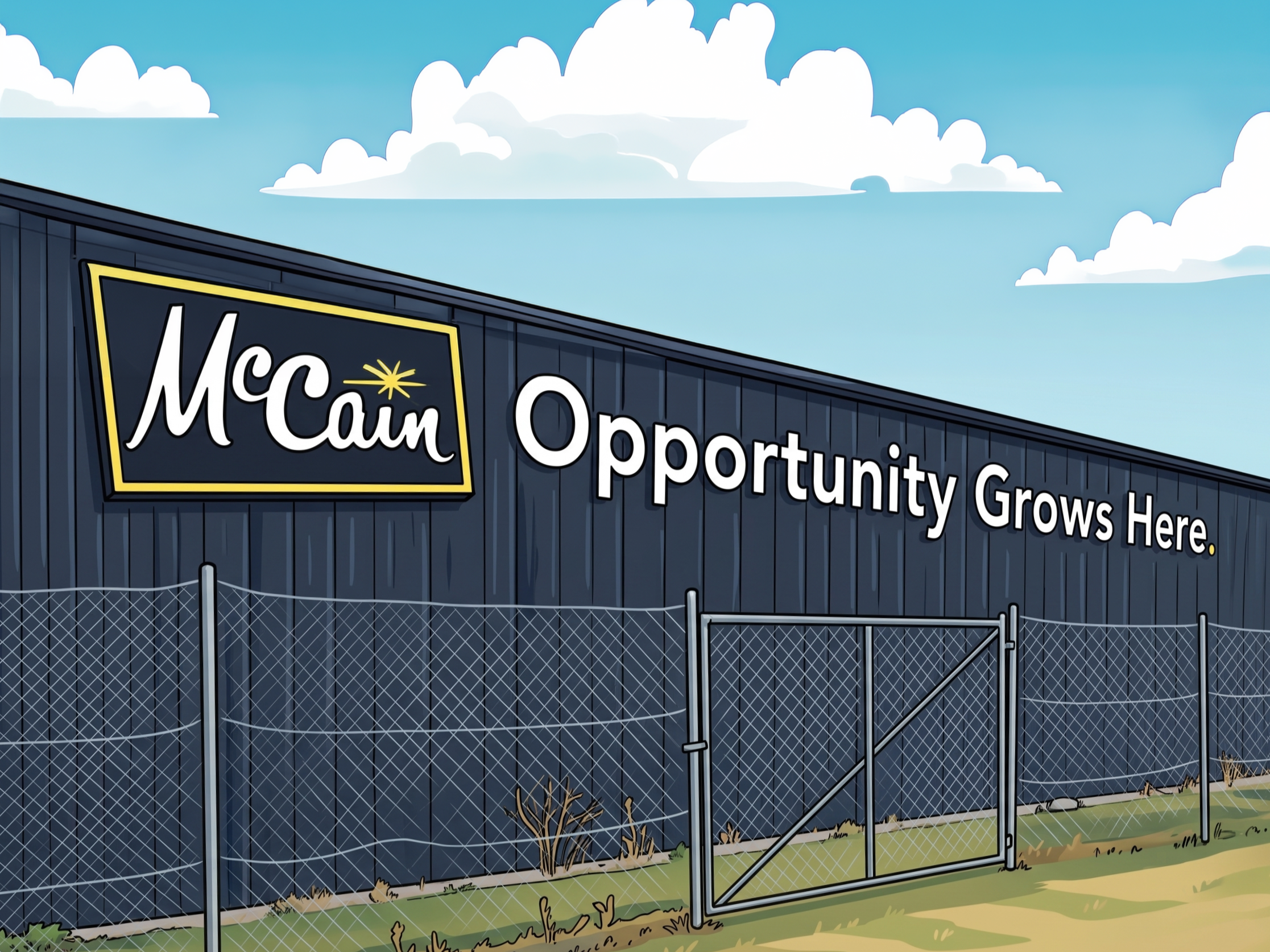
There is an old saying: "The truth is like a lion. You don't have to defend it. Let it loose. It will defend itself." Hastings District Council has now let it loose—in writing, in their own words. A council carrying nearly half a billion dollars in debt, overseeing the departure of two of the district's largest industrial employers, has done nothing.
Not a spreadsheet. Not a memo. Not a conversation minuted at any meeting.
Nothing.
We have confirmation that McCain will fully close its Hastings vegetable processing plant by January 2027, and that Heinz Wattie's has begun a partial withdrawal by closing frozen packing lines in Hastings and manufacturing sites in Christchurch, Dunedin and Auckland. This brings up serious questions about the long-term viability of its remaining Hastings presence. Unfortunately, it has generated exactly the kind of response we've come to expect from our political class: concern, commentary, and committee proposals.
Three Labour MPs held a public meeting in Hastings on Tuesday 14 April on job losses. [12] The council has expressed deep sympathy. Wellington has paid attention.
It’s just more handwringing. More pearl-clutching. And, almost inevitably, another rates rise.
What nobody has done, as the council has now confirmed in writing, is run the numbers.
I've written before about the numbers. They bear repeating. When Wendy Schollum won the mayoralty with 26% of the vote, representing around 12% of eligible voters [1], ratepayers inherited a council whose external debt stood at $493.7 million as at 31 December 2025, [2] tracking toward a forecast $515 million by June 2026, and a projected $700 million by 2030. [3] A council that has delivered rates increases of 8.7% in 2023, 19% in 2024, and 15% in 2025. [4] [5] That is $140 million in new debt accumulated in 18 months. A council that, by any honest measure, is borrowing more than it earns.
And now, for 2026/27, the council is consulting ratepayers on two options: a 5.9% increase, or a 9.1% increase. [6] The lower option requires borrowing $4.8 million to bridge the gap between rates revenue and operating costs; not because spending has increased, but because the council has chosen to limit the rates rise rather than fully close the shortfall this year. While it sounds like relief, borrowing to bridge the gap between what you spend and what you collect is not sound financial management. It's a Faustian bargain.
That was the fiscal position before McCain confirmed it was walking away entirely after three loss-making years out of its last five. [9] Before Heinz Wattie's signalled its own partial withdrawal. [10] Blind Freddy can see where this is heading; the Whakatu industrial corridor is looking considerably less robust than the Long-Term Plan assumes. And, as is now a matter of public record, nobody at the council has looked at what that means for the rating base.
There is a broader pattern worth noting. Public officials who embrace social media as a governance tool have an obligation to engage with it honestly. Posting prolifically while filtering out challenge or criticism is not communication; it is curation. Ratepayers deserve a council that welcomes uncomfortable questions, not one that manages them out of sight.
The 2 April council meeting became a heated battleground over whether a mana whenua representative should sit on the board of the new Water Services Council-controlled organisation. Councillor Steve Gibson moved to remove the appointment. [8] As someone with Māori ancestry, I have no fear of that debate. But Hastings ratepayers already had it, and voted in a binding referendum at the 2025 local elections to remove the Māori ward. That was a clear democratic expression on the question of co-governance in this district. Relitigating it again at a water entity board, weeks after the district's two largest food processors announced they were leaving, is not governance. It is distraction. And while the council found plenty of energy for that debate, nobody found time to open a spreadsheet to answer the fiscal question facing every ratepayer in this district: Māori and Pākehā alike.
The troubles in Hawke's Bay food manufacturing haven't arrived without warning. Energy costs have been ruinous for a decade. The gas supply situation has been deteriorating for years. As home brands cannibalise the premium shelf of supermarkets, margins have ground down on tinned peaches and bags of peas for years. In September 2024, Wattie's cut contracts with Hawke's Bay peach growers, citing cheaper competition. An anti-dumping investigation later confirmed Chinese imports had caused material harm to the New Zealand industry.
None of this was secret. None of it was unforeseeable. A council serious about fiscal discipline—a council that campaigned on affordability first [7]—would have been stress-testing its revenue assumptions against exactly this kind of scenario. It would have the modelling ready. It would be presenting it to the public. Instead, what the council has now confirmed is that it simply didn't look. What we have is the structural problem that I've flagged repeatedly: a council spending as if its revenue base is permanent, while that base quietly erodes.
Interest payments don't respond to economic shocks. They arrive every year, regardless of what a multinational in Detroit decides to do with a processing facility in Flaxmere. The debt doesn't pause. The Long-Term Plan rolls on. And rates rise again.
Ratepayers in the Hastings district are not a shock absorber. They are households already carrying mortgage stress, power bills, fuel costs, and insurance costs on top of rates that have grown at multiples of inflation for three consecutive years. They have absorbed cyclone levies as a targeted rate that will sit on their bills for the next sixteen years. [11] They have absorbed infrastructure backlogs. They deserve a council that absorbs the shock of economic disruption through fiscal prudence, not one that passes it straight through to the next rates notice while debating boardroom seats.
The council's own consultation document tells the story plainly. The total cost of everything Hastings District Council will spend in 2026/27 (infrastructure, services, and debt) is $517 million. Rates cover just 31.97% of that. Loans cover a higher 33.78%. Financing costs alone are $23 million annually. Debt repayment adds another $96 million. All up, that is $119 million, nearly a quarter of the entire budget, before a single service is delivered. [13]
We’re talking about a council carrying nearly half a billion dollars in debt, tracking toward $515 million, heading for $700 million; overseeing the departure of its two largest industrial employers, and by their own admission, nobody has looked at what it means. Not the Finance team. Not the treasury advisors. Not the auditors. No discussions at any meeting. Nil. The honest numbers weren't done. Now ratepayers know.
This ANZAC Day, we remember the cost of failing to act when action was required. We can but hope that same lesson sinks in at last for the council, as it’s now very clear what has not been done, and what is owed.
Nick Stewart
(Ngāi Tahu, Ngāti Huirapa, Ngāti Māmoe,
Ngāti Waitaha)
Financial Adviser and CEO at Stewart Group
Stewart Group is a Hawke's Bay and Wellington based CEFEX & BCorp certified financial planning and advisory firm providing personal fiduciary services, Wealth Management, Risk Insurance & KiwiSaver scheme solutions.
The information provided, or any opinions expressed in this article, are of a general nature only and should not be construed or relied on as a recommendation to invest in a financial product or class of financial products. You should seek financial advice specific to your circumstances from a Financial Adviser before making any financial decisions. A disclosure statement can be obtained free of charge by calling 0800 878 961 or visit our website, www.stewartgroup.co.nz
REFERENCES
[1] NZ Herald (2025). Local elections 2025: Wendy Schollum new Hastings Mayor. https://www.nzherald.co.nz/hawkes-bay-today/news/wendy-schollum-the-new-hastings-mayor-as-last-minute-voters-extend-her-lead/36XJ5V5QP5FJHGQUJ5AYTJY2IU/
[2] Hastings District Council (2026). Half-Year Financial Results to 31 December 2025 — external debt $493.7 million. Performance and Monitoring Committee, 18 March 2026.
[3] NZ Herald (2024). Hastings facing one of highest rates rises in country — council could hit $700 million debt. https://www.nzherald.co.nz/hawkes-bay-today/news/hastings-facing-one-of-highest-rates-rises-in-country-council-could-hit-700m-debt/RSI6UI44ANCHTA6KDHH5TJGCSM/
[4] Hastings District Council (2024). Council reduces proposed rate increase. https://www.hastingsdc.govt.nz/our-council/news/article/3125/council-reduces-proposed-rate-increase
[5] NZ Herald (2025). Central Hawke's Bay tries to lower rates hike to 10% as cyclone-hit Hastings sticks with 15%. https://www.nzherald.co.nz/hawkes-bay-today/news/central-hawkes-bay-tries-to-lower-rates-hike-to-10-as-cyclone-hit-hastings-sticks-with-15/Z6F3ZQ3GGFCNRO6IMMN5BA6SAA/
[6] Hastings District Council (2026). Draft Annual Plan 2026–2027. https://www.hastingsdc.govt.nz/our-council/draft-annual-plan-2026-2027/
[7] Schollum, W. (2025). Affordability first through smarter spending, real savings and long-term thinking. https://www.wendyworksforme.co.nz/affordability-first
[8] 1News / Local Democracy Reporting (2026). 'Nothing to be scared of': Clash over mana whenua seat in Hastings. https://www.1news.co.nz/2026/04/03/nothing-to-be-scared-of-clash-over-mana-whenua-seat-in-hastings/
[9] 1News (2026). McCain to close Hastings vegetable processing factory. https://www.1news.co.nz/2026/03/24/mccain-to-close-hastings-vegetable-processing-factory/
[10] RNZ (2026). Heinz Wattie's to proceed with closing factories, discontinuing some products. https://www.rnz.co.nz/news/business/590873/central-hawke-s-bay-mayor-questions-watties-mccain-closures-in-pretty-good-food-producing-region
[11] 1News (2026). Hastings residents to pay cyclone recovery rates for next 16 years. https://www.1news.co.nz/2026/02/16/hastings-residents-to-pay-cyclone-recovery-rates-for-next-16-years/
[12] Napier Labour (2026). Public Meeting — Job Losses in Hawke's Bay. Tuesday 14 April, 5pm, Elwood Centre, Hastings. Facebook post, Napier Labour page, April 2026.
[13] Hastings District Council (2026). Draft Annual Plan 2026/27 Consultation Document. April 2026. Submissions close 15 May 2026.
[14] Hastings District Council (2026). LGOIMA Response — McCain/Heinz Watties closures. Letter from Louise Stettner, Manager Democracy & Governance Services, 20 A26.