Government

Air New Zealand: The Worst of Both Worlds

Article #452

Fifty percent government-owned, operating like a budget carrier, charging premium prices, Air New Zealand occupies the most uncomfortable position in aviation. It’s neither fish nor fowl: not quite private, not quite public, delivering neither the efficiency of true competition nor the service standards of genuine public ownership.¹

Welcome to the warm embrace of collectivism. It’s getting warmer, and not in a good way.

The Flightless National Carrier

The symbolism writes itself. Air New Zealand, like the kiwi, has become a flightless bird, grounded by contradictions, unable to soar because it refuses to commit. Government ownership was supposed to protect the national interest. Instead, it has created an airline that enjoys privileges without facing consequences: government contracts, preferential treatment, implicit bailout guarantees, all without the full discipline of the market or the scrutiny of complete public accountability.¹

When things go wrong, taxpayers are on the hook. When things go right, shareholders collect the dividends.

New Zealanders know this intimately: the airline received NZ$2.3 billion in Crown support during COVID-19.² The structural trap was set long before the current crisis.

The World is on Fire. Air NZ has a Newsletter.

On 8 April 2026, CEO Nikhil Ravishankar sent customers a carefully worded email. “Kia ora Nick,” it began warmly. He wanted to update customers on jet fuel prices. Fuel had surged from around US$85–90 a barrel to above US$200, effectively doubling Air New Zealand’s daily fuel bill from NZ$4 million to NZ$8.5 million. Schedule cuts for May and June were confirmed. More were promised to be “deliberate and carefully considered.”³

Warm. Reassuring. Human, even, which is ironic, given what you encounter when you actually try to contact the airline.

This crisis is not Air New Zealand’s alone. Iran’s effective closure of the Strait of Hormuz, through which over 20% of global seaborne jet fuel normally flows, has sent shockwaves through the entire industry.⁴ More than 14,000 flights globally have been cancelled since late February 2026.⁵

Ryanair’s Michael O’Leary has predicted summer cancellations of 5–10% across Europe.⁶ United Airlines’ CEO Scott Kirby has warned his carrier’s fuel bill could double to US$20 billion.⁷ Lufthansa’s CEO has assigned teams to contingency planning.⁸ SAS has cancelled over 1,000 flights in April alone.⁹ Energy analysts at Kpler warn that even if the Strait reopened tomorrow, prices would not fall quickly: production has been taken offline, and the market hangover could last well into 2027.¹⁰

The difference between Air New Zealand and those carriers is structural. Most are pure private enterprises; they face consequences. Air New Zealand faces a shareholder with a printing press.

The Numbers are Brutal

Forsyth Barr’s March 2026 report is stark: Air New Zealand could book a net loss of $226 million in FY2026, and $148 million in FY2027 if fuel costs remain elevated.¹¹ Macquarie analysts warn that capacity cuts will fall primarily on domestic and Tasman routes.¹² The share price has reflected the outlook, trading near its 52-week low at $0.48, down sharply from $0.64.¹³

The airline has already trimmed near-term capacity by 5%, with more reductions almost certain.

Watch for the Capital Raise

Here is what the CEO’s warm email does not say: if losses of this magnitude materialise over two financial years, Air New Zealand will need to raise capital. When it does, the New Zealand government, as 50.1% shareholder, faces an unavoidable choice. Participate, and write another substantial cheque from the public purse to protect its stake. Or decline, dilute, and begin the slow retreat from an ownership position it has held for decades.

Either outcome implicates taxpayers. Either outcome exposes the central absurdity of the current arrangement. Budget 2026… hold your breath.

Chatbots and Contempt

Try contacting Air New Zealand’s customer service, and you will discover the true face of modern collectivist enterprise: woeful service, declining standards, and a corporate structure that treats human interaction as an inconvenience to be automated away.

You are more likely to engage with a chatbot than a human, and the human, when you eventually find one, operates like a chatbot anyway—scripted, bounded, unable to resolve anything of substance. The airline’s answer to its service failures is not better people or better training, but better systems for apologising for the absence of both.

The Hospital Pass

That’s what recommending Air New Zealand has become, and nowhere is the gap between price and product more vivid than in business class, where Air New Zealand’s structural contradictions are most expensive to observe firsthand.

The airline’s new Business Premier cabin, rolling out across its Boeing 787 fleet through 2026, retains a herringbone configuration. Passengers sit angled toward the aisle rather than toward the window, the opposite of the reverse herringbone suites now standard on Qatar Airways, Singapore Airlines and Cathay Pacific.¹⁴ Standard Business Premier seats come equipped with a sliding privacy screen. Not a door: a screen.

A door costs extra. Specifically, NZ$820 (approximately US$487) extra on long-haul.¹⁵ There are four of them on the entire retrofitted aircraft.¹⁶ Aviation analysts reviewing the product have described the standard offering as “fairly underwhelming” compared to what the competition offers.¹⁷

You’d book Qantas if you could, but with Emirates disrupted by Iranian airspace closures, rerouting flights away from Gulf hubs, alternatives from New Zealand are thinner than they have been in years.¹⁸

Choose

New Zealand deserves better than this muddled middle ground. Our national carrier should be either a source of genuine pride (fully public, properly accountable, serving citizens) or a true competitor, privately owned and driven to excel.

Full public ownership means genuine accountability: real service obligations, routes chosen for public benefit, consequences for failure. Full privatisation means real competition, no bailouts, market discipline for a product that currently charges a premium for the privilege of facing a stranger across a narrow aisle.

What we have instead is the comfortable middle ground that serves nobody.

Make a choice. Commit to something. Because right now, our national carrier charges like Singapore Airlines, seats you in a layout from 2005, asks NZ$820 extra for a door, deploys a chatbot when you complain, and may shortly be asking the government for more money.

That’s not the warm embrace of collectivism. That’s the slow squeeze.


Nick Stewart

(Ngāi Tahu, Ngāti Huirapa, Ngāti Māmoe,
Ngāti Waitaha)

Financial Adviser and CEO at Stewart Group

  • Stewart Group is a Hawke's Bay and Wellington based CEFEX & BCorp certified financial planning and advisory firm providing personal fiduciary services, Wealth Management, Risk Insurance & KiwiSaver scheme solutions.

  • The information provided, or any opinions expressed in this article, are of a general nature only and should not be construed or relied on as a recommendation to invest in a financial product or class of financial products. You should seek financial advice specific to your circumstances from a Financial Adviser before making any financial decisions. A disclosure statement can be obtained free of charge by calling 0800 878 961 or visit our website, www.stewartgroup.co.nz

The Centurion’s Warning: Superannuation at 65—comforting politics, hard maths

Article #450

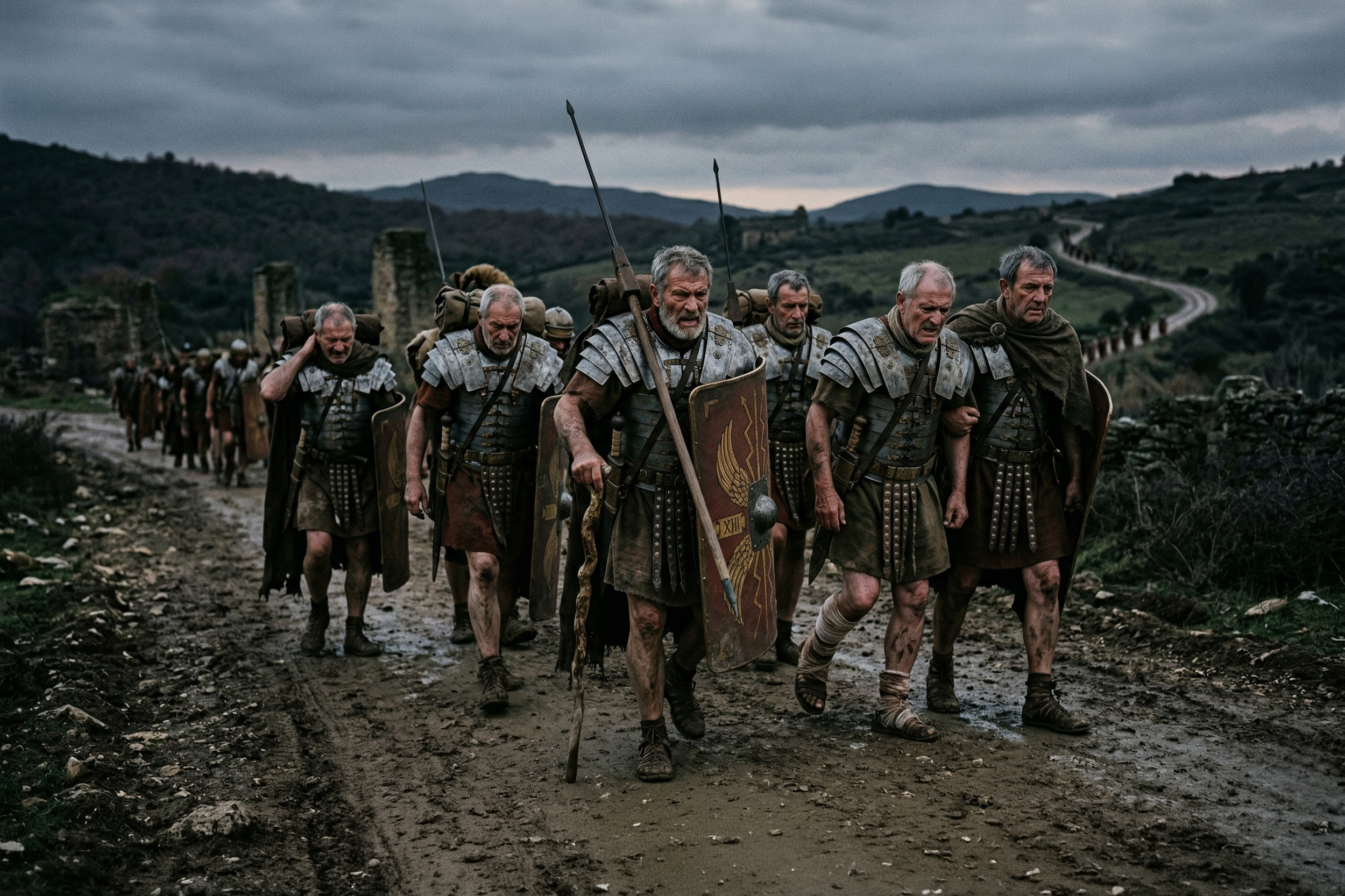
Nine years ago, I wrote about Roman Centurions. The New Zealand Economics Forum last month proved I wasn’t being dramatic enough.

When I wrote my very first Canny View in September 2017, I told the story of Roman Emperor Augustus and his military pension scheme, the Aerarium militare. Augustus faced a problem that will sound familiar: Romans were living longer, the pension fund was catastrophically underfunded, and someone had to pay for it.

His solutions were creative, if not entirely honest. Keep raising taxes. Extend the military service requirements, again and again. And when the pension rolls got too heavy? Launch another campaign! Rome always found another frontier war conveniently thinned the numbers — the Germans, the Dacians, the Parthians. It was just fiscal procrastination dressed up as military glory.

I wrote then: what is happening today is no different to those Roman times. At the end of the day, someone has to pay for it.¹

The Road to Rome’s Problems

The Aerarium militare is one of history’s most instructive fiscal cautionary tales. Augustus established it in 6 AD, seeding it with 170 million sesterces of his own money — a sum so large he had to make it a personal gift to avoid a Senate revolt over new taxes. When that proved insufficient, he pushed through a 5% inheritance tax and a 1% sales tax on goods sold at auction to keep the fund solvent. When Tiberius later tried to abolish the sales tax, his generals warned him that there was no other way to pay veterans. So, the tax stayed.

Each time the fund came under pressure, the response was the same: extend the service requirement. Augustus raised it from 16 years to 20, then up to 25. Soldiers who had signed up expecting to retire at 16 years found the goalposts moved, repeatedly, for fiscal reasons. Sound familiar?

Some historians trace a significant part of Rome’s eventual decline to the Senate later cutting pension payments altogether. With less incentive to serve, Roman citizens stopped enlisting. The ranks filled with barbarian mercenaries. Cohesion and discipline collapsed. The pension problem eventually helped unravel the army that held the Empire together.

New Zealand introduced its own old-age pension in 1898 — one of the first countries in the world to do so, under Richard Seddon’s Liberal government. It would be received at age 65, when male life expectancy was just 56. Like the Aerarium, it was never designed to be paid to most people. It was a safety net for the few who beat the odds. The pension that most New Zealanders now expect to receive for 20-plus years of retirement was conceived for people who, statistically, were unlikely to reach it at all.

Shifting Demographics Add Up to a Problem

Back in 2017, when I wrote that first article, over 15% of New Zealand’s population was aged 65 or older. Today, we’re past 16% and heading towards 20–21% within the next decade.⁵ We’ve gone from around 750,000 receiving NZ Super then, to over 912,000 today.⁶ Crucially, the working-age population supporting them is shrinking proportionally.

It’s not a sudden crisis of compassion, but rather a mathematical problem. The ratio of workers to retirees is deteriorating. Empires fall not from external threats but from internal fiscal contradictions — and we are living that reality now.

What’s Changed Since 2017?

In 2017, Bill English had just opened the door to raising the retirement age to 67 from 2037. Jacinda Ardern promptly pledged to repeal it and declared she’d resign before raising the retirement age. Labour won, the policy was scrapped, and the age stayed at 65. It hasn’t shifted since.

Movement comes only at the margins. Residence requirements for NZ Super are increasing from 10 to 20 years, phased through to 2042.⁷ Superannuation will consume 18.6% of tax revenue by 2029, up from 16.6% in 2023.³ But the fundamental policy lever — the eligibility age — remains politically untouchable. Augustus would understand completely.

What Treasury Said in Hamilton

At February’s New Zealand Economics Forum in Hamilton, Treasury Secretary Iain Rennie warned that ageing is already materially lifting expenditure and will continue to do so throughout the next decade, outpacing revenue growth. Without policy changes, New Zealand’s debt trajectory will become unsustainable.²

The number of people receiving superannuation will grow from 928,000 today to over 1,084,000 by 2029/30. That’s roughly the entire population of Tauranga added to the pension rolls in just under five years, costing a cool $7.7 billion more per year – equivalent to 22% of all projected tax revenue growth over that period.² Rennie was clear this isn’t a problem for future governments alone: “They are part of the chill headwinds confronting the government now.”²

Treasury’s longer-term projections show that without policy changes, government debt could reach unsustainable levels by the 2060s. This would be driven primarily by superannuation and healthcare costs for our ageing population.⁴ Every year of inaction makes the eventual adjustments more severe. That’s Treasury’s own modelling, not an opinion.

The Age Question Nobody Wants to Answer

At the same forum, a panel of economists and former politicians concluded that New Zealand can’t afford superannuation at 65… or even 67. Some suggested eligibility may need to rise as high as 72 or 73 to be viable long-term.²

Back to our Roman friends: Augustus didn’t want to cut centurion pensions either, as it was politically impossible. Instead, he extended service requirements, raised taxes, and launched another Parthian campaign. Each short-term fix made the structural problem worse. Eventually, the promises became mathematically impossible to honour, and the system failed.

We are not Augustus. We have better data, better institutions, and better options. What we seem to lack is the political will to use them.

What Actually Needs to Happen

Raising the age alone won’t fix this. The Forum panel agreed on that much.²

The deeper issue is savings and productivity. There is no credible path to lifting New Zealand’s productivity without matching Australia’s savings rate.² That means taking KiwiSaver seriously: Not as a nice-to-have, but as the foundation of our retirement system.

With 3.4 million New Zealanders enrolled — 90% of the workforce — KiwiSaver has been a genuine success. But 1.6 million members were making no contributions as of March 2025, either out of the workforce or on contribution holidays.⁴ It’s a structural gap we keep patching rather than fixing.

Compulsory contributions, properly locked in until retirement, would be a meaningful start. Paired with a gradual, signalled increase in eligibility age — giving people decades to plan — and we begin to look less like Augustus clutching at straws, and more like a country with a plan.

If you’re under 50, don’t rely solely on NZ Super. Your KiwiSaver balance isn’t a supplement anymore. It’s becoming the primary pillar of your retirement income – treat it accordingly.

The 450th Edition Lesson

In my first article, I concluded that failing to act would be irresponsible and place an extremely unfair burden on younger generations.¹ Nine years later, that’s exactly what we’ve done.

New Zealand is in a stronger position than most comparable countries. But public debt is at its highest point in 30 years, and the cost curve is steepening. The window for gradual, manageable change is narrowing.

The Romans had options. They could have reformed early, adjusted gradually, and built a sustainable system. Instead, they extended, delayed, promised — until the promises became impossible to honour and the system helped collapse the army that held everything together.

We still have choices; they didn’t. But as Treasury made clear last month, that won’t be true forever. And conversation without action is just more Parthian campaigning.

The Centurions learnt too late that empires don’t honour promises they can’t afford. We can avoid that mistake. But only if we start now.


Nick Stewart

(Ngāi Tahu, Ngāti Huirapa, Ngāti Māmoe,
Ngāti Waitaha)

Financial Adviser and CEO at Stewart Group

  • Stewart Group is a Hawke's Bay and Wellington based CEFEX & BCorp certified financial planning and advisory firm providing personal fiduciary services, Wealth Management, Risk Insurance & KiwiSaver scheme solutions.

  • The information provided, or any opinions expressed in this article, are of a general nature only and should not be construed or relied on as a recommendation to invest in a financial product or class of financial products. You should seek financial advice specific to your circumstances from a Financial Adviser before making any financial decisions. A disclosure statement can be obtained free of charge by calling 0800 878 961 or visit our website, www.stewartgroup.co.nz


References

¹ Stewart, N. (2017, September 16). Like Romans, fall on our sword and raise retirement age. Stewart Group. https://www.stewartgroup.co.nz/we-love-to-write/2017/9/16/like-romans-fall-on-our-sword-and-raise-retirement-age

² New Zealand Economics Forum 2026 (February 2026). Treasury presentations on fiscal sustainability and superannuation costs.

³ New Zealand Treasury. (2025). Budget Economic and Fiscal Update 2025. https://www.treasury.govt.nz/publications/efu/budget-economic-and-fiscal-update-2025

⁴ New Zealand Treasury. (2025). He Tirohanga Mokopuna 2025 – Long-term Fiscal Statement. https://www.treasury.govt.nz/publications/ltfp/he-tirohanga-mokopuna-2025

⁵ Stats NZ. (2024). Population estimates and projections. https://www.stats.govt.nz

⁶ Ministry of Social Development. (2025). New Zealand Superannuation recipient data.

⁷ Work and Income. (2024). Change to residence criteria for NZ Super and Veteran’s Pension. https://workandincome.govt.nz/eligibility/seniors/nz-super-and-veterans-pension-residency-changes-2024.html

$3 at the Pump — Crisis, Panic, or a Lesson We Refused to Learn?

Article #449

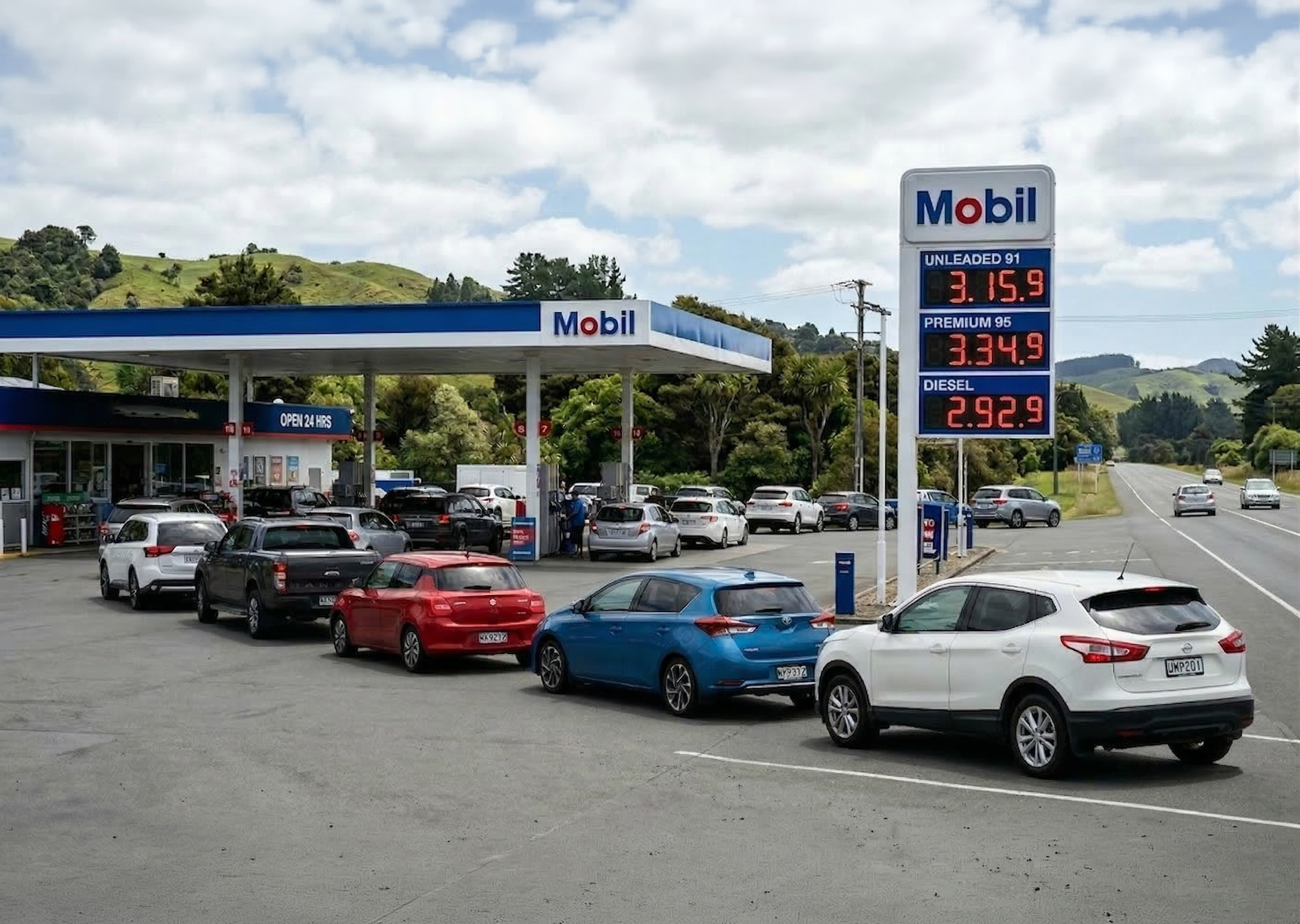
The average price of unleaded 91 jumped 14 NZD cents over a single weekend — and suddenly, commentators are reaching for the kind of language we last heard during COVID. Back then, we fought over toilet paper. Today, the panic commodity is petrol.

Let us first take a breath and assess.

The cause: Iran’s effective closure of the Strait of Hormuz (which handles about a quarter of the world’s seaborne oil trade). This of course follows retaliatory strikes after a US and Israeli attack on Iran in late February. [1]

The effect: Global oil prices have surged past US $100 per barrel, with Brent and WTI hitting around US$110 to US$114 at the height of the crisis. That pain is not contained to the petrol forecourt. It is flowing into every corner of our economy simultaneously, because energy is embedded in the cost of producing virtually everything. [1]

The most visible casualty so far is Air New Zealand, another unfortunately familiar occurrence. Our majority state-owned carrier has cancelled approximately 1,100 flights through early May, impacting around 44,000 passengers. In USD, jet fuel spiked from around $85 per barrel before the conflict to between $150 and $200, with the refinery crack spread (the margin between crude oil and refined jet fuel) blowing out from $22 to as high as $115 per barrel. That’s a structural blow to an airline already recording losses, and it has suspended its full-year earnings guidance entirely because the numbers no longer make sense. [2–5]

Finance Minister Nicola Willis has cited New Zealand's 50 days of fuel supply as a form of reassurance, but the public must read the fine print carefully. That figure includes fuel still sitting on tankers at sea, in transit from the very region in crisis. The fuel physically on New Zealand soil is closer to 28–33 days, depending on the product. [6]

More concerning still, that onshore storage is heavily concentrated around the former Marsden Point site in the north. That means regional centres and the entire South Island operate effectively on just-in-time supply and sit at the end of an extra coastal-shipping leg that adds its own layer of vulnerability. If supply were completely cut off today, New Zealand could sustain itself for roughly a month. [6,7]

That is not 50 days — and it should reframe the conversation entirely.

Muldoon-era carless days, last deployed between July 1979 and May 1980, are being discussed as a last resort. The mere fact we’re having this conversation in 2026 should give everyone pause. [8]

This is where a Canny View requires plain speaking.

Energy is not a lifestyle choice. It is the oxygen of economic activity. Every business—whether moving freight, running a dairy farm, manufacturing product, or providing professional services—consumes energy somewhere in its cost structure. When that cost surges sharply and suddenly, the business faces exactly three options:

  1. Pass the increase to the customer.

  2. Absorb it through productivity gains and efficiency.

  3. Close their doors.

There is no fourth option. This is precisely why energy price shocks are so broadly inflationary. They don’t strike one sector. They strike all sectors at once.

For shareholders and business owners, the message is clear. A viable business must pay its bills, pay its staff, and generate sufficient return to keep capital engaged. When a major uncontrollable cost input (like energy) doubles overnight, that margin compresses fast.

The businesses weathering this shock best are those that made deliberate investments in energy resilience during the quieter years. Fleet operators who transitioned to hybrid or electric vehicles, alongside conventional petrol and diesel workhorses, are finding their total fuel bill meaningfully lower today. Those with suitable rooftops or landholdings who installed solar are generating their own daytime electricity, reducing grid dependency when traditional energy costs are most volatile.

Neither investment requires ideological conviction, only the basic financial discipline of stress-testing a cost structure and acting before the stress arrives.

Resilience is built in calm weather, not in a storm.

Now to the harder conversation — one that goes well beyond oil.

New Zealand's coal reserves exceed 15 billion tonnes, spread across Waikato, Taranaki, the West Coast, Otago and Southland. Our West Coast bituminous coal is internationally prized for its exceptionally low sulphur, low ash, and low phosphorus content — a premium quality product valued by the global steel industry. Yet Genesis Energy's Huntly Power Station sources most of its coal from Indonesia, with imports surging 311% in 2024 as domestic gas supply fell faster than expected. [9–11]

We export quality. We import what we need to keep the lights on. It’s a paradox, not a viable strategy.

The same logic applies offshore. Geological surveys estimate a 90% probability that New Zealand holds undiscovered oil reserves of at least 1.9 billion barrels, with a 50%  probability that the figure reaches 6.5 billion barrels. We are not a Saudi Arabia. But we are far from a barren rock. [12]

Which brings us to the captain's calls demanding accountability — plural, because there were more than one.

In 2018, then-Prime Minister Jacinda Ardern unilaterally banned all new offshore oil and gas exploration permits—no parliamentary vote, no Select Committee process, no national conversation. One announcement. Then, under the same Ardern government, New Zealand's only oil refinery at Marsden Point was closed and permanently decommissioned in 2022. The owner has since confirmed there is no prospect of restarting it; it would take billions of dollars and years of work to rebuild what took decades to establish. Associate Energy Minister Shane Jones described the closure as having fatally wounded New Zealand's fuel security. It’s difficult to argue otherwise this week. [13,14]

An uncomfortable but instructive parallel comes to mind. During Stalin's forced collectivisation in Ukraine in the early 1930s, a nation sitting atop some of the world's most productive agricultural land experienced a devastating famine while grain continued to be exported across its borders. The resources existed, and the policy choices negated them.

New Zealand is not Ukraine, and this is not the Holodomor, but the underlying dynamic—voluntarily denying access to domestic resources while importing vulnerability from abroad—is a pattern worth acknowledging.

A nation surrounded by grain, starving. A nation surrounded by hydrocarbons, panicking at the pump.

Muldoon would be baffled. His Think Big programme in the early 1980s was explicitly designed to convert New Zealand's own natural gas into synthetic fuels, fertiliser and methanol, and reduce oil import dependency following the 1973 energy shock. Think Big was expensive and its outcomes were mixed. But the underlying instinct — that a small, geographically isolated nation at the bottom of the world needs to take energy sovereignty seriously — wasn’t wrong. [15]

Domestic production does not fully insulate a small open economy from global prices. But it reduces the foreign exchange drain of pure import dependency, supports local employment, generates royalties and tax revenue for the Crown, and critically – reduces exposure to the shipping disruptions and geopolitical shocks we are living through right now. In times of crisis, a country with some domestic production and refining capacity is materially more resilient than one with neither.

The toilet paper panic of 2020 passed, and we learned almost nothing from it. Let us use this one differently: we need to have the serious, unsentimental conversation about energy sovereignty that we should have started long before Ardern's captain's call made it more urgent than it ever needed to be. We’ve missed the boat on energy resilience, and the storm has arrived; all we can do now is fortify ourselves to better weather the next one.


Nick Stewart

(Ngāi Tahu, Ngāti Huirapa, Ngāti Māmoe,
Ngāti Waitaha)

Financial Adviser and CEO at Stewart Group

  • Stewart Group is a Hawke's Bay and Wellington based CEFEX & BCorp certified financial planning and advisory firm providing personal fiduciary services, Wealth Management, Risk Insurance & KiwiSaver scheme solutions.

  • The information provided, or any opinions expressed in this article, are of a general nature only and should not be construed or relied on as a recommendation to invest in a financial product or class of financial products. You should seek financial advice specific to your circumstances from a Financial Adviser before making any financial decisions. A disclosure statement can be obtained free of charge by calling 0800 878 961 or visit our website, www.stewartgroup.co.nz


References

  1. NZ Herald, Petrol prices expected to hit at least $3 a litre in some places, March 2026

  2. Flight Global, Fuel price volatility prompts Air New Zealand to suspend earnings guidance, March 2026

  3. Global Banking & Finance Review, Air New Zealand cut flights, fuel price surge wreaks havoc, March 2026

  4. AeroTime, Air NZ to cut 1,100 flights amid soaring fuel prices, March 2026

  5. NZX Announcement, Air New Zealand suspends FY2026 guidance, March 2026

  6. RNZ, How much fuel does NZ have — and what happens if we run out?, March 2026

  7. Infonews, NZ Fuel Situation — South Island Vulnerabilities, March 2026

  8. NZ Herald, Carless days are no solution to an oil shock (Liam Dann), March 2026

  9. Wikipedia, Coal in New Zealand, citing USGS and MBIE data

  10. USGS Fact Sheet 2004-3089, New Zealand Coal Resources

  11. Ministry of Business, Innovation & Employment, Energy in New Zealand 2025 — Coal

  12. New Zealand Parliament, The Next Oil Shock?, citing Institute of Geological and Nuclear Sciences 2009

  13. NZ Herald, First look: Inside Northland's Marsden Point oil refinery post-shutdown, November 2024

  14. NZ Herald, Inquiry into reopening New Zealand's only oil refinery, March 2024

  15. Wikipedia, Think Big, New Zealand Third National Government economic strategy

Hōne Heke: New Zealand's First Tax Rebel

Article # 448

It’s been 181 years since Hōne Heke and Te Ruki Kawiti's warriors stormed Maiki Hill above Kororāreka, felled the British flagstaff for the fourth and final time, in what we now call the Flagstaff War.[1] If you ask most New Zealanders why Heke chopped down that pole, you'll get vague answers about sovereignty or anti-colonial protest. Some might mention it as a symbolic rejection of British authority. Others recall it as an act of defiance, full stop.

What's conveniently forgotten, or perhaps deliberately obscured, is this: Hōne Heke was protesting taxes.

Hōne Heke, The History Collection - Alamy

In 1841, the new colonial government introduced customs duties on tea, sugar, flour, grain, spirits, tobacco, and other foreign goods.[2] These tariffs hit Māori trade in the north particularly hard, fundamentally altering the economic landscape that had made the Bay of Islands the centre of New Zealand's early colonial economy.

Kororāreka had been a thriving trading hub. While described by some as the "hellhole of the Pacific", it was undeniably prosperous. Māori merchants and rangatira like Heke had built sophisticated, profitable businesses supplying visiting ships with provisions, engaging in trade with overseas merchants, and extracting fees from vessels using the harbour. It was commercial enterprise at scale.

Then came the Crown's taxes. Suddenly, the Treaty he'd signed in good faith at Waitangi in 1840 was being followed by higher prices, reduced economic opportunity, and decisions made in Auckland without meaningful consultation (let alone consent). The government was taking a cut of every transaction, strangling the very trade that had made the Bay of Islands so prosperous.

Every ship that entered the harbour now paid customs duties to the Crown instead of port fees to local chiefs. Every bag of flour, every barrel of tobacco, every luxury good imported carried a government tax that drove up prices and reduced trade volumes. The economic sovereignty Māori chiefs believed they'd retained under the Treaty was being systematically dismantled, one tariff at a time.

Heke saw what was happening and he wasn't having it. He'd studied the American Revolution, contemporary accounts confirm this, and understood exactly what "taxation without representation" meant. He even flew the American flag during his rebellion, a detail often airbrushed out of modern retellings because it complicates the narrative. It's hard to cast Heke as simply anti-European when he's explicitly invoking American revolutionary principles and symbols.[2]

The flagstaff itself was deeply symbolic, but not in the way most people think. Yes, it represented Crown authority. But more practically, it represented the customs regime. Ships entering the harbour saw that flag and knew they'd be paying duties. It was a constant visual reminder of who now controlled the commerce of the Bay.

When Te Haratua cut it down on 8 July 1844 under Heke's orders, it was a statement: these taxes are not legitimate.[1] The Crown re-erected it. Heke personally chopped it down on 10 January 1845, wielding the axe himself. They put it up again, this time with iron cladding for protection, convinced that surely this would stop the attacks. Heke cut it down anyway on 19 January; the iron made it harder, but not impossible.

And finally, on 11 March 1845, Heke and Kawiti's forces overran the hill in a coordinated assault, killed the defenders, and felled that flagstaff one last time before sacking the town in outright economic warfare.[1]

Was it just about taxes? Of course not. Historians rightly point to the complex power dynamics within Ngāpuhi following the death of Hongi Hika in 1828, Heke's rivalry with Tāmati Wāka Nene for the paramount chieftainship, the loss of direct income from port fees, and broader questions about rangatiratanga versus sovereignty.[3] Heke was also frustrated by the capital's move from the Bay of Islands to Auckland, which had already damaged the region's economic prospects before the customs duties compounded the injury.

History is never monocausal. But the tax grievance was real, significant, and extensively documented in contemporary accounts. The Taxpayers' Union recently highlighted this often-ignored aspect of our history, noting that after Heke's rebellion, the government abolished customs duties in the Bay of Islands and declared it a free port.[2] Bad taxes were repealed because someone was willing to stand up and say "this isn't fair", and back it up with action. The policy change came too late to prevent war, but arrived nonetheless.

Some modern interpreters find this story uncomfortable as it shows a Māori rangatira fighting for economic freedom and against government overreach. It doesn't fit neatly into the box of noble savage resisting colonisation, nor does it suit the narrative of Māori as natural collectivists unconcerned with commerce, profit, and individual enterprise.

Heke was a businessman. A successful one. He understood trade, supply and demand, competitive advantage, and market dynamics. He recognised that excessive taxation kills economic activity and punishes productive enterprise. He saw government imposing costs without delivering corresponding benefits to those being taxed. And he fought back using the tools available to him in 1840s New Zealand.

Too often, Heke is reduced to a caricature; the man who chopped down the flagpole. This airbrushing of history to fit modern narratives does his character and mana a profound disservice. He was a principled, strategic thinker who would be puzzled, perhaps even insulted, by how shallow his legacy has become in popular memory. Reducing him to a one-dimensional figure of resistance obscures the sophisticated economic and political reasoning behind his actions.

The problem he identified hasn't gone away. If anything, it's getting worse. New Zealand's Tax Freedom Day, the date each year when we theoretically stop working for the government and start working for ourselves, has been creeping steadily later. In 2019, it fell on 9 May.[4] By 2021, it had slipped to 11 May.[5] The 2022-2023 period saw it jump dramatically to 20 May,[6] before settling at 16 May in 2025.[7]

That's seven days later in just six years. We're now working 136 days into the year, more than a third of it, just to pay the tax bill before we earn a single dollar for ourselves. Put another way, if you started work on 1 January, you wouldn't start earning money you could actually keep until mid-May.

The trend is troubling. Government's share of the economy keeps growing, driven by bracket creep (where inflation pushes people into higher tax brackets without any real increase in purchasing power), council rates rising over 10 percent annually for three consecutive years, and ever-expanding government spending that refuses to shrink even when politicians promise restraint.[7,8]

Despite tax cuts announced with great fanfare, despite redundancies in the public sector making headlines, and despite endless talk of fiscal discipline, New Zealanders paid nearly 5 percent more in total tax in 2025 than the year before.[8] Core Crown expenses rose from $139 billion to an estimated $144.6 billion. Welfare spending has ballooned from $26.6 billion pre-COVID to $47.8 billion in 2025; that’s nearly double in just five years.[7]

Local government deserves scrutiny too. Council rates have increased by more than 10 percent for three straight years, adding days to our collective tax burden.[7,8] While central government debates tax brackets and income tax rates, local councils have been quietly and relentlessly increasing their take.

Today, we might not resort to chopping down flagpoles (the IRD would take a dim view, and the penalties would be rather more than a military campaign in the bush). But Heke had it right: governments that tax without meaningful consent, that impose burdens without corresponding benefits, that take without giving value in return, these governments deserve to be challenged.

New Zealand has a long tradition of healthy scepticism toward authority and bureaucratic overreach. We question power. We push back against unreasonable demands. We expect government to justify what it takes from us. Perhaps we inherited some of that attitude from Heke, certainly his spirit lives on every time a New Zealander questions a rates rise or challenges a new tax.

His methods were blunt. The Flagstaff War brought death and destruction to the Bay of Islands. People died defending and attacking that pole. Towns were burned. The social fabric was torn. Violence is a terrible way to resolve policy disputes, and we've developed better mechanisms for democratic accountability since 1845.

But strip away the violence and look at his core complaint: unjust taxation forcing up prices, reducing opportunity, and transferring wealth from productive enterprise to government coffers without adequate justification or benefit. Does that sound familiar? It should. It's the same complaint we hear today, just expressed in different forums with different tools.

When you hear politicians talking about the "cost-of-living crisis," remember it was a cost-of-living crisis driven by customs duties on basic goods that sparked Heke's rebellion. When businesses complain about regulatory burden and compliance costs, remember Heke's merchants struggling with the Crown's new tariff regime.

When you question whether you're getting value for your tax dollar, especially when Tax Freedom Day keeps sliding later into the year, when rates keep rising, when spending keeps growing, you're asking the same question Heke asked in 1844.

We have elections, select committees, submissions processes, ratepayer advocacy groups. We have the Taxpayers' Union keeping score. We have media scrutiny and public debate. These are better tools than axes and muskets, and we should be grateful for them.

But fundamentally, we’re asking the same questions: when does taxation cross the line from legitimate funding of essential government services to unjust extraction? When does the government's share of the economy become so large that it hinders rather than helps our collective prosperity? At what point do we say "enough"?

This week, 181 years after that final flagstaff fell, perhaps we should remember Hōne Heke not just as the man who chopped down a pole, but as New Zealand's first tax rebel; a rangatira who understood that economic dignity, self-determination, and common sense matter more than government revenue. A businessman who recognised that prosperity comes from productive enterprise, not from government spending. A leader who knew that consent matters, that representation matters, that value for money matters.

That's a legacy worth celebrating. And it's a reminder worth heeding as Tax Freedom Day continues its unwelcome creep deeper into the year.


Nick Stewart

(Ngāi Tahu, Ngāti Huirapa, Ngāti Māmoe,
Ngāti Waitaha)

Financial Adviser and CEO at Stewart Group

  • Stewart Group is a Hawke's Bay and Wellington based CEFEX & BCorp certified financial planning and advisory firm providing personal fiduciary services, Wealth Management, Risk Insurance & KiwiSaver scheme solutions.

  • The information provided, or any opinions expressed in this article, are of a general nature only and should not be construed or relied on as a recommendation to invest in a financial product or class of financial products. You should seek financial advice specific to your circumstances from a Financial Adviser before making any financial decisions. A disclosure statement can be obtained free of charge by calling 0800 878 961 or visit our website, www.stewartgroup.co.nz


References

[1] New Zealand History, "The Flagstaff War," nzhistory.govt.nz

[2] New Zealand Taxpayers' Union, "Waitangi Day 2026," taxpayers.org.nz

[3] Academic historical analysis of the Northern War, various sources

[4] Baker Tilly Staples Rodway, "Tax Freedom Day 2019," May 2019

[5] Baker Tilly Staples Rodway, "How Tax Freedom Day, on 11 May, affects you," May 2021

[6] Baker Tilly Staples Rodway, "Tax Freedom Day 2024," May 2024

[7] Baker Tilly Staples Rodway, "Tax Freedom Day 2025," May 2025

[8] RNZ, "Taxpayers forking out almost 5% more than last year," 15 May 2025

Two Years of Drift: New Zealand's Squandered Mandate for Change

Article # 445

In late 2023, New Zealanders voted decisively for change. After six years of Labour government under Jacinda Ardern and Chris Hipkins, the country was exhausted. The NZX had become one of the worst‑performing stock markets in the developed world [1]. Trust in core institutions, from the police to the healthcare system, had cratered [2]. Real economic growth was negative [3]. The cost of living was crushing ordinary families, while housing remained stubbornly unaffordable.

The coalition government swept to power on a mandate to reverse this decline. But two years later, that mandate has been squandered through timidity and a fatal misreading of the moment.

It's tempting to view this government's approach through the lens of John Key and Bill English's post‑GFC strategy. Between 2008 and 2017, that duo carefully managed spending cuts while allowing growth to flourish organically [4]. They made incremental reforms, maintained fiscal discipline, and let the private sector drive recovery. It worked brilliantly. Unemployment fell, growth returned, and National won three consecutive elections.

But 2026 is not 2010, and the global playing field has fundamentally changed. Interest rates have surged after over a decade of easy money [5]. New Zealand's underlying productivity crisis can no longer be ignored [6].

This government has tried to apply the Key‑English playbook to a radically different situation. Ministers speak reassuringly of “green shoots”, yet the economy contracted 0.9% in Q2 2025, then grew just 1.1% in Q3, a volatile pattern that speaks to underlying fragility rather than sustained recovery [7]. Real GDP per capita continues falling [8].

The retail sector tells the story most viscerally. Boxing Day sales slumped 12.4%, consumers spent just $51.2 million on non‑food retail, down from $58.5 million the previous year [9]. As Simplicity chief economist Shamubeel Eaqub observed, “For a lot of businesses this should be their saving grace” [10].

January 2026 brought only marginal relief: core retail spending lifted a mere 0.6% compared to the same month last year, with weather events depressing regional performance and retailers “just treading water as the economy moves sideways, rather than forwards,” according to Retail NZ CEO Carolyn Young [11]. In the meantime, retail business liquidations surged 34% year‑on‑year [12].

Consider ACT leader David Seymour's State of the Nation speech on Sunday, where he diagnosed the core problem with brutal clarity. “People work their guts out only to find that they're further behind,” he said, noting young New Zealanders simply “can't make the numbers add up” when looking at student loans, wages, taxes, and housing costs. He called emigration a “flashing light on the dashboard” and observed that previous generations worked hard “because hard work was a rewarding strategy. That deal feels broken.” He admitted the government is “on track to post a small surplus by 2030, but after that, our ageing population will put us back in the red for more decades of deficit spending.” Yet his proposed solution, reducing the number of ministers to 20 and departments to 30, only epitomises the incrementalism that has defined this government. When your coalition partner polling at 7.6% is calling for bolder action than you are, you've misread the moment [13].

With the election now confirmed for 7 November 2026, Prime Minister Christopher Luxon’s party has a narrow lead in recent polls, but the fundamentals are troubling. The latest Roy Morgan poll has National at 34.5% compared to Labour's 30.5%, with the coalition government on 52% versus the opposition's 44% [14]. Yet 51.5% of voters say New Zealand is “heading in the wrong direction” [15].

The Argentina Mirror

In 1913, Argentina's per capita income exceeded Germany, France, Sweden, Italy, and Spain [16]. Like New Zealand, it was a resource‑rich agricultural powerhouse built on classical liberal foundations. Both countries ranked among the world's wealthiest in the first half of the 20th century [17].

Argentina's fall was dramatic. Decades of Peronist corporatism culminated in the crisis that brought Javier Milei to power. By December 2023, Argentina faced 211% annual inflation, 42% poverty, a 15% quasi‑fiscal deficit, and an economy in free fall [18].

Milei cut the budget by 30% and balanced it by his second month in the job [18]. He implemented 1,246 deregulations through August 2025 [18]. He abolished 10 ministries and fired more than 53,000 public employees [18]. Annual inflation fell from 211% to around 32% by January 2026 [18–21]. GDP grew 6.3% and investment surged 32% in the second quarter of 2025 [18]. More than 11 million people have been pulled out of poverty [18].

The results are transformative. After Milei eliminated rent controls, rental housing supply tripled and real prices fell 30% [18]. When he deregulated agricultural markets, vaccine costs for livestock producers dropped by two‑thirds [18]. Home appliance prices fell 35% after eliminating import‑licensing schemes [18].

There are real victories here. They’re 28‑year‑old Franco signing a 30‑year mortgage,  “unthinkable only a couple of years ago” [18]. They’re freelancer Cecilia finally able to focus on work instead of navigating convoluted tax laws [18]. They’re farmer Pedro Gassiebayle reinvesting in his business and thinking about efficiency for the first time [18].

To be sure, Argentina's transformation faces headwinds. Monthly inflation ticked up to 2.9% in January 2026 in the fifth consecutive monthly increase, and questions have emerged about the government's statistical methodology [19–21]. The path remains narrow and fraught. But even with a few snags, the direction is unmistakable: from complete collapse toward functioning markets.

New Zealand's Drift

Compare that to New Zealand. Two years after a change in government, there's been no meaningful regulatory reform despite endless consultation. Government spending has barely been constrained [22]. Infrastructure delivery remains slow and over‑budget [23]. Housing consents have fallen [24]. The promised Fast‑track Approvals Bill has been watered down. RMA reform has been incremental when transformation was needed.

Most damningly, the fundamental drivers of our decline remain unaddressed. We still can't build houses efficiently. We still can't deliver infrastructure on time or budget. Our planning system still makes simple projects take years to consent. Meanwhile, retailers close their doors while politicians tout those elusive green shoots.

The Key‑English approach worked because the GFC was primarily a demand shock. New Zealand's current malaise is structural.

We have a productivity crisis decades in the making [25]. We have infrastructure crumbling from underinvestment [26]. We have planning and regulatory systems that strangle growth.

As Austrian economist Ludwig von Mises told Argentines in 1959: “Economic recovery does not come from a miracle; it comes from the adoption of sound economic policies” [18].

The Electoral Reckoning

With nine months until the election, this government faces an uncomfortable reckoning. Voters were promised change and received continuity. They were told to trust the process while their living standards declined. Now they're being asked to believe in green shoots while retail spending barely budges and liquidations surge.

The opposition will hammer a simple message: You had your chance and you wasted it. And they'll be right. This government has fundamentally misread the moment. It applied a playbook designed for managing cyclical downturns to a structural crisis requiring transformation.

What makes Argentina's transformation particularly instructive is that Milei turned the mainstreaming of libertarian thought into political victory [18]. He became the first political leader in 80 years to propose that the whole corporatist state had to be torn down and replaced with limited government [18]. New Zealand faces no such ideological battle. We already have strong institutions, low corruption, an independent central bank, and largely functional markets. We don't need revolution; we need our government to use the mandate voters gave them.

The tragedy is that we could reform from strength if our leaders found the courage. Instead, we're drifting toward the point where only painful corrections remain viable. Postponing necessary reforms doesn't achieve stability. It ensures that, when reform finally comes, it's painful and disruptive.

Two years ago, voters gave this government a mandate for change. Nine months from an election, with retail sales barely growing and businesses liquidating at record rates, they're learning that careful management of decline is still decline. As Milei declared to Argentines: “Either we persist on the path of decadence, or we dare to travel the path of freedom” [18].

New Zealand faces the same choice. Two years ago, voters chose change but received decadence, polite, incremental, delivered with press releases about green shoots while retailers close their doors.

Argentina's history suggests we're running out of time to change course. The voters will render their verdict on November 7.

Nick Stewart

(Ngāi Tahu, Ngāti Huirapa, Ngāti Māmoe, Ngāti Waitaha)

Financial Adviser and CEO at Stewart Group

  • Stewart Group is a Hawke's Bay and Wellington based CEFEX & BCorp certified financial planning and advisory firm providing personal fiduciary services, Wealth Management, Risk Insurance & KiwiSaver scheme solutions.

  • The information provided, or any opinions expressed in this article, are of a general nature only and should not be construed or relied on as a recommendation to invest in a financial product or class of financial products. You should seek financial advice specific to your circumstances from a Financial Adviser before making any financial decisions. A disclosure statement can be obtained free of charge by calling 0800 878 961 or visit our website, www.stewartgroup.co.nz

  • Article no. 445


References

1. NZX. Market performance data, 2020–2023.

2. Statistics New Zealand. New Zealand General Social Survey: Trust in public institutions, 2018–2023.

3. Statistics New Zealand. Gross Domestic Product (GDP) data, 2022–2025.

4. New Zealand Treasury. Fiscal consolidation analysis, 2008–2017.

5. Reserve Bank of New Zealand. Official Cash Rate (OCR) data, 2021–2023.

6. OECD. Productivity statistics for New Zealand.

7. Statistics New Zealand. Quarterly GDP data, Q2–Q3 2025.

8. Statistics New Zealand. Real GDP per capita data, 2024–2025.

9. Worldline NZ. Retail spending data and Boxing Day sales figures, December 2025.

10. RNZ. “Tough December for retailers, as Boxing Day sales slump 12.4 percent.” 13 January 2026.

11. Inside Retail NZ / Ragtrader. Retail sector reports, January 2026.

12. Centrix. Retail business liquidations data, reported February 2026.

13. RNZ / Reid Research. Polling data on ACT Party support, January 2026.

14. Roy Morgan. New Zealand voting intention poll, January 2026.

15. Roy Morgan. Government confidence rating, January 2026.

16. Maddison Project Database. Historical GDP per capita comparisons, 1913.

17. Maddison Project Database. Long‑term international income comparisons, early 20th century.

18. Vásquez, Ian, and Marcos Falcone. “Liberty Versus Power in Milei’s Argentina.” Cato Institute – Free Society, Fall 2025.

19. ABC News. Argentina inflation reporting, February 2026.

20. Fortune. Argentina inflation and economic reform coverage, February 2026.

21. Washington Times. Argentina inflation and fiscal policy reporting, February 2026.

22. New Zealand Treasury. Budget documents, 2024–2026.

23. Infrastructure Commission Te Waihanga. Project delivery and cost‑overrun reports.

24. Statistics New Zealand. Building consents data, 2024–2025.

25. New Zealand Productivity Commission. Long‑term productivity analysis.

26. Infrastructure Commission Te Waihanga. Infrastructure deficit assessments.

The Squeeze Play: When Essentials Outpace Everything Else

There's a peculiar phenomenon unfolding across New Zealand households, and it doesn't add up. While families cut back on discretionary spending, three relentless forces continue their upward march: rates, power, and insurance premiums.

Kiwibank's latest inflation analysis reveals the problem.[1] Overall inflation sits at 3%, but council rates are up 8.8% year-on-year and electricity has surged 11.3%. Meanwhile, rent and building costs remain soft, responding as they should to economic pressure. This is Economics 101 – except for the outliers that won't bend.

Households respond to price signals by cutting spending, businesses adjust to market conditions, but monopolistic and quasi-monopolistic services continue their upward trajectory regardless of economic headwinds. When essentials become the only thing still inflating, we're not seeing healthy price discovery – we're watching economic dysfunction concentrate in the places people can't escape.

The Democratic Disconnect

In Hastings – Hawke's Bay's largest district – the mayoral election delivered an instructive lesson in vote-splitting. Marcus Buddo had a detailed plan about rates, spending, and debt. Steve Gibson had a plan of ideas. Damon Harvey had a plan of sorts. Between them, they split the centre-right vote.[2][3] Wendy Schollum had a plan to have a plan – and won with 6,722 votes, representing 26.06% of the total vote.[3]

What ratepayers inherited is a focus on process, not outcomes. The problem isn't reviewing assets or benchmarking contracts – it's the absence of a clear plan for cutting spending, reducing debt, and passing savings to ratepayers. In her first month, the new mayor reported focusing on "bringing our new council together," "establishing how we'll work as a team," and "meeting with staff to look at how we can do more with less."[14] Classic "all hui and no doey" [16,17]– lots of meetings, team-building, and singing while rates grow at triple the rate of inflation.[1] 

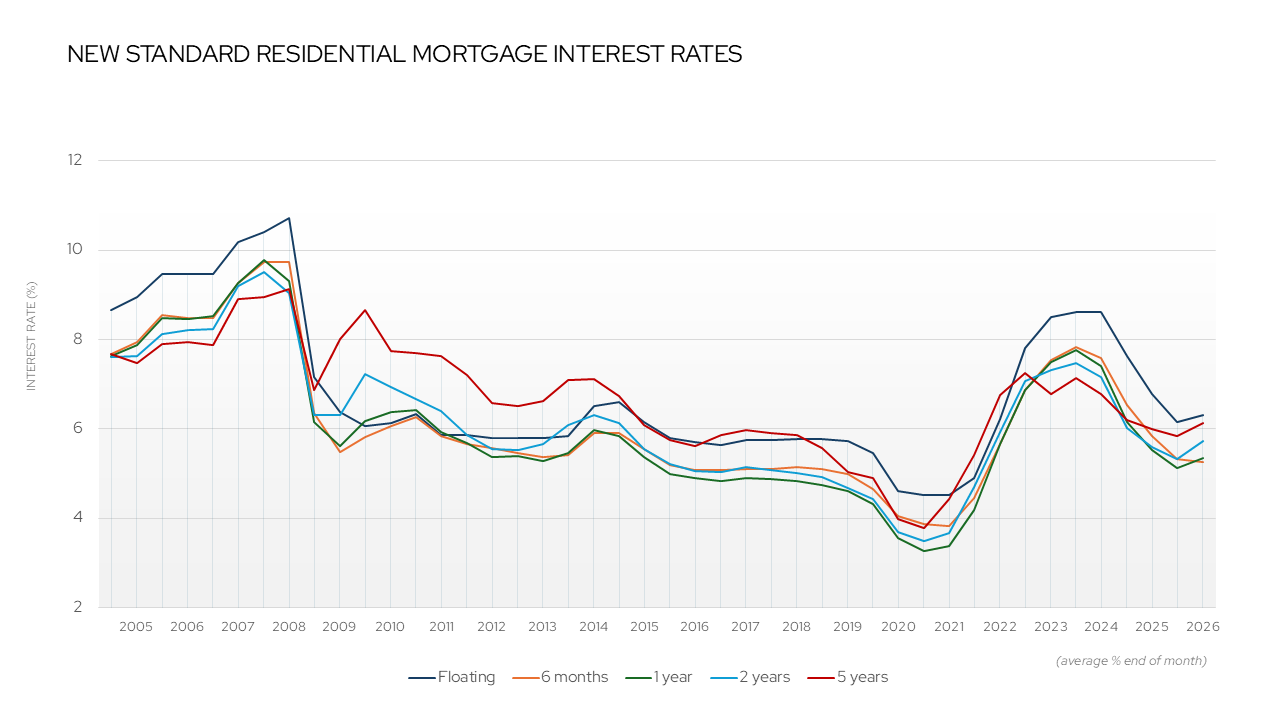
The RBNZ may deliver some further relief through rate cuts, as economists predict.[1] But that relief will be swallowed by cost increases that don't respond to monetary policy. Council rates aren't discretionary. Power bills aren't negotiable. Insurance premiums exist beyond household bargaining power. The very things households need most are the things rising fastest, creating a squeeze that monetary policy cannot relieve.

The Rates Reality

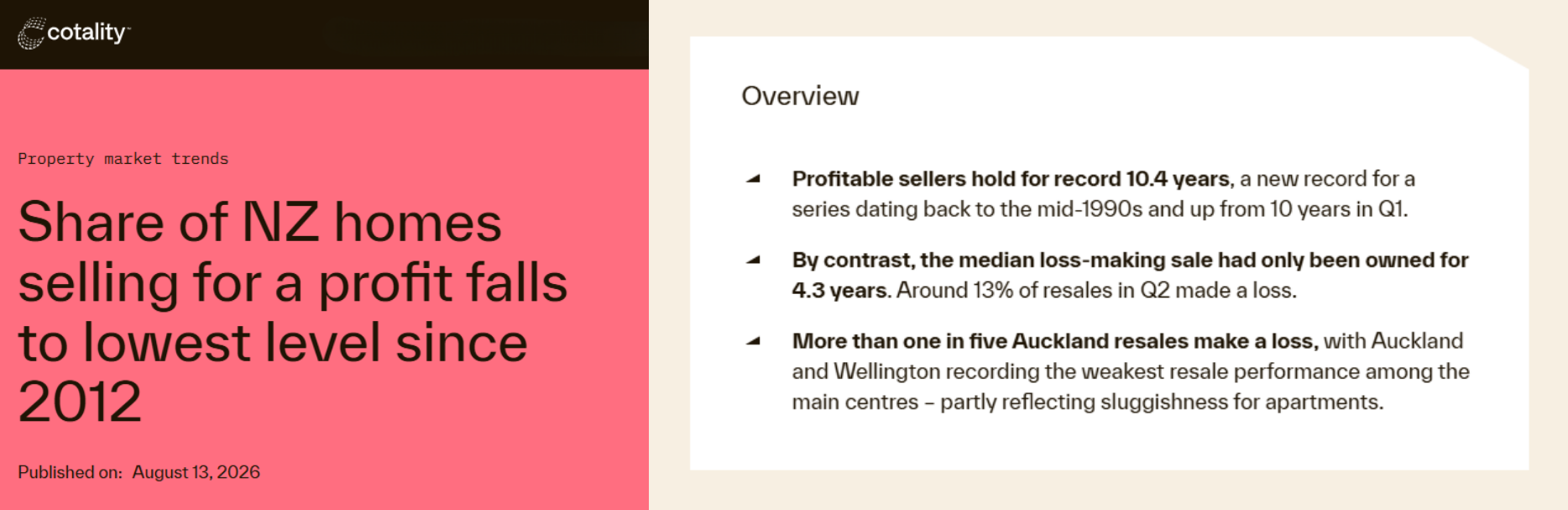
Hastings imposed a 19% rates increase for 2024/25[5][6] and another 15% for 2025/26.[7] These aren't just numbers on a page – they represent real pain for households already stretched thin by the cost of living crisis. For an average property paying $3,000 annually, rates have jumped to approximately $4,000, with another increase pushing that toward $4,600.

Ratepayers have done their bit – the cyclone-specific targeted rate elevated these increases to the upper band among New Zealand councils. But here's the problem: this is temporary revenue with a 16-year sunset clause,[6] yet spending patterns suggest permanent cost increases have been baked in, with significant portions funding non-cyclone expenditure.

When the cyclone charge expires, does the council try to keep ratepayers paying the cyclone charges to fund other council nice-to-haves, or does it reduce rates? The current trajectory builds in a structural deficit that future ratepayers will inherit. It's a classic government budget problem: temporary revenue streams funding permanent spending commitments. The logic doesn’t add up, and costs get kicked down the road regardless.

Across New Zealand, councils have faced unprecedented cost pressures. A 2024 report commissioned by Local Government NZ found that construction costs for bridges increased 38%, sewage systems 30%, and roads and water supply systems 27% over three years.[8] The average rates increase across the country hit 15% for 2024/25,[8] with some councils proposing even higher increases. But these pressures, while real, don't explain why councils can't find operational efficiencies to partially offset infrastructure cost inflation.

The Residential Reckoning

Nowhere does this squeeze play out more starkly than in residential rental property, where New Zealand's retirement wealth delusion meets economic reality.

For decades, Kiwis were sold a simple story: property is the path to retirement security. Buy a rental. Watch it appreciate. Collect rent. Retire comfortably. It's been cultural gospel, reinforced by favourable tax treatment and the absence of capital gains taxes. An entire generation built its retirement strategy around this asset class.

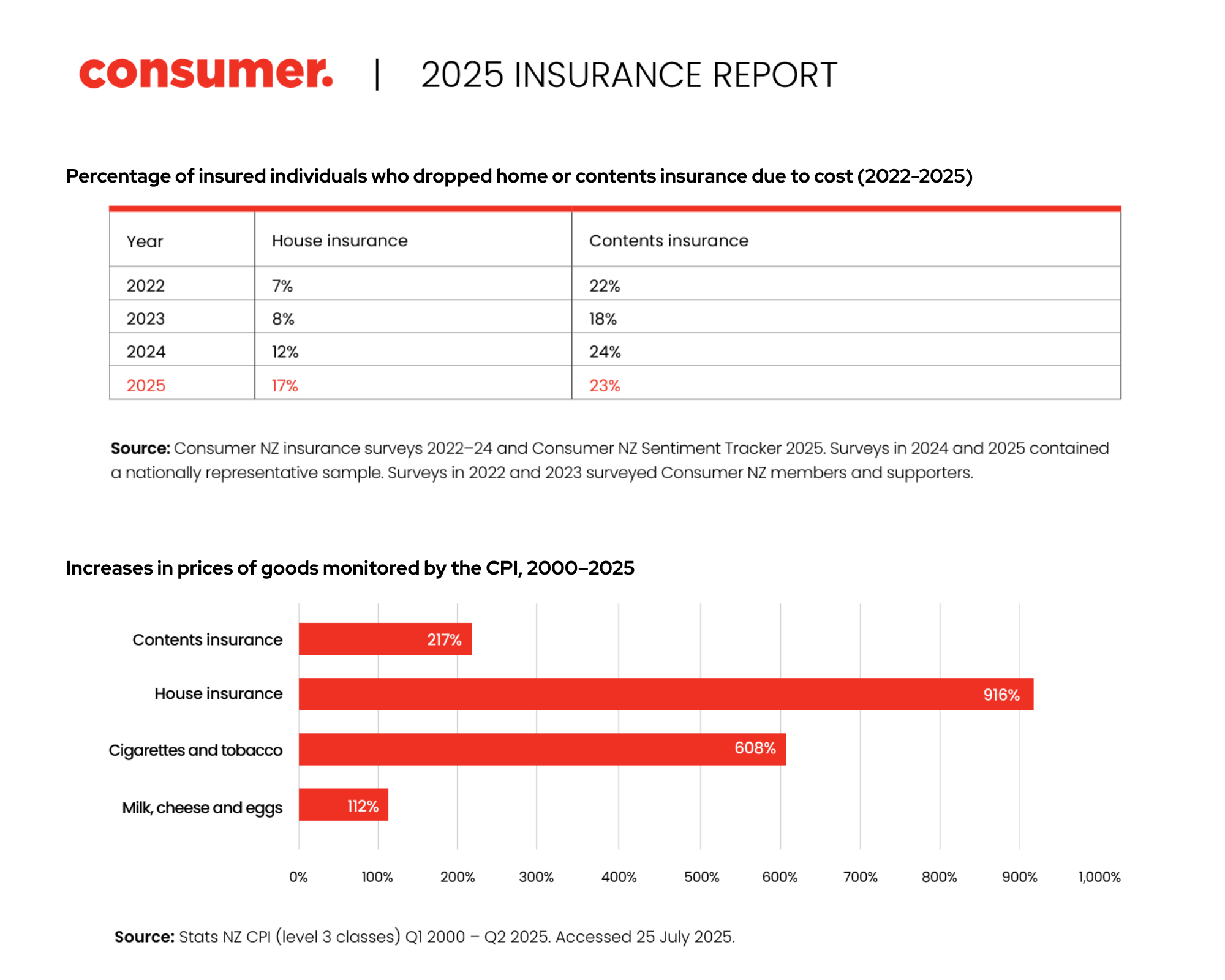
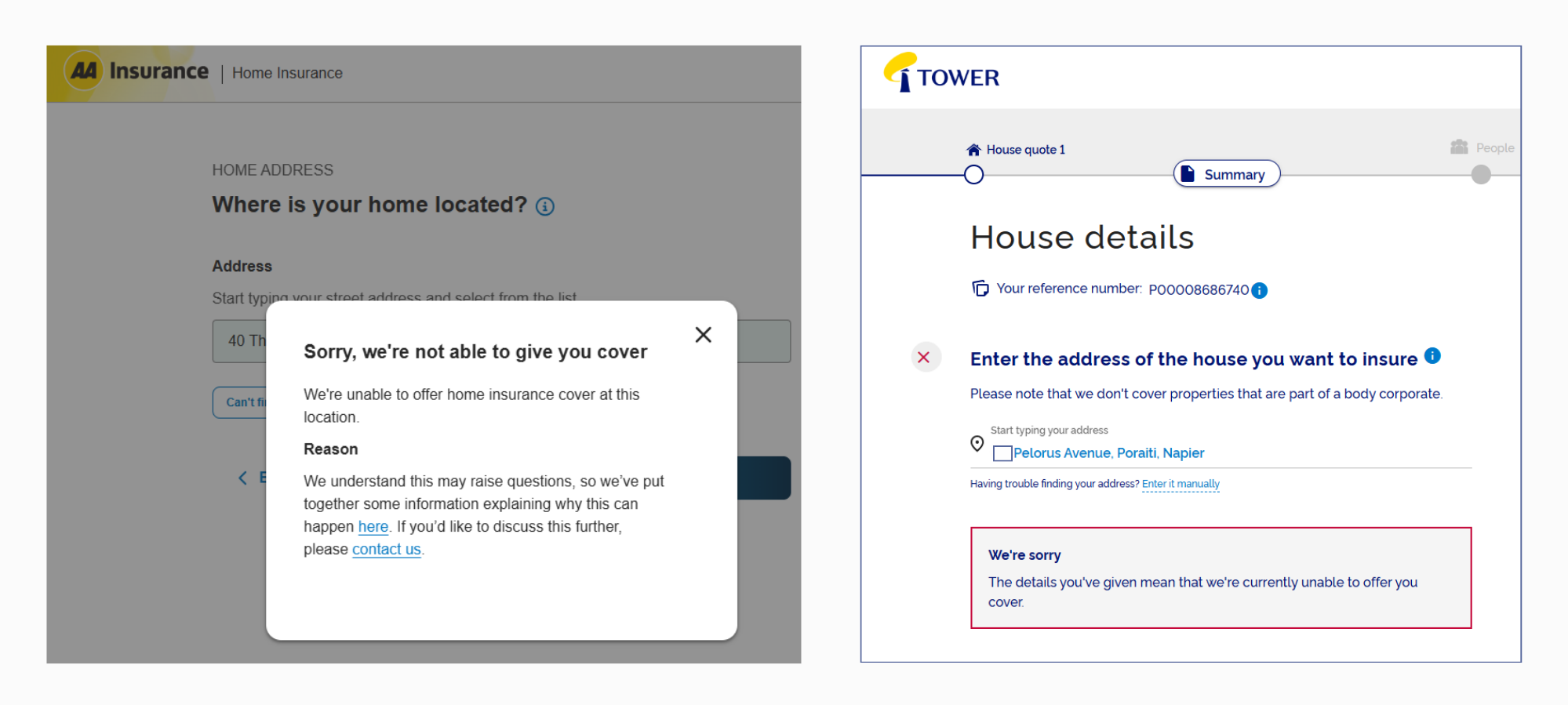
But that story is fast becoming a tragedy. Residential landlords face the same 8.8% rates increase, insurance premiums that have doubled or tripled post-Gabrielle.[1] These costs aren't negotiable. They simply arrive and must be paid. Unlike businesses that can adjust their cost structures or pass costs to customers, landlords operate in a market with hard ceilings.

Tenants can't just absorb corresponding rent increases endlessly. The market has found its ceiling through the hard limit of what people can actually pay when their own costs are climbing. Tenants are facing their own squeeze – grocery bills up, power bills up, their own insurance costs rising. There's no capacity to absorb 8-11% annual rent increases. So who wears it? The landlord.

When non-negotiable costs grow at 8-11% annually, but rent increases are market-capped at 3-4%, the gap widens, and the squeeze tightens. Properties once generating positive cash flow now require subsidies from other income. The "investment" becomes a wealth destroyer rather than a wealth builder.

The residential property investment model was built for an era where rates grew modestly and insurance was predictable. That era is over. We now have a cohort who bet retirement security on an asset class where holding costs accelerate faster than income. Some will sell. Some will hold on, hoping for capital appreciation to compensate for negative carry. Many will discover too late that their retirement strategy has a fundamental flaw.

It's sad – not because property investors deserve special sympathy, but because it represents massive misallocation of national savings. An entire generation channelled wealth-building into residential property instead of productive assets or diversified investments. Capital that could have funded business growth, innovation, or infrastructure went into bidding up house prices instead. Now they're discovering that when monopolistic cost structures meet market-limited revenue, leverage works in reverse.

The Policy Vacuum

The Kiwibank data disproves the myth of symmetrical adjustment.[1] Households adapt. Markets respond. But essentials march to their own drum, disconnected from broader economic discipline. This asymmetry matters because it means traditional economic responses – tightening monetary policy, reducing household spending – fail to address the source of inflation when it concentrates in monopolistic services.

The government is considering rates-capping legislation to refocus councils on "doing the basics, brilliantly."[10] But rates capping may be only the opening salvo. The Government has just announced proposals to eliminate regional councillors entirely, replacing them with 'Combined Territories Boards' made up of mayors.[15] More significantly, each region will be required to prepare a 'regional reorganisation plan' within two years, with options including merging territorial authorities into unitary councils. The Government's stated goal: "cut duplication, reduce costs, and streamline decision-making."[15]

For councils like Hastings already stretched thin by cyclone recovery, this represents both opportunity and threat.

The opportunity: forced consolidation might finally deliver the operational efficiencies that should have been found voluntarily.

The threat: poorly designed reorganisation could create even larger bureaucracies with less accountability. The pressure to demonstrate fiscal discipline just intensified dramatically.

Council external debt has surged from $353 million in December 2023[11] to $472 million as at 30 June 2025,[13] and is projected to reach $700 million by 2030.[9] That's debt more than doubling in less than three years, with the trajectory showing no signs of slowing. Interest payments alone consume an ever-larger share of rates revenue, creating a vicious cycle where borrowing to fund current operations crowds out funding for actual services.

With voter turnout at just 44.71%[3] and Schollum winning with 26.06% of votes cast, approximately 12% of eligible voters delivered her a victory. She has three years to prove she deserves to be re-elected, which means proving she understands how angry ratepayers are about rate rises. The mandate is thin. The patience is thinner.

For property investors, the question is starker: how long can negative carry be sustained before the retirement wealth strategy becomes the retirement wealth trap? For how many years can landlords subsidise tenants from other income before they capitulate and sell? And when they do sell, who buys investment property with known negative carry characteristics?

Until we confront why essentials climb at double-digit rates while the broader economy slows, we're not solving inflation. We're watching it concentrate in the places people can't escape. That concentration makes the burden harder to bear and the economic distortions more severe.

That's not economics adapting. That's economics breaking down, one essential service at a time.

Nick Stewart

(Ngāi Tahu, Ngāti Huirapa, Ngāti Māmoe, Ngāti Waitaha)

Financial Adviser and CEO at Stewart Group

  • Stewart Group is a Hawke's Bay and Wellington based CEFEX & BCorp certified financial planning and advisory firm providing personal fiduciary services, Wealth Management, Risk Insurance & KiwiSaver scheme solutions.

  • The information provided, or any opinions expressed in this article, are of a general nature only and should not be construed or relied on as a recommendation to invest in a financial product or class of financial products. You should seek financial advice specific to your circumstances from a Financial Adviser before making any financial decisions. A disclosure statement can be obtained free of charge by calling 0800 878 961 or visit our website, www.stewartgroup.co.nz

  • Article no. 435


References

[1] Kiwibank Economics (2025). "NZ Inflation: What's really happening?"

[2] NZ Herald (2024). "Hastings mayoral race - Wendy Schollum claims the win, but her closest rival hasn't conceded."

[3] NZ Herald (2024). "Local elections 2025: Wendy Schollum new Hastings Mayor as last-minute voters extend her lead."

[5] Hastings District Council (2024). "Council reduces proposed rate increase."

[6] Wikipedia (2025). "2022–2025 term of the Hastings District Council."

[7] NZ Herald (2025). "Central Hawke's Bay tries to lower rates hike to 10% as cyclone-hit Hastings sticks with 15%."

[8] 1News (2024). "New Zealand homeowners facing an average rates rise of 15%."

[9] NZ Herald (2024). "Hastings facing one of highest rates rises in country - council could hit $700 million debt."

[10] RNZ (2025). "Local Government New Zealand crying foul over potential rates capping."

[11] NZ Herald (2024). "Hastings District Council nearly $400 million in debt as cyclone costs compound."

[13] Hastings District Council (2025). "2024-2025 Annual Report."

[14] Schollum, W. (2024). Facebook post, Mayor Wendy Schollum of Heretaunga Hastings, November 2024.

[15] New Zealand Government (2025). "Local Government Reorganisation Proposals." BayBuzz Special Alert.

[16] NZ Herald. (2020). Too much hui and not enough do-ey: Why workplace meetings can be wasteful. Retrieved from https://www.nzherald.co.nz

[17] National Māori Authority. (n.d.). Matthew Tukaki on suicide prevention: “Too much hui and not enough doey – so we are taking action right now.” Retrieved from https://www.nationalmaoriauthority.nz

The 12-Month Tax Gambit: Labour's Calculated Risk

Announcing a major tax policy a year before an election isn't just unusual; it's almost unheard of.

Conventional political wisdom dictates you either implement unpopular measures early in your term, or promise them after securing victory. Labour's decision to foreground a 28% capital gains tax ‘CGT’ a full year out from polling day demands examination, particularly through the lens of economist Arthur Laffer. His insight cuts straight through political calculation: speeding fines are a tax. Governments use taxes to stop people doing things they don't want them to do. So why would you tax investment when the country desperately needs more of it?¹

The timing becomes immediately suspect. Labour sits in opposition facing a National-led government, and historically, opposition parties campaign on aspiration rather than taxation. Helen Clark's 2005 Labour government actively campaigned against CGT proposals, recognising the electoral toxicity.² Yet here we are in late 2025, with Labour essentially writing National's attack ads 12 months in advance.

The Political Theatre

The political play is obvious: announce now, let the controversy "settle," and by election day the CGT feels like old news rather than shocking revelation. Labour hopes voters will be desensitised to what might otherwise be campaign-ending policy. It's political inoculation through extended exposure, with the policy carefully designed as "CGT light" (exempting family homes, farms, KiwiSaver and shares) to avoid the comprehensive wealth taxation that spooked voters in previous attempts.²

Yet as business commentator Damien Grant observes, the policy amounts to "a marketing plan sketched on the back of a napkin that had been used to wipe the lipstick off a chardonnay glass after drinks at a Fabian Society soiree."⁶ The policy amounts to a few pages in a glossy press release with less substance than a frozen coke.

If you own property in July 2027 and sell it after that date, you pay 28% of any increase in value, with no allowance for inflation. Family homes are exempt. That's essentially it—the rest is left to imagination and future consultation.

Recent polling shows Labour's framing is working – 43% support versus 36% opposition.² The 12-month runway allows this narrative to solidify. Labour bets that sustained messaging about "fairness" will ultimately land better than National's "tax on ambition" counter-narrative.

The Fine Fallacy

Laffer's analogy cuts through the fluff. When government fines speeding, fewer people speed – that's the point. When government taxes cigarettes heavily, fewer people smoke – that's the objective. These are taxes deliberately designed to discourage the behaviour.

Applied to investment taxes, the logic is inescapable. When government taxes investment gains at 28%, fewer people invest. Yet that's meant to be revenue-neutral economic policy rather than deliberate discouragement? You cannot fine an activity and simultaneously expect more of it.

The contradiction becomes starker considering New Zealand's actual needs. Treasury warns that 52% of total tax comes from personal income tax, and the group paying this tax is shrinking due to an ageing population.⁴

The country desperately needs productive investment in commercial property, business expansion, and capital formation. Yet Labour proposes taxing precisely these activities, at rates designed to be punitive enough to raise revenue.

This is the economic equivalent of installing speed cameras on the motorway while simultaneously complaining that traffic isn't moving fast enough. You cannot discourage and encourage the same behaviour simultaneously.

The Implementation Damage

The July 2027 implementation date provides convenient political distance: win in November 2026, govern for eight months, then introduce legislation.²

But here's where political cleverness creates economic damage - the announcement effect begins immediately. Why would a developer start a commercial property project in 2026 knowing that any gains realised in 2028 or 2029 will face 28% taxation? Investment decisions from now until 2027 will be distorted by anticipated future taxes, locking capital out of productive uses or sending it offshore.³

The economic damage begins not when the tax takes effect, but when it's announced. We're living through that damage period now. The speeding camera has been installed, and the signs are up; don't be surprised when drivers slow down.

The British Warning

Laffer's analysis of Gordon Brown's decision to raise Britain's top rate from 40% to 50% provides the cautionary tale. The UK Treasury's own "Laffer section" showed the increase "not only did not get more revenue, it got you a lot less prosperity. People left the country, people used tax shelters, dodges, loopholes, all that."¹ As Laffer emphasised, this wasn't his opinion imposing American economics on Britain—"This was Britain doing the Laffer curve."¹

As Laffer notes from decades of US tax data: "Every time we've raised the highest tax rate on the top 1% of income earners, three things have happened. The economy has underperformed, tax revenues from the rich have gone down, and the poor have been hammered."¹

Conversely: "Every single time we've lowered tax rates on the rich, the economy has outperformed. Tax revenues from the rich have gone up and the poor have had opportunities to earn a living, to live a better life."¹

The Practical Nightmares

The practical problems compound the economic ones. Grant notes that inflation has already created havoc in Australia, where properties often can't be sold “because almost all of the price is considered a capital gain. This will be worse on the Hipkins plan because there is no indexation.”⁶

Consider a property bought in 2015 for $500,000 is now worth $800,000. Under Labour's plan, the entire $300,000 gain faces 28% taxation – that’s $84,000. But how much of that gain is real appreciation versus inflation? Without indexation, investors pay tax on phantom gains that merely reflect currency debasement.

Meanwhile, definitional nightmares await. Australia's capital gains tax guide runs to 339 pages, with court judgements adding hundreds more.⁶ Is replacing a kitchen a capital improvement or maintenance? What about landscaping? A 2028 Fisher and Paykel dishwasher replacing a 1980s Westinghouse: expense, or capital upgrade? As Grant notes drily: "Tax lawyers and accountants will be kept busy."⁶

The Chartered Accountants Institute supports Labour's proposal – hardly surprising, given it guarantees full employment for their profession dealing with compliance complexity.

The Fiscal Illusion

Even Chartered Accountants acknowledge that CGTs "do not generate significant revenue in the short or even medium terms. Long term, however, they typically provide a steady revenue stream… Using them to cover a specific policy expense is unusual."⁴ Yet Labour wants to use this non-existent revenue immediately to subsidise doctor visits.

As Grant observes: "There is a cash shortfall on Labour's own analysis in the early years which, like everything else in this policy, the resolution is left to the imagination."⁶ Here's the speeding fine logic again: if you install cameras to generate revenue from fines, you're simultaneously reducing the very behaviour that generates the revenue.

Successful speed cameras mean less speeding, and therefore less revenue. A capital gains tax that successfully deters property speculation means less property investment, and again, less revenue.

The Historical Pattern

This is Labour's seventh CGT attempt since 1973.² Norman Kirk's first attempt taxed gains at up to 90%, a rate so confiscatory it was quickly abandoned. Phil Goff's 2011 version, David Cunliffe's 2014 proposal, and Jacinda Ardern's 2019 attempt all failed politically.

Each previous effort proved politically costly and economically counterproductive. Voters instinctively understand Laffer's speeding fine logic, even if they can't articulate the economics by name. They recognise taxing investment reduces investment, just as fining speeding reduces speeding. Winston Churchill’s timeless observation perfectly captures the impossibility of taxing your way to prosperity – you cannot stand in a bucket and lift yourself up by the handles.⁵

The Alternative Vision

Laffer's prescription for struggling economies is brutally simple: "You want a low-rate, broad-based flat tax, spending restraint, sound money, minimal regulations, and free trade. And then get the hell out of the way."¹ Labour offers the opposite with new taxes on capital, sketchy implementation details, and revenue projections that don't add up.

As Laffer puts it: "Poor people don't work to pay taxes. They work to get what they can after tax. It's that very personal and very private incentive that motivates them to work, to quit one job and go to another job, to get the education they need to do it."¹ Replace "poor people" with "investors" and the logic remains - capital seeks returns. Tax those returns heavily enough, and capital goes elsewhere.

Perhaps most revealing: if this policy were genuinely beneficial for economic growth, why the elaborate political choreography? The answer lies in Laffer's observation about lottery tickets: "Everyone—tall, short, skinny, fat, old, young—they all want to be rich. Why does your government then turn around and tax the living hell out of the rich?"¹

New Zealanders don't want to punish success; they want pathways to achieve it themselves. They buy lottery tickets hoping to strike it rich. The government encourages dreams of wealth while simultaneously taxing the achievement of wealth.

The Verdict

The election will shortly reveal whether Labour's calculated 12-month strategy succeeds politically. By announcing early, they've given the policy time to settle, given themselves something concrete to campaign on, and satisfied membership demands for action on wealth taxation.

But both Laffer's economic analysis and Grant's practical critique suggest that regardless of electoral outcome, the policy itself represents strategic error. It's economic theory ignored in favour of political positioning.

New Zealand has better options. Genuine broadening of the tax base, reform of property taxation to encourage productive use, addressing infrastructure bottlenecks, and creating conditions for productivity growth would all contribute more to long-term prosperity than taxing capital gains at 28%. But those approaches require the hard work of reform rather than the easy politics of taxing "wealthy property investors."

Is Labour's CGT announcement politically canny, or economically catastrophic? When you deliberately discourage an activity through taxation, you can’t be surprised when you get less of it.

Labour has installed the camera; investment will slow accordingly. Whether that's clever politics or economic self-harm depends entirely on whether you're focused on winning the next election or building the next generation's prosperity.

As Laffer would note, you cannot tax an economy into prosperity. And you most certainly cannot stand in a bucket and lift yourself up by the handles.

Nick Stewart
(Ngāi Tahu, Ngāti Huirapa, Ngāti Māmoe, Ngāti Waitaha)

Financial Adviser and CEO at Stewart Group

  • Stewart Group is a Hawke's Bay and Wellington based CEFEX & BCorp certified financial planning and advisory firm providing personal fiduciary services, Wealth Management, Risk Insurance & KiwiSaver scheme solutions.

  • The information provided, or any opinions expressed in this article, are of a general nature only and should not be construed or relied on as a recommendation to invest in a financial product or class of financial products. You should seek financial advice specific to your circumstances from a Financial Adviser before making any financial decisions. A disclosure statement can be obtained free of charge by calling 0800 878 961 or visit our website, www.stewartgroup.co.nz

  • Article no. 433


References

  1. Simmons, M. (2024). Reality Check: Interview with Arthur Laffer. Times Radio.

  2. Opes Partners (2025). 'Does New Zealand Have a Capital Gains Tax? [2025]'. Available at: https://www.opespartners.co.nz/tax/capital-gains-tax-nz

  3. RNZ (2025). 'What you need to know: Seven questions about a capital gains tax'. Available at: https://www.rnz.co.nz/news/business/577065/what-you-need-to-know-seven-questions-about-a-capital-gains-tax

  4. Chartered Accountants Australia and New Zealand (2025). 'Capital gains tax must be considered as part of tax reform'.

  5. Churchill, W.S. (1906). For Free Trade. London: Arthur Humphreys.

  6. Grant, D. (2025). 'Hipkins' capital gains tax policy leaves more questions than answers'. Stuff. Available at: https://www.stuff.co.nz/politics/360878756/damien-grant-hipkins-capital-gains-tax-policy-leaves-more-questions-answers