Article #460
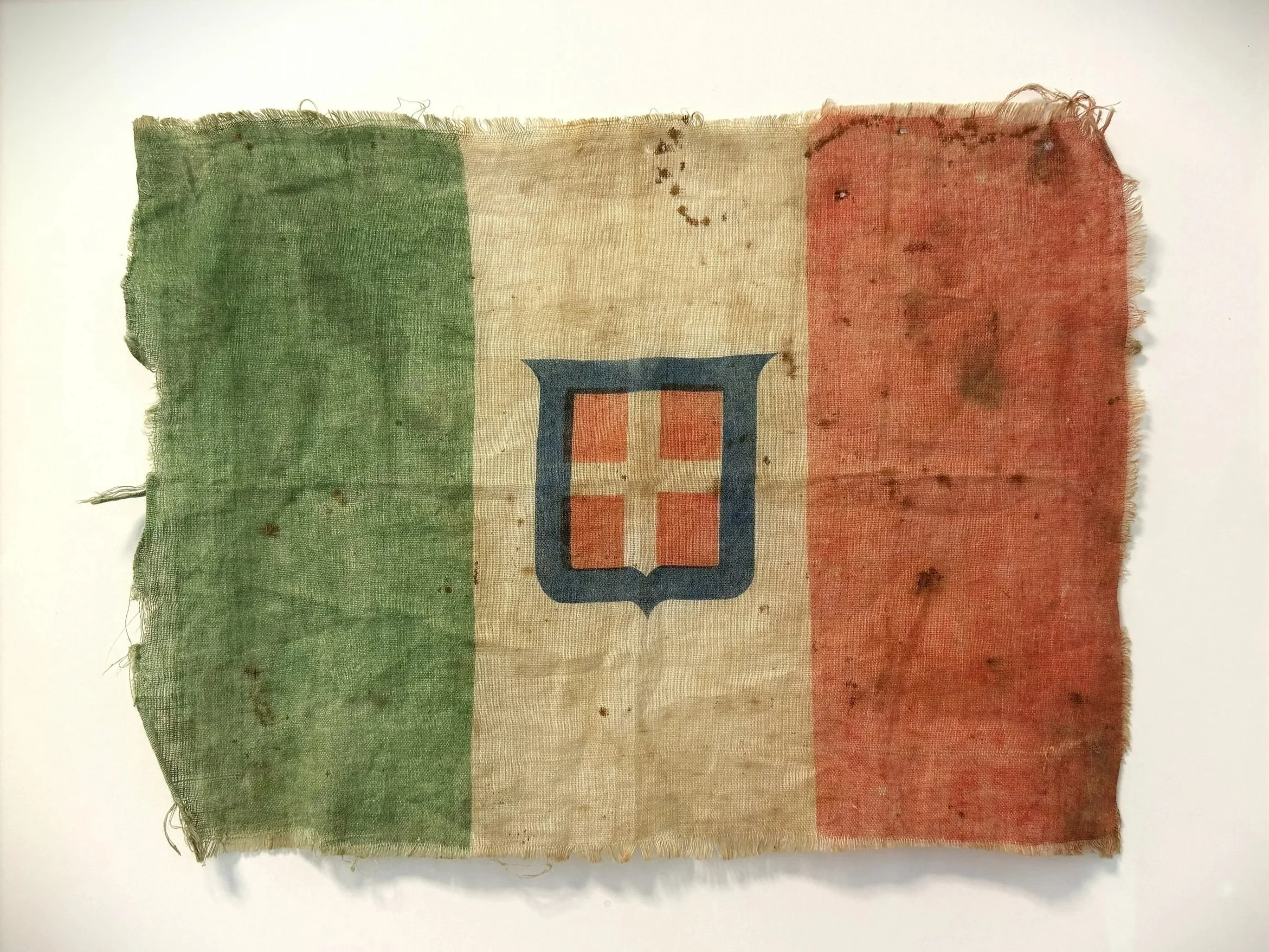
Last weekend we marked King's Birthday - the official birthday of a man none of us voted for, none of us can remove, and most of us will never meet. The monarchy survives on charm, inertia, and a constitutional bargain held for centuries: the King reigns on the condition he does not rule.
The same cannot be said of our Council-Controlled Organisations. In three weeks' time, that contrast becomes expensive.

Last October, New Zealanders voted in 42 simultaneous referendums on Māori wards. 24 councils voted to remove them and 18 to keep them. Nationally, more than 542,000 voters supported retaining Māori wards against around 468,000 who opposed them. Whatever your view, the principle was clear: how local democratic representation is structured is important enough for voters to decide directly.
Now apply the same lens to CCOs. These organisations sit at the intersection of three conditions that create a serious accountability vacuum:
They run monopolies or near-monopolies - no competitor can offer cheaper water, public transport, or port services.
Their boards are appointed, not elected. Voters do not choose the directors, and the councillors who appoint them do not manage them day-to-day.
Directors are almost impossible to remove when ratepayers are unhappy. CCOs continue unchanged no matter who wins council elections. The democratic feedback loop never closes.
No market discipline. No democratic discipline. Ratepayers pay regardless.
Fuel price hikes annoy us because they flow into the cost of everything. But fuel still operates in a competitive market: you can switch brands, go electric, take the bus, or drive less. Water has no such substitute. You cannot switch providers, install a cheaper pipe, or easily opt out. If fuel prices trouble you, water should give you nightmares - because the entity setting the price answers to no one you can vote out.
If "no taxation without representation" means anything in 2026, any body with the power to compel payment must answer to those who pay. That principle is the foundation of legitimate government.
On 1 July, IAWAI - Flowing Waters Ltd takes over water and wastewater services across Hamilton City and Waikato District. Owned 50:50 by the two councils and in partnership with Waikato-Tainui, its board is appointed by a nine-member Forum: three Hamilton representatives, three Waikato District representatives, and three Waikato-Tainui representatives - all with equal voting rights. Ratepayers will be legally required to buy from an entity whose governance includes voices no voter ever elected.
The Auditor-General warned in 2022 of "a serious diminution in accountability to the public for a critical service". The structural problem remains.
This week, Local Government Minister Simon Watts announced an amendment to the Local Government Act 2002 to restrict voting at council committee meetings to elected councillors only. "Councillors are directly accountable to voters for their decisions," he said. "That's not democratic, so we're fixing it." A welcome principle - but the reform applies only to council committees. The new water CCOs going live in three weeks sit outside the Local Government Act, governed instead under Local Water Done Well. The Forums that select their boards - the very arrangements that breach Watts' own principle - will keep their voting rights intact.
If it is not democratic at council level, it cannot be democratic at the water entity level either.
This is not just a water issue. The same governance model applies to Auckland Transport, port companies, and other major CCOs.
In Wellington, Tiaki Wai - also launching on 1 July - has confirmed a $645,000 CEO salary (more than the Prime Minister) and doubled director fees to $60,000, while households face average bills of $2,418 this year, potentially rising to $6,831 by 2036. Mayor Andrew Little called the salaries "generous". The Commerce Commission is now scrutinising pricing - proof that the only meaningful check is regulatory, not democratic.
The model is heading to Hawke's Bay. From 1 July 2027, water services for Hastings, Napier, and Central Hawke's Bay will transfer to a new joint CCO.
Two practical reforms would close the gap.
First, CCO directors should be either directly elected by ratepayers or appointed exclusively from sitting councillors. Either option creates a direct line of sight from voter to board. The former is more democratic; the latter is cheaper and integrates CCO governance into existing council accountability.
Second, directorships should be term-limited to the electoral cycle. A change in council should automatically refresh CCO boards. At present, voters can throw out a council only to discover the bodies actually running their water, transport, and ports remain untouched.
Critics will object that elected or councillor-appointed directors would be parochial and unqualified. Perhaps. But the current system produces unaccountable parochialism dressed up as professional governance. The ability to vote them out is worth more than the illusion of expertise from people who answer to no one.
We tolerate an unelected sovereign because he sets no rates, signs no major contracts, and cannot raise the price of your shower. He is a constitutional ornament. Our CCO directors are not.
New Zealanders take representation seriously – so why is there exception for organisations that can send us bills we cannot refuse?
No taxation without representation. It is not a slogan. It is the bargain.
Watts has now agreed with the principle - for councils. In three weeks, water entities operating on the very arrangements he has just rejected go live in Wellington and the Waikato. Hawke's Bay follows a year later. Either the democratic principle applies everywhere, or it applies nowhere.
The King, at least, had the decency to stay out of it.

Nick Stewart
(Ngāi Tahu, Ngāti Huirapa, Ngāti Māmoe,
Ngāti Waitaha)
Financial Adviser and CEO at Stewart Group
Stewart Group is a Hawke's Bay and Wellington based CEFEX & BCorp certified financial planning and advisory firm providing personal fiduciary services, Wealth Management, Risk Insurance & KiwiSaver scheme solutions.
The information provided, or any opinions expressed in this article, are of a general nature only and should not be construed or relied on as a recommendation to invest in a financial product or class of financial products. You should seek financial advice specific to your circumstances from a Financial Adviser before making any financial decisions. A disclosure statement can be obtained free of charge by calling 0800 878 961 or visit our website, www.stewartgroup.co.nz
SOURCES
Maori ward referendums (Oct 2025): RNZ; final national tally per Wikipedia (Keep 542,134 / Remove 467,923 / margin 74,211).
IAWAI - Flowing Waters Ltd (Hamilton/Waikato water CCO, operational 1 July 2026): Hamilton City Council governance page.
Local Water Done Well overview: Bell Gully briefing.
Auditor-General, "Submission on the Water Services Entities Bill" (8 August 2022): oag.parliament.nz.
Local Government Act amendment announcement (Hon Simon Watts, 2 June 2026): Stuff; press release reproduced at Mirage News, "Council Voting Limited To Elected Officials".
Tiaki Wai pay and pricing (April-May 2026): NZ Taxpayers' Union release; NZ Herald, "New Wellington water entity Tiaki Wai defends salary spend for top officials" (13 April 2026); NZ Herald, "Tiaki Wai opens books, warns of higher costs to households" (24 March 2026); RNZ, "Mounting confusion over new water bills looming for Wellington region residents" (22 May 2026).
Hawke's Bay joint water CCO (operational 1 July 2027): Napier City Council news release.