Retirement Planning

The Centurion’s Warning: Superannuation at 65—comforting politics, hard maths

Article #450

Nine years ago, I wrote about Roman Centurions. The New Zealand Economics Forum last month proved I wasn’t being dramatic enough.

When I wrote my very first Canny View in September 2017, I told the story of Roman Emperor Augustus and his military pension scheme, the Aerarium militare. Augustus faced a problem that will sound familiar: Romans were living longer, the pension fund was catastrophically underfunded, and someone had to pay for it.

His solutions were creative, if not entirely honest. Keep raising taxes. Extend the military service requirements, again and again. And when the pension rolls got too heavy? Launch another campaign! Rome always found another frontier war conveniently thinned the numbers — the Germans, the Dacians, the Parthians. It was just fiscal procrastination dressed up as military glory.

I wrote then: what is happening today is no different to those Roman times. At the end of the day, someone has to pay for it.¹

The Road to Rome’s Problems

The Aerarium militare is one of history’s most instructive fiscal cautionary tales. Augustus established it in 6 AD, seeding it with 170 million sesterces of his own money — a sum so large he had to make it a personal gift to avoid a Senate revolt over new taxes. When that proved insufficient, he pushed through a 5% inheritance tax and a 1% sales tax on goods sold at auction to keep the fund solvent. When Tiberius later tried to abolish the sales tax, his generals warned him that there was no other way to pay veterans. So, the tax stayed.

Each time the fund came under pressure, the response was the same: extend the service requirement. Augustus raised it from 16 years to 20, then up to 25. Soldiers who had signed up expecting to retire at 16 years found the goalposts moved, repeatedly, for fiscal reasons. Sound familiar?

Some historians trace a significant part of Rome’s eventual decline to the Senate later cutting pension payments altogether. With less incentive to serve, Roman citizens stopped enlisting. The ranks filled with barbarian mercenaries. Cohesion and discipline collapsed. The pension problem eventually helped unravel the army that held the Empire together.

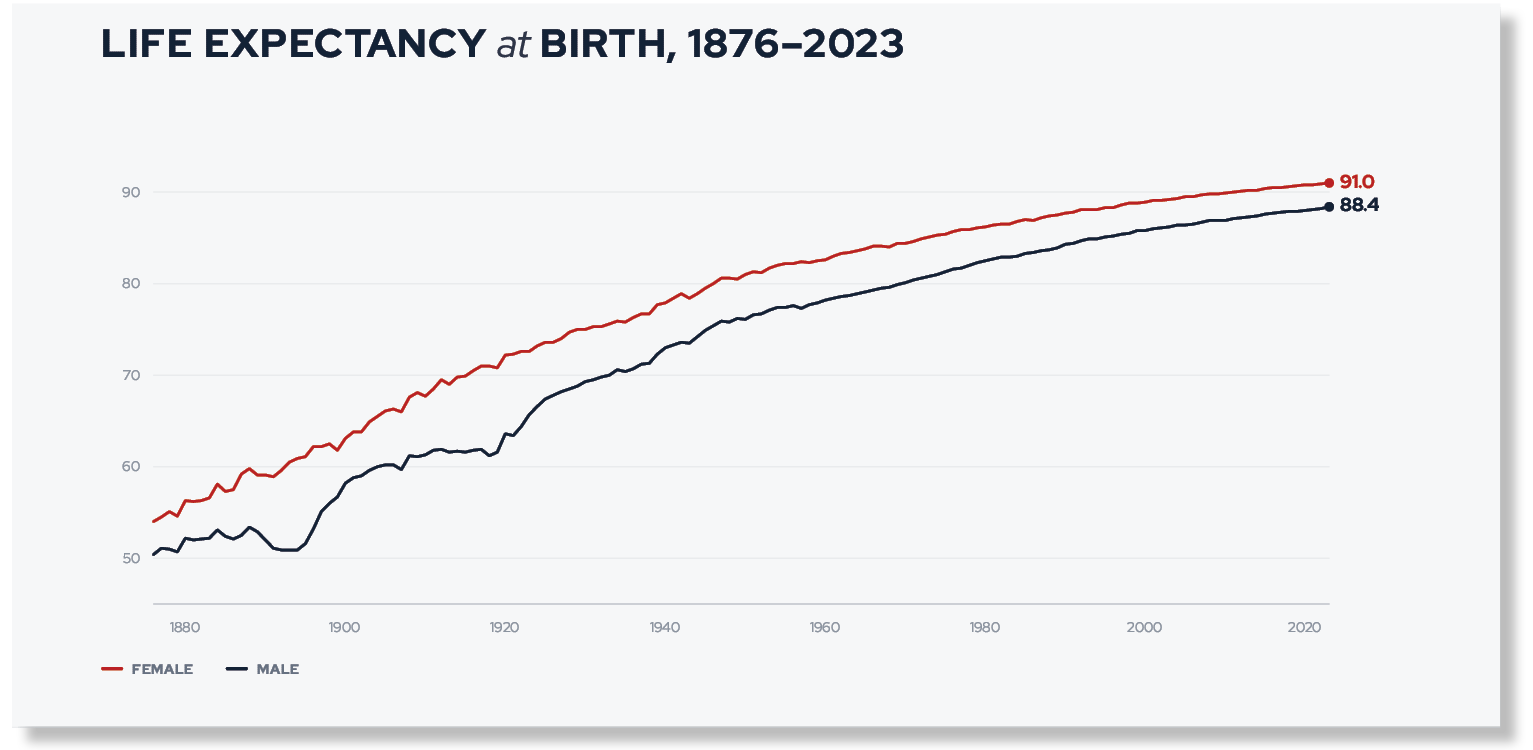
New Zealand introduced its own old-age pension in 1898 — one of the first countries in the world to do so, under Richard Seddon’s Liberal government. It would be received at age 65, when male life expectancy was just 56. Like the Aerarium, it was never designed to be paid to most people. It was a safety net for the few who beat the odds. The pension that most New Zealanders now expect to receive for 20-plus years of retirement was conceived for people who, statistically, were unlikely to reach it at all.

Shifting Demographics Add Up to a Problem

Back in 2017, when I wrote that first article, over 15% of New Zealand’s population was aged 65 or older. Today, we’re past 16% and heading towards 20–21% within the next decade.⁵ We’ve gone from around 750,000 receiving NZ Super then, to over 912,000 today.⁶ Crucially, the working-age population supporting them is shrinking proportionally.

It’s not a sudden crisis of compassion, but rather a mathematical problem. The ratio of workers to retirees is deteriorating. Empires fall not from external threats but from internal fiscal contradictions — and we are living that reality now.

What’s Changed Since 2017?

In 2017, Bill English had just opened the door to raising the retirement age to 67 from 2037. Jacinda Ardern promptly pledged to repeal it and declared she’d resign before raising the retirement age. Labour won, the policy was scrapped, and the age stayed at 65. It hasn’t shifted since.

Movement comes only at the margins. Residence requirements for NZ Super are increasing from 10 to 20 years, phased through to 2042.⁷ Superannuation will consume 18.6% of tax revenue by 2029, up from 16.6% in 2023.³ But the fundamental policy lever — the eligibility age — remains politically untouchable. Augustus would understand completely.

What Treasury Said in Hamilton

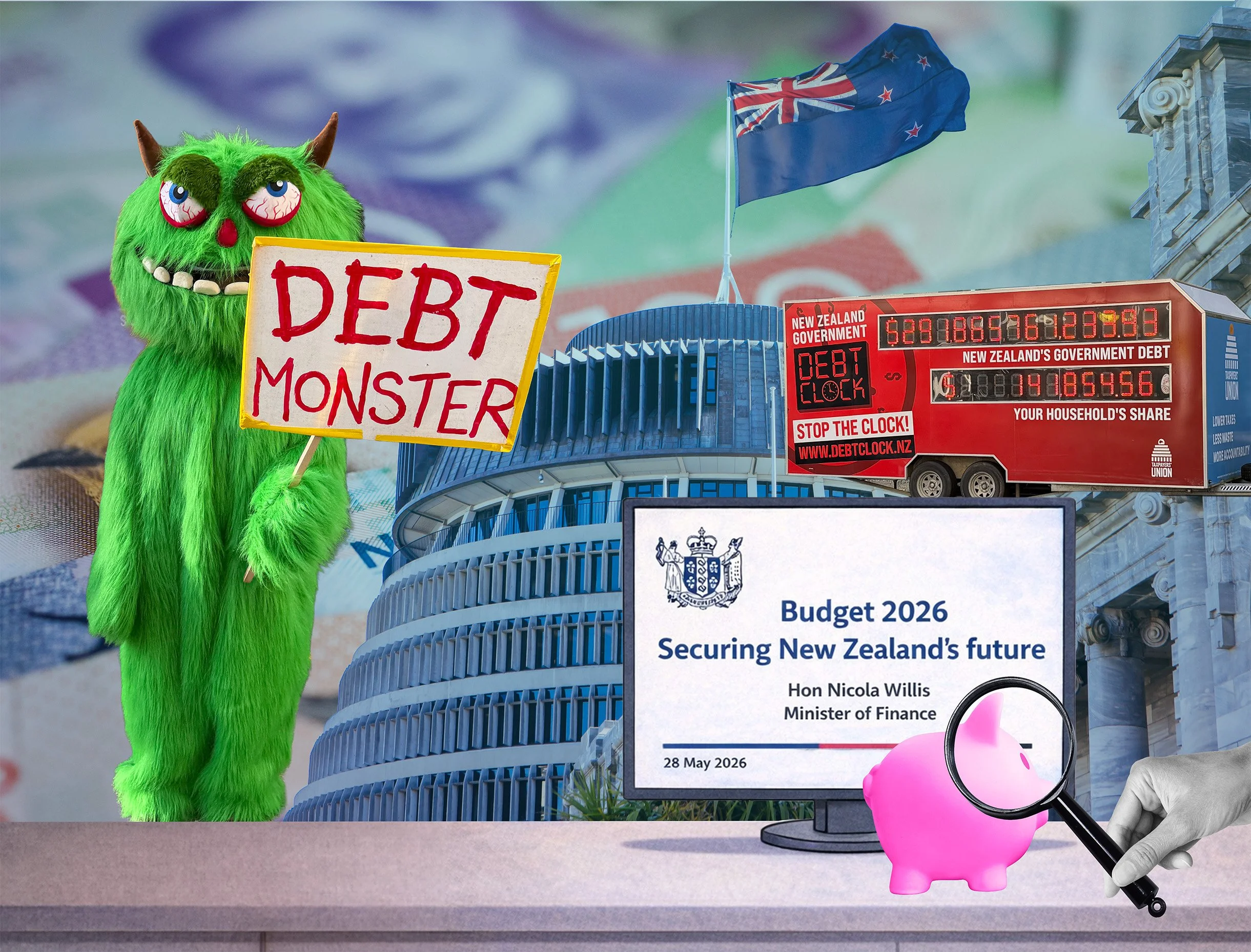
At February’s New Zealand Economics Forum in Hamilton, Treasury Secretary Iain Rennie warned that ageing is already materially lifting expenditure and will continue to do so throughout the next decade, outpacing revenue growth. Without policy changes, New Zealand’s debt trajectory will become unsustainable.²

The number of people receiving superannuation will grow from 928,000 today to over 1,084,000 by 2029/30. That’s roughly the entire population of Tauranga added to the pension rolls in just under five years, costing a cool $7.7 billion more per year – equivalent to 22% of all projected tax revenue growth over that period.² Rennie was clear this isn’t a problem for future governments alone: “They are part of the chill headwinds confronting the government now.”²

Treasury’s longer-term projections show that without policy changes, government debt could reach unsustainable levels by the 2060s. This would be driven primarily by superannuation and healthcare costs for our ageing population.⁴ Every year of inaction makes the eventual adjustments more severe. That’s Treasury’s own modelling, not an opinion.

The Age Question Nobody Wants to Answer

At the same forum, a panel of economists and former politicians concluded that New Zealand can’t afford superannuation at 65… or even 67. Some suggested eligibility may need to rise as high as 72 or 73 to be viable long-term.²

Back to our Roman friends: Augustus didn’t want to cut centurion pensions either, as it was politically impossible. Instead, he extended service requirements, raised taxes, and launched another Parthian campaign. Each short-term fix made the structural problem worse. Eventually, the promises became mathematically impossible to honour, and the system failed.

We are not Augustus. We have better data, better institutions, and better options. What we seem to lack is the political will to use them.

What Actually Needs to Happen

Raising the age alone won’t fix this. The Forum panel agreed on that much.²

The deeper issue is savings and productivity. There is no credible path to lifting New Zealand’s productivity without matching Australia’s savings rate.² That means taking KiwiSaver seriously: Not as a nice-to-have, but as the foundation of our retirement system.

With 3.4 million New Zealanders enrolled — 90% of the workforce — KiwiSaver has been a genuine success. But 1.6 million members were making no contributions as of March 2025, either out of the workforce or on contribution holidays.⁴ It’s a structural gap we keep patching rather than fixing.

Compulsory contributions, properly locked in until retirement, would be a meaningful start. Paired with a gradual, signalled increase in eligibility age — giving people decades to plan — and we begin to look less like Augustus clutching at straws, and more like a country with a plan.

If you’re under 50, don’t rely solely on NZ Super. Your KiwiSaver balance isn’t a supplement anymore. It’s becoming the primary pillar of your retirement income – treat it accordingly.

The 450th Edition Lesson

In my first article, I concluded that failing to act would be irresponsible and place an extremely unfair burden on younger generations.¹ Nine years later, that’s exactly what we’ve done.

New Zealand is in a stronger position than most comparable countries. But public debt is at its highest point in 30 years, and the cost curve is steepening. The window for gradual, manageable change is narrowing.

The Romans had options. They could have reformed early, adjusted gradually, and built a sustainable system. Instead, they extended, delayed, promised — until the promises became impossible to honour and the system helped collapse the army that held everything together.

We still have choices; they didn’t. But as Treasury made clear last month, that won’t be true forever. And conversation without action is just more Parthian campaigning.

The Centurions learnt too late that empires don’t honour promises they can’t afford. We can avoid that mistake. But only if we start now.


Nick Stewart

(Ngāi Tahu, Ngāti Huirapa, Ngāti Māmoe,
Ngāti Waitaha)

Financial Adviser and CEO at Stewart Group

  • Stewart Group is a Hawke's Bay and Wellington based CEFEX & BCorp certified financial planning and advisory firm providing personal fiduciary services, Wealth Management, Risk Insurance & KiwiSaver scheme solutions.

  • The information provided, or any opinions expressed in this article, are of a general nature only and should not be construed or relied on as a recommendation to invest in a financial product or class of financial products. You should seek financial advice specific to your circumstances from a Financial Adviser before making any financial decisions. A disclosure statement can be obtained free of charge by calling 0800 878 961 or visit our website, www.stewartgroup.co.nz


References

¹ Stewart, N. (2017, September 16). Like Romans, fall on our sword and raise retirement age. Stewart Group. https://www.stewartgroup.co.nz/we-love-to-write/2017/9/16/like-romans-fall-on-our-sword-and-raise-retirement-age

² New Zealand Economics Forum 2026 (February 2026). Treasury presentations on fiscal sustainability and superannuation costs.

³ New Zealand Treasury. (2025). Budget Economic and Fiscal Update 2025. https://www.treasury.govt.nz/publications/efu/budget-economic-and-fiscal-update-2025

⁴ New Zealand Treasury. (2025). He Tirohanga Mokopuna 2025 – Long-term Fiscal Statement. https://www.treasury.govt.nz/publications/ltfp/he-tirohanga-mokopuna-2025

⁵ Stats NZ. (2024). Population estimates and projections. https://www.stats.govt.nz

⁶ Ministry of Social Development. (2025). New Zealand Superannuation recipient data.

⁷ Work and Income. (2024). Change to residence criteria for NZ Super and Veteran’s Pension. https://workandincome.govt.nz/eligibility/seniors/nz-super-and-veterans-pension-residency-changes-2024.html

The People's Poet and The People's Purse: From Burns to KiwiSaver

Article # 441

"A man's a man for a' that." - Robert Burns, 1795 [1]

Nigh on Burns Day feels like an appropriate moment to reflect on Scotland's most beloved poet. Robert Burns was no mere wordsmith; he was a revolutionary who believed wisdom and dignity belonged to everyone, not just the privileged few. Writing in Scots dialect rather than formal English, he made poetry accessible to common people in the 1700s; a radical and transformative act in its time.

Burns lived during the Age of Enlightenment, when intellectual discourse was largely confined to universities and aristocratic salons. Yet here was a ploughman-poet who insisted profound insights could come from anywhere: the farm, the tavern, ordinary folk going about their daily lives. His poetry gave voice to universal human experiences in language the people could understand.

An 18th-century Scottish poet has more to do with modern finance than you might think. Burns' commitment to democratising culture mirrors a shift that's been happening in the investment world, culminating in what might be New Zealand's most egalitarian financial innovation: KiwiSaver.

Burns' Revolutionary Accessibility

When Burns penned verses celebrating ploughmen, mice, and haggis, he was doing something deeply subversive. He was adamant that insight into the human condition – love, loss, joy, struggle – wasn't the exclusive domain of the educated elite. His genius lay in understanding that emotional intelligence and wisdom about human nature mattered more than formal education or social standing.

Consider "Auld Lang Syne," sung around the world each New Year; a meditation on friendship and memory, accessible to anyone. Or "To a Mouse," where disturbing a field mouse's nest becomes a profound reflection on planning and uncertainty. These weren't lofty academic exercises but observations from lived experience.

Burns recognised that a farmer could possess a deeper understanding than a nobleman. He celebrated the common person through genuine respect for their capacity for wisdom and feeling. This wasn't sentimentality; it was a fundamental belief in human equality that was genuinely radical for his era.

The Long Road to Investment Democratisation

For most of human history, investing was an aristocratic pursuit. You needed significant capital, insider connections, and often formal education to participate. Even in more recent history, the average person's financial planning extended to perhaps a savings account and hoping their employer's pension would suffice.

The journey toward broader access has been gradual:

  • Stock exchanges initially served merchants and wealthy traders.

  • The 20th century brought mutual funds and pension schemes, but these remained largely employer-controlled or required significant individual initiative and financial literacy.

  • The democratisation of investment accelerated with regulatory changes, technology, index funds, and online platforms.

Yet each advance still required knowledge and a confidence many New Zealanders lacked. We had democratised access… but barriers to participation remained.

KiwiSaver: The People's Purse

Enter KiwiSaver in 2007 – New Zealand's fiscal equivalent to Burns’ poetry [2]. Rather than another standard investment vehicle, it was a fundamentally egalitarian structure that would have made the Scottish bard proud.

KiwiSaver's genius lies in its true accessibility. It actively enrols people. Employers and employees both contribute. The government provides incentives. Millions of New Zealanders who might never have considered themselves "investors" were suddenly building wealth through capital markets.

The design was deliberately inclusive, as automatic enrolment meant participation became the default. Contribution rates started modestly, making it achievable for low-income workers whilst still meaningful. Importantly, the employer contribution requirement meant workers weren't building wealth alone – it was a structural recognition that wealth-building works best as a collective endeavour.

KiwiSaver has become the backbone of New Zealand's capital markets, channelling billions into productive investment [3]. As of 2024, over 3 million New Zealanders are members, with total funds exceeding $100 billion. This isn't just personal nest eggs; it's the foundation of New Zealand's investment infrastructure, funding businesses, infrastructure, and innovation.

Every working Kiwi (the cleaner, the teacher, the retail worker, the tradesperson) can build capital alongside CEOs and professionals. A person earning minimum wage with KiwiSaver has access to the same professional fund management and diversification as a high earner. The difference is scale, not opportunity.

This is investment democratisation at its finest. Not because it's simple, but because it's genuinely even-handed. Both employer and employee contribute and benefit.

Why the Human Element Still Matters

Burns understood that success in life wasn't just about opportunity; it was about how we think, feel, and respond to circumstances. Modern research tells us the same: emotional intelligence drives financial outcomes more than traditionally valued metrics like education or age [4][5].

KiwiSaver provides the vehicle. Successful wealth building still requires the human qualities Burns celebrated:

  • Patience over panic

  • Contentment over materialism

  • Long-term perspective over short-term thinking

Burns understood human nature deeply: our capacity for both wisdom and folly, our tendency toward both courage and fear.

Consider the emotional journey of investing, where markets are in a state of flux, and news cycles fan the anxious flames. The temptation to react emotionally and flee markets during downturns, or chase returns during booms, undermines long-term success.

The most successful KiwiSaver investors aren't necessarily the wealthiest or most educated. They're the ones who maintain emotional discipline. They understand that a market correction isn't a catastrophe but an opportunity. They resist the urge to constantly check balances and tinker with allocations. They stay the course through volatility, because they know what Burns knew: that the best outcomes often require patience, faith, and the wisdom to see beyond immediate circumstances.

Understanding your own emotional responses is the foundation of sound decision-making.

The Need for Wise Counsel

Burns also knew the value of good companions and sound advice. "Auld Lang Syne" isn't just about nostalgia; it's about trusted relationships that endure through time.

Having access to KiwiSaver is transformative, but maximising its benefit requires guidance. Understanding contribution rates, choosing appropriate funds, adjusting as circumstances change, planning for retirement – these decisions benefit enormously from experienced counsel.

Consider the choices KiwiSaver members face:

  1. Which fund suits your risk tolerance and timeline?

  2. Should you contribute more than the minimum?

  3. How does KiwiSaver fit with buying a home or other financial goals?

  4. When should you adjust your strategy as you age?

These aren't trivial questions, and answers vary greatly depending on individual circumstances.

Just as Burns made poetry accessible by expressing profound truths clearly, good financial advice makes wealth-building accessible by clarifying complexity without oversimplifying it.

A man's a man for a' that – every person deserves both the tools and the counsel to build lasting wealth.

Nick Stewart

(Ngāi Tahu, Ngāti Huirapa, Ngāti Māmoe, Ngāti Waitaha)

Financial Adviser and CEO at Stewart Group

  • Stewart Group is a Hawke's Bay and Wellington based CEFEX & BCorp certified financial planning and advisory firm providing personal fiduciary services, Wealth Management, Risk Insurance & KiwiSaver scheme solutions.

  • The information provided, or any opinions expressed in this article, are of a general nature only and should not be construed or relied on as a recommendation to invest in a financial product or class of financial products. You should seek financial advice specific to your circumstances from a Financial Adviser before making any financial decisions. A disclosure statement can be obtained free of charge by calling 0800 878 961 or visit our website, www.stewartgroup.co.nz

  • Article no. 441


References

[1] Burns, R. (1795). A Man's A Man For A' That. In Poems Chiefly in the Scottish Dialect.

[2] Inland Revenue. (2007). KiwiSaver Act 2006: Implementation and Overview. Wellington: New Zealand Government.

[3] Financial Markets Authority. (2024). KiwiSaver Annual Report 2024. Wellington: New Zealand Government.

[4] Brown, K. W., & Ryan, R. M. (2003). The benefits of being present: Mindfulness and its role in psychological well-being. Journal of Personality and Social Psychology, 84(4), 822-848.

[5] Klontz, B., Britt, S. L., Mentzer, J., & Klontz, T. (2011). Money beliefs and financial behaviors: Development of the Klontz Money Script Inventory. Journal of Financial Therapy, 2(1), 1-22.

Don't Let Your Adviser's Retirement Disrupt Yours

If you're planning your retirement with a financial adviser who's anywhere near retirement age themselves, you might be setting yourself up for a nasty surprise.

Recent industry data indicates only 10-20% of financial advisers have a documented succession plan, despite many advisers being in their mid-50s and planning to retire within the next decade. Meanwhile, 83% of people with advisers worry about what happens when their adviser retires, and more than half fear they won't receive any warning at all.

That's not just a statistic. It's a wake-up call for Kiwi investors.

You'll Likely Outlive Your Adviser's Career

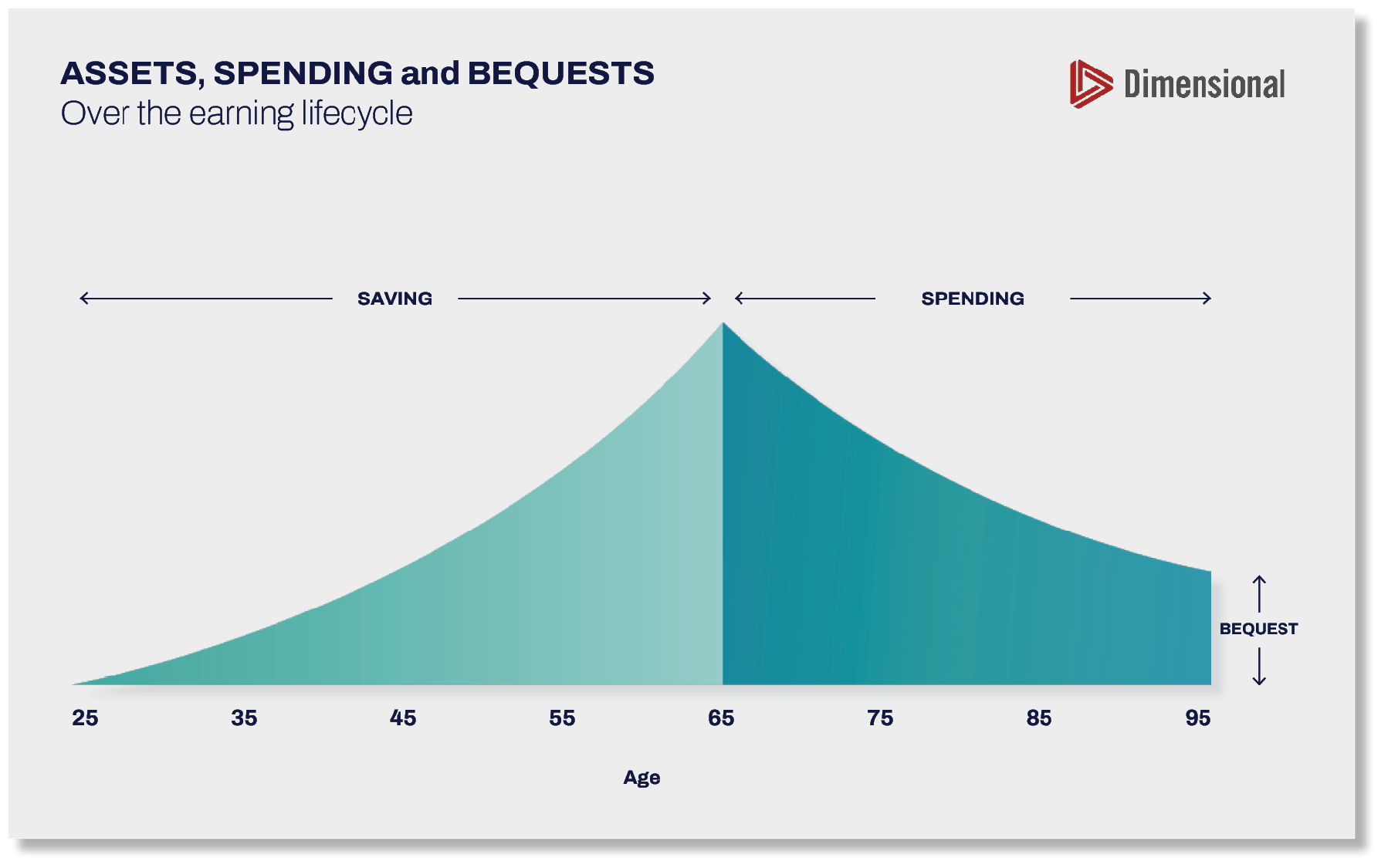
If you retire at 65, you're likely to live another 25-30 years. According to Stats NZ, life expectancy for a 65-year-old New Zealander is currently 20.6 years for men and 23.2 years for women – and those figures continue to improve over time. Many Kiwis will live well into their 90s, with centenarians becoming increasingly common.

Now consider this: if your 60-year-old adviser plans to work until they're 70, that gives you just 5-10 years of their guidance during a retirement that could span three decades. You'll almost certainly outlive their working life, and quite possibly outlive them entirely.

The mismatch is stark. You need financial guidance for 25-30+ years, but your peer-age adviser might only be around for a third of that journey. Without a proper succession plan, you're facing two decades of uncertainty at precisely the time you need stability most.

The Hidden Risk in Your Financial Plan

Think about the irony for a moment. You hire a financial adviser to help you plan for decades of retirement, ensuring you'll never run out of money or face unexpected disruptions… Yet the person guiding you through this process often hasn't done the same planning for their own practice.

When an adviser retires without a proper succession plan, clients typically get assigned to someone new. Often, it’s someone they've never met.

The investment philosophy might change. The service style could be completely different. It's a bit like when your GP retires without warning and you're left scrambling to find someone new who understands your goals and history.

If you're pre-retirement (around 55 or 60) and working with an adviser who's 65 with no succession plan, you're practically guaranteeing yourself a disruptive transition right as you enter retirement. Even if that adviser works until 70 or 75, you'll still need another 15-20 years of advice after they're gone.

Why Advisers Avoid This Conversation

The reluctance to plan succession isn't malicious; it's deeply human. Creating a proper succession plan requires advisers to share their revenue with younger team members, invest significant time in training and mentoring, and confront their own career endings.

Many simply prefer to coast into semi-retirement rather than undertake this difficult work.

But their comfort shouldn't come at your expense, especially when you're planning for a retirement that could easily span three decades.

What a Proper Succession Looks Like

A well-executed succession plan doesn't happen overnight. The best transitions span multiple years, giving you time to build relationships with next-generation advisers while your current adviser gradually steps back.

You should see:

  • Early introductions to the advisers who will eventually manage your portfolio

  • Gradual transitions where new advisers take on increasing responsibility over 3-7 years

  • Consistent philosophy ensuring your investment approach doesn't change with personnel

  • Clear communication about the timeline and process

  • Demonstrated commitment such as ownership stakes for next-generation advisers

  • Age diversity on the advisory team to ensure continuity


Again, think of it like shopping for a family doctor. You don't want someone in their late 60s or 70s; you want someone who can look after you for multiple decades into the future. The same logic applies to your financial adviser, perhaps even more so given the 25-30 year timeframe you're planning for.

An adviser in their 30s or 40s can realistically serve you throughout your entire retirement. An adviser in their 60s simply cannot, no matter how skilled or dedicated they are.

This doesn’t mean you can’t get advice from an adviser in this age bracket – simply that you need to ask questions about the future.

7 Questions to Ask About Adviser Succession

Don't wait for your adviser to bring it up. Take control by asking:

  1. Do you have a documented succession plan?

  2. Who will work with my family when you retire?

  3. Have I already met this person, or are they yet to be hired?

  4. What's the age range of your advisory team?

  5. How will you ensure my investment approach, services, and fees remain consistent?

  6. What's the timeline for this transition?

  7. Given I might need advice for another 25-30 years, how does your firm plan to serve me throughout my entire retirement?


If your adviser seems uncomfortable or unprepared to answer these questions, that tells you everything you need to know.

Building Succession Into Your Planning

Smart financial planning means thinking holistically about risk. You diversify your investments through KiwiSaver and other portfolios, maintain emergency funds, and plan for healthcare costs. Adviser succession should be part of that same risk management framework.

If you're in your 40s, you might have more flexibility, but you should still favour advisers with clear succession plans. If you're approaching retirement, this becomes non-negotiable. You need an advisory team that can serve you for the next 30 years, not just the next five.

Look for firms that have already made the hard choices – those that have hired and trained next-generation advisers, documented processes and consistent philosophies, and made those younger advisers actual owners in the business. This isn't just good planning; it's a commitment to their clients' long-term wellbeing.

The Bottom Line

Your financial security is too important to leave to chance. The adviser helping you plan for decades of retirement should have spent at least as much time planning for their own succession.

The actuarial reality is clear: at 65, you're looking at potentially 25-30 years of retirement. Your peer-age adviser simply won't be working that long. The question isn't whether succession will happen – it's whether it will happen with planning and care, or chaos and disruption.

Ask the hard questions now. If the answers don't satisfy you, it might be time to find an adviser who's as committed to your future as you are.

Nick Stewart
(Ngāi Tahu, Ngāti Huirapa, Ngāti Māmoe, Ngāti Waitaha)

Financial Adviser and CEO at Stewart Group

  • Stewart Group is a Hawke's Bay and Wellington based CEFEX & BCorp certified financial planning and advisory firm providing personal fiduciary services, Wealth Management, Risk Insurance & KiwiSaver scheme solutions.

  • The information provided, or any opinions expressed in this article, are of a general nature only and should not be construed or relied on as a recommendation to invest in a financial product or class of financial products. You should seek financial advice specific to your circumstances from a Financial Adviser before making any financial decisions. A disclosure statement can be obtained free of charge by calling 0800 878 961 or visit our website, www.stewartgroup.co.nz

  • Article no. 434


Acknowledgements

Special thanks to Keith Matthews of Tulett Matthews and Associates for exploring this critical topic on the Empowered Investor Podcast and highlighting the importance of adviser succession planning for investors approaching retirement.

References

  1. Investment Planning Council (IPC) survey of 1,500+ Canadians with financial advisers, cited in Tulett Matthews & Associates, "Empowered Investor Podcast Episode 120: Don't Let Your Adviser's Retirement Disrupt Yours" (October 2024)

  2. Stats NZ, "National and subnational period life tables: 2017–2019" - Life expectancy data for 65-year-olds in New Zealand

  3. Industry research on adviser succession planning cited in Tulett Matthews & Associates podcast, showing 10-20% of advisers have documented succession plans, with average adviser age of 54 years

Beyond the Silo: Why Your KiwiSaver Strategy Should Reflect Your Entire Financial Picture

Most New Zealanders check their KiwiSaver balance in isolation – celebrating growth or worrying about market dips without considering the bigger picture. But what if this tunnel vision is actually holding back your retirement wealth?

The key to optimising your KiwiSaver isn't just about picking the right fund; it's about understanding how it fits within your complete financial ecosystem.

The Whole-of-Wealth Approach

Your KiwiSaver is just one piece of your financial puzzle. Let’s put that in context:

Consider Sarah, a 35-year-old professional with:

  • $45,000 in KiwiSaver

  • A $120,000 mortgage on her $580,000 home

  • $25,000 in term deposits

  • $15,000 in everyday savings

 If Sarah only looks at her KiwiSaver balanced fund (typically 50% growth assets, 50% defensive assets), she's missing the complete story. If we examine the bigger picture, Sarah's defensive assets extend far beyond her KiwiSaver's bond allocation.

Her cash savings and term deposits already provide significant conservative exposure across her total portfolio. This means her KiwiSaver could theoretically afford to be more growth-focused, as the defensive components are already well-represented elsewhere in her wealth structure.

This becomes even more pronounced when considering homeownership. While your family home isn't a liquid investment, it represents a substantial asset that will likely appreciate over time and will eventually be mortgage-free. You then have an additional layer of wealth stability, which should influence how aggressively you can afford to invest your KiwiSaver.

The 30-Year Retirement Challenge

Here's the sobering reality that every KiwiSaver member needs to confront: if you retire at 65, your savings could need to stretch three decades (or more).

According to Statistics New Zealand's mortality data, a 65-year-old today has a significant chance of living into their 90s¹ - much longer than previous generations.

This extended timeframe fundamentally changes the retirement investment equation. Even at retirement age, money that may not be needed for decades can potentially weather market volatility in pursuit of higher long-term returns. Yet many retirees shift to overly conservative approaches, which may struggle to maintain purchasing power across such extended retirement periods.

Consider the numbers. If inflation averages 2.5% annually, the purchasing power of money halves every 28 years². A conservative investment approach barely keeping pace with inflation could leave retirees significantly worse off by their 80s and 90s.

Asset Allocation Across Your Complete Portfolio

The sophisticated investor doesn't ask "What should my KiwiSaver fund allocation be?" but rather "What should my total asset allocation be, and how can I use different investment vehicles to achieve it most effectively?"

This approach might lead to counterintuitive decisions. Someone with substantial cash savings and term deposits might benefit from a growth-focused KiwiSaver strategy. Conversely, someone heavily invested in shares outside KiwiSaver might choose a more balanced KiwiSaver approach to avoid over-concentration in equities.

The tax efficiency of different investment vehicles plays a crucial role too. KiwiSaver's favourable tax treatment on contributions and fund earnings makes it an ideal vehicle for growth investments, particularly for higher-income earners³. Meanwhile, other investment structures might be more suitable for defensive allocations.

The Danger of Set-and-Forget Thinking

KiwiSaver's success in automatically enrolling New Zealanders into retirement savings has created an unintended consequence – the belief that retirement planning is now "sorted."

This set-and-forget mentality ignores the dynamic nature of both personal circumstances and investment markets. Your optimal KiwiSaver strategy should evolve as your life changes:

  • Early in your career, with decades until retirement and potentially limited other assets, an aggressive growth approach often makes sense.

  • As you accumulate property, build emergency funds, and approach retirement, the optimal allocation across your complete portfolio will shift.

Regular portfolio reviews are essential - not just of your KiwiSaver, but of how all your financial assets work together. This might reveal opportunities to rebalance between different investment vehicles or adjust your KiwiSaver strategy to better complement your evolving financial situation.

Beyond Silos: The Need for Holistic Financial Guidance

This whole-of-wealth approach reveals a critical flaw in how many New Zealanders currently receive financial advice. Too often, advice is delivered in silos: KiwiSaver advice from one provider, mortgage advice from another, investment advice from a third. You end up with a fragmented approach, which may not all fit together into a favourable picture.

Holistic financial advice considers your complete financial ecosystem. A truly comprehensive adviser doesn't just ask "What KiwiSaver fund should you be in?" but rather "How should all your financial assets work together to achieve your goals most efficiently?"

This integrated approach can reveal sound strategies that siloed advice skates past. When the circumstances are right, some might find benefit in:

  • Salary sacrificing additional amounts into KiwiSaver whilst reducing term deposit holdings, effectively shifting defensive assets into a more tax-efficient structure

  • Paying down your mortgage faster could be more beneficial than increasing other investments, depending on your complete tax and financial situation.

Professional financial advisers who take this holistic view can help model different scenarios across your entire portfolio. They consider not just your KiwiSaver options – but how changes to your mortgage repayments, investment allocations, ownership structures and even insurance strategies could work together to improve your financial position

The complexity of optimising across multiple asset classes, tax structures, and time horizons is where professional expertise becomes invaluable. A qualified adviser can navigate the interplay between KiwiSaver's tax advantages, property investment considerations, portfolio diversification needs, and your evolving life circumstances.

Moreover, this comprehensive approach requires ongoing attention. Your optimal strategy today won't necessarily be optimal in five years. Regular reviews of your complete financial picture ensure your strategy remains aligned with your goals.

Taking Action

Start by conducting a complete financial stocktake. List all your assets, including:

  • KiwiSaver balance

  • Property equity

  • Other investments

  • Cash holdings

 Then consider your current overall asset allocation across everything you own. Does this allocation make sense for someone who needs their money to last potentially 30 years in retirement? Or are you being overly conservative, because you're only looking at each investment in isolation?

The Case for Wise Counsel

The path to a comfortable retirement isn't found in any single investment fund. It's constructed through the thoughtful integration of all your financial resources, with KiwiSaver playing its optimal role within your wealth ecosystem. This level of sophisticated planning requires experienced professionals who understand how to orchestrate asset and cash flow integration across your entire financial life.

The cost of this holistic professional advice is often far outweighed by the potential long-term benefits. Even modest improvements in your overall investment efficiency compound dramatically over 30-40 years, potentially adding tens of thousands of dollars to your retirement wealth.

KiwiSaver is a powerful tool, but it's most effective as part of a complete financial strategy. Your 95-year-old self will thank you for taking a thoughtful, comprehensive approach to retirement planning today.

Nick Stewart
(Ngāi Tahu, Ngāti Huirapa, Ngāti Māmoe, Ngāti Waitaha)

Financial Adviser and CEO at Stewart Group

  • Stewart Group is a Hawke's Bay and Wellington based CEFEX & BCorp certified financial planning and advisory firm providing personal fiduciary services, Wealth Management, Risk Insurance & KiwiSaver scheme solutions.

  • The information provided, or any opinions expressed in this article, are of a general nature only and should not be construed or relied on as a recommendation to invest in a financial product or class of financial products. You should seek financial advice specific to your circumstances from a Financial Adviser before making any financial decisions. A disclosure statement can be obtained free of charge by calling 0800 878 961 or visit our website, www.stewartgroup.co.nz

  • Article no. 427


References

¹ Statistics New Zealand. (2024). New Zealand Life Tables 2020-22. Wellington: Statistics New Zealand.

² Reserve Bank of New Zealand. (2024). Inflation Calculator. Available at: rbnz.govt.nz

³ Inland Revenue. (2024). KiwiSaver Tax Treatment Guidelines. Wellington: Inland Revenue Department.

⁴ Financial Markets Authority. (2024). KiwiSaver Annual Report. Wellington: FMA.

Good and getting better

Why would the couple in their 50’s have such a different outlook to the man in his 30’s? It’s hard to be a successful investor unless you’re an optimist. Firstly, if everyone does well, you’re likely to do better as an investor.

One Simple Thing

For most of us, KiwiSaver is the primary vehicle that will help us reach our retirement goals. So it is a good idea to spend some time reviewing your KiwiSaver with the help of a financial adviser and make sure you are maximising your returns.

Gifting that might be taking

New Zealand has remained prosperous for more than a decade if you're judging based on recessions, but it hasn't happened without creating wealth divisions. The property ladder issue has led to some parents feeling the need to help the kids reach the first rung. What are the issues?

Falling out of fashion

One of the main reasons people invest in term deposits over other investment assets is for safety. But not many realise the risky fact that New Zealand does not currently have a deposit insurance scheme. A long-standing Reserve Bank’s policy is aimed at allowing a distressed bank to be kept open for business while placing the cost of a bank failure primarily on the bank's shareholders and creditors, rather than the taxpayer.

Get ready for Life Two

If ever there was a word that needed to be retired it is retirement. What kind of mental picture does this word invoke up for you? Is it sunny beaches and no longer having to set an alarm clock? Or a stressful feeling about how much longer you will need to work to afford such a lifestyle?

Time to rethink your retirement income | Covid-19 Special Focus

The spectre of zero and negative interest rates are looming over the New Zealand financial market and those looking for a haven can't find much relief. Last week, the Reserve Bank of New Zealand (RBNZ) deputy governor Geoff Bascand suggested at least some bank depositors might want to put their money to use elsewhere.

Canny View: Super 65 (or 67?)

It may only be over 100 years ago, but life in the 1900s would be considered brutal by today’s standards. Lights in your home might be candle or gas. Fridge, freezer well they didn’t exist. Indoor plumbing? If you were lucky. Things have changed since then. In simple terms every 10 years our life expectancy has increased by 2 years.

Closing the gap

Women need to educate themselves about how to mitigate things like illness and the loss of a partner and talk to an expert about things like estate planning, life and health insurance, investing and retirement planning. The more informed and prepared women are for these things, the better they will feel, and the more protected they will be.