Investments

Iran, Oil, and Your Retirement Savings: Separating the Signal from the Noise

Article # 447

The New Zealand media has had a busy week connecting the US and Israeli strikes on Iran to your wallet. Some of it is legitimate. Some of it is noise dressed up as financial guidance. Knowing which is which - now that’s useful.

Let's start with what’s real.

The Strait of Hormuz: A known pressure point

The Strait of Hormuz is a roughly 33km-wide chokepoint between the Persian Gulf and the Gulf of Oman. Around 20% of the world's daily oil supply and a similar share of global liquefied natural gas trade passes through it every single day, mostly bound for China, India, Japan, and South Korea.¹

This waterway has been a pressure point for decades. Iran mined it during the Iran-Iraq War in the 1980s, prompting direct US military intervention in what became known as the Tanker War (during which more than 500 vessels were damaged or destroyed).² In December 2011, Iran threatened closure in response to Western sanctions, triggering the deployment of a US-British-French naval flotilla. In 2019, tanker seizures and attacks on shipping spiked tensions again. In June 2025, Israel's strikes on Iranian nuclear facilities prompted Iran's parliament to pass a motion recommending closure, though that did not materialise into a full blockade.³

The point is this: the Strait of Hormuz has been a geopolitical instrument for Iran for more than 40 years. Successive US administrations, allies, and global energy markets have navigated those threats repeatedly. Every episode generated alarming coverage. Yet every episode passed. That does not make the current situation trivial, but it does provide context that breathless headlines rarely bother to include.

New Zealand's real exposure

Importantly, New Zealand has direct and specific economic exposure to this conflict.

According to the Meat Industry Association (MIA), nearly all of New Zealand's red meat exports to the Gulf Cooperation Council (Bahrain, Kuwait, Oman, Qatar, Saudi Arabia, and the UAE) travel through the Strait of Hormuz. In 2025, that trade was valued at $298 million, including $166 million in chilled exports, which are the most time-sensitive.⁴

Supply chain firm Kotahi, which handles freight on behalf of Fonterra and Silver Fern Farms, has confirmed that all major shipping lines have suspended services through the strait, with some 4,000 containers of New Zealand export cargo currently in transit.⁴

Fuel prices are also a legitimate concern. New Zealand no longer imports crude directly from the Middle East, but petrol is priced in a global market. Brent crude spiked more than 8% when trading opened after the weekend strikes.⁵ Analysts at JPMorgan and Citigroup have warned that sustained disruption could embed a significant geopolitical premium for weeks.

The New Zealand Ministry of Foreign Affairs and Trade has noted that rising fuel costs do not just show up at the pump. They pervade the economy through transport, logistics, and consumer prices – and may force the Reserve Bank to respond with always-dreaded interest rate adjustments.⁶

One lesser-discussed exposure: approximately one-third of the world's fertiliser trade also passes through the Strait of Hormuz, meaning prolonged disruption could eventually flow through to agricultural input costs. This is directly relevant to a primary-export economy like New Zealand's. ⁷

So yes, there are real and specific things worth monitoring here. Beyond fearmongering, we must consider geography and economic forces decades in the making.

Now for the noise...

Here’s where some of the coverage starts to serve the headline more than the reader.

At 7:56 am on Monday, 2 March, before Wall Street had even opened for the day, 1News published a piece headlined "Iran attack sparks warning for KiwiSaver, fuel, inflation."

Readers were told to brace for volatility, expect red ink in their KiwiSaver, and anticipate a flight to safer assets.⁸ By the time New Zealand investors had read that article over their morning coffee, absorbed the alarm, and perhaps reached for their phones to switch funds... Wall Street had opened, dipped 1.2%, and was already recovering. The S&P 500 closed that Monday virtually unchanged, finishing the session up just 0.04%.⁹

The warning had outrun the facts by an entire trading day.

Alarming coverage is produced in real time, often ahead of the facts. By the time reality arrives, in this case, a market that largely shrugged off the initial shock and bought the dip, most people have already absorbed the panic as truth and may have acted on it.

Advising the average investor to urgently check their KiwiSaver balance and consider switching funds is, for most people, bad advice dressed up as financial concern. This applies equally to any well-constructed investment portfolio underpinned by a comprehensive financial plan.

The latest data from the Retirement Commission puts the average KiwiSaver balance at $37,079 and the average member age at approximately 44.¹⁰ That means the typical New Zealand investor has roughly 20 to 25 years of accumulation ahead before they reach 65. Long-term KiwiSaver growth funds have historically returned between 7% and 9% annually.¹¹ Across that kind of horizon, even a meaningful short-term market dip is a rounding error in the final outcome.

The pattern markets have seen repeatedly, last June's brief Israel-Iran exchange being a useful recent reference point, is as follows:

  1. Equity markets sell off sharply on geopolitical shock.

  2. They recover once it becomes clear the worst-case scenario has not materialised.

  3. Investors who switched to conservative funds during that episode locked in losses they then missed recovering as markets rebounded.

The same logic applies whether you hold KiwiSaver,  managed funds, or a direct share portfolio.

A comprehensive financial plan is engineered to withstand volatility. Abandoning it because of a week of alarming headlines is not a financial decision; it is an emotional one.

Four genuine reasons to review your investments

The right time to review your asset allocation or contribution settings is when your circumstances change — not when the news cycle does.

  1. Has your income shifted significantly?

  2. Are you approaching 65 and still in an aggressive growth fund that no longer reflects your timeline?

  3. Has your risk tolerance genuinely changed — not because of a week of coverage, but because of a considered, honest look at your financial position and goals?

  4. Are there changes to your broader financial plan that warrant a portfolio rebalance? These are all valid triggers for a conversation with your financial adviser.

But if your goals, your timeline, your income, and your broader financial picture are the same today as they were a fortnight ago, and for most people they are, the rational position is to stay the course.

A well-built investment portfolio is designed to absorb decades of global volatility. Many such portfolios have weathered the Global Financial Crisis, the COVID-19 crash, the 2022 rate shock, and last June's regional conflict. Each of those episodes generated similar headlines. Each time, disciplined investors who stayed the course came out ahead of those who did not.

When others are running from the fire

Warren Buffett has made a career of running towards financial fires, not away from them. Writing in the depths of the Global Financial Crisis, his philosophy spoke to financial discipline over the furore of the day: "Whether we're talking about socks or stocks, I like buying quality merchandise when it is marked down."¹²

The irony of a market downturn? Precisely when assets go on sale is when most investors want nothing to do with them; it’s when they are expensive and rising that everyone wants in. Buffett's instruction has always been the opposite: be fearful when others are greedy, and greedy when others are fearful. That’s not a comfortable stance when headlines are blaring an alarm. But discomfort and bad decision-making are not the same thing.

This is where a structured, disciplined rebalancing strategy earns its keep.

When equities fall, and fixed income or defensive assets hold their ground, a rebalancing framework triggers a deliberate, rules-based response: trim what has held up, add to what has fallen. Not because of a hunch. Not because of a headline. Because the plan said so before any of this happened.

That’s the discipline Buffett is describing. Not panic, not paralysis — but a pre-committed process that removes emotion from the equation and replaces it with structure. The investors who do best through periods like this are not the ones who predicted the conflict or called the bottom. They’re the ones who had a plan, stuck to it, and let systematic rebalancing do what it was designed to do.

Discipline pays off

The media's job is to make you read the next paragraph. Your financial plan's job is to compound quietly over decades. These two objectives are not aligned – and it’s worth remembering that when the very same article explaining why oil prices are rising pivots abruptly to urging you to check your KiwiSaver.

There is genuine news here worth following closely: shipping disruptions, petrol prices, fertiliser costs, red meat export disruptions, and what unfolds in the Strait of Hormuz over the coming weeks are all legitimately important to New Zealand households and businesses. Read those stories. Understand the exposure.

But when the coverage drifts into urging reactive investment decisions based on today's headlines, that is where you put the phone down, flick on the kettle, and make yourself a brew instead of making rash investment decisions.

Your future self will thank you.


Nick Stewart

(Ngāi Tahu, Ngāti Huirapa, Ngāti Māmoe,
Ngāti Waitaha)

Financial Adviser and CEO at Stewart Group

  • Stewart Group is a Hawke's Bay and Wellington based CEFEX & BCorp certified financial planning and advisory firm providing personal fiduciary services, Wealth Management, Risk Insurance & KiwiSaver scheme solutions.

  • The information provided, or any opinions expressed in this article, are of a general nature only and should not be construed or relied on as a recommendation to invest in a financial product or class of financial products. You should seek financial advice specific to your circumstances from a Financial Adviser before making any financial decisions. A disclosure statement can be obtained free of charge by calling 0800 878 961 or visit our website, www.stewartgroup.co.nz

  • Article no. 447


References

[1] US Energy Information Administration. (2024). Strait of Hormuz — World's Most Important Oil Chokepoint. https://www.eia.gov/international/analysis/special-topics/World_Oil_Transit_Chokepoints

[2] Ratner, M., Lawson, A., & Brock, J. (2025). Iran Conflict and the Strait of Hormuz: Oil and Gas Market Impacts. Congressional Research Service. https://www.congress.gov/crs-product/R45281

[3] Times of Israel. (2026, March 1). Strait of Hormuz: Key Oil Route in Middle of Iran Crisis. https://www.timesofisrael.com/strait-of-hormuz-key-oil-route-in-middle-of-iran-crisis/

[4] Meat Industry Association NZ / Kotahi NZ. (2026, March 1). Statements on Strait of Hormuz shipping disruption. Reported in NZ Herald. https://www.nzherald.co.nz/business/us-iran-conflict-threatens-nz-red-meat-exports-via-strait-of-hormuz

[5] Franck, T., & Imbert, F. (2026, February 28). Markets Brace for Impact After US Strikes Iran. CNBC. https://www.cnbc.com/2026/02/28/markets-brace-for-impact-following-us-military-strikes-against-iran.html

[6] New Zealand Ministry of Foreign Affairs and Trade. (2025, July). NZ Economy Not Immune to Conflict in the Middle East. https://www.mfat.govt.nz/en/trade/mfat-market-reports/nz-economy-not-immune-to-conflict-in-the-middle-east-july-2025

[7] Stojanovic, U., & Bradshaw, T. (2026, March 1). Strait of Hormuz: If the Iran Conflict Shuts the World's Most Important Oil Chokepoint, Global Economic Chaos Could Follow. The Conversation. https://theconversation.com/strait-of-hormuz-if-the-iran-conflict-shuts-worlds-most-important-oil-chokepoint-global-economic-chaos-could-follow-277199

[8] Edmunds, S. (2026, March 2). Iran Attack Sparks Warning for KiwiSaver, Fuel, Inflation. RNZ / 1News. Published 7:56am. https://www.1news.co.nz/2026/03/02/iran-attack-sparks-warning-for-kiwisaver-fuel-inflation/

[9] CNBC Markets Desk. (2026, March 2). Stock Market Today: S&P 500 Ends Monday Just Above the Flatline, Rebounding from Sharp Declines. CNBC. https://www.cnbc.com/2026/03/01/stock-market-today-live-update.html

[10] Reyers, M. (2025, March). KiwiSaver Member Data — December 2024. Te Ara Ahunga Ora Retirement Commission / Melville Jessup Weaver. Reported in: Edmunds, S. What Average KiwiSavers' Balances Are at Your Age. RNZ News. https://www.rnz.co.nz/news/business/545015/what-average-kiwisavers-balances-are-at-your-age

[11] MoneyHub NZ. (2024). Average KiwiSaver Balance by Age. https://www.moneyhub.co.nz/average-kiwisaver-balance-by-age.html

[12] Buffett, W. (2008). Berkshire Hathaway Inc. Chairman's Letter to Shareholders. Berkshire Hathaway. https://www.berkshirehathaway.com/letters/2008ltr.pdf

Fonterra Sale: A Once-in-a-Generation Opportunity for Financial Balance

Article # 446

Fonterra's shareholder approval of the $3.2 billion capital return from the Mainland Group sale has now been rubber-stamped. Farmers are set to receive an average of $392,000 per operation—some larger operations receiving over $2-3 million.¹

The deal, which saw 88% support back in October when the $4.2 billion sale to French dairy giant Lactalis was approved, represents a watershed moment for New Zealand dairy farmers. Last week's special meeting confirmed the capital return arrangements through a scheme of arrangement, with settlement expected any time between now and the end of March.²

JHVEPhoto - stock.adobe.com

Around 60% of shareholding farms will receive at least $200,000, while some of the co-op's largest shareholders will receive over $2-3 million. Southland's Fortuna Group, with more than 4.4 million shares, will receive close to $9 million, while state-owned farmer Pāmu could receive $10 million.²

This reflects the sector's strategic maturity and forward-thinking approach to wealth creation beyond a single generation. It's a recognition that the most resilient farming families build diversified financial structures that can support their operations and families through all market cycles.

The balance of the sale proceeds is being retained by Fonterra to reinvest in its ingredients and foodservice businesses, with some cash used to retire debt or applied as working capital. Fonterra forecast its balance sheet metrics to stay in line with targets, being debt to EBITDA of less than 3x and gearing of 30-40%.²

Understanding Real Returns: The Smart Farmer's Perspective

Savvy farmers know headline numbers don't tell the whole story.

While the recent $10.16 per kilogram of milk solids farmgate price represents a nominal record,³ astute operators understand the critical importance of inflation-adjusted returns when assessing true profitability.

The previous high-water mark came in the 2013/14 season at $8.40 per kilogram.⁴ At first glance, this suggests farmers are now receiving approximately 21% more per kilogram than they did eleven years ago. However, this comparison becomes meaningless when examined through the lens of actual input cost inflation that has fundamentally transformed farm economics.

The rising cost of production

Between 2019 and 2024, the average total cost for milk production across major exporting regions increased by around 14%, with over 70% of that increase occurring since 2021.⁵ While on-farm inflation peaked at 10.2% in the year to March 2022,⁶ costs remained elevated through 2023 before moderating slightly in 2024. However, the cumulative impact since 2013 is huge.

The structural cost uplift is evident across every input category. From 2018-19 to 2024-25:

  • Interest costs for an average dairy farm rose 86.5%, from $187,182 to $246,416 annually.⁷

  • Insurance costs increased approximately 33% over five years, with insurance premiums now succeeding fertiliser and interest rates as a major cost pressure in 2024.⁸

DairyNZ estimates dairy operating expenses reached $8.16 per kilogram of milk solids in 2022/23, up sharply from $7.23 in 2021/22.⁹ The national break-even farmgate milk price for the 2024/25 season is $7.76 per kilogram of milk solids.¹⁰

Fertiliser costs saw some products skyrocket from $799 per tonne to $1,800 per tonne during the peak inflation period.¹¹ While prices moderated in 2024 (declining 4.2% in the sheep and beef sector),¹² the cumulative impact of years of price escalation remains embedded in farm cost structures. Additionally, feed costs for dairy farms rose 28.2% between 2020-21 and 2022-23.¹³

Added pressure from interest rates

While the Official Cash Rate has fallen to 2.25%, medium and longer-term fixed mortgage rates have been rising since December 2025. Wholesale interest rates have increased more than half a percentage point since November, with banks lifting 2-5 year fixed rates accordingly.

ASB's 2-year rate now sits at 4.95% and 3-year at 5.19%, while Westpac's 4-year rate has risen to 5.19% and 5-year to 5.29%.¹⁴ Markets are pricing in potential OCR hikes from mid-2026 as inflation sits at 3.1%, above the Reserve Bank's 1-3% target band.¹⁴

This dynamic creates renewed debt servicing pressure for farmers despite the falling OCR. The disconnect between short-term policy rates and longer-term borrowing costs reflects market expectations about future inflation and the eventual return to higher rates.

Smart farmers recognise this reality: $10 per kilogram milk price (while excellent in nominal terms) represents the outcome of working harder, investing more capital, and operating more efficiently within a structurally higher cost environment. When you strip away the nominal gains and examine purchasing power, farmers aren't substantially better off than they were at the previous peak. They've simply adapted to significantly higher operating costs.

The best operators understand that sustainable wealth creation requires thinking strategically beyond the farm gate. Relying solely on commodity price increases that barely keep pace with input cost inflation is not a wealth-building strategy, it's survival.

Extreme Volatility Demands Resilience

Recent price swings have been dramatic, rapid, and unpredictable – proving why wealth structures beyond farm gate are essential for multi-generational farming families.

The season opened in August 2025 with Fonterra forecasting a midpoint of $10 per kilogram with a wide range of $8-$11 per kilogram.¹⁵ For several months, this appeared achievable as prices held firm.

December’s dairy downturn

After nine consecutive Global Dairy Trade auction declines, Fonterra cut its farmgate milk price forecast for the second time in the season in December. It dropped from the season-opening midpoint of $10 per kilogram down to $9 per kilogram with a narrowed range of $8.50-$9.50.¹⁶ Whole Milk Powder prices had fallen 5.7%, having declined nearly 28% from their May peak.¹⁶

Market commentary was uniformly bearish, with analysts warning of sustained supply-side pressure and global milk flows outstripping demand. The outlook was grim. Farmers adjusted budgets, planned for lower cashflows, and braced for a difficult season.

Then, in a remarkable reversal, the market staged a recovery.

An unexpected upswing

Four consecutive positive Global Dairy Trade auctions saw prices surge back to September levels.¹⁷ Whole Milk Powder, which accounts for half the auction by volume and has the greatest influence on farmgate milk price, rose 2.5% to US$3,706 per metric tonne in late February. Skim milk powder increased 3% to US$2,973 per metric tonne, while butter surged 10.7% to US$6,347 per metric tonne.¹⁷

Last Friday (February 20, 2026) Fonterra responded to this market recovery by lifting its forecast again, just ten weeks after the December cuts. The co-op raised the midpoint from $9.00 to $9.50 per kilogram with a new range of $9.20-$9.80.¹⁸ CEO Miles Hurrell cited "recent improvements in global commodity prices combined with Fonterra's well contracted sales book."¹⁸

Additionally, Fonterra announced a special dividend of 14-18 cents per share from the entire fiscal 2026 underlying earnings generated by Mainland Group, payable following the completion of the sale to Lactalis.¹⁸

Volatility as a hard-learned lesson

This whipsaw journey (from $10, to $9, to $9.50) over the course of just four months illustrates the fundamental challenge facing farming families who depend entirely on commodity prices for wealth creation.

These aren't gradual, predictable shifts that allow for careful planning. They're rapid, material changes driven by global supply and demand dynamics that individual farmers cannot influence or accurately predict. In August, the outlook appeared strong. By December, it appeared dire. By February, it had recovered.

What will it look like in May? July? No one knows.

This volatility creates genuine financial planning challenges for families trying to build intergenerational wealth. How do you plan for retirement, fund the next generation's education, or structure succession when your primary income source can swing 10-20% in a matter of weeks?

Critically, even as Fonterra lifted its forecast, CEO Hurrell acknowledged that "global milk production remains above seasonal norms, meaning the risk of further volatility in pricing remains."¹⁸ In other words, yesterday's good news could reverse again next month. The unpredictability is structural, not temporary.

History guarantees there’ll be another downturn. You need to establish whether your family's financial security depends entirely on timing those cycles correctly, or whether you've built diversified wealth structures that can weather volatility while continuing to generate real returns.

Learning from the Best for Diversification

The most successful farming enterprises share one common characteristic: off-farm assets that aren't correlated to dairy commodity cycles.

The farm is the engine of wealth generation, but it shouldn't be the sole repository of wealth. Diversification creates financial resilience, provides genuine optionality, and reduces dependence on factors beyond the farm gate.

Strategic diversification into property, shares, managed funds, or other investments can provide income streams that aren't dependent on global dairy prices, exchange rates, or seasonal conditions. These assets have the potential to generate real returns above inflation. They can create genuine wealth growth, rather than simply keeping pace with rising costs.

Diversification also provides crucial liquidity that farm assets cannot deliver. When opportunities arise—whether that's acquiring neighbouring land, investing in new technology, or supporting the next generation's education—liquid investments can be accessed without forcing farm asset sales at potentially disadvantageous times. When emergencies occur, diversified wealth provides options and reduces stress.

This builds a comprehensive financial strategy that supports both farm and family for generations. The farm remains the core productive asset and the foundation of family identity and purpose – within a broader wealth structure providing stability, optionality, and genuine financial security through all market conditions.

Many farmers intend to reinvest this capital return into their farming operations.² This makes sense for operations with clear productivity improvements available. However, the most strategic approach balances on-farm reinvestment with genuine diversification beyond the farm gate.

There’s a question every farming family should ask: if we reinvest everything back into the farm, are we building wealth – or simply maintaining our exposure to a single asset class subject to extreme volatility and structural cost inflation?

Ensuring Quality Advice

As farmers contemplate deploying this imminent capital, the relationship with their financial adviser becomes paramount. This may be the largest single capital deployment decision many farming families ever make. Getting it right requires an adviser who is genuinely and legally committed to putting your interests first.

Will your adviser provide a written statement affirming that the advice relationship is of a fiduciary nature, where your interests unequivocally surpass those of the adviser?

Under New Zealand's financial advice regime, advisers are legally required to put their clients' interests first when giving advice and to prioritise their clients' interests over any conflicts.¹⁹ However, requiring your adviser to put this commitment in writing—in clear, unambiguous language—separates those who truly embrace fiduciary responsibility from those who simply meet minimum compliance standards.

Request a letter explicitly stating that all recommendations will prioritise your long-term financial wellbeing over commission structures, conflicts of interest, product preferences, or any other adviser considerations. This letter should confirm:

  • That the adviser will put your interests unequivocally ahead of their own

  • That they will disclose all conflicts of interest proactively

  • They will recommend only investments and strategies that serve your long-term objectives

  • Their compensation will be structured in alignment with your success

  • They will provide ongoing accountability for the advice given

If an adviser hesitates or refuses to provide this written commitment, that tells you everything you need to know about where their priorities truly lie. The best advisers welcome this clarity because it aligns with how they already operate.

It’s not about distrust—it's about establishing crystal-clear accountability in what may be the most significant financial planning exercise of your farming career.

Payment is Imminent – What About a Plan?

The timeline has crystallised. With settlement expected between now and the end of March,² farmers have mere weeks before capital arrives. The Overseas Investment Office approval cited the $3.2 billion direct injection of capital to New Zealand farmers as a strong economic benefit, alongside Lactalis' $100 million capital expenditure commitment and ongoing supply arrangements.² Finance Minister Nicola Willis confirmed the transaction met the "benefit to New Zealand test."²

For farmers who haven't yet engaged in comprehensive financial planning, the time to act is now—not after the money arrives. Once capital is in the bank account, the psychological pressure to "do something" with it can lead to reactive decisions, not strategic ones.

Execute on robust financial planning that diversifies wealth beyond agricultural assets into uncorrelated investments, creates multiple income streams independent of commodity cycles and inflation erosion, structures tax-efficient wealth transfer to the next generation, provides financial resilience and liquidity against future market downturns, and builds genuine intergenerational wealth that can support family objectives for decades.

Work with advisers now to develop comprehensive plans, have thorough family discussions about objectives and succession, and ensure structures are ready for when the capital arrives. The planning should happen now; the deployment happens when the money is in your account.

The Bottom Line

The dairy sector has proven its resilience, discipline, and strategic thinking through multiple crisis periods. But dependence on commodity prices alone creates unnecessary risk for farming families seeking to build multi-generational wealth.

Now, thanks to the Fonterra sale, farmers can take the next strategic step—building financial structures that weather all cycles and generate real wealth across generations. Beyond the next season, or even the next decade, this is about creating financial security that supports your family's farming legacy for the next century.

The question becomes whether you'll deploy the capital strategically, with proper advice, appropriate diversification, with explicit attention to generating real returns above inflation.

With capital arriving imminently and markets demonstrating their unpredictability daily, the time for planning is now. The most successful farmers will approach this thoughtfully, strategically… and with professional, fiduciary guidance that puts their interests unequivocally first.

Nick Stewart

(Ngāi Tahu, Ngāti Huirapa, Ngāti Māmoe,
Ngāti Waitaha)

Financial Adviser and CEO at Stewart Group

  • Stewart Group is a Hawke's Bay and Wellington based CEFEX & BCorp certified financial planning and advisory firm providing personal fiduciary services, Wealth Management, Risk Insurance & KiwiSaver scheme solutions.

  • The information provided, or any opinions expressed in this article, are of a general nature only and should not be construed or relied on as a recommendation to invest in a financial product or class of financial products. You should seek financial advice specific to your circumstances from a Financial Adviser before making any financial decisions. A disclosure statement can be obtained free of charge by calling 0800 878 961 or visit our website, www.stewartgroup.co.nz

  • Article no. 446


References

  1. BusinessDesk (19 February 2026). "Fonterra farmers set to rubber stamp $3.2b Mainland Group capital return". ASB estimated average return at $392,000, with 60% receiving at least $200,000.

  2. BusinessDesk (19 February 2026). Settlement expected between now and end of March 2026.

  3. NZ Herald (26 September 2025). Final farmgate milk payout reached $10.16 per kilogram of milk solids.

  4. NZ Herald (18 March 2025). In 2013/14 season, Fonterra paid $8.40/kg.

  5. Rabobank (18 February 2025). Between 2019 and 2024, average total cost increased 14%, with over 70% since 2021.

  6. NZ Herald (22 August 2022). On-farm inflation 10.2% for year to March 2022.

  7. Farmers Weekly (4 June 2024). Interest costs rose 86.5% from $187,182 (2018-19) to $246,416 (2024-25).

  8. USDA (2025). In 2024, insurance premiums succeeded fertiliser and interest rates as major cost pressure.

  9. Infometrics (August 2023). Operating expenses at $8.16 per kgMS in 2022/23.

  10. DairyNZ (2024). Break-even at $7.76 kg/MS for 2024/25.

  11. NZ Herald (22 August 2022). One fertiliser increased to $1,800/tonne from $799/tonne.

  12. Beef + Lamb NZ (June 2024). Fertiliser declined 4.2% in 2023-24.

  13. DairyNZ. Feed costs rose 28.2% between 2020-21 and 2022-23.

  14. RNZ (9 February 2026) and Opes Partners (25 February 2026). ASB: 2-year at 4.95%, 3-year at 5.19%; Westpac: 4-year at 5.19%, 5-year at 5.29%. Wholesale rates up over half a percentage point. Note: BNZ reversed recent rate hikes on 27 February 2026, cutting 3-year to 4.99%, 4-year to 5.19%, 5-year to 5.29%.

  15. Fonterra (August 2025). Season opened at $10/kg midpoint with range $8-$11/kg.

  16. Farmers Weekly (18 December 2025). Fonterra cut forecast to $9/kg midpoint, range $8.50-$9.50, following nine consecutive GDT declines.

  17. BusinessDesk (19 February 2026). WMP rose 2.5% to US$3,706/MT, SMP 3%, butter 10.7% following four consecutive positive auctions.

  18. Reuters/Fonterra (20 February 2026). "NZ's Fonterra lifts annual milk price forecast, teases special dividend". New midpoint $9.50/kg, range $9.20-$9.80. Special dividend 14-18 cents per share from Mainland Group FY26 earnings. CEO noted volatility risk remains.

  19. FMA New Zealand. Advisers must put client's interests first.

The DIY Investment Trap: Why New Zealanders Need to Play the Net Game

Article # 444

The democratisation of investing has transformed the financial landscape. Where once only institutional investors had access to sophisticated investment vehicles, today's retail investors can build diversified portfolios with a few clicks on their smartphones. Exchange-traded funds (ETFs) have been at the forefront of this revolution: in the United States, they now represent half of all listed funds[1], a remarkable shift that reflects their popularity and accessibility. 

The investment supermarket has expanded exponentially, offering strategies across listed and unlisted assets, domestic and international markets, and countless sectors and themes. From tech giants like Apple and Nvidia to broad market indices, bond funds to commodity trackers, the barriers to entry have never been lower.  

A generation ago, building a globally diversified portfolio required significant wealth and professional intermediaries. Today, it requires a brokerage account and an internet connection. 

But more choice doesn't automatically mean better outcomes. In New Zealand, there's a growing cohort of DIY investors who are playing the gross game when they should be playing the net game. They're watching their portfolio balances grow, celebrating double-digit returns, and comparing performance with friends… all whilst ignoring the substantial tax implications that will ultimately determine their real wealth accumulation. 

The Bracket Creep Reality 

New Zealand's tax landscape has shifted dramatically, yet many investors haven't adjusted their thinking accordingly. A significant number of Kiwis now find themselves in the 33% tax bracket (income between $70,000 and $180,000) or even the 39% bracket for those earning over $180,000, often without realising it until after 31 March when their tax returns are typically filed.[2] 

This isn't always due to massive salary increases or career progression. Bracket creep, driven by wage inflation without corresponding tax threshold adjustments, is quietly pushing more New Zealanders into higher tax brackets each year[3]. As wages rise to keep pace with the cost of living, the tax system captures an increasingly large slice of that income. What once seemed like a tax bracket reserved for high earners has become surprisingly accessible to middle-income professionals. 

But there's another factor many overlook when calculating their tax position: total earnings extend far beyond salary. Consider the full picture of your financial life. That cash sitting in the bank, even at relatively low interest rates, generates taxable income[4]. It might not seem like much on an individual transaction basis, but across multiple accounts and a full tax year, it adds up. 

Trust distributions, company dividends, rental income from investment properties, and profits from share trading; these all contribute to your taxable income.  

Many investors are genuinely surprised when they discover their effective tax rate is higher than anticipated, simply because they've been thinking about salary in isolation rather than total taxable income.  

The Hidden Consequence 

When you buy shares in Nvidia, Apple, or any other direct shareholding, or when you invest in ETFs tracking international markets, you're creating taxable events. Under New Zealand's tax rules, particularly the Foreign Investment Fund (FIF) regime, these investments generate tax obligations that must be included in your annual return[5]. 

The FIF rules are complex and often misunderstood. Many investors assume they only pay tax when they sell. In reality, they may be liable for tax on deemed income each year, regardless of whether they've sold anything. Yet a startling number of investors either don't realise this or don't adequately account for it in their investment strategy. 

They're focused on gross returns (the headline numbers showing how much their portfolio has grown) without applying a tax overlay to understand their true, net position. They celebrate when their tech stock portfolio rises 25%, but forget to calculate what that means after tax obligations are met. 

How We Got Here 

For roughly 25 years, New Zealand maintained a relatively flat tax structure with a top rate of 33%[6]. The tax environment was stable and predictable. Investors could make reasonably informed decisions knowing that their tax position would remain relatively constant. 

But the introduction of the 39% top tax rate in 2021[7], combined with the absence of inflation indexing for tax brackets, has fundamentally changed the game. Each year, more New Zealanders cross into higher tax brackets not because they're genuinely wealthier in real terms, but simply because thresholds haven't kept pace with inflation. 

The compounding effect is significant. A professional who was comfortably in the 30% bracket (or lower) a decade ago might now find themselves in the 33% or even 39% bracket, despite their real purchasing power having barely changed. The tax burden has increased substantially, yet investment strategies have often remained unchanged. 

Gross Returns vs Net Reality 

An investment delivering a 10% gross return might sound attractive, but if you're in the 39% tax bracket and a significant portion of that return is taxable under the FIF rules, your net return tells a very different story. Suddenly that 10% might be closer to 6% or 7% after tax. It’s still positive, but materially different from the headline figure. 

This distinction becomes even more critical when comparing investment options. A lower-gross-return investment with tax advantages might deliver superior after-tax returns compared to a higher-gross-return investment that's tax-inefficient for your circumstances. 

You don't want to win the battle only to lose the war. Chasing gross returns without understanding the net outcome is a pyrrhic victory – it looks impressive on portfolio statements but delivers disappointing real-world results when tax time arrives. 

The Silo Trap 

Even when investors recognise the need for professional advice, they can fall into another trap: the silo regime. Perhaps influenced by barbecue conversation about diversifying across advisers – “don't put all your eggs in one basket, mate” – some investors split their portfolio. They might allocate $750,000 here with one adviser, another substantial chunk there with a second, and perhaps a third portion elsewhere for good measure. 

The logic seems sound on the surface. After all, diversification is a fundamental investment principle, so why not diversify your advisers too? It provides a sense of security, multiple perspectives, and perhaps even keeps each adviser "honest" through implicit competition. 

You’re essentially asking each adviser to play with one hand tied behind their back. 

No single adviser in this fragmented arrangement understands your complete tax position. They can't see the full picture of your income sources, your various investment vehicles, or how different components of your portfolio interact from a tax perspective. They're optimising for their slice of your wealth without any visibility into the whole. 

One might be selecting investments that generate substantial taxable income, unaware that another adviser is doing the same thing, pushing you into a higher tax bracket than necessary. Or they might be duplicating strategies, eliminating the diversification benefits you sought by splitting your portfolio in the first place. 

Each adviser might be doing an excellent job with their portion, yet your overall outcome remains suboptimal because no one is orchestrating the tax efficiency of the complete picture[9].  

It's the financial equivalent of having multiple chefs each cooking one course of a meal without coordinating the menu. You might end up with three excellent dishes that don't work together at all. 

Why You Need a Financial Adviser 

Professional guidance matters. And not just any adviser, but one who can see your complete financial picture and implement a coordinated, tax-efficient strategy across all your assets. 

Investment success isn't measured by individual account performance. It's measured by your actual, after-tax wealth accumulation. An adviser with a holistic view can structure investments in ways that are tax-efficient for your specific circumstances, recognising that different investment vehicles have different tax treatments and that your personal tax situation is unique. 

They can help you understand whether PIE funds, direct shares, or other investment structures make the most sense for your position. They can coordinate the timing of income recognition, manage your exposure to FIF rules, and ensure your overall portfolio is working towards your net wealth goals rather than simply chasing gross returns. 

When seeking advice, look for a fee-only, unconflicted fiduciary adviser[10]. This ensures their recommendations are driven by your best interests, not commission structures or product sales targets. A fiduciary is legally obligated to put your interests first—a distinction that matters profoundly when navigating the complex intersection of investment strategy and tax planning. 

Fee-only advisers are compensated for their advice and service, not for selling particular products. This alignment of interests is crucial when you need objective guidance on tax-efficient structuring rather than a sales pitch for the highest-commission product. 

The Path Forward 

The DIY investment revolution isn't going away, nor should it. Access to investment opportunities is fundamentally democratising and positive. But as the New Zealand tax environment becomes increasingly complex, investors need to evolve their approach. 

Understanding your total tax position, applying a tax overlay to investment decisions, and focusing relentlessly on net returns rather than gross figures—these aren't optional luxuries. They're necessities for anyone serious about building wealth in today's environment. 

The supermarket aisle may be longer than ever, offering more choice than any previous generation of investors could have imagined. But choosing wisely requires understanding the true price you're paying; not just the label on the shelf, but the price after tax.  

The game has changed. Make sure you're playing it properly. 

Nick Stewart

(Ngāi Tahu, Ngāti Huirapa, Ngāti Māmoe, Ngāti Waitaha)

Financial Adviser and CEO at Stewart Group

  • Stewart Group is a Hawke's Bay and Wellington based CEFEX & BCorp certified financial planning and advisory firm providing personal fiduciary services, Wealth Management, Risk Insurance & KiwiSaver scheme solutions.

  • The information provided, or any opinions expressed in this article, are of a general nature only and should not be construed or relied on as a recommendation to invest in a financial product or class of financial products. You should seek financial advice specific to your circumstances from a Financial Adviser before making any financial decisions. A disclosure statement can be obtained free of charge by calling 0800 878 961 or visit our website, www.stewartgroup.co.nz

  • Article no. 444


References

[1] Investment Company Institute, 2024 data on US ETF market share  

[2] Inland Revenue Department, "Individual income tax rates" (current as of 2024-25 tax year)  

[3] New Zealand Treasury, "Fiscal drag and bracket creep analysis," 2024  

[4] Inland Revenue Department, "Resident withholding tax on interest"  

[5] Inland Revenue Department, "Foreign investment fund rules and portfolio investment entities"  

[6] New Zealand Tax History, "Top personal tax rates 1988-2021"  

[7] Taxation (Annual Rates for 2020–21, Feasibility Expenditure, and Remedial Matters) Act 2021  

[8] Financial Advice New Zealand, "The importance of holistic financial planning," professional standards guidance  

[9] Chartered Accountants Australia and New Zealand, "Tax-effective wealth management strategies," 2024

[10] Financial Markets Authority, "Financial adviser disclosure requirements and fiduciary standards," Financial Markets Conduct Act 2013 

Full and Final: The Value of Moving Forward

Article # 443

With Waitangi Day upon us, it’s the perfect opportunity to reflect on what makes us unique. We're one of few nations built on a founding document promising partnership: the Treaty has been imperfectly honoured, fiercely contested, never abandoned… and the journey has taught us something valuable about moving forward without forgetting the past.

There's a story from Ngāi Tahu history that captures this lesson. It involves a sacred dogskin cloak, a violation of tapu, and a cost compounded beyond anyone's imagination.

Arowhenua Marae - Photo by Nick Stewart

The Cost of Feuds

Around 1826, while Chief Te Maiharanui was away, a woman from Waikākahi wore the kurīawarua – the Chief's sacred dogskin cloak. This act sparked the kai huānga feud: years of fighting between kin across Banks Peninsula, where the final insult to the enemy after battle was to consume them (kai huānga meaning ‘to eat a relative’, as the fighting was between hapū).[1]

This internal warfare weakened Ngāi Tahu at a crucial moment in time. Te Rauparaha of Ngāti Toa then swept down from Kapiti Coast with muskets. He found an iwi divided. The feud ended when the external threat loomed, but the damage had been done: the siege of Kaiapoi and the fall of Ōnawe found Ngāi Tahu already vulnerable because of the previous fighting.

The cloak was never worth what it ultimately cost.

The Next Fight: Te Kerēme

Ngāi Tahu learned from this. When the land was taken – eight million hectares purchased by the Crown for £2,000 through Kemp's Deed in 1848 – Ngāi Tahu made its first claim against the Crown in 1849, just one year after the deed was signed.[2]

For 149 years, generation after generation carried the fight forward. This became known as Te Kerēme (The Claim).

Above the Arowhenua Marae in Temuka, where tribal gatherings have been held for over a century, hangs the name Te Hapa o Niu Tireni: "The Broken Promises of New Zealand."[3] That name captures the weight of grievance the iwi carried, which were many and justified.

  • The Crown had promised reserves for Ngai Tahu of approximately ten percent of the land sold, along with schools and hospitals. None materialised.

  • Access to mahinga kai – traditional food gathering places – was lost.

  • Sacred sites and urupā were alienated.

  • By the early 1900s, fewer than 2,000 Ngāi Tahu remained alive in their own land, deprived of virtually everything required to survive beyond subsistence level.

The fight for justice took many forms. In 1877, the prophet Hipa Te Maiharoa led over 100 followers to Te Ao Mārama in the upper Waitaki – land he maintained had never been legitimately sold under Kemp's Deed. For two years they cultivated kai and taught tikanga, a peaceful assertion of rights that had been ignored.[4] When the armed constabulary came in 1879, Te Maiharoa chose not to shed blood. They left peacefully. Though he died before any resolution, his example of principled, persistent resistance without self-destruction gave strength to the generations who continued the fight.

The struggle continued through courts, commissions, and countless petitions. When Ngāi Tahu first took Te Kerēme to court in 1868, the government passed laws to prevent the courts from hearing it. A Commission of Inquiry a decade later had its funding halted by the Crown mid-investigation. In 1887, Royal Commissioner Judge MacKay acknowledged only a "substantial endowment" of land would begin to right so many years of neglect. By 1991, at least a dozen different commissions, inquiries, courts and tribunals had repeatedly established the veracity and justice of Te Kerēme.

Fast forward to 1998. Ngāi Tahu became the first iwi to settle with the Crown under the modern Treaty settlement process. The settlement was cents on the dollar – everyone knew it. The breach had been egregious, the losses enormous. By any measure, they deserved more.

But Ngāi Tahu took the deal anyway. Full and final. As Tā Mark Solomon reflected: "The Crown reckoned full redress was worth $12 to $15 billion. Our advisers thought closer to $20 billion. We settled for $170 million — a lot less, but it allowed Ngāi Tahu to move forward, to rebuild."[5]

The Rule of 72: Investing in the future

Why settle for less than one percent of what was owed? The Rule of 72 provides part of the answer. At 7.2% returns, money doubles every 10 years. That $170 million settlement has grown to $1.66 billion in net assets today - nearly a tenfold increase in 27 years.[6] But it required stopping the fight and starting to invest.

The opportunity cost of delay is staggering. Every year spent fighting is a year money isn't compounding. Every year locked in grievance mode is a year not building for the future. The settlement allowed Ngāi Tahu to shift from survival mode to growth mode, from defending what was left to creating what could be.

This principle extends far beyond Treaty settlements:

  • Family disputes over estates burn tens of thousands in legal fees while the assets stagnate or depreciate.

  • Former business partners spend more on lawyers than the company was ever worth.

  • Divorce battles consume resources that could be rebuilding two separate lives.

 We hang in there because the principle matters, we deserve more, and because justice demands it.

And principle does matter. Justice is real – but so is your future. So is your peace of mind. So is the life you could be building instead of the grievance you're nursing.

Sometimes the juice isn't worth the squeeze.

The Value in Moving Forward

Holding grievances costs your mental health, your wellbeing, your ability to move forward – not to mention the fiscal cost. The human mind has limited bandwidth. Energy spent on past wrongs is energy unavailable for future opportunities. Anger may be righteous, but it's still corrosive.

You can be right, and still be trapped in a bad situation.

The settlement let Ngāi Tahu stop fighting the past (justified though they were) and start creating the future. That psychological shift may be worth more than any dollar figure – but the dollars did add up as well. Within a generation, the iwi went from near-extinction to becoming one of New Zealand's major economic and cultural forces. The asset base grew, yes, but so did everything else: language revitalisation programs, educational scholarships, marae restoration, cultural renaissance.

Modern New Zealand is a nation where nearly one in three people are first generation migrants, with fresh eyes unburdened by our nation’s history. These newcomers don't carry the weight of Te Hapa o Niu Tireni – the broken promises – and perhaps that lightness allows different possibilities.

That’s not to say we should forget. The name still hangs above Arowhenua Marae. The history is taught, remembered, and honoured. Moving on doesn't mean sweeping things under a rug and forgetting they existed. It means choosing where to invest your finite resources: backward into grievance, or forward into growth.

This Waitangi weekend, we celebrate a nation learning to move forward together, imperfectly but persistently. The dogskin cloak is long gone, but the lessons remain.

Sometimes "full and final" is the smartest decision you'll make. Not because you got everything you deserved, or because justice was fully served – but because opportunity cost exceeds what most people imagine.

In investment, and in life, the math is unforgiving. Every year looking backward is a year not compounding forward.

That's the real lesson Ngāi Tahu learned, twice over. Once the very hard way, fighting themselves while enemies approached, and once by choice: taking less than they deserved, and turning it into more than anyone expected.

The question isn't whether your grievance is justified. It probably is. The question must instead become: what's it costing you to hold on? And what could you build if you let it go?

Nick Stewart

(Ngāi Tahu, Ngāti Huirapa, Ngāti Māmoe, Ngāti Waitaha)

Financial Adviser and CEO at Stewart Group

  • Stewart Group is a Hawke's Bay and Wellington based CEFEX & BCorp certified financial planning and advisory firm providing personal fiduciary services, Wealth Management, Risk Insurance & KiwiSaver scheme solutions.

  • The information provided, or any opinions expressed in this article, are of a general nature only and should not be construed or relied on as a recommendation to invest in a financial product or class of financial products. You should seek financial advice specific to your circumstances from a Financial Adviser before making any financial decisions. A disclosure statement can be obtained free of charge by calling 0800 878 961 or visit our website, www.stewartgroup.co.nz

  • Article no. 443


References

[1] Mikaere, B. (1988). Te Maiharoa and the Promised Land. Auckland: Heinemann.

[2] Te Rūnanga o Ngāi Tahu. (n.d.). Claim History. Retrieved from https://ngaitahu.iwi.nz/ngai-tahu/creation-stories/the-settlement/claim-history/

[3] Arowhenua Marae. (n.d.). Te Hapa o Niu Tireni - The Broken Promises of New Zealand. Temuka, South Canterbury.

[4] Mikaere, B. (1988). Te Maiharoa and the Promised Land. Auckland: Heinemann.

[5] Solomon, M. with Revington, M. (2021). Mana Whakatipu: Ngāi Tahu Leader Mark Solomon on Leadership and Life. Massey University Press.

[6] Te Rūnanga o Ngāi Tahu. (2024). Annual Report 2024. Retrieved from https://ngaitahu.iwi.nz

28 Investment Principles That Actually Work When Markets Don't Cooperate

Article # 442

I've watched families navigate decades of volatility: crashes, recoveries, euphoria, panic. The ones who preserve wealth across generations don't have secret information or perfect timing. They follow simple rules, consistently.

February has 28 days. To ring it in, here are 28 guiding principles that have stood the test of time regardless of market activity.

1.       The market rewards patience, not prediction.

Most noise isn't information. The constant stream of commentary, analysis, and breaking news creates the illusion that staying informed means staying ahead. It doesn't. The market moves on fundamentals that reveal themselves slowly, not on headlines that change hourly.

2.       Focus on what you can control: Costs, discipline, diversification, behaviour.

You cannot control returns. You cannot control when recessions arrive or when bull markets end. But you can control how much you pay in fees, how consistently you invest, how broadly you spread your risk, and how you respond when fear or greed takes hold.

3.       You don't need to beat the market. You just need to capture it.

The obsession with outperformance drives investors towards complexity, higher costs, and ultimately, disappointment. Capturing market returns through low-cost, diversified portfolios has built more wealth over time than the pursuit of alpha ever has.

4.       The simplest portfolio is often the smartest.

Complexity rarely adds value. It adds cost, confusion, and opportunity for error. A straightforward allocation across global equities and bonds, rebalanced systematically, has outperformed the vast majority of elaborate strategies.

5.       Volatility is the price of admission.

Don't demand returns without accepting the ride. Equities deliver premium returns over time, because of fluctuations in the short term. If you cannot stomach the volatility, you don't deserve the returns.

6.       Time in the market matters more than timing the market. Always.

Missing just the 10 best days over a 20-year period can cut your returns nearly in half. Funnily enough, the best days often follow the worst ones – so it’s hard to capture them after getting cold feet on the downswing. Staying invested through the chaos is what separates wealth-builders from market-timers.

7.       Diversification is a dark horse.

Its power is revealed over decades, not days. When one asset class stumbles, another steadies the ship. The benefit isn't dramatic in any one year, but over a lifetime of investing, it's the difference between weathering storms and being swept away by them.

8.       Your plan should be built on evidence, not emotion.

Especially when emotions run high. When markets crash, fear whispers that this time is different and worse than any before. When markets soar, greed tells you that you're missing out. Evidence and decades of market history tell a different story – a much more trustworthy one.

9.       Chasing performance is a tax on impatience.

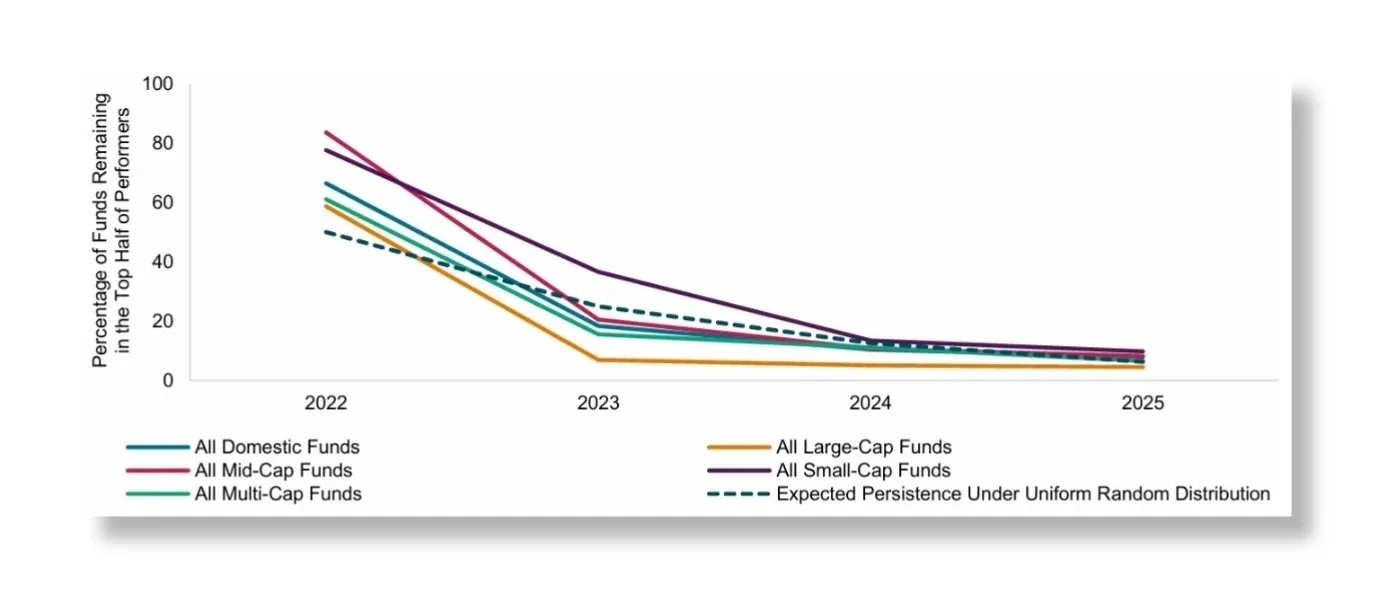
Last year's winners become this year's laggards with predictable regularity. By the time a fund or strategy appears on a "best performer" list, the opportunity has usually passed. Avoid getting swept up in the furore.

10.  The market has already priced in what everyone knows.

You don't need to outguess it. If information is public, it's already reflected in prices. Your edge as an investor isn't superior information, it's superior behaviour.

11.  A disciplined strategy beats a brilliant prediction. Every time.

Predictions fail. Discipline endures. The investor who follows a consistent plan through all market conditions will outperform the ‘strategist’ who tries to predict turning points.

12.  Your behaviour matters more than your products.

Panic is more expensive than fees: selling in a downturn locks in losses, while buying at market peaks locks in mediocre returns. Managing your behaviour by staying calm, and staying invested, matters far more than optimising your expense ratio by a few measley basis points.

13.  You don't need the perfect moment.

The moment you start is perfect enough. Markets climb over time. Waiting for a correction before investing often means waiting forever. Start now. Adjust as you go.

14.  Rebalancing is the quiet hero of long-term returns.

It forces buy-low, sell-high. When equities surge, rebalancing trims them back. When they crash, rebalancing buys more. It's counter-intuitive, uncomfortable… and extraordinarily effective over time.

15.  The best portfolios feel boring.

Boredom is not a bug, it's a feature. If your portfolio keeps you up at night with excitement, you’re probably taking on unnecessary risk. Wealth is built slowly, quietly, and without drama.

16.  Markets recover more often than they collapse.

History is your friend. Every bear market in history has eventually given way to a new bull market. Crashes feel permanent in the moment. They never are – as the adage goes, “this too shall pass.”

17.  Ignore headlines.

They're written to sell attention, not build wealth. Financial media thrives on urgency and alarm. Your portfolio should thrive on patience and perspective.

18.  Compounding works best when you don't interrupt it.

Let time do the heavy lifting. Albert Einstein allegedly called compound interest the eighth wonder of the world. But, it only works if you leave it alone – every time you exit the market, you reset the clock.

19.  Costs compound too.

Costs compound just like returns. Pay for advice that adds value, not for products that don't. The difference between value and waste always reveals itself in the fullness of time.

20.  Bad days don't destroy portfolios. Bad decisions do.

Markets fall. That's normal, and things will swing back the other way. Selling during the fall, abandoning your plan, or fleeing to cash – those are the decisions that inflict permanent damage.

21.  Not every risk deserves a reward.

Factor premiums do. Stocks are riskier than bonds, so they should deliver higher returns. Small-cap and value stocks have historically outperformed over long periods. These are risks worth taking. Concentrated bets on individual stocks or sectors? Not so much.

22.  Your portfolio should be built around you, not around the news cycle.

Your goals, your time horizon, and your risk tolerance should dictate your allocation. Not the latest economic forecast or geopolitical crisis.

23.  You don't need to predict the future.

…But you do need a strategy that survives it. Robust portfolios aren't built on forecasts. They're built on diversification, discipline, and the recognition that uncertainty is permanent.

24.  Stay invested, stay diversified, stay disciplined.

The rest is commentary. If you do these three things consistently, you will be fine. Better than fine, in fact. You'll be wealthier than the vast majority of investors who spend their lives chasing the next opportunity.

25.  Wealth isn't created in moments of excitement.

It's created in years of consistency. The investors who succeed aren't the ones who make brilliant trades or perfectly time the market. They're the ones who show up, year after year, regardless of conditions. Consistency compounds.

26.  Your worst investing day feels catastrophic. Your best investing decade feels inevitable.

Perspective matters. In the moment, a 20% drawdown feels like the end. Twenty years later, it's a footnote. Keep the long view. Stay the course.

27.  Successful investors are more patient than ‘smart’.

Intelligence helps, but temperament wins out every time. The ability to sit still, to do nothing when everyone else is panicking or euphoric, is worth more than any financial qualification.

28.  Markets don't care about your timeline. Build a plan that doesn't care about the markets.

You might need money in five years for a house deposit or in thirty years for retirement. The market will do what it does regardless. Structure your portfolio around your needs, not market predictions, and you'll sleep better through every cycle.

Remember: Markets will always be chaotic. Your response doesn't have to be.

Follow the rules (and seek professional advice)

These principles work. But they work best when you have someone in your corner who isn't conflicted by commissions, product sales, or institutional agendas.

Seek independent, impartial advice that puts you first and foremost. You are the sun, not the moon: your financial plan should orbit around you, your goals, your circumstances. Not around what someone else needs to sell.

Nick Stewart

(Ngāi Tahu, Ngāti Huirapa, Ngāti Māmoe, Ngāti Waitaha)

Financial Adviser and CEO at Stewart Group

  • Stewart Group is a Hawke's Bay and Wellington based CEFEX & BCorp certified financial planning and advisory firm providing personal fiduciary services, Wealth Management, Risk Insurance & KiwiSaver scheme solutions.

  • The information provided, or any opinions expressed in this article, are of a general nature only and should not be construed or relied on as a recommendation to invest in a financial product or class of financial products. You should seek financial advice specific to your circumstances from a Financial Adviser before making any financial decisions. A disclosure statement can be obtained free of charge by calling 0800 878 961 or visit our website, www.stewartgroup.co.nz

  • Article no. 442


Should I Invest in What I Love? Product Affection vs Investment Logic

Personal product preferences are often the worst possible guide to investment decisions.

I remember when my family first got a GoPro. Revolutionary technology, stunning footage – everyone wanted one. Naturally, I thought: "This company is going places. Maybe I should buy shares." It's a seductive logic: if I love the product, surely others will too. A decade later, I'm thankful I didn't act on that impulse.

This instinct to invest in what we know and love feels intuitive. We use the products, we understand them, we see their value. But this emotional connection – what behavioural economists call "familiarity bias" – is precisely what makes it dangerous.

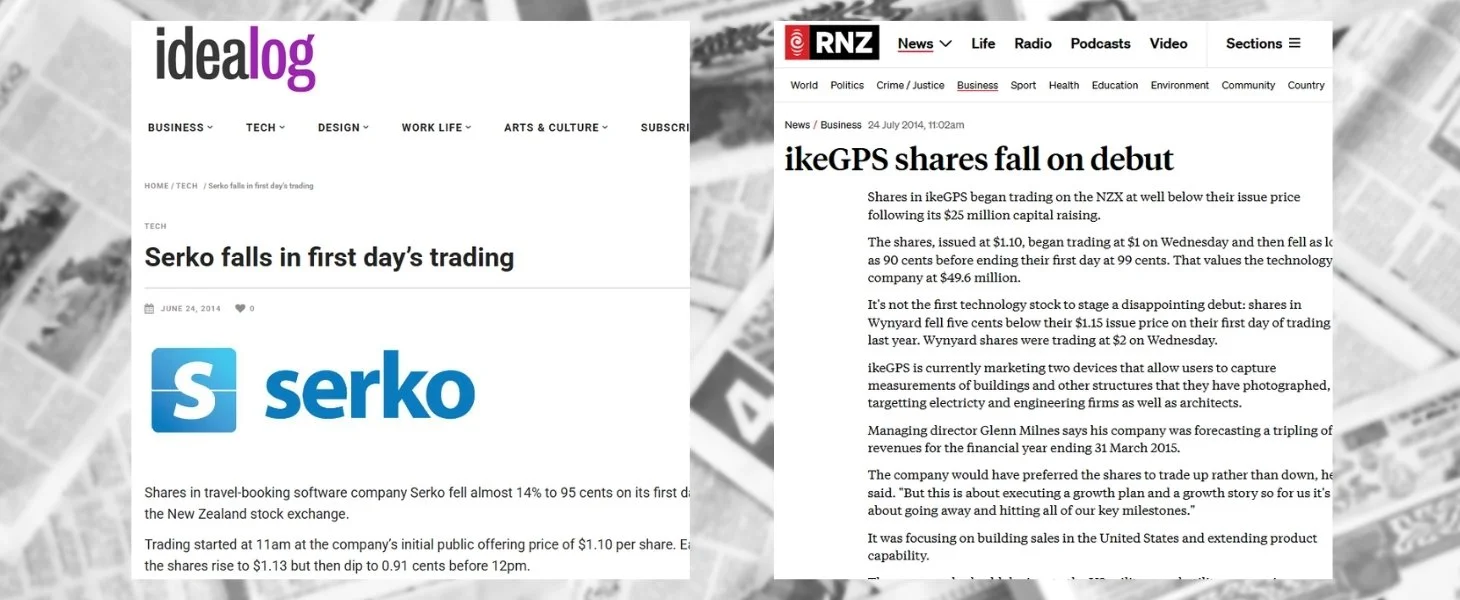
Back in 2014, GoPro went public and quickly hit a market capitalization of $10 billion with virtually no competition. Today? The stock trades around $1.87 per share – down 98% from its peak, with over $9.7 billion in market value lost.

What went wrong?

Smartphones killed the action camera star. Modern phones became waterproof, gained multiple lenses, and developed image stabilisation that rivals dedicated cameras. GoPro thought they were competing against other action cameras when they were actually competing against the most successful consumer device in history.

But here's the deeper lesson: loving a product tells you nothing about the company's competitive position or long-term viability. A great product is necessary but far from sufficient for investment success. In GoPro's case, every smartphone manufacturer became their competitor, each with deeper pockets and products consumers were already buying.

The Pattern Repeats Closer to Home

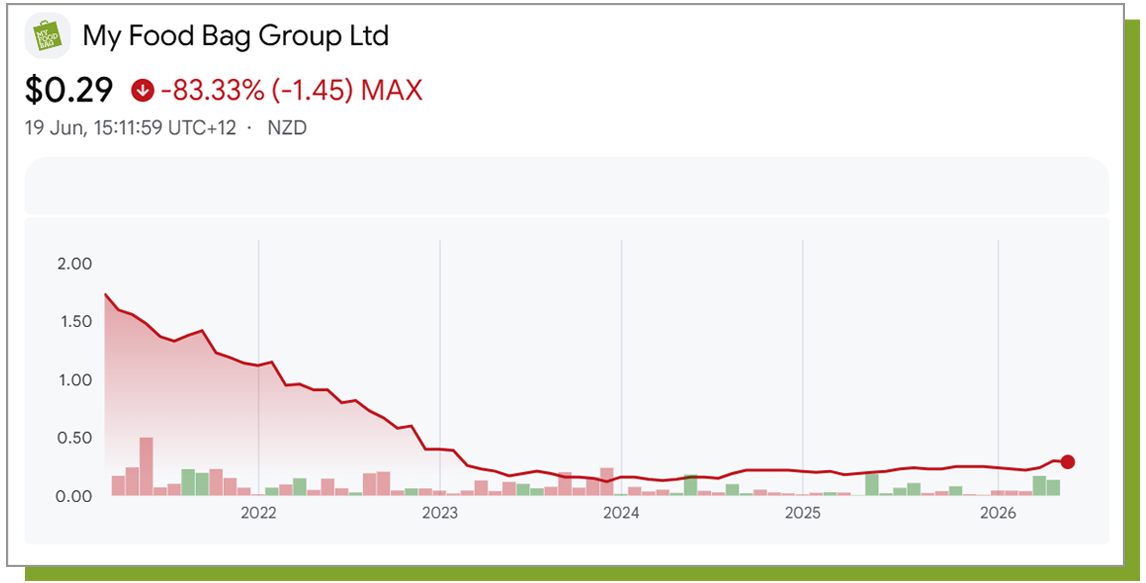
This isn't just an overseas story. Take My Food Bag – during COVID lockdowns, it seemed genius. The company went public in March 2021 at $1.85 per share, raising $342 million. Customers loved the service and bought shares. Many retail investors had enjoyed watching co-founder Nadia Lim cook on TV for years – hardly grounds for a wise investment decision. The result? Shares now trade around 25 cents – an 86% decline. As one fund manager noted, "It was a classic private equity exit, which has seen a lot of retail investors lose out."[1]

The timing seemed perfect. Lockdowns had created new habits. People were cooking at home more. The convenience model made sense. But investors failed to ask: what happens when lockdowns end? Is this a permanent behaviour shift or a temporary adaptation? How defensible is the business model? These are the uncomfortable questions that emotional attachment prevents us from asking.

As one fund manager noted, "It was a classic private equity exit, which has seen a lot of retail investors lose out."

Then there's Ryman Healthcare, beloved by many Kiwi families for good reason. My own family experienced the amazing care and kindness shown towards my late father during his time in the dementia care unit at Ryman in Havelock North. The quality of their villages is genuinely impressive. Yet despite these strengths, the stock hit $10.87 in December 2019 and now trades around $2.87 – down 74%. The investment thesis crumbled under construction delays and regulatory challenges, demonstrating that exceptional service doesn't automatically translate into strong investment returns.

This one hits close to home because the service was excellent. But gratitude and investment logic operate in different domains. A company can deliver outstanding customer experiences while simultaneously facing operational headwinds that undermine shareholder returns.

These three examples share a common thread: product or service quality created an emotional connection that clouded rational investment analysis.

The Evidence Against Emotional Investing

Behavioural finance research identifies "familiarity bias" as a major driver of poor investment decisions, where investors favour what they know rather than what performs best.[2] This bias is particularly pronounced amongst long-term investors who believe they're securing against volatility when they're actually concentrating risk.

The evidence against stock picking is overwhelming:

An Arizona State University study by Professor Hendrik Bessembinder examining over 28,000 stocks from 1926 to 2024 found that just 4% of firms created all net wealth in the U.S. stock market. The remaining 96% collectively matched Treasury bills over their lifetimes, and the majority of individual stocks actually reduced shareholder wealth compared to holding cash.[3]

Think about that. If you picked a stock at random, you'd have better than even odds of underperforming cash. The market's impressive returns come from a tiny fraction of companies – and identifying them in advance is nearly impossible.

Professional fund managers fare no better. S&P Dow Jones Indices' SPIVA Scorecard shows that after 10 years, approximately 85% of large-cap funds underperform the S&P 500, and after 15 years, around 90% trail the index.[4] Even Warren Buffett admits: "In 58 years of Berkshire management, most of my capital-allocation decisions have been no better than so-so."[5]

These aren't amateur investors. These are professionals with research teams, Bloomberg terminals, insider access, and decades of experience. If they can't beat a simple index fund, what makes individual investors think they can, especially when driven by product affection rather than analysis?

The Smart Money Questions

Instead of asking "Do I love this product?", evidence-based investors ask: How big is the addressable market? What prevents competitors from copying this? How strong are the financials? Is the company innovating fast enough? What could make this product obsolete?

These questions are deliberately uncomfortable because they force you to look beyond your emotional attachment. They require research, analysis, and a willingness to acknowledge uncertainty. Most importantly, they shift the focus from "I like this" to "can this company maintain a durable competitive advantage?"

The answers usually point to the same solution: diversification. Diversified index funds consistently outperform stock picking over the long term, providing market-matching returns while reducing the risk of catastrophic losses from individual stock failures.[6]

Diversification isn't glamorous. There's no story to tell at dinner parties about your clever stock pick. But it's precisely this lack of excitement that makes it effective. By owning the entire market, you guarantee you'll own the 4% of companies that generate all the wealth creation, without needing to predict which ones they'll be.

As a fee-only adviser working with evidence-based strategies, the real value isn't in chasing hot stocks or validating product obsessions. It's in building a robust financial plan grounded in decades of research, then maintaining discipline through market noise and emotional temptation.

This discipline is harder than it sounds. When GoPro was soaring, when My Food Bag was listing during lockdowns, when you're genuinely grateful for care received – the emotional pull to invest is powerful. It feels like you have special insight. You don't. You have an emotional connection clouding your judgment.

The most valuable thing a good adviser provides isn't stock tips or market predictions. It's the voice of reason when your emotions are screaming at you to invest in what you love. It's the person who asks the uncomfortable questions: "Have you analyzed the competitive landscape? What's your exit strategy? How does this fit your overall plan?" These questions aren't exciting, but they're essential.

Seek wise counsel, commit to a plan that aligns with your goals, and redirect that energy from stock-picking to living your life. Enjoy the products you love. Be grateful for excellent service. Just don't confuse these feelings with investment insight.

Your future self will thank you for choosing evidence over emotion.

Nick Stewart

(Ngāi Tahu, Ngāti Huirapa, Ngāti Māmoe, Ngāti Waitaha)

Financial Adviser and CEO at Stewart Group

  • Stewart Group is a Hawke's Bay and Wellington based CEFEX & BCorp certified financial planning and advisory firm providing personal fiduciary services, Wealth Management, Risk Insurance & KiwiSaver scheme solutions.

  • The information provided, or any opinions expressed in this article, are of a general nature only and should not be construed or relied on as a recommendation to invest in a financial product or class of financial products. You should seek financial advice specific to your circumstances from a Financial Adviser before making any financial decisions. A disclosure statement can be obtained free of charge by calling 0800 878 961 or visit our website, www.stewartgroup.co.nz

  • Article no. 437


References

  1. My Food Bag Group Limited. (2024-2025). Financial Results and Market Updates. NZX Announcements. Retrieved from https://investors.myfoodbag.co.nz/

    • Devon Funds Management. (2025). "My Food Bag Investment Analysis." RNZ Business Interview, May 22, 2025.

  2. Huberman, G. (2001). Familiarity breeds investment. Review of Financial Studies, 14(3), 659–680. https://doi.org/10.1093/rfs/14.3.659

    • Chew, S.H., Li, K.K., & Sagi, J. (2023). Home bias explained by familiarity, not ambiguity. Social Science Research Network. https://papers.ssrn.com/sol3/papers.cfm?abstract_id=3870716

    • De Vries, A., Erasmus, P.D., & Gerber, C. (2017). The familiar versus the unfamiliar: Familiarity bias amongst individual investors. Investment Analysts Journal, 46(1), 24-39.

  3. Bessembinder, H. (2024). Shareholder wealth enhancement, 1926 to 2022 (Updated through 2024). Arizona State University, W.P. Carey School of Business. Retrieved from https://wpcarey.asu.edu/department-finance/faculty-research/do-stocks-outperform-treasury-bills

    • Bessembinder, H. (2018). Do stocks outperform Treasury bills? Journal of Financial Economics, 129(3), 440-457.

  4. S&P Dow Jones Indices. (2024). SPIVA U.S. Scorecard Year-End 2024. Retrieved from https://www.spglobal.com/spdji/en/documents/spiva/spiva-us-year-end-2024.pdf

  5. Berkshire Hathaway Inc. (2022). Letter to Shareholders. Annual Report 2022.

  6. Malkiel, B.G. (2019). A random walk down Wall Street: The time-tested strategy for successful investing (12th ed.). W.W. Norton & Company.

    • Bogle, J.C. (2017). The little book of common sense investing: The only way to guarantee your fair share of stock market returns (10th anniversary ed.). John Wiley & Sons.

    • Fama, E.F., & French, K.R. (2010). Luck versus skill in the cross-section of mutual fund returns. The Journal of Finance, 65(5), 1915-1947.


Markets, Science, & the Chicago Legacy: Why Evidence Matters More Than Ever

Standing outside the University of Chicago Booth School of Business recently, I was struck by how this building represents something far more valuable than bricks and mortar.

The building bears the name of David Booth, founder of Dimensional Fund Advisors (DFA), whose $300 million donation in 2008 recognised the profound influence this institution has had on how we understand investing. It was the largest gift to any business school in history at the time—and for good reason. The University of Chicago has produced 97 Nobel Prize laureates, making it one of the world’s great centres of economic thought.

I’ve just returned from the United States, where I attended a conference and met with some of the most innovative wealth management firms operating today. What struck me most wasn’t the technology or the marketing—it was the unwavering commitment to letting science, not emotion, drive investment decisions.

The Chicago Revolution

The University of Chicago fundamentally changed how we understand markets. In the 1960s and 70s, Eugene Fama developed the Efficient Market Hypothesis, which challenged the prevailing wisdom that active stock pickers could consistently beat the market. His research, along with work by Harry Markowitz on portfolio theory and Merton Miller on corporate finance, created a scientific framework for understanding how markets actually work rather than how we wish they would work.

 These weren’t armchair theories. They were rigorously tested hypotheses backed by decades of data. Fama won the Nobel Prize in 2013.[1] More recently, Douglas Diamond, who serves as a director at DFA, won the Nobel Prize in 2022 for his groundbreaking research on banks and financial crises.[2] The message is clear: markets are remarkably efficient at incorporating information into prices, making it extraordinarily difficult for active managers to consistently outperform after fees.


From Theory to Practice

This is where David Booth’s story becomes fascinating. After studying under these pioneers at Chicago, he co-founded DFA in 1981 with a radical idea: academic research should drive investment strategy. Rather than trying to pick winners or time markets, DFA built portfolios that captured the dimensions of return that academic research had identified—company size, relative price, and profitability.

The firm’s commitment to its academic foundation remains extraordinary. Eugene Fama himself serves as a director and consultant to DFA, alongside Nobel laureate Douglas Diamond and numerous other distinguished academics.[3] This isn’t window dressing—these researchers actively shape the firm’s investment approach. Today, DFA manages over $850 billion globally and works exclusively with around 1,800 financial advisers and institutions worldwide who share their evidence-based philosophy.[4]

We’ve been fortunate to be part of that community since 2003. Over more than two decades, I’ve had the privilege of meeting David Booth himself, along with many of DFA’s esteemed researchers and team members. These aren’t just business relationships—they’re ongoing dialogues about how markets work and how we can best serve our clients.

But philosophy alone doesn’t pay the bills. The real work happens in translating these academic insights into portfolios that work for real New Zealanders with real goals. Our investment committee builds portfolios that harness these evidence-based principles while respecting each client’s individual circumstances. For some, that means incorporating ESG considerations—ensuring investments align with values without sacrificing returns. For others, it’s about smart tax planning, understanding how PIE funds, FIF rules, and portfolio location decisions can significantly impact after-tax wealth over time. The science tells us what works in markets; our job is to implement it in a way that works for you.


The Emotional Trap

During my US trip, I sat through presentations from wealth management firms managing billions in client assets. A common theme emerged: the biggest threat to investor success isn’t market crashes or economic recessions—it’s investor behaviour itself.

We’re hardwired for emotional responses that work against us in financial markets. We panic when markets fall and become euphoric when they rise. We chase last year’s winners and abandon sound strategies at precisely the wrong moment. We believe we can spot the next big thing, despite overwhelming evidence that even professionals cannot consistently do so.

The firms I met with have built their practices around protecting clients from themselves. They use science-based portfolio construction, maintain discipline during volatility, and focus on what investors can control: costs, diversification, tax efficiency, and most importantly, behaviour.


The New Zealand Reality

Here’s something I hear often: “But surely New Zealand is different?”

It’s not. Market principles are universal. New Zealand shares trade on the same fundamental dynamics as shares in New York, London, or Tokyo. The temptation to believe “it’s different here” often leads to home bias and concentrated portfolios that increase risk without increasing expected returns.

The evidence is unequivocal, regardless of geography. Studies consistently show that the average investor significantly underperforms the very funds they invest in, purely due to poor timing decisions. Research from Morningstar found that investors typically lag their own investments by 1-2% annually simply by buying high and selling low.[5] This behaviour penalty applies equally to investors in Auckland as it does in Austin.

Think about that: a 1-2% annual drag from poor timing decisions alone. Over a 30-year investment horizon, that’s the difference between retiring comfortably and struggling to make ends meet. And it has nothing to do with market returns or fund performance—it’s entirely self-inflicted through emotional decision-making.


What This Means for You

As your advisers, our role isn’t to predict the future or pick winning stocks. It’s to help you stay invested in sensibly constructed, evidence-based portfolios through all market conditions. The science tells us that markets reward patient investors who remain diversified and resist the urge to react to short-term noise.

This matters now more than ever. With 24/7 news cycles, social media investment “gurus,” and the constant temptation to react to market movements, maintaining discipline has never been harder—or more important.

When markets inevitably experience volatility (and they will), remember this: every market downturn in history has eventually been followed by recovery. The investors who stayed disciplined and remained invested captured those recoveries. Those who sold in panic and tried to time their re-entry typically bought back in after much of the recovery had already occurred.

Standing outside that Chicago building, I felt grateful for the legacy of rigorous thinking that continues to shape how we invest today. But the principles that emerged from those halls decades ago remain as relevant now as ever: markets work, diversification matters, costs compound, and behaviour determines outcomes.

The challenge isn’t knowing what to do—science has answered that. The challenge is doing it consistently, especially when markets test our resolve. That’s where good advice becomes invaluable.


Nick Stewart

(Ngāi Tahu, Ngāti Huirapa, Ngāti Māmoe, Ngāti Waitaha)

Financial Adviser and CEO at Stewart Group


References

 [1] The Nobel Prize, “Eugene F. Fama - Facts,” 2013, [nobelprize.org](http://nobelprize.org)

 [2] University of Chicago Booth School of Business, “Douglas W. Diamond Wins Nobel Prize in Economic Sciences,” October 2022, [chicagobooth.edu](http://chicagobooth.edu)

 [3] Dimensional Fund Advisors, “Leadership and Board of Directors,” [dimensional.com](http://dimensional.com)

 [4] Dimensional Fund Advisors SEC Form ADV, showing $835.7 billion in discretionary assets under management as of March 31, 2025

 [5] Morningstar, “Mind the Gap: The Behavior of the Average Investor,” various years, [morningstar.com](http://morningstar.com)

 [6] University of Chicago News, “Alumnus David Booth gives $300 million; University of Chicago Booth School of Business named in his honor,” November 2008, [news.uchicago.edu](http://news.uchicago.edu)​​​​​​​​​​​​​​​​

Not all that Glitters: A Hawke’s Bay Perspective on Investment Lures

Walking your dog along the banks of the Tuki Tuki River on a crisp Hawke's Bay morning, you might spot an angler casting their line into the current. If you look closely at the tackle box, you'll find an array of brightly coloured lures - fluorescent pinks that practically glow in daylight, electric greens that shimmer with an unnatural brilliance, shimmering silvers that catch every ray of sun. Each one is a masterpiece of design, engineered to trigger a response. They're designed to catch something, all right. But it's not always the fish.

Lures work because they exploit instinct. That flash of silver mimics a wounded baitfish. The vibrant pink stands out against murky water. The electric green triggers a predatory response. But here’s the thing - the lure doesn’t need to fool the fish to be successful. It only needs to fool the angler into buying it. The brightest, most eye-catching lures often sit in tackle boxes, never touching water, while experienced fishers reach for duller, more practical options that actually work.

Charlie Munger, the late investing legend and Warren Buffett’s long-time partner, once recounted a conversation that cuts to the heart of how financial products are really sold. He’d asked a fishing lure salesman whether fish actually bit on those garish purple and green contraptions. The man’s response was disarmingly honest: “Mister, I don’t sell to fish.” [1]

That simple line exposes an uncomfortable truth about the investment industry - one that’s struck particularly close to home here in Hawke’s Bay in recent times. In October 2025, the Financial Markets Authority issued a formal warning to Finbase (HP Capital Limited) over serious breaches relating to their Single Investment financial products - essentially property lending arrangements.[2] This is the same company that had been running full-page advertisements in the Hawke’s Bay Today, using search terms like “term deposit” and “low risk investment NZ” to attract investors.

But there’s more. Also in October, MyFarm Investments’ Rākete Orchards partnership, which grows Rockit apples across six Hawke’s Bay orchards valued at $17.4 million, entered voluntary administration. [3]  When launched in late 2017, the investment closed oversubscribed at $13 million, with forecasts of returns exceeding 50-55% per annum. [4]  Those shiny projections now look very different.

The irony is impossible to miss. Full-page ads in our local paper projecting stability and legitimacy - the investment equivalent of fluoro pink lures. Promises of safety using familiar terms like “term deposit” - the shimmering silver that mimics something trustworthy. Bold marketing campaigns featuring impressive return projections - the electric green designed to stand out from everything else. None of it was designed to catch fish. It was all designed to catch us.

The FMA found that Finbase’s advertising created a false impression that their investment products were comparable to term deposits when they differed significantly in nature and characteristics.[2] The use of familiar, reassuring terminology masked the real nature of the investment and its risks. Meanwhile, Rākete’s chair blamed low returns, noting that demand hadn’t grown sufficiently, and high costs meant returns were insufficient to support ongoing operations.[5]

Humans are predictable creatures, and decades of behavioural finance research has mapped our psychological vulnerabilities. We’re drawn to familiar-sounding terms because they trigger associations with safety and certainty. We’re attracted to branded agricultural products because they seem tangible, real, and connected to what we know. We trust advertisements in our local newspaper more than we probably should. The investment industry understands this intimately and constructs marketing designed to activate them, whether or not the product serves our actual interests.

Here in Hawke’s Bay, we pride ourselves on straight talk and honest work. Our regional economy is built on things you can touch and understand - orchards heavy with export-quality apples, vineyards producing wines that compete on world stages, farms raising premium livestock. There’s no mystery about how value is created in these industries. You plant, you tend carefully, you harvest, you continually improve your methods. Real results come from patience, expertise, and time.

Successful investing follows these same unglamorous principles. It’s buying quality businesses at reasonable prices and holding them through inevitable market cycles. It’s diversifying sensibly across different asset classes and geographies. It’s keeping costs and fees low. It’s maintaining emotional discipline when markets fluctuate. It’s resisting the powerful urge to chase whatever looks shiniest or promises the highest returns.

This approach doesn’t generate compelling marketing copy. It doesn’t require full-page advertisements. It doesn’t promise 50%+ annual returns that sound too good to be true. But that’s precisely why it’s harder to sell. Boring doesn’t capture attention. Prudent diversification doesn’t create excitement. Modest, realistic projected returns don’t make headlines.

When someone presents an investment opportunity backed by aggressive marketing - whether splashed across the Hawke’s Bay Today or promoted through carefully optimised online search terms - ask yourself fundamental questions: Is this designed to catch fish, or catch me? Why does something supposedly offering solid, legitimate returns need this level of promotional spending? What happens if rosy projections don’t materialise? What are the realistic worst-case scenarios?

This is where seeking wise counsel becomes essential. Look for advisers with rigorous due diligence processes and recognised certifications like CEFEX, which demonstrates commitment to fiduciary excellence and systematic client protection.[6] These aren’t shiny credentials designed to impress - they’re evidence of thorough, unglamorous processes that protect investors.

A good adviser asks uncomfortable questions about any investment: What are the real, not theoretical, risks? How dependent is success on optimistic assumptions about markets, demand, or costs? How liquid is this investment if circumstances change? Can you genuinely afford to lose this money? Most importantly, have similar investments really delivered returns as promised, or is there a pattern of disappointments?

Finbase exceeded regulatory limits and used advertising that misled potential investors about fundamental product characteristics.[2] With Rākete, even real orchards growing actual apples in Hawke’s Bay soil didn’t deliver the projected economics. Other Rockit growers reported returns well under the $1.10 per tube needed to break even, forcing difficult decisions about their orchard futures.[3]

The consequences of getting these decisions wrong aren’t abstract. They affect real people in our community - retirees who thought they were safely parking their retirement savings, families who believed they were making prudent decisions while supporting local agriculture, individuals who trusted that bold advertising in their trusted local newspaper meant something had been thoroughly vetted and deemed appropriate for ordinary investors.

The magpie, despite its considerable intelligence, can’t resist a shiny object. It’s hardwired evolutionary instinct. But we can do better.

Next time you’re walking your dog along the Tuki Tuki and see those bright lures glinting in an angler’s tackle box - let them serve as a useful reminder. The brightest lures are often the ones that never get wet. In fishing, as in investing, the flash and colour serve one primary purpose - to catch you, not the fish.

Because the question isn’t whether the lure looks attractive, uses comfortable terminology, appears in trusted publications, or involves tangible Hawke’s Bay assets. The question is simple and profound: who is it really designed to catch?

Your financial future deserves better than bright colours and borrowed credibility. It deserves honesty, transparency, realistic assumptions, thorough due diligence, and advice that genuinely serves your interests rather than someone else’s sales commission.

Unless you’re a magpie, you don’t have to take the bait.

Nick Stewart
(Ngāi Tahu, Ngāti Huirapa, Ngāti Māmoe, Ngāti Waitaha)

Financial Adviser and CEO at Stewart Group

  • Stewart Group is a Hawke's Bay and Wellington based CEFEX & BCorp certified financial planning and advisory firm providing personal fiduciary services, Wealth Management, Risk Insurance & KiwiSaver scheme solutions.

  • The information provided, or any opinions expressed in this article, are of a general nature only and should not be construed or relied on as a recommendation to invest in a financial product or class of financial products. You should seek financial advice specific to your circumstances from a Financial Adviser before making any financial decisions. A disclosure statement can be obtained free of charge by calling 0800 878 961 or visit our website, www.stewartgroup.co.nz


References

  1. Poor Charlie's Almanack: The Wit and Wisdom of Charles T. Munger

  2. Financial Markets Authority. (2025, October). "FMA issues warning to Finbase over serious disclosure and fair dealing breaches." Retrieved from https://www.fma.govt.nz/news/all-releases/media-releases/warning-to-finbase/

  3. Farmers Weekly (2025, October 15). MyFarm’s Rockit partnership turns sour as Rākete orchard enters voluntary administration

  4. Rural News Group. (2017, December 16). "A chance to pocket from Rockit." Retrieved from https://www.ruralnewsgroup.co.nz/rural-news/rural-agribusiness/a-chance-to-pocket-from-rockit

  5. NZ Herald. (2025, October 28). "Rockit apple grower Rākete Orchards in voluntary administration." Retrieved from https://www.nzherald.co.nz/business/companies/agribusiness/rockit-apple-grower-rakete-orchards-in-voluntary-administration/PNH4JTBZHBHLTLPF7XAMS5U474/

  6. Centre for Fiduciary Excellence (CEFEX). For more information on fiduciary certification standards, visit www.cefex.org

The Magnificent 7: Why Yesterday’s Winners May Not Be Tomorrow’s Champions

Financial advisers are facing intense pressure from clients: should portfolios be loaded up on the Magnificent 7 stocks (Apple, Microsoft, Amazon, Alphabet, Meta, NVIDIA, and Tesla)?

These tech giants have delivered spectacular returns and now dominate America’s largest companies. Clients’ friends are bragging about gains, financial media breathlessly covers every earnings report, and the fear of missing out is palpable.

But financial lessons tell us to look beyond the headlines and recent performance – and market history suggests this caution is warranted.

The Illusion of Permanence

When we look at today’s market leaders, it’s easy to assume they’ll remain on top indefinitely. These companies have massive cash reserves, dominant market positions, and appear to be shaping our technological future. But market history tells a different story.

Consider this statistic from Dimensional Fund Advisers’ analysis: of the 10 largest US companies in 1980, only three made it to the top 10 by 2000.[1] Even more striking, none of those 1980 giants appears in today’s top 10. Companies like IBM, AT&T, and Exxon – once considered unassailable titans – have been replaced by an entirely new generation of market leaders.

Source: Dimensional - Click for full information

This is more than trivia; it’s a fundamental lesson about impermanent market dynamics that should inform every portfolio decision.

Research from the Centre for Research in Security Prices demonstrates that market leadership is far more transient than most investors realise: In 1980, six of the 10 largest companies were energy firms.[1] Today, technology dominates. This wasn’t gradual. It was a wholesale transformation driven by innovation and shifting economic fundamentals.

This pattern should concern anyone betting that today’s technology concentration will last for decades. Seemingly unstoppable industries may face disruption from sources we cannot yet imagine.

Technological advancement doesn’t benefit only technology companies. Throughout history, firms across all industries have leveraged new technologies to innovate and grow. The internet didn’t just create wealth for internet companies; it transformed retail, finance, healthcare, and virtually every sector.

Similarly, McKinsey research suggests AI adoption could add trillions in value across all economic sectors, not just technology.[2] A pharmaceutical company using AI for drug discovery or a manufacturer deploying advanced robotics may deliver returns that rival pure-play tech stocks – anything is possible at this stage.

The Case for Diversification

Modern Portfolio Theory, developed by Nobel laureate Harry Markowitz, demonstrates that diversification is the only “free lunch” in investing – it reduces risk without necessarily sacrificing returns.[3]

Diversification doesn’t mean avoiding the Magnificent 7 per se. These companies earn their market positions through genuine competitive advantages. It does mean resisting the temptation to overweight them simply because they’ve performed well recently. A diversified portfolio allows participation in current market leaders while maintaining exposure to companies and sectors that may emerge as tomorrow’s giants.

Remember, many of today’s Magnificent 7 were relatively small or didn’t exist 25 years ago. The next generation of market leaders is likely being built right now.

Working with a financial adviser can help you recognise and combat recency bias – this is the tendency to assume recent trends will continue indefinitely. Behavioural finance research shows this cognitive bias often leads to poor investment decisions.[4] And as any adviser worth their salt will be able to tell you, the Magnificent 7’s impressive performance creates a psychological pull to buy more of these stocks – but this often means buying high and taking concentrated risk precisely when valuations are stretched.

Instead of chasing performance, you need to stay focused on your long-term goals. Maintaining discipline around portfolio construction through regular rebalancing forces you to trim any areas that have grown over-large, so you (or rather, your financial adviser) can redeploy capital to areas that may offer better prospective returns.[5]

The Path Forward

Market history doesn’t repeat itself, but it often rhymes. While predicting which companies will lead markets in 2040 or 2050 is impossible, the leaders of the pack will certainly change. New technologies, business models, and companies will emerge, and the current leaders may become footnotes in global markets history.

A globally diversified portfolio positions you to benefit from these changes, rather than being hurt by them. They participate in today’s success stories while remaining open to tomorrow’s opportunities.

The Magnificent 7 have earned their place among America’s largest companies through innovation and execution. But despite how tempting they are, the best course of action isn’t to chase yesterday’s winners or follow the herd – it’s to build resilient portfolios that serve your unique needs.

Building a plan that can weather change (while capturing opportunity wherever it emerges) requires diversification, discipline, and a healthy respect for the lessons of market history. If that sounds daunting, try arranging a chat with your local, fiduciary financial adviser to discuss what your first steps might be – it’s a better use of your time than tracking Magnificent 7 performance, anyway.

Nick Stewart
(Ngāi Tahu, Ngāti Huirapa, Ngāti Māmoe, Ngāti Waitaha)

Financial Adviser and CEO at Stewart Group

  • Stewart Group is a Hawke's Bay and Wellington based CEFEX & BCorp certified financial planning and advisory firm providing personal fiduciary services, Wealth Management, Risk Insurance & KiwiSaver scheme solutions.

  • The information provided, or any opinions expressed in this article, are of a general nature only and should not be construed or relied on as a recommendation to invest in a financial product or class of financial products. You should seek financial advice specific to your circumstances from a Financial Adviser before making any financial decisions. A disclosure statement can be obtained free of charge by calling 0800 878 961 or visit our website, www.stewartgroup.co.nz

  • Article no. 429


References

  1. Dimensional Fund Advisers. (2024). “Will the Magnificent 7 Stay on Top?” *Dimensional Quick Take*, using data from the Centre for Research in Security Prices (CRSP) and Compustat, University of Chicago.

  2. McKinsey Global Institute. (2023). “The Economic Potential of Generative AI: The Next Productivity Frontier.” McKinsey & Company.

  3. Markowitz, H. (1952). “Portfolio Selection.” *The Journal of Finance*, 7(1), 77-91.
  4. Kahneman, D., & Tversky, A. (1979). “Prospect Theory: An Analysis of Decision under Risk.” *Econometrica*, 47(2), 263-291.
  5. Buetow, G. W., Sellers, R., Trotter, D., Hunt, E., & Whipple Jr, W. A. (2002). “The Benefits of Rebalancing.” *Journal of Portfolio Management*, 28(2), 23-32.

When Geniuses Get Burned: A Timely Lesson on Bubbles, Diversification, and the Perils of FOMO

On a crisp morning stroll through Edinburgh recently, whilst following my son’s rugby team in the UK, I found myself at the Scottish National Gallery of Modern Art, where Eduardo Paolozzi’s 1989 statue of Sir Isaac Newton caught my eye. Cast in bronze with geometric fragments, Newton is depicted as the “Master of the Universe,” his head bowed intently over mathematical instruments. It’s a mesmerising tribute to one of history’s greatest intellects, immortalised in deep contemplation of the cosmos.

But statues don’t tell the full story. What Paolozzi’s work omits is Newton’s humiliating financial debacle during the South Sea Bubble of 1720-a cautionary tale that resonates profoundly in today’s volatile markets. Historical accounts reveal that Newton initially invested a modest sum in South Sea Company stock, cashed out with a respectable profit, then watched enviously as his friends amassed fortunes while prices skyrocketed. Succumbing to the fear of missing out (FOMO), he re-entered the market near its peak with a much larger stake [1]. When the bubble inevitably burst, Newton lost approximately £ 20,000, equivalent to about £6 million today (adjusted for inflation), or roughly $14 million in New Zealand dollars [2]. His wry reflection afterwards? “I can calculate the motions of heavenly bodies, but not the madness of people” [3].

This episode isn’t just an amusing footnote in the life of a scientific giant; it’s a stark reminder that even the sharpest minds are vulnerable to market mania. If Newton, the architect of calculus and gravity, couldn’t outsmart the crowd, what hope do everyday investors have in navigating today’s hype-driven landscapes, like the AI boom?

Unpacking the Bubble Phenomenon

Financial bubbles are seductive traps, identifiable only after they’ve popped. They thrive on compelling narratives that mask underlying risks. In 1720, the South Sea Company’s promise of exclusive trade rights with South America fuelled wild speculation, driving stock prices from around £100 to over £1,000 in months before collapsing [4]. Closer to home, New Zealand’s 1987 sharemarket crash serves as a vivid parallel: fuelled by deregulation and easy credit, the NZSE index surged, only to plummet 60% in weeks, wiping out leveraged fortunes in property and equities [5, 11]. The aftermath was brutal: bankruptcies, shattered families, and a lingering distrust of markets that scarred a generation.

More recently, Auckland’s property market exhibited bubble characteristics, with median house prices tripling between 2011 and 2021 amid low interest rates and high demand [6]. These episodes highlight a pattern: euphoria driven by “this time it’s different” optimism, followed by inevitable reversion to fundamentals.

Enter today’s hottest debate: artificial intelligence. Is AI the next fire, wheel, or microchip-a paradigm shift revolutionising healthcare, agriculture, and beyond? Or is it overhyped, with valuations echoing the dotcom bubble, where slapping “.com” on a business sent stocks soaring regardless of viability [7]? Companies like Nvidia have seen shares rocket over 100% in the past year on AI enthusiasm, but sceptics warn of irrational exuberance. The truth? No one knows for sure. AI could deliver transformative value, or it might follow the path of past tech fads, leaving late entrants holding the bag.

Why Diversification is Your Best Defence

In the face of such uncertainty, diversification emerges not as a conservative cop-out, but as a strategic imperative. When predicting individual winners is near-impossible, the smart play is to spread your bets across the market. Own a broad index fund, and let capitalism’s machinery-competition, innovation, and resource allocation-work its magic over the long haul.

Strolling Edinburgh’s Royal Mile, I paused at the statue of Adam Smith, the Scottish economist whose 1776 masterpiece, The Wealth of Nations, introduced the “invisible hand” [8]. Smith argued that self-interested individuals, through free markets, inadvertently create societal benefits by directing capital to its most productive uses. No top-down planning required-just the aggregate wisdom of millions of decisions fostering efficiency and growth.

This evolutionary aspect of capitalism is key: viable companies flourish, while hype-driven ones wither. Yet spotting them in advance is a fool’s errand. Studies show that even seasoned fund managers underperform broad market indices over time, with survivorship bias and fees eroding returns [9]. For individual investors chasing the next Amazon or dodging the next Enron, the odds are stacked even higher against success.

New Zealanders have ample tools for diversification: local or global index funds covering thousands of companies, often accessible via platforms like KiwiSaver. These vehicles ensure you participate in growth sectors like AI without overexposure. Miss the ground-floor entry on Nvidia? No problem-a diversified portfolio still captures the upside while shielding you from sector-specific crashes.

The Psychology of Smart People Making Dumb Moves

Newton’s misadventure underscores a timeless truth: raw intelligence offers no immunity to behavioural biases. As Daniel Kahneman explains in Thinking, Fast and Slow, our brains are wired for quick, intuitive decisions that often lead us astray in complex environments [10]. Newton fell victim to a classic cycle: initial caution (fear of loss), sidelined envy (FOMO), and impulsive greed fuelled by social proof from his peers.

This dynamic played out vividly in New Zealand’s 1987 crash. Professionals-doctors, lawyers, accountants-piled into “can’t-lose” investments with borrowed money, convinced by the herd that prices would rise forever. When reality hit, the rapid 60% drop erased wealth overnight, triggering a cascade of personal and economic fallout [11].

Human nature hasn’t evolved since Newton’s day. Greed, fear, and herd mentality persist, amplified by social media and 24/7 news cycles. In the AI era, viral success stories can lure even savvy investors into concentrated bets, ignoring the risks.

Building Resilience Through Diversification

While diversification won’t eliminate downturns (markets are volatile by nature), it mitigates ruinous losses. Imagine holding only South Sea stock: total devastation. But a basket of British equities? Painful, but survivable, with recovery potential. The MSCI World Index’s ~8% average annual gross return over 30 years, weathering multiple crashes, exemplifies this resilience [9].

Apply this to AI: if it revolutionises society, diversified holders benefit via broad tech exposure. If it fizzles, your portfolio’s other sectors (healthcare, consumer goods, energy) provide ballast [12]. The key is discipline: resist the siren call of hot tips and maintain a balanced allocation.

Final Reflections: Wisdom from the Past

Gazing at Newton’s statue, the irony hit me: a monument to unparalleled genius, yet its subject was felled by the same primal instincts that plague us all. Bubbles will recur because human psychology is immutable. But we can arm ourselves with humility, acknowledging our limitations in outguessing markets.

Embrace diversification as your anchor, harnessing capitalism’s long-term compounding power. You don’t need Newton-level brilliance to thrive financially-often, recognising your non-genius status is the cleverest strategy.

And don’t go it alone. Newton might have avoided disaster with impartial advice. A trusted financial adviser won’t forecast the next bubble but will enforce discipline: reminding you that past performance doesn’t predict future results, crowds are often wrong, and capital preservation trumps speculative gains. They’ll tailor a diversified plan to your goals, helping you navigate emotional turbulence and emerge stronger.

In an unpredictable world, this approach turns potential pitfalls into opportunities. Review your portfolio today: is it diversified enough to withstand the next mania? If not, seek wise counsel-it could be the difference between exiting happy and exiting broke.

Nick Stewart
(Ngāi Tahu, Ngāti Huirapa, Ngāti Māmoe, Ngāti Waitaha)

Financial Adviser and CEO at Stewart Group

  • Stewart Group is a Hawke's Bay and Wellington based CEFEX & BCorp certified financial planning and advisory firm providing personal fiduciary services, Wealth Management, Risk Insurance & KiwiSaver scheme solutions.

  • The information provided, or any opinions expressed in this article, are of a general nature only and should not be construed or relied on as a recommendation to invest in a financial product or class of financial products. You should seek financial advice specific to your circumstances from a Financial Adviser before making any financial decisions. A disclosure statement can be obtained free of charge by calling 0800 878 961 or visit our website, www.stewartgroup.co.nz

  • Article no. 428


References

  1. Odlyzko, A. (2018). Notes and Records: The Royal Society Journal of the History of Science, 73(1), 29-59.

  2. UK Office for National Statistics Composite Price Index; Bank of England inflation calculator (1750-2025).

  3. Levenson, T. (2009). Newton and the Counterfeiter. Houghton Mifflin Harcourt.

  4. Dale, R., et al. (2005). The Economic History Review, 58(2), 233-271.

  5. Easton, B. (1997). In Stormy Seas. Otago University Press.

  6. Reserve Bank of New Zealand Housing Data Series (2011-2021).

  7. Shiller, R. J. (2015). Irrational Exuberance (3rd ed.). Princeton University Press.

  8. Smith, A. (1776). Wealth of Nations. W. Strahan and T. Cadell, London.

  9. Malkiel, B. G. (2019). A Random Walk Down Wall Street (12th ed.). W. W. Norton & Company.

  10. Kahneman, D. (2011). Thinking, Fast and Slow. Farrar, Straus and Giroux.

  11. Steeman, M. (2017). Stuff.co.nz, 19 October 2017.

  12. Bogle, J. C. (2017). The Little Book of Common Sense Investing (10th Anniversary ed.). John Wiley & Sons.

Why Holding Cash Feels Safe - But Isn't Always Wise

The ‘security’ of cash today often comes at the expense of tomorrow's purchasing power.

New Zealanders tend to hold cash reserves despite changing interest rate conditions. The RBNZ has cut the Official Cash Rate to 3.0% in August 2025 from its peak of 5.5% in early 2024, with term deposits following suit. While declining in line with the OCR, term deposit rates remain attractive; the highest rates on Canstar's database sit at 4.50%.

Yet, NZ’s economy contracted in the second quarter of 2025. Inflation increased to 2.70% in the same period[1] – well within the RBNZ's 1-3% target band but adding pressure to real returns.

The Money Illusion Trap

Many investors fall victim to what economists call "the money illusion": thinking about money in nominal rather than real terms[2].

A $100,000 term deposit earning 4.5% generates $4,500 annually, which feels like growth. But for someone paying 33% tax, the after-tax return is just $3,015 (3.015%). With inflation at 2.7%, this creates a real return of just 0.315%. For those in the top tax bracket (39%), this return becomes 2.745% - providing a microscopic real return of $45. That’s barely enough to buy a decent bottle of wine to drown your wealth preservation strategy sorrows.

Major bank economists forecast the OCR will fall to 2.5% by the end of 2025 or early 2026[3]. If term deposits drop to around 3%, a 33% taxpayer will earn an even measlier 2.01%.

Hidden Costs of Cash Comfort

Opportunity Cost: While current term deposits offer reasonable returns, historical equity market returns in New Zealand averaged 7-10% annually over longer periods. That 2-5% difference compounds substantially over decades.[4]

Rate Dependency Risk: With the two-year swap rate expected to drop to 2.8% as the OCR reaches 2.5%, retail deposit rates will follow. Unlike growth assets that can benefit from economic recovery, cash offers no upside participation.

Inflation Protection: Cash provides no hedge against rising costs. With administered prices driving near-term inflation pressures, purchasing power erosion remains a persistent threat.

The Economic Reality Check

New Zealand's economic recovery stalled in the second quarter. Spending is constrained by global economic policy uncertainty, falling employment, higher goods prices, and declining house prices. RBNZ notes there is scope to lower the OCR further if medium-term inflation pressures continue to ease as expected[5].

This makes holding large cash positions riskier; cash-savers face declining returns and miss potential recovery gains in other asset classes.[6]

Cash has its place – as part of a strategic, sophisticated portfolio, where professional advisers can implement a bond laddering strategy (providing income stability with superior yields to deposits), liquidity management to provide regular cash flow and reduce the need for large cash reserves and can recommend PIE funds and other tax-efficient structures that minimise the tax drag.

The Value of Professional Advice

History has shown many investors start panic selling during downturns, chasing performance at market peaks, or hoarding cash.

When cash returns are low, investors venture into adventurous territory: junk bonds, private credit, mezzanine debt arrangements, and other high-yield instruments that carry higher risks.

Working with a fee-only, fiduciary adviser is invaluable. Look for advisers who:

  • Conduct thorough discovery of your financial situation

  • Explain their investment philosophy and process clearly

  • Provide transparent fee disclosure with no hidden commissions

  • Demonstrate relevant credentials (CFP, AIF, CEFEX)

  • Show measurable progress tracking methods

 The Bottom Line

With NZ’s economic headwinds, sitting in cash isn't the safe option - it's the wealth erosion option.

"She'll be right" doesn't cut the mustard when your money's losing value faster than a leaky boat. After tax and inflation, that "safe" term deposit is barely keeping you afloat. Your future wealth depends on making this distinction now, not when it's convenient.


Nick Stewart
(Ngāi Tahu, Ngāti Huirapa, Ngāti Māmoe, Ngāti Waitaha)

Financial Adviser and CEO at Stewart Group

  • Stewart Group is a Hawke's Bay and Wellington based CEFEX & BCorp certified financial planning and advisory firm providing personal fiduciary services, Wealth Management, Risk Insurance & KiwiSaver scheme solutions.

  • The information provided, or any opinions expressed in this article, are of a general nature only and should not be construed or relied on as a recommendation to invest in a financial product or class of financial products. You should seek financial advice specific to your circumstances from a Financial Adviser before making any financial decisions. A disclosure statement can be obtained free of charge by calling 0800 878 961 or visit our website, www.stewartgroup.co.nz

  • Article no. 423


References

  1. Trading Economics. (2025). New Zealand Inflation Rate - Q2 2025. Available at: https://tradingeconomics.com/new-zealand/inflation-cpi

  2. Shafir, E., Diamond, P., & Tversky, A. (1997). Money Illusion. Quarterly Journal of Economics, 112(2), 341-374.

  3. ANZ Bank New Zealand. (2025). Weekly Data Wrap: Economic Forecasts and OCR Projections. Available at: https://www.anz.co.nz/about-us/economic-markets-research/data-wrap/

  4. NZX Limited. (2024). Historical Returns Analysis: New Zealand Equity Market Performance 1987-2024. Wellington: NZX.

  5. Reserve Bank of New Zealand. (2025). Monetary Policy Statement August 2025. Wellington: RBNZ. Available at: https://www.rbnz.govt.nz/hub/publications/monetary-policy-statement/2025/08/monetary-policy-statement-august-2025

  6. DALBAR Inc. (2024). Quantitative Analysis of Investor Behavior: New Zealand Market Study. Boston: DALBAR Research.

Modern Protection in Vehicles and Investments

The morning had been perfect for my friend Paul’s brother. The Queensland sun warmed his skin as he hitched his modern caravan to his Nissan SUV, ready for a weekend at the beach. The open road beckoned, promising relaxation and the soothing sound of waves.

The 'Great Wealth Transfer’ Myths You Should Know About

The headlines are attention-grabbing all seem to agree: The largest transfer of wealth in history is coming. But how much of this narrative holds up to scrutiny? There are several myths that need addressing.