
Inflation

Fonterra Sale: A Once-in-a-Generation Opportunity for Financial Balance

Article # 446

Fonterra's shareholder approval of the $3.2 billion capital return from the Mainland Group sale has now been rubber-stamped. Farmers are set to receive an average of $392,000 per operation—some larger operations receiving over $2-3 million.¹

The deal, which saw 88% support back in October when the $4.2 billion sale to French dairy giant Lactalis was approved, represents a watershed moment for New Zealand dairy farmers. Last week's special meeting confirmed the capital return arrangements through a scheme of arrangement, with settlement expected any time between now and the end of March.²

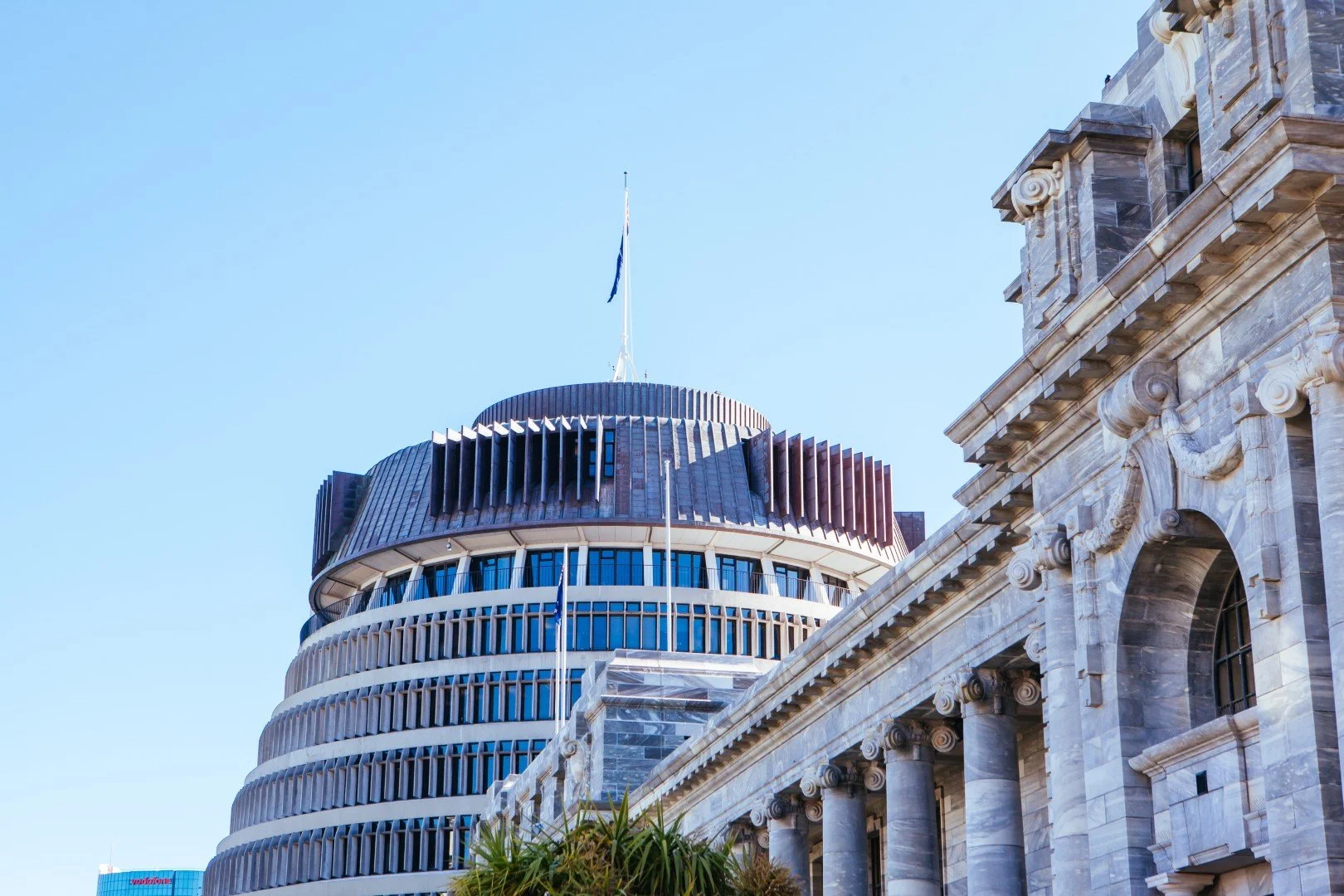
JHVEPhoto - stock.adobe.com

Around 60% of shareholding farms will receive at least $200,000, while some of the co-op's largest shareholders will receive over $2-3 million. Southland's Fortuna Group, with more than 4.4 million shares, will receive close to $9 million, while state-owned farmer Pāmu could receive $10 million.²

This reflects the sector's strategic maturity and forward-thinking approach to wealth creation beyond a single generation. It's a recognition that the most resilient farming families build diversified financial structures that can support their operations and families through all market cycles.

The balance of the sale proceeds is being retained by Fonterra to reinvest in its ingredients and foodservice businesses, with some cash used to retire debt or applied as working capital. Fonterra forecast its balance sheet metrics to stay in line with targets, being debt to EBITDA of less than 3x and gearing of 30-40%.²

Understanding Real Returns: The Smart Farmer's Perspective

Savvy farmers know headline numbers don't tell the whole story.

While the recent $10.16 per kilogram of milk solids farmgate price represents a nominal record,³ astute operators understand the critical importance of inflation-adjusted returns when assessing true profitability.

The previous high-water mark came in the 2013/14 season at $8.40 per kilogram.⁴ At first glance, this suggests farmers are now receiving approximately 21% more per kilogram than they did eleven years ago. However, this comparison becomes meaningless when examined through the lens of actual input cost inflation that has fundamentally transformed farm economics.

The rising cost of production

Between 2019 and 2024, the average total cost for milk production across major exporting regions increased by around 14%, with over 70% of that increase occurring since 2021.⁵ While on-farm inflation peaked at 10.2% in the year to March 2022,⁶ costs remained elevated through 2023 before moderating slightly in 2024. However, the cumulative impact since 2013 is huge.

The structural cost uplift is evident across every input category. From 2018-19 to 2024-25:

  • Interest costs for an average dairy farm rose 86.5%, from $187,182 to $246,416 annually.⁷

  • Insurance costs increased approximately 33% over five years, with insurance premiums now succeeding fertiliser and interest rates as a major cost pressure in 2024.⁸

DairyNZ estimates dairy operating expenses reached $8.16 per kilogram of milk solids in 2022/23, up sharply from $7.23 in 2021/22.⁹ The national break-even farmgate milk price for the 2024/25 season is $7.76 per kilogram of milk solids.¹⁰

Fertiliser costs saw some products skyrocket from $799 per tonne to $1,800 per tonne during the peak inflation period.¹¹ While prices moderated in 2024 (declining 4.2% in the sheep and beef sector),¹² the cumulative impact of years of price escalation remains embedded in farm cost structures. Additionally, feed costs for dairy farms rose 28.2% between 2020-21 and 2022-23.¹³

Added pressure from interest rates

While the Official Cash Rate has fallen to 2.25%, medium and longer-term fixed mortgage rates have been rising since December 2025. Wholesale interest rates have increased more than half a percentage point since November, with banks lifting 2-5 year fixed rates accordingly.

ASB's 2-year rate now sits at 4.95% and 3-year at 5.19%, while Westpac's 4-year rate has risen to 5.19% and 5-year to 5.29%.¹⁴ Markets are pricing in potential OCR hikes from mid-2026 as inflation sits at 3.1%, above the Reserve Bank's 1-3% target band.¹⁴

This dynamic creates renewed debt servicing pressure for farmers despite the falling OCR. The disconnect between short-term policy rates and longer-term borrowing costs reflects market expectations about future inflation and the eventual return to higher rates.

Smart farmers recognise this reality: $10 per kilogram milk price (while excellent in nominal terms) represents the outcome of working harder, investing more capital, and operating more efficiently within a structurally higher cost environment. When you strip away the nominal gains and examine purchasing power, farmers aren't substantially better off than they were at the previous peak. They've simply adapted to significantly higher operating costs.

The best operators understand that sustainable wealth creation requires thinking strategically beyond the farm gate. Relying solely on commodity price increases that barely keep pace with input cost inflation is not a wealth-building strategy, it's survival.

Extreme Volatility Demands Resilience

Recent price swings have been dramatic, rapid, and unpredictable – proving why wealth structures beyond farm gate are essential for multi-generational farming families.

The season opened in August 2025 with Fonterra forecasting a midpoint of $10 per kilogram with a wide range of $8-$11 per kilogram.¹⁵ For several months, this appeared achievable as prices held firm.

December’s dairy downturn

After nine consecutive Global Dairy Trade auction declines, Fonterra cut its farmgate milk price forecast for the second time in the season in December. It dropped from the season-opening midpoint of $10 per kilogram down to $9 per kilogram with a narrowed range of $8.50-$9.50.¹⁶ Whole Milk Powder prices had fallen 5.7%, having declined nearly 28% from their May peak.¹⁶

Market commentary was uniformly bearish, with analysts warning of sustained supply-side pressure and global milk flows outstripping demand. The outlook was grim. Farmers adjusted budgets, planned for lower cashflows, and braced for a difficult season.

Then, in a remarkable reversal, the market staged a recovery.

An unexpected upswing

Four consecutive positive Global Dairy Trade auctions saw prices surge back to September levels.¹⁷ Whole Milk Powder, which accounts for half the auction by volume and has the greatest influence on farmgate milk price, rose 2.5% to US$3,706 per metric tonne in late February. Skim milk powder increased 3% to US$2,973 per metric tonne, while butter surged 10.7% to US$6,347 per metric tonne.¹⁷

Last Friday (February 20, 2026) Fonterra responded to this market recovery by lifting its forecast again, just ten weeks after the December cuts. The co-op raised the midpoint from $9.00 to $9.50 per kilogram with a new range of $9.20-$9.80.¹⁸ CEO Miles Hurrell cited "recent improvements in global commodity prices combined with Fonterra's well contracted sales book."¹⁸

Additionally, Fonterra announced a special dividend of 14-18 cents per share from the entire fiscal 2026 underlying earnings generated by Mainland Group, payable following the completion of the sale to Lactalis.¹⁸

Volatility as a hard-learned lesson

This whipsaw journey (from $10, to $9, to $9.50) over the course of just four months illustrates the fundamental challenge facing farming families who depend entirely on commodity prices for wealth creation.

These aren't gradual, predictable shifts that allow for careful planning. They're rapid, material changes driven by global supply and demand dynamics that individual farmers cannot influence or accurately predict. In August, the outlook appeared strong. By December, it appeared dire. By February, it had recovered.

What will it look like in May? July? No one knows.

This volatility creates genuine financial planning challenges for families trying to build intergenerational wealth. How do you plan for retirement, fund the next generation's education, or structure succession when your primary income source can swing 10-20% in a matter of weeks?

Critically, even as Fonterra lifted its forecast, CEO Hurrell acknowledged that "global milk production remains above seasonal norms, meaning the risk of further volatility in pricing remains."¹⁸ In other words, yesterday's good news could reverse again next month. The unpredictability is structural, not temporary.

History guarantees there’ll be another downturn. You need to establish whether your family's financial security depends entirely on timing those cycles correctly, or whether you've built diversified wealth structures that can weather volatility while continuing to generate real returns.

Learning from the Best for Diversification

The most successful farming enterprises share one common characteristic: off-farm assets that aren't correlated to dairy commodity cycles.

The farm is the engine of wealth generation, but it shouldn't be the sole repository of wealth. Diversification creates financial resilience, provides genuine optionality, and reduces dependence on factors beyond the farm gate.

Strategic diversification into property, shares, managed funds, or other investments can provide income streams that aren't dependent on global dairy prices, exchange rates, or seasonal conditions. These assets have the potential to generate real returns above inflation. They can create genuine wealth growth, rather than simply keeping pace with rising costs.

Diversification also provides crucial liquidity that farm assets cannot deliver. When opportunities arise—whether that's acquiring neighbouring land, investing in new technology, or supporting the next generation's education—liquid investments can be accessed without forcing farm asset sales at potentially disadvantageous times. When emergencies occur, diversified wealth provides options and reduces stress.

This builds a comprehensive financial strategy that supports both farm and family for generations. The farm remains the core productive asset and the foundation of family identity and purpose – within a broader wealth structure providing stability, optionality, and genuine financial security through all market conditions.

Many farmers intend to reinvest this capital return into their farming operations.² This makes sense for operations with clear productivity improvements available. However, the most strategic approach balances on-farm reinvestment with genuine diversification beyond the farm gate.

There’s a question every farming family should ask: if we reinvest everything back into the farm, are we building wealth – or simply maintaining our exposure to a single asset class subject to extreme volatility and structural cost inflation?

Ensuring Quality Advice

As farmers contemplate deploying this imminent capital, the relationship with their financial adviser becomes paramount. This may be the largest single capital deployment decision many farming families ever make. Getting it right requires an adviser who is genuinely and legally committed to putting your interests first.

Will your adviser provide a written statement affirming that the advice relationship is of a fiduciary nature, where your interests unequivocally surpass those of the adviser?

Under New Zealand's financial advice regime, advisers are legally required to put their clients' interests first when giving advice and to prioritise their clients' interests over any conflicts.¹⁹ However, requiring your adviser to put this commitment in writing—in clear, unambiguous language—separates those who truly embrace fiduciary responsibility from those who simply meet minimum compliance standards.

Request a letter explicitly stating that all recommendations will prioritise your long-term financial wellbeing over commission structures, conflicts of interest, product preferences, or any other adviser considerations. This letter should confirm:

  • That the adviser will put your interests unequivocally ahead of their own

  • That they will disclose all conflicts of interest proactively

  • They will recommend only investments and strategies that serve your long-term objectives

  • Their compensation will be structured in alignment with your success

  • They will provide ongoing accountability for the advice given

If an adviser hesitates or refuses to provide this written commitment, that tells you everything you need to know about where their priorities truly lie. The best advisers welcome this clarity because it aligns with how they already operate.

It’s not about distrust—it's about establishing crystal-clear accountability in what may be the most significant financial planning exercise of your farming career.

Payment is Imminent – What About a Plan?

The timeline has crystallised. With settlement expected between now and the end of March,² farmers have mere weeks before capital arrives. The Overseas Investment Office approval cited the $3.2 billion direct injection of capital to New Zealand farmers as a strong economic benefit, alongside Lactalis' $100 million capital expenditure commitment and ongoing supply arrangements.² Finance Minister Nicola Willis confirmed the transaction met the "benefit to New Zealand test."²

For farmers who haven't yet engaged in comprehensive financial planning, the time to act is now—not after the money arrives. Once capital is in the bank account, the psychological pressure to "do something" with it can lead to reactive decisions, not strategic ones.

Execute on robust financial planning that diversifies wealth beyond agricultural assets into uncorrelated investments, creates multiple income streams independent of commodity cycles and inflation erosion, structures tax-efficient wealth transfer to the next generation, provides financial resilience and liquidity against future market downturns, and builds genuine intergenerational wealth that can support family objectives for decades.

Work with advisers now to develop comprehensive plans, have thorough family discussions about objectives and succession, and ensure structures are ready for when the capital arrives. The planning should happen now; the deployment happens when the money is in your account.

The Bottom Line

The dairy sector has proven its resilience, discipline, and strategic thinking through multiple crisis periods. But dependence on commodity prices alone creates unnecessary risk for farming families seeking to build multi-generational wealth.

Now, thanks to the Fonterra sale, farmers can take the next strategic step—building financial structures that weather all cycles and generate real wealth across generations. Beyond the next season, or even the next decade, this is about creating financial security that supports your family's farming legacy for the next century.

The question becomes whether you'll deploy the capital strategically, with proper advice, appropriate diversification, with explicit attention to generating real returns above inflation.

With capital arriving imminently and markets demonstrating their unpredictability daily, the time for planning is now. The most successful farmers will approach this thoughtfully, strategically… and with professional, fiduciary guidance that puts their interests unequivocally first.

Nick Stewart

(Ngāi Tahu, Ngāti Huirapa, Ngāti Māmoe,
Ngāti Waitaha)

Financial Adviser and CEO at Stewart Group

  • Stewart Group is a Hawke's Bay and Wellington based CEFEX & BCorp certified financial planning and advisory firm providing personal fiduciary services, Wealth Management, Risk Insurance & KiwiSaver scheme solutions.

  • The information provided, or any opinions expressed in this article, are of a general nature only and should not be construed or relied on as a recommendation to invest in a financial product or class of financial products. You should seek financial advice specific to your circumstances from a Financial Adviser before making any financial decisions. A disclosure statement can be obtained free of charge by calling 0800 878 961 or visit our website, www.stewartgroup.co.nz

  • Article no. 446


References

  1. BusinessDesk (19 February 2026). "Fonterra farmers set to rubber stamp $3.2b Mainland Group capital return". ASB estimated average return at $392,000, with 60% receiving at least $200,000.

  2. BusinessDesk (19 February 2026). Settlement expected between now and end of March 2026.

  3. NZ Herald (26 September 2025). Final farmgate milk payout reached $10.16 per kilogram of milk solids.

  4. NZ Herald (18 March 2025). In 2013/14 season, Fonterra paid $8.40/kg.

  5. Rabobank (18 February 2025). Between 2019 and 2024, average total cost increased 14%, with over 70% since 2021.

  6. NZ Herald (22 August 2022). On-farm inflation 10.2% for year to March 2022.

  7. Farmers Weekly (4 June 2024). Interest costs rose 86.5% from $187,182 (2018-19) to $246,416 (2024-25).

  8. USDA (2025). In 2024, insurance premiums succeeded fertiliser and interest rates as major cost pressure.

  9. Infometrics (August 2023). Operating expenses at $8.16 per kgMS in 2022/23.

  10. DairyNZ (2024). Break-even at $7.76 kg/MS for 2024/25.

  11. NZ Herald (22 August 2022). One fertiliser increased to $1,800/tonne from $799/tonne.

  12. Beef + Lamb NZ (June 2024). Fertiliser declined 4.2% in 2023-24.

  13. DairyNZ. Feed costs rose 28.2% between 2020-21 and 2022-23.

  14. RNZ (9 February 2026) and Opes Partners (25 February 2026). ASB: 2-year at 4.95%, 3-year at 5.19%; Westpac: 4-year at 5.19%, 5-year at 5.29%. Wholesale rates up over half a percentage point. Note: BNZ reversed recent rate hikes on 27 February 2026, cutting 3-year to 4.99%, 4-year to 5.19%, 5-year to 5.29%.

  15. Fonterra (August 2025). Season opened at $10/kg midpoint with range $8-$11/kg.

  16. Farmers Weekly (18 December 2025). Fonterra cut forecast to $9/kg midpoint, range $8.50-$9.50, following nine consecutive GDT declines.

  17. BusinessDesk (19 February 2026). WMP rose 2.5% to US$3,706/MT, SMP 3%, butter 10.7% following four consecutive positive auctions.

  18. Reuters/Fonterra (20 February 2026). "NZ's Fonterra lifts annual milk price forecast, teases special dividend". New midpoint $9.50/kg, range $9.20-$9.80. Special dividend 14-18 cents per share from Mainland Group FY26 earnings. CEO noted volatility risk remains.

  19. FMA New Zealand. Advisers must put client's interests first.
Two Years of Drift: New Zealand's Squandered Mandate for Change

Article # 445

In late 2023, New Zealanders voted decisively for change. After six years of Labour government under Jacinda Ardern and Chris Hipkins, the country was exhausted. The NZX had become one of the worst‑performing stock markets in the developed world [1]. Trust in core institutions, from the police to the healthcare system, had cratered [2]. Real economic growth was negative [3]. The cost of living was crushing ordinary families, while housing remained stubbornly unaffordable.

The coalition government swept to power on a mandate to reverse this decline. But two years later, that mandate has been squandered through timidity and a fatal misreading of the moment.

It's tempting to view this government's approach through the lens of John Key and Bill English's post‑GFC strategy. Between 2008 and 2017, that duo carefully managed spending cuts while allowing growth to flourish organically [4]. They made incremental reforms, maintained fiscal discipline, and let the private sector drive recovery. It worked brilliantly. Unemployment fell, growth returned, and National won three consecutive elections.

But 2026 is not 2010, and the global playing field has fundamentally changed. Interest rates have surged after over a decade of easy money [5]. New Zealand's underlying productivity crisis can no longer be ignored [6].

This government has tried to apply the Key‑English playbook to a radically different situation. Ministers speak reassuringly of “green shoots”, yet the economy contracted 0.9% in Q2 2025, then grew just 1.1% in Q3, a volatile pattern that speaks to underlying fragility rather than sustained recovery [7]. Real GDP per capita continues falling [8].

The retail sector tells the story most viscerally. Boxing Day sales slumped 12.4%, consumers spent just $51.2 million on non‑food retail, down from $58.5 million the previous year [9]. As Simplicity chief economist Shamubeel Eaqub observed, “For a lot of businesses this should be their saving grace” [10].

January 2026 brought only marginal relief: core retail spending lifted a mere 0.6% compared to the same month last year, with weather events depressing regional performance and retailers “just treading water as the economy moves sideways, rather than forwards,” according to Retail NZ CEO Carolyn Young [11]. In the meantime, retail business liquidations surged 34% year‑on‑year [12].

Consider ACT leader David Seymour's State of the Nation speech on Sunday, where he diagnosed the core problem with brutal clarity. “People work their guts out only to find that they're further behind,” he said, noting young New Zealanders simply “can't make the numbers add up” when looking at student loans, wages, taxes, and housing costs. He called emigration a “flashing light on the dashboard” and observed that previous generations worked hard “because hard work was a rewarding strategy. That deal feels broken.” He admitted the government is “on track to post a small surplus by 2030, but after that, our ageing population will put us back in the red for more decades of deficit spending.” Yet his proposed solution, reducing the number of ministers to 20 and departments to 30, only epitomises the incrementalism that has defined this government. When your coalition partner polling at 7.6% is calling for bolder action than you are, you've misread the moment [13].

With the election now confirmed for 7 November 2026, Prime Minister Christopher Luxon’s party has a narrow lead in recent polls, but the fundamentals are troubling. The latest Roy Morgan poll has National at 34.5% compared to Labour's 30.5%, with the coalition government on 52% versus the opposition's 44% [14]. Yet 51.5% of voters say New Zealand is “heading in the wrong direction” [15].

The Argentina Mirror

In 1913, Argentina's per capita income exceeded Germany, France, Sweden, Italy, and Spain [16]. Like New Zealand, it was a resource‑rich agricultural powerhouse built on classical liberal foundations. Both countries ranked among the world's wealthiest in the first half of the 20th century [17].

Argentina's fall was dramatic. Decades of Peronist corporatism culminated in the crisis that brought Javier Milei to power. By December 2023, Argentina faced 211% annual inflation, 42% poverty, a 15% quasi‑fiscal deficit, and an economy in free fall [18].

Milei cut the budget by 30% and balanced it by his second month in the job [18]. He implemented 1,246 deregulations through August 2025 [18]. He abolished 10 ministries and fired more than 53,000 public employees [18]. Annual inflation fell from 211% to around 32% by January 2026 [18–21]. GDP grew 6.3% and investment surged 32% in the second quarter of 2025 [18]. More than 11 million people have been pulled out of poverty [18].

The results are transformative. After Milei eliminated rent controls, rental housing supply tripled and real prices fell 30% [18]. When he deregulated agricultural markets, vaccine costs for livestock producers dropped by two‑thirds [18]. Home appliance prices fell 35% after eliminating import‑licensing schemes [18].

There are real victories here. They’re 28‑year‑old Franco signing a 30‑year mortgage,  “unthinkable only a couple of years ago” [18]. They’re freelancer Cecilia finally able to focus on work instead of navigating convoluted tax laws [18]. They’re farmer Pedro Gassiebayle reinvesting in his business and thinking about efficiency for the first time [18].

To be sure, Argentina's transformation faces headwinds. Monthly inflation ticked up to 2.9% in January 2026 in the fifth consecutive monthly increase, and questions have emerged about the government's statistical methodology [19–21]. The path remains narrow and fraught. But even with a few snags, the direction is unmistakable: from complete collapse toward functioning markets.

New Zealand's Drift

Compare that to New Zealand. Two years after a change in government, there's been no meaningful regulatory reform despite endless consultation. Government spending has barely been constrained [22]. Infrastructure delivery remains slow and over‑budget [23]. Housing consents have fallen [24]. The promised Fast‑track Approvals Bill has been watered down. RMA reform has been incremental when transformation was needed.

Most damningly, the fundamental drivers of our decline remain unaddressed. We still can't build houses efficiently. We still can't deliver infrastructure on time or budget. Our planning system still makes simple projects take years to consent. Meanwhile, retailers close their doors while politicians tout those elusive green shoots.

The Key‑English approach worked because the GFC was primarily a demand shock. New Zealand's current malaise is structural.

We have a productivity crisis decades in the making [25]. We have infrastructure crumbling from underinvestment [26]. We have planning and regulatory systems that strangle growth.

As Austrian economist Ludwig von Mises told Argentines in 1959: “Economic recovery does not come from a miracle; it comes from the adoption of sound economic policies” [18].

The Electoral Reckoning

With nine months until the election, this government faces an uncomfortable reckoning. Voters were promised change and received continuity. They were told to trust the process while their living standards declined. Now they're being asked to believe in green shoots while retail spending barely budges and liquidations surge.

The opposition will hammer a simple message: You had your chance and you wasted it. And they'll be right. This government has fundamentally misread the moment. It applied a playbook designed for managing cyclical downturns to a structural crisis requiring transformation.

What makes Argentina's transformation particularly instructive is that Milei turned the mainstreaming of libertarian thought into political victory [18]. He became the first political leader in 80 years to propose that the whole corporatist state had to be torn down and replaced with limited government [18]. New Zealand faces no such ideological battle. We already have strong institutions, low corruption, an independent central bank, and largely functional markets. We don't need revolution; we need our government to use the mandate voters gave them.

The tragedy is that we could reform from strength if our leaders found the courage. Instead, we're drifting toward the point where only painful corrections remain viable. Postponing necessary reforms doesn't achieve stability. It ensures that, when reform finally comes, it's painful and disruptive.

Two years ago, voters gave this government a mandate for change. Nine months from an election, with retail sales barely growing and businesses liquidating at record rates, they're learning that careful management of decline is still decline. As Milei declared to Argentines: “Either we persist on the path of decadence, or we dare to travel the path of freedom” [18].

New Zealand faces the same choice. Two years ago, voters chose change but received decadence, polite, incremental, delivered with press releases about green shoots while retailers close their doors.

Argentina's history suggests we're running out of time to change course. The voters will render their verdict on November 7.

Nick Stewart

(Ngāi Tahu, Ngāti Huirapa, Ngāti Māmoe, Ngāti Waitaha)

Financial Adviser and CEO at Stewart Group

  • Stewart Group is a Hawke's Bay and Wellington based CEFEX & BCorp certified financial planning and advisory firm providing personal fiduciary services, Wealth Management, Risk Insurance & KiwiSaver scheme solutions.

  • The information provided, or any opinions expressed in this article, are of a general nature only and should not be construed or relied on as a recommendation to invest in a financial product or class of financial products. You should seek financial advice specific to your circumstances from a Financial Adviser before making any financial decisions. A disclosure statement can be obtained free of charge by calling 0800 878 961 or visit our website, www.stewartgroup.co.nz

  • Article no. 445


References

1. NZX. Market performance data, 2020–2023.

2. Statistics New Zealand. New Zealand General Social Survey: Trust in public institutions, 2018–2023.

3. Statistics New Zealand. Gross Domestic Product (GDP) data, 2022–2025.

4. New Zealand Treasury. Fiscal consolidation analysis, 2008–2017.

5. Reserve Bank of New Zealand. Official Cash Rate (OCR) data, 2021–2023.

6. OECD. Productivity statistics for New Zealand.

7. Statistics New Zealand. Quarterly GDP data, Q2–Q3 2025.

8. Statistics New Zealand. Real GDP per capita data, 2024–2025.

9. Worldline NZ. Retail spending data and Boxing Day sales figures, December 2025.

10. RNZ. “Tough December for retailers, as Boxing Day sales slump 12.4 percent.” 13 January 2026.

11. Inside Retail NZ / Ragtrader. Retail sector reports, January 2026.

12. Centrix. Retail business liquidations data, reported February 2026.

13. RNZ / Reid Research. Polling data on ACT Party support, January 2026.

14. Roy Morgan. New Zealand voting intention poll, January 2026.

15. Roy Morgan. Government confidence rating, January 2026.

16. Maddison Project Database. Historical GDP per capita comparisons, 1913.

17. Maddison Project Database. Long‑term international income comparisons, early 20th century.

18. Vásquez, Ian, and Marcos Falcone. “Liberty Versus Power in Milei’s Argentina.” Cato Institute – Free Society, Fall 2025.

19. ABC News. Argentina inflation reporting, February 2026.

20. Fortune. Argentina inflation and economic reform coverage, February 2026.

21. Washington Times. Argentina inflation and fiscal policy reporting, February 2026.

22. New Zealand Treasury. Budget documents, 2024–2026.

23. Infrastructure Commission Te Waihanga. Project delivery and cost‑overrun reports.

24. Statistics New Zealand. Building consents data, 2024–2025.

25. New Zealand Productivity Commission. Long‑term productivity analysis.

26. Infrastructure Commission Te Waihanga. Infrastructure deficit assessments.

Why Holding Cash Feels Safe - But Isn't Always Wise

The ‘security’ of cash today often comes at the expense of tomorrow's purchasing power.

New Zealanders tend to hold cash reserves despite changing interest rate conditions. The RBNZ has cut the Official Cash Rate to 3.0% in August 2025 from its peak of 5.5% in early 2024, with term deposits following suit. While declining in line with the OCR, term deposit rates remain attractive; the highest rates on Canstar's database sit at 4.50%.

Yet, NZ’s economy contracted in the second quarter of 2025. Inflation increased to 2.70% in the same period[1] – well within the RBNZ's 1-3% target band but adding pressure to real returns.

The Money Illusion Trap

Many investors fall victim to what economists call "the money illusion": thinking about money in nominal rather than real terms[2].

A $100,000 term deposit earning 4.5% generates $4,500 annually, which feels like growth. But for someone paying 33% tax, the after-tax return is just $3,015 (3.015%). With inflation at 2.7%, this creates a real return of just 0.315%. For those in the top tax bracket (39%), this return becomes 2.745% - providing a microscopic real return of $45. That’s barely enough to buy a decent bottle of wine to drown your wealth preservation strategy sorrows.

Major bank economists forecast the OCR will fall to 2.5% by the end of 2025 or early 2026[3]. If term deposits drop to around 3%, a 33% taxpayer will earn an even measlier 2.01%.

Hidden Costs of Cash Comfort

Opportunity Cost: While current term deposits offer reasonable returns, historical equity market returns in New Zealand averaged 7-10% annually over longer periods. That 2-5% difference compounds substantially over decades.[4]

Rate Dependency Risk: With the two-year swap rate expected to drop to 2.8% as the OCR reaches 2.5%, retail deposit rates will follow. Unlike growth assets that can benefit from economic recovery, cash offers no upside participation.

Inflation Protection: Cash provides no hedge against rising costs. With administered prices driving near-term inflation pressures, purchasing power erosion remains a persistent threat.

The Economic Reality Check

New Zealand's economic recovery stalled in the second quarter. Spending is constrained by global economic policy uncertainty, falling employment, higher goods prices, and declining house prices. RBNZ notes there is scope to lower the OCR further if medium-term inflation pressures continue to ease as expected[5].

This makes holding large cash positions riskier; cash-savers face declining returns and miss potential recovery gains in other asset classes.[6]

Cash has its place – as part of a strategic, sophisticated portfolio, where professional advisers can implement a bond laddering strategy (providing income stability with superior yields to deposits), liquidity management to provide regular cash flow and reduce the need for large cash reserves and can recommend PIE funds and other tax-efficient structures that minimise the tax drag.

The Value of Professional Advice

History has shown many investors start panic selling during downturns, chasing performance at market peaks, or hoarding cash.

When cash returns are low, investors venture into adventurous territory: junk bonds, private credit, mezzanine debt arrangements, and other high-yield instruments that carry higher risks.

Working with a fee-only, fiduciary adviser is invaluable. Look for advisers who:

  • Conduct thorough discovery of your financial situation

  • Explain their investment philosophy and process clearly

  • Provide transparent fee disclosure with no hidden commissions

  • Demonstrate relevant credentials (CFP, AIF, CEFEX)

  • Show measurable progress tracking methods

 The Bottom Line

With NZ’s economic headwinds, sitting in cash isn't the safe option - it's the wealth erosion option.

"She'll be right" doesn't cut the mustard when your money's losing value faster than a leaky boat. After tax and inflation, that "safe" term deposit is barely keeping you afloat. Your future wealth depends on making this distinction now, not when it's convenient.


Nick Stewart
(Ngāi Tahu, Ngāti Huirapa, Ngāti Māmoe, Ngāti Waitaha)

Financial Adviser and CEO at Stewart Group

  • Stewart Group is a Hawke's Bay and Wellington based CEFEX & BCorp certified financial planning and advisory firm providing personal fiduciary services, Wealth Management, Risk Insurance & KiwiSaver scheme solutions.

  • The information provided, or any opinions expressed in this article, are of a general nature only and should not be construed or relied on as a recommendation to invest in a financial product or class of financial products. You should seek financial advice specific to your circumstances from a Financial Adviser before making any financial decisions. A disclosure statement can be obtained free of charge by calling 0800 878 961 or visit our website, www.stewartgroup.co.nz

  • Article no. 423


References

  1. Trading Economics. (2025). New Zealand Inflation Rate - Q2 2025. Available at: https://tradingeconomics.com/new-zealand/inflation-cpi

  2. Shafir, E., Diamond, P., & Tversky, A. (1997). Money Illusion. Quarterly Journal of Economics, 112(2), 341-374.

  3. ANZ Bank New Zealand. (2025). Weekly Data Wrap: Economic Forecasts and OCR Projections. Available at: https://www.anz.co.nz/about-us/economic-markets-research/data-wrap/

  4. NZX Limited. (2024). Historical Returns Analysis: New Zealand Equity Market Performance 1987-2024. Wellington: NZX.

  5. Reserve Bank of New Zealand. (2025). Monetary Policy Statement August 2025. Wellington: RBNZ. Available at: https://www.rbnz.govt.nz/hub/publications/monetary-policy-statement/2025/08/monetary-policy-statement-august-2025

  6. DALBAR Inc. (2024). Quantitative Analysis of Investor Behavior: New Zealand Market Study. Boston: DALBAR Research.