Interest rates

When the Process Becomes the Cover

Article #466

Two stories crossed my desk last month, half a world apart, joined by the same affliction: institutions so wedded to their own process that they lose sight of the people it should serve, and then reach for that process as a shield. The pattern is worth naming, because it is far more common than outright wrongdoing and far harder to spot. Nobody sets out to fail. They simply follow the steps, tick the boxes, and assume the machine will catch what they did not.
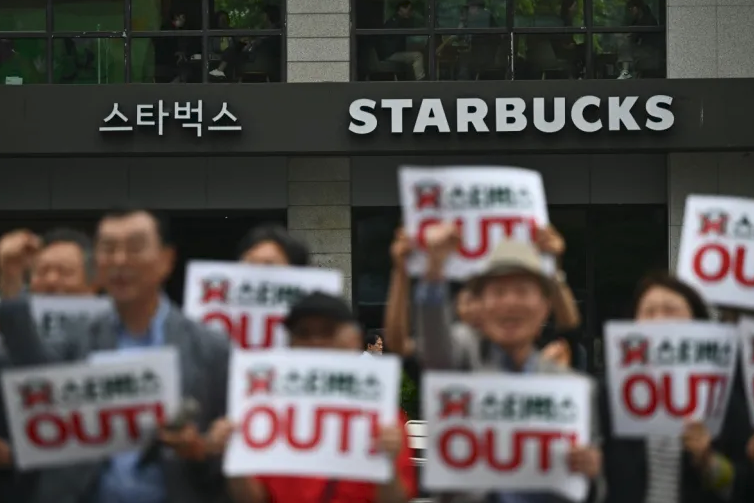
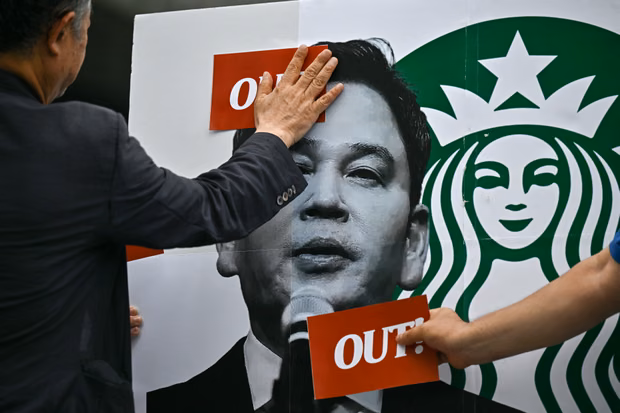
Our first story comes courtesy of former MP Rick Barker. Starbucks South Korea launched a promotion for “Tank Day” on 18 May, the anniversary of the 1980 Gwangju massacre, when the military rolled tanks over pro-democracy protesters and killed hundreds [1].

It did not land well.

The Korea CEO was sacked and weekly sales fell more than a quarter [2]. What makes the episode instructive is not that a mistake was made, but how it was made. Reports suggest the marketing team asked an AI tool for suggestions, the approving officials never opened the design file, and the legal review was skipped entirely [3]. Every gate that should have stopped it was either delegated or waved through. Not malice, but blindness – the particular blindness of people who trusted the process to do their looking for them.


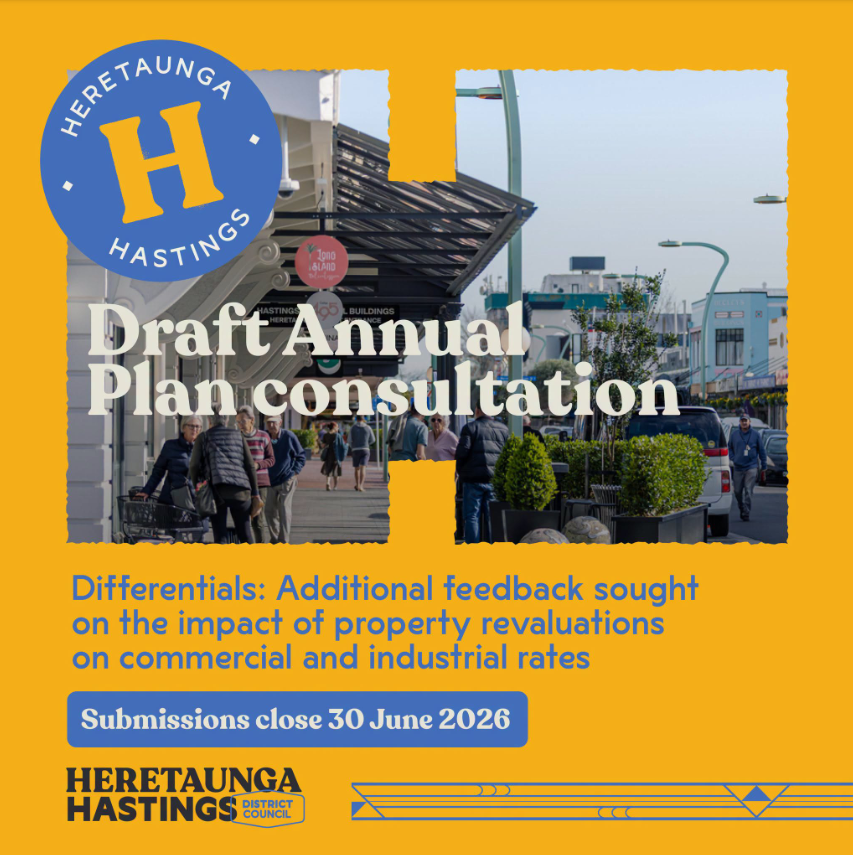
In story two, we return to Hastings. Council consulted on an Annual Plan offering a 5.9 or 9.1 percent rates rise, and businesses across the district budgeted accordingly [4]. Then Quotable Value’s revaluation landed. Commercial and industrial land values had risen sharply while residential values fell close to 20 percent. Because rates are apportioned by property value, that swing shifted a far larger share of the burden onto commercial owners – not through any decision to target them, but as an automatic consequence of the arithmetic. One inner-city operator told the Herald his rates were jumping almost 30 percent, a rise he believed could end his business [4]. The certified figures arrived only two working days before submissions closed, creating an extremely limited window for the very people most affected to respond.

The official line was that Council did not have the numbers until early May. Under questioning, that account became more complicated. The mayor acknowledged she had received an indication that there could be a significant shift [5]. A councillor has since stated that officers held a pre-audit valuation report in February and March showing commercial values rising and residential values falling, yet ratepayers were given no warning [6]. The distinction matters. There is a difference between not having a certified, audited, signed-off figure and having no idea at all which way the wind was blowing.

That admission raises a fair question: whether earlier, plainer communication could have helped affected ratepayers prepare, even without the final numbers in hand. You do not need certified figures to the last decimal to tell a café owner a storm may be coming. Not knowing the final number is not the same as knowing nothing. A warning that a material shift was likely – caveated, provisional, honest about its uncertainty – would have cost the Council nothing and given businesses time to plan, to model their exposure, to organise a considered submission rather than a scramble.

Then, after a second round of consultation and 233 submissions seeking relief, Council retained the differentials in full and deferred the rating review to the 2027 Long Term Plan [7]. A pause on the Hastings CBD targeted rate was offered as the consolation; Havelock North businesses did not receive the same relief [7]. And the decision was posted immediately before a long weekend – a timing that, whatever the intention behind it, did little to foster the perception of an open and confident process. Institutions that are proud of a decision tend to announce it in daylight.
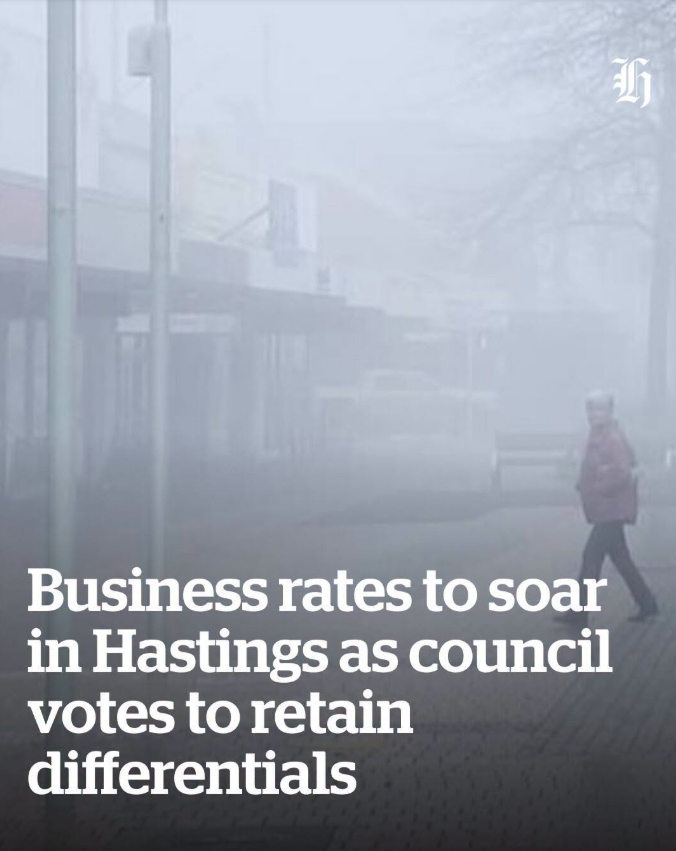

With amalgamation now looming [8], the deferral carries a further risk. A review pushed out to a future Long Term Plan may ultimately be inherited by an entity that never made the promise. A commitment made by one council to revisit its rating approach is only as durable as that council; restructure the furniture and the promise can quietly fall down the back of it.

There was, it turns out, an alternative on the table. A councillor had proposed a different differential before consultation opened, one that eased the commercial burden while nudging the rural villages toward parity. He and four colleagues voted against the status quo; ten voted to retain it. His alternative could not proceed, he says, because the modelling had not been completed [6]. Whatever the merits of his particular proposal, the sequence is telling: an option existed, and the process – not a debate on its substance – was the reason it went no further. When process appears to foreclose the consideration of alternatives rather than enable it, confidence in the process itself begins to suffer.

Let me be clear about what this is and is not. The rates were never the real issue. Revaluations happen; they are an independent statutory exercise the Council does not control, and this one at least spared many households the worst by loading the swing onto commercial property instead. The more significant issue is confidence in the process that surrounds the numbers: whether people were given timely information, whether options were genuinely explored, and whether the concerns of those affected received meaningful consideration before the die was cast.

Starbucks lost a quarter of its sales because nobody thought to examine the impact of what they were about to do. Hastings’ ratepayers risk losing something slower to rebuild: the confidence that important information will be shared with them while there is still time to act on it. Trust is the one asset a council cannot borrow against. It does not appear on any balance sheet, it cannot be levied, and once it is spent it cannot be refinanced.

As Hawke’s Bay considers significant structural change through possible amalgamation, the lesson extends well beyond one year’s rates. Public institutions do not earn trust because every decision they make is popular – that is an impossible standard and not a sensible one. They earn it when people feel informed, heard and treated fairly throughout the process, win or lose. Consultation, transparency and candour are not administrative box-ticking to be completed and filed; they are the foundation upon which public confidence actually rests. Once that confidence begins to erode, rebuilding it is far harder, and far more expensive, than preserving it in the first place. That is a lesson worth learning before the machinery of local government is rebuilt, not after.


Nick Stewart

(Ngāi Tahu, Ngāti Huirapa, Ngāti Māmoe,
Ngāti Waitaha)

Financial Adviser and CEO at Stewart Group

  • Stewart Group is a Hawke's Bay and Wellington based CEFEX & BCorp certified financial planning and advisory firm providing personal fiduciary services, Wealth Management, Risk Insurance & KiwiSaver scheme solutions.

  • The information provided, or any opinions expressed in this article, are of a general nature only and should not be construed or relied on as a recommendation to invest in a financial product or class of financial products. You should seek financial advice specific to your circumstances from a Financial Adviser before making any financial decisions. A disclosure statement can be obtained free of charge by calling 0800 878 961 or visit our website, www.stewartgroup.co.nz


REFERENCES

  1. “Starbucks Apologizes After Ad Campaign Evokes Massacre,” Associated Press, May 2026; Branding in Asia, “Shinsegae Chairman Issues Apology Over Starbucks Korea ‘Tank Day’ Campaign,” May 2026.

  2. “Starbucks’ Korea sales plunge after Tank Day marketing backlash,” Reuters, May 2026; CEO Sohn Jeong-hyun dismissed per CNN.

  3. “Foreign Media Spotlight Starbucks Korea’s ‘Tank Day’ Backlash and Sales Plunge,” Seoul Economic Daily / Yonhap, 27 May 2026.

  4. “Hastings business says rate hike of almost 30% could end them, mayor ‘beyond livid’ with situation,” NZ Herald / Hawke’s Bay Today, June 2026.

  5. Public meeting convened by the Hastings and Havelock North Business Associations, 4 June 2026.

  6. Cr Steve Gibson, public statement on the 2026/27 Annual Plan decision, July 2026: pre-audit valuation report in February/March, 25–75 percent impact estimate, alternative rating differential proposal, and 10–5 vote to retain the existing differentials. Facebook.

  7. “Council adopts 2026/27 Annual Plan,” Hastings District Council, July 2026 (differentials retained; rating review deferred to the 2027 Long Term Plan; Hastings CBD targeted rate pause).

  8. “Majority of Hawke’s Bay submitters favour amalgamation into one council,” Hawke’s Bay Today, 14 July 2026.


Why Holding Cash Feels Safe - But Isn't Always Wise

The ‘security’ of cash today often comes at the expense of tomorrow's purchasing power.

New Zealanders tend to hold cash reserves despite changing interest rate conditions. The RBNZ has cut the Official Cash Rate to 3.0% in August 2025 from its peak of 5.5% in early 2024, with term deposits following suit. While declining in line with the OCR, term deposit rates remain attractive; the highest rates on Canstar's database sit at 4.50%.

Yet, NZ’s economy contracted in the second quarter of 2025. Inflation increased to 2.70% in the same period[1] – well within the RBNZ's 1-3% target band but adding pressure to real returns.

The Money Illusion Trap

Many investors fall victim to what economists call "the money illusion": thinking about money in nominal rather than real terms[2].

A $100,000 term deposit earning 4.5% generates $4,500 annually, which feels like growth. But for someone paying 33% tax, the after-tax return is just $3,015 (3.015%). With inflation at 2.7%, this creates a real return of just 0.315%. For those in the top tax bracket (39%), this return becomes 2.745% - providing a microscopic real return of $45. That’s barely enough to buy a decent bottle of wine to drown your wealth preservation strategy sorrows.

Major bank economists forecast the OCR will fall to 2.5% by the end of 2025 or early 2026[3]. If term deposits drop to around 3%, a 33% taxpayer will earn an even measlier 2.01%.

Hidden Costs of Cash Comfort

Opportunity Cost: While current term deposits offer reasonable returns, historical equity market returns in New Zealand averaged 7-10% annually over longer periods. That 2-5% difference compounds substantially over decades.[4]

Rate Dependency Risk: With the two-year swap rate expected to drop to 2.8% as the OCR reaches 2.5%, retail deposit rates will follow. Unlike growth assets that can benefit from economic recovery, cash offers no upside participation.

Inflation Protection: Cash provides no hedge against rising costs. With administered prices driving near-term inflation pressures, purchasing power erosion remains a persistent threat.

The Economic Reality Check

New Zealand's economic recovery stalled in the second quarter. Spending is constrained by global economic policy uncertainty, falling employment, higher goods prices, and declining house prices. RBNZ notes there is scope to lower the OCR further if medium-term inflation pressures continue to ease as expected[5].

This makes holding large cash positions riskier; cash-savers face declining returns and miss potential recovery gains in other asset classes.[6]

Cash has its place – as part of a strategic, sophisticated portfolio, where professional advisers can implement a bond laddering strategy (providing income stability with superior yields to deposits), liquidity management to provide regular cash flow and reduce the need for large cash reserves and can recommend PIE funds and other tax-efficient structures that minimise the tax drag.

The Value of Professional Advice

History has shown many investors start panic selling during downturns, chasing performance at market peaks, or hoarding cash.

When cash returns are low, investors venture into adventurous territory: junk bonds, private credit, mezzanine debt arrangements, and other high-yield instruments that carry higher risks.

Working with a fee-only, fiduciary adviser is invaluable. Look for advisers who:

  • Conduct thorough discovery of your financial situation

  • Explain their investment philosophy and process clearly

  • Provide transparent fee disclosure with no hidden commissions

  • Demonstrate relevant credentials (CFP, AIF, CEFEX)

  • Show measurable progress tracking methods

 The Bottom Line

With NZ’s economic headwinds, sitting in cash isn't the safe option - it's the wealth erosion option.

"She'll be right" doesn't cut the mustard when your money's losing value faster than a leaky boat. After tax and inflation, that "safe" term deposit is barely keeping you afloat. Your future wealth depends on making this distinction now, not when it's convenient.


Nick Stewart
(Ngāi Tahu, Ngāti Huirapa, Ngāti Māmoe, Ngāti Waitaha)

Financial Adviser and CEO at Stewart Group

  • Stewart Group is a Hawke's Bay and Wellington based CEFEX & BCorp certified financial planning and advisory firm providing personal fiduciary services, Wealth Management, Risk Insurance & KiwiSaver scheme solutions.

  • The information provided, or any opinions expressed in this article, are of a general nature only and should not be construed or relied on as a recommendation to invest in a financial product or class of financial products. You should seek financial advice specific to your circumstances from a Financial Adviser before making any financial decisions. A disclosure statement can be obtained free of charge by calling 0800 878 961 or visit our website, www.stewartgroup.co.nz

  • Article no. 423


References

  1. Trading Economics. (2025). New Zealand Inflation Rate - Q2 2025. Available at: https://tradingeconomics.com/new-zealand/inflation-cpi

  2. Shafir, E., Diamond, P., & Tversky, A. (1997). Money Illusion. Quarterly Journal of Economics, 112(2), 341-374.

  3. ANZ Bank New Zealand. (2025). Weekly Data Wrap: Economic Forecasts and OCR Projections. Available at: https://www.anz.co.nz/about-us/economic-markets-research/data-wrap/

  4. NZX Limited. (2024). Historical Returns Analysis: New Zealand Equity Market Performance 1987-2024. Wellington: NZX.

  5. Reserve Bank of New Zealand. (2025). Monetary Policy Statement August 2025. Wellington: RBNZ. Available at: https://www.rbnz.govt.nz/hub/publications/monetary-policy-statement/2025/08/monetary-policy-statement-august-2025

  6. DALBAR Inc. (2024). Quantitative Analysis of Investor Behavior: New Zealand Market Study. Boston: DALBAR Research.

Navigating New Zealand’s Economic Crossroads - A Canny View

The Rate Cut Reality Check: Too Little, Too Late

Next Wednesday's anticipated 25 basis point cut to 3%[i] represents more than monetary policy adjustment—it's an admission of New Zealand's economic fragility, yet likely inadequate given our challenges. While markets celebrate cheaper money, this modest response highlights policy inertia.

The Reserve Bank's hand has been forced by unemployment climbing to 5.2%—the highest since 2016—and wage growth softening to its slowest pace in years. Private sector wages have decelerated to just 2.2% annually, whilst underutilisation has surged to 12.8%[ii]. Yet the expected quarter-point response appears tepid when economic data screams for decisive action.

As former Finance Minister Ruth Richardson commented, Treasury's warnings about New Zealand's fiscal sustainability aren't mere technical observations—they're alarm bells signalling "greater pressure on the fiscal position than we have in the last 20 years"[iii].

Higher starting debt, unfavourable interest rates, adverse growth trends, and long-term pressures from aging and climate change are converging into a perfect storm. Despite claims of $44 billion in savings, government has reallocated spending rather than shrinking it [iii].

It's hard for hope not to fade when our government appears to lack the mettle to take the bull by the horns. The "price of butter" facade may have fooled some, but not many. Butter is a product that hasn't changed in eons—full cream milk, add salt and churn. No smoke and mirrors or PR spin, just butter. Yet politicians obsess over its retail pricing whilst avoiding hard decisions on fiscal consolidation that might actually address underlying inflation pressures. 

The Great Capital Migration

Capital flows as freely as people in an interconnected world. Just as 230,000 Kiwis have voted with their feet over two years seeking better opportunities offshore[iv], smart money increasingly looks beyond our borders for superior returns.

The recent emigration shows a damning verdict on New Zealand's economic trajectory. These are productive citizens, who see limited prospects in a country determined to tax productivity whilst subsidising speculation. Human capital flight and financial capital mobility share parallels—both respond to incentives and seek the best risk-adjusted returns.

Housing Market Dysfunction Remains

Our housing market remains in purgatory, with prices stubbornly elevated while transaction volumes are sluggish. Latest data shows ‘days to sell’ extending and prices slipping nationally for six of the past seven months[v]. Wednesday's modest rate cut is unlikely to break this deadlock.

Young Kiwis are emigrating, recognising their homeownership prospects have been systematically destroyed by policies prioritising incumbent wealth over economic dynamism. The social contract promising hard work would lead to homeownership has been broken: 72% of Kiwis without a home believe buying a property is beyond their reach[vi]. Yet, many Kiwis remain dangerously over-exposed to residential real estate.

Rethinking Investment

The traditional Kiwi approach of leveraging into property and hoping for the best is dangerous where house prices may stagnate whilst debt service costs remain higher.

Global equity markets continue to climb, with the S&P 500 delivering 5-year annualised returns of 15.71%. Meanwhile, New Zealand's NZX50 has delivered a dismal 1.8% annualised return over the same period [vii].

The performance gap is devastating. A $100,000 investment in the S&P 500 over five years would have grown to $208,000, versus approximately $109,000 in the NZX50. This $99,000 difference[vii] is a documented reality for investors who remained domestically focused while global opportunities compounded wealth at dramatically higher rates.

Complexity extends beyond simple asset allocation. Tax implications vary dramatically between domestic and international investments. Currency hedging decisions can make or break returns. Liquidity needs must account for potential emigration scenarios—a consideration rational investors now embrace.

A skilled financial adviser becomes essential for protecting and growing wealth whilst navigating emotional challenges of investing against your home country's prospects.

Economic Crossroads Ahead

New Zealand stands at an economic crossroads between fiscal irresponsibility leading to Japanese-style stagnation, or making hard decisions to restore economic dynamism. Next Wednesday's timid rate cut suggests we're choosing the former.

For investors, the message is clear: adapt or suffer consequences. Capital, like talent, flows to where it's best treated. The 230,000 Kiwis who've recognised this reality are canaries in the coal mine. Smart investors should ensure their wealth enjoys the same mobility their fellow citizens have embraced.

The coming rate cut won't be cause for celebration—it will be a symptom of deeper malaise and policy impotence facing structural decline.


[i] https://www.interest.co.nz/economy/134636/kiwibank-economists-say-all-key-data-released-ahead-reserve-banks-official-cash-rate

[ii] Statistics New Zealand - Labour Force Report, June 2025 quarter https://www.stats.govt.nz/information-releases/labour-market-statistics-june-2025-quarter/

[iii] Newstalk ZB Radio Interview - Ruth Richardson (Former Finance Minister, Chair of Taxpayers Union) interviewed by Heather du Plessis-Allan, 8th August 2025 https://www.newstalkzb.co.nz/on-air/heather-du-plessis-allan-drive/audio/ruth-richardson-former-finance-minister-says-nicola-willis-needs-to-face-up-to-the-latest-treasury-report/

[iv] Statistics New Zealand - International Travel and Migration Statistics, Monthly releases 2023-2025: Net permanent and long-term migration data showing departures of New Zealand citizens seeking opportunities offshore.

[v] Craig's Investment Partners - "Onboard" podcast, Episode 291, August 10th, 2025: Mark Lister, Investment Director, discussing OCR expectations, labour market data, global equity performance, dairy prices, currency movements, and central bank policy decisions.

[vi] MPA Mag – “Most Kiwis Say Homeownership is Out of Reach” https://www.mpamag.com/nz/news/general/most-kiwis-say-homeownership-is-out-of-reach-report/545632
Good Returns – “Gloomy Home Ownership Results” https://www.goodreturns.co.nz/article/976524736/gloomy-home-ownership-results.html

[vii] S&P Dow Jones Indices - S&P/NZX 50 Index factsheet, July 31, 2025: 5-year annualized total return data. State Street S&P 500 Index fund performance data showing 5-year annualised returns for comparative analysis. Calculation: $100,000 invested at 15.71% annually over 5 years = $208,000 (S&P 500) vs $100,000 invested at 1.8% annually over 5 years = $109,000 (NZX50). Performance gap: $99,000.


Nick Stewart
(Ngāi Tahu, Ngāti Huirapa, Ngāti Māmoe, Ngāti Waitaha)

Financial Adviser and CEO at Stewart Group

  • Stewart Group is a Hawke's Bay and Wellington based CEFEX & BCorp certified financial planning and advisory firm providing personal fiduciary services, Wealth Management, Risk Insurance & KiwiSaver scheme solutions.

  • The information provided, or any opinions expressed in this article, are of a general nature only and should not be construed or relied on as a recommendation to invest in a financial product or class of financial products. You should seek financial advice specific to your circumstances from a Financial Adviser before making any financial decisions. A disclosure statement can be obtained free of charge by calling 0800 878 961 or visit our website, www.stewartgroup.co.nz

  • Article no. 420

Lazy Money

In its latest interest rate decision on 14 April, the Reserve Bank of New Zealand's Monetary Policy Committee maintained its official cash rate at a historic low of 0.25 per cent, introduced earlier in 2020, and its medium-term outlook remains highly uncertain, determined in large part by both health-related restrictions, and business and consumer confidence.

The greatest risk

Lurking just under the surface of the investment ocean is a risk waiting to devour retirees desperate for yield. It’s understandable: after all, a retirement portfolio is supposed to generate cash. But considering the current economic situation generating income is tough.