
Inflation

The Squeeze Play: When Essentials Outpace Everything Else

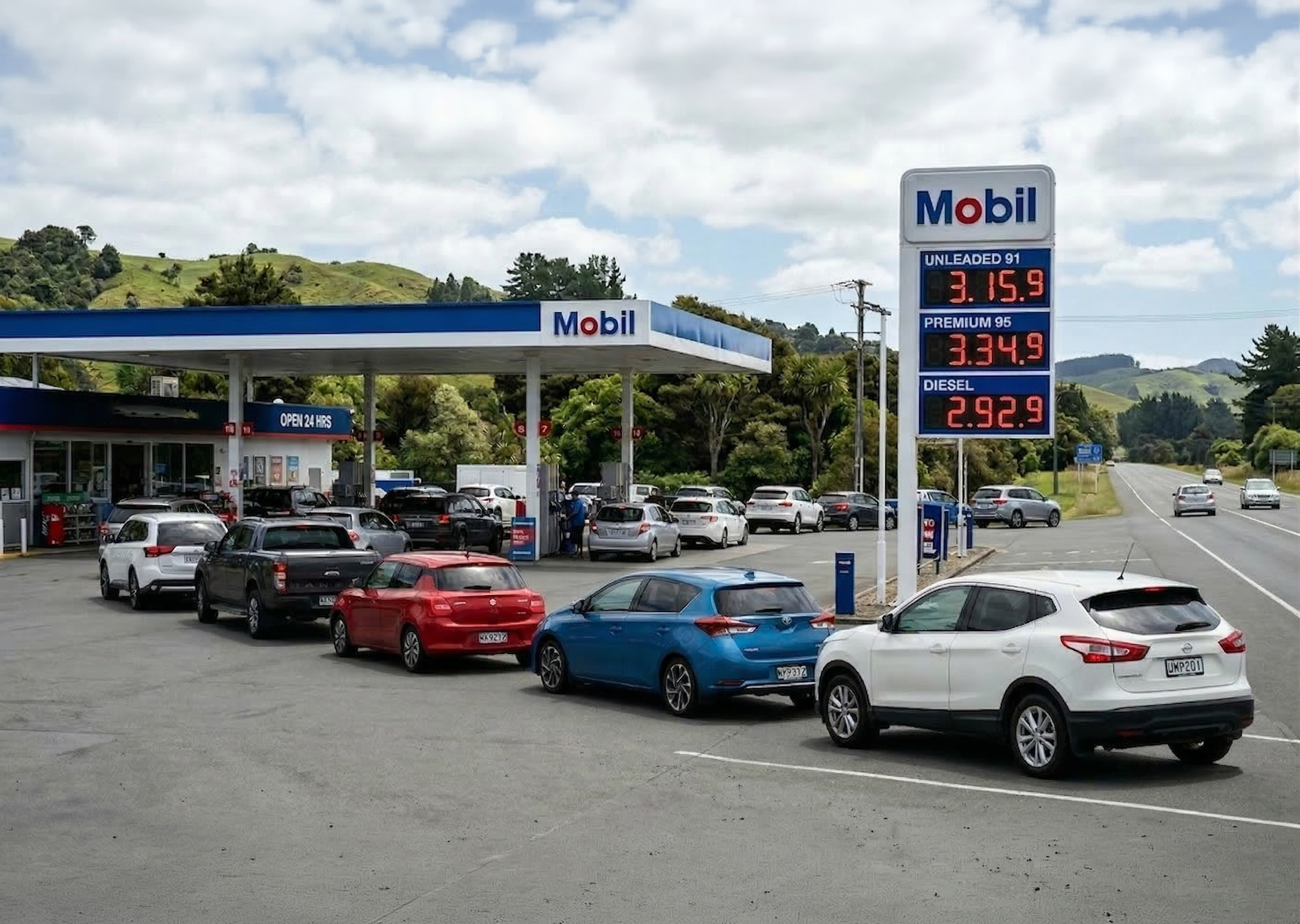
There's a peculiar phenomenon unfolding across New Zealand households, and it doesn't add up. While families cut back on discretionary spending, three relentless forces continue their upward march: rates, power, and insurance premiums.

Kiwibank's latest inflation analysis reveals the problem.[1] Overall inflation sits at 3%, but council rates are up 8.8% year-on-year and electricity has surged 11.3%. Meanwhile, rent and building costs remain soft, responding as they should to economic pressure. This is Economics 101 – except for the outliers that won't bend.

Households respond to price signals by cutting spending, businesses adjust to market conditions, but monopolistic and quasi-monopolistic services continue their upward trajectory regardless of economic headwinds. When essentials become the only thing still inflating, we're not seeing healthy price discovery – we're watching economic dysfunction concentrate in the places people can't escape.

The Democratic Disconnect

In Hastings – Hawke's Bay's largest district – the mayoral election delivered an instructive lesson in vote-splitting. Marcus Buddo had a detailed plan about rates, spending, and debt. Steve Gibson had a plan of ideas. Damon Harvey had a plan of sorts. Between them, they split the centre-right vote.[2][3] Wendy Schollum had a plan to have a plan – and won with 6,722 votes, representing 26.06% of the total vote.[3]

What ratepayers inherited is a focus on process, not outcomes. The problem isn't reviewing assets or benchmarking contracts – it's the absence of a clear plan for cutting spending, reducing debt, and passing savings to ratepayers. In her first month, the new mayor reported focusing on "bringing our new council together," "establishing how we'll work as a team," and "meeting with staff to look at how we can do more with less."[14] Classic "all hui and no doey" [16,17]– lots of meetings, team-building, and singing while rates grow at triple the rate of inflation.[1] 

The RBNZ may deliver some further relief through rate cuts, as economists predict.[1] But that relief will be swallowed by cost increases that don't respond to monetary policy. Council rates aren't discretionary. Power bills aren't negotiable. Insurance premiums exist beyond household bargaining power. The very things households need most are the things rising fastest, creating a squeeze that monetary policy cannot relieve.

The Rates Reality

Hastings imposed a 19% rates increase for 2024/25[5][6] and another 15% for 2025/26.[7] These aren't just numbers on a page – they represent real pain for households already stretched thin by the cost of living crisis. For an average property paying $3,000 annually, rates have jumped to approximately $4,000, with another increase pushing that toward $4,600.

Ratepayers have done their bit – the cyclone-specific targeted rate elevated these increases to the upper band among New Zealand councils. But here's the problem: this is temporary revenue with a 16-year sunset clause,[6] yet spending patterns suggest permanent cost increases have been baked in, with significant portions funding non-cyclone expenditure.

When the cyclone charge expires, does the council try to keep ratepayers paying the cyclone charges to fund other council nice-to-haves, or does it reduce rates? The current trajectory builds in a structural deficit that future ratepayers will inherit. It's a classic government budget problem: temporary revenue streams funding permanent spending commitments. The logic doesn’t add up, and costs get kicked down the road regardless.

Across New Zealand, councils have faced unprecedented cost pressures. A 2024 report commissioned by Local Government NZ found that construction costs for bridges increased 38%, sewage systems 30%, and roads and water supply systems 27% over three years.[8] The average rates increase across the country hit 15% for 2024/25,[8] with some councils proposing even higher increases. But these pressures, while real, don't explain why councils can't find operational efficiencies to partially offset infrastructure cost inflation.

The Residential Reckoning

Nowhere does this squeeze play out more starkly than in residential rental property, where New Zealand's retirement wealth delusion meets economic reality.

For decades, Kiwis were sold a simple story: property is the path to retirement security. Buy a rental. Watch it appreciate. Collect rent. Retire comfortably. It's been cultural gospel, reinforced by favourable tax treatment and the absence of capital gains taxes. An entire generation built its retirement strategy around this asset class.

But that story is fast becoming a tragedy. Residential landlords face the same 8.8% rates increase, insurance premiums that have doubled or tripled post-Gabrielle.[1] These costs aren't negotiable. They simply arrive and must be paid. Unlike businesses that can adjust their cost structures or pass costs to customers, landlords operate in a market with hard ceilings.

Tenants can't just absorb corresponding rent increases endlessly. The market has found its ceiling through the hard limit of what people can actually pay when their own costs are climbing. Tenants are facing their own squeeze – grocery bills up, power bills up, their own insurance costs rising. There's no capacity to absorb 8-11% annual rent increases. So who wears it? The landlord.

When non-negotiable costs grow at 8-11% annually, but rent increases are market-capped at 3-4%, the gap widens, and the squeeze tightens. Properties once generating positive cash flow now require subsidies from other income. The "investment" becomes a wealth destroyer rather than a wealth builder.

The residential property investment model was built for an era where rates grew modestly and insurance was predictable. That era is over. We now have a cohort who bet retirement security on an asset class where holding costs accelerate faster than income. Some will sell. Some will hold on, hoping for capital appreciation to compensate for negative carry. Many will discover too late that their retirement strategy has a fundamental flaw.

It's sad – not because property investors deserve special sympathy, but because it represents massive misallocation of national savings. An entire generation channelled wealth-building into residential property instead of productive assets or diversified investments. Capital that could have funded business growth, innovation, or infrastructure went into bidding up house prices instead. Now they're discovering that when monopolistic cost structures meet market-limited revenue, leverage works in reverse.

The Policy Vacuum

The Kiwibank data disproves the myth of symmetrical adjustment.[1] Households adapt. Markets respond. But essentials march to their own drum, disconnected from broader economic discipline. This asymmetry matters because it means traditional economic responses – tightening monetary policy, reducing household spending – fail to address the source of inflation when it concentrates in monopolistic services.

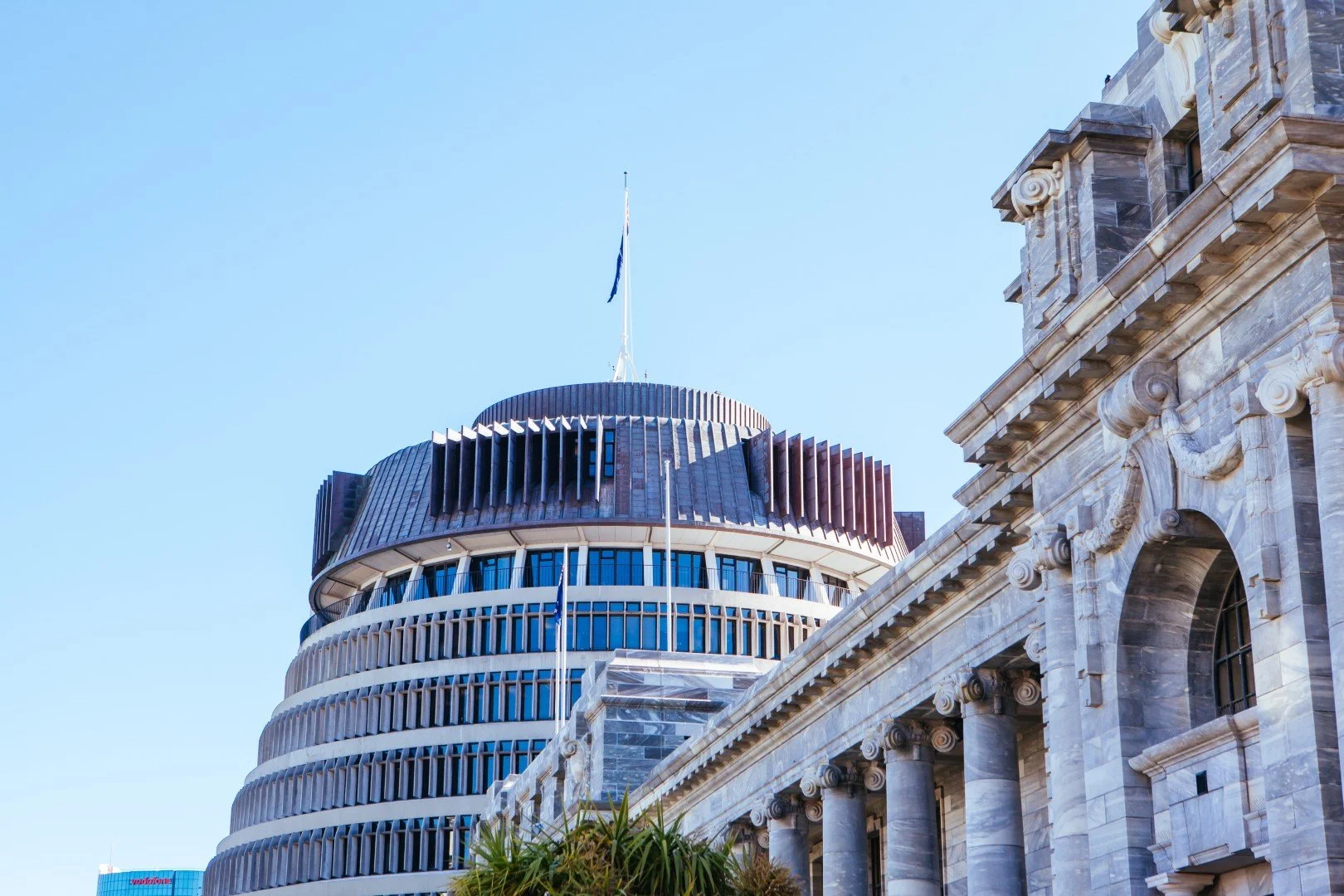
The government is considering rates-capping legislation to refocus councils on "doing the basics, brilliantly."[10] But rates capping may be only the opening salvo. The Government has just announced proposals to eliminate regional councillors entirely, replacing them with 'Combined Territories Boards' made up of mayors.[15] More significantly, each region will be required to prepare a 'regional reorganisation plan' within two years, with options including merging territorial authorities into unitary councils. The Government's stated goal: "cut duplication, reduce costs, and streamline decision-making."[15]

For councils like Hastings already stretched thin by cyclone recovery, this represents both opportunity and threat.

The opportunity: forced consolidation might finally deliver the operational efficiencies that should have been found voluntarily.

The threat: poorly designed reorganisation could create even larger bureaucracies with less accountability. The pressure to demonstrate fiscal discipline just intensified dramatically.

Council external debt has surged from $353 million in December 2023[11] to $472 million as at 30 June 2025,[13] and is projected to reach $700 million by 2030.[9] That's debt more than doubling in less than three years, with the trajectory showing no signs of slowing. Interest payments alone consume an ever-larger share of rates revenue, creating a vicious cycle where borrowing to fund current operations crowds out funding for actual services.

With voter turnout at just 44.71%[3] and Schollum winning with 26.06% of votes cast, approximately 12% of eligible voters delivered her a victory. She has three years to prove she deserves to be re-elected, which means proving she understands how angry ratepayers are about rate rises. The mandate is thin. The patience is thinner.

For property investors, the question is starker: how long can negative carry be sustained before the retirement wealth strategy becomes the retirement wealth trap? For how many years can landlords subsidise tenants from other income before they capitulate and sell? And when they do sell, who buys investment property with known negative carry characteristics?

Until we confront why essentials climb at double-digit rates while the broader economy slows, we're not solving inflation. We're watching it concentrate in the places people can't escape. That concentration makes the burden harder to bear and the economic distortions more severe.

That's not economics adapting. That's economics breaking down, one essential service at a time.

Nick Stewart

(Ngāi Tahu, Ngāti Huirapa, Ngāti Māmoe, Ngāti Waitaha)

Financial Adviser and CEO at Stewart Group

  • Stewart Group is a Hawke's Bay and Wellington based CEFEX & BCorp certified financial planning and advisory firm providing personal fiduciary services, Wealth Management, Risk Insurance & KiwiSaver scheme solutions.

  • The information provided, or any opinions expressed in this article, are of a general nature only and should not be construed or relied on as a recommendation to invest in a financial product or class of financial products. You should seek financial advice specific to your circumstances from a Financial Adviser before making any financial decisions. A disclosure statement can be obtained free of charge by calling 0800 878 961 or visit our website, www.stewartgroup.co.nz

  • Article no. 435


References

[1] Kiwibank Economics (2025). "NZ Inflation: What's really happening?"

[2] NZ Herald (2024). "Hastings mayoral race - Wendy Schollum claims the win, but her closest rival hasn't conceded."

[3] NZ Herald (2024). "Local elections 2025: Wendy Schollum new Hastings Mayor as last-minute voters extend her lead."

[5] Hastings District Council (2024). "Council reduces proposed rate increase."

[6] Wikipedia (2025). "2022–2025 term of the Hastings District Council."

[7] NZ Herald (2025). "Central Hawke's Bay tries to lower rates hike to 10% as cyclone-hit Hastings sticks with 15%."

[8] 1News (2024). "New Zealand homeowners facing an average rates rise of 15%."

[9] NZ Herald (2024). "Hastings facing one of highest rates rises in country - council could hit $700 million debt."

[10] RNZ (2025). "Local Government New Zealand crying foul over potential rates capping."

[11] NZ Herald (2024). "Hastings District Council nearly $400 million in debt as cyclone costs compound."

[13] Hastings District Council (2025). "2024-2025 Annual Report."

[14] Schollum, W. (2024). Facebook post, Mayor Wendy Schollum of Heretaunga Hastings, November 2024.

[15] New Zealand Government (2025). "Local Government Reorganisation Proposals." BayBuzz Special Alert.

[16] NZ Herald. (2020). Too much hui and not enough do-ey: Why workplace meetings can be wasteful. Retrieved from https://www.nzherald.co.nz

[17] National Māori Authority. (n.d.). Matthew Tukaki on suicide prevention: “Too much hui and not enough doey – so we are taking action right now.” Retrieved from https://www.nationalmaoriauthority.nz

Navigating New Zealand’s Economic Crossroads - A Canny View

The Rate Cut Reality Check: Too Little, Too Late

Next Wednesday's anticipated 25 basis point cut to 3%[i] represents more than monetary policy adjustment—it's an admission of New Zealand's economic fragility, yet likely inadequate given our challenges. While markets celebrate cheaper money, this modest response highlights policy inertia.

The Reserve Bank's hand has been forced by unemployment climbing to 5.2%—the highest since 2016—and wage growth softening to its slowest pace in years. Private sector wages have decelerated to just 2.2% annually, whilst underutilisation has surged to 12.8%[ii]. Yet the expected quarter-point response appears tepid when economic data screams for decisive action.

As former Finance Minister Ruth Richardson commented, Treasury's warnings about New Zealand's fiscal sustainability aren't mere technical observations—they're alarm bells signalling "greater pressure on the fiscal position than we have in the last 20 years"[iii].

Higher starting debt, unfavourable interest rates, adverse growth trends, and long-term pressures from aging and climate change are converging into a perfect storm. Despite claims of $44 billion in savings, government has reallocated spending rather than shrinking it [iii].

It's hard for hope not to fade when our government appears to lack the mettle to take the bull by the horns. The "price of butter" facade may have fooled some, but not many. Butter is a product that hasn't changed in eons—full cream milk, add salt and churn. No smoke and mirrors or PR spin, just butter. Yet politicians obsess over its retail pricing whilst avoiding hard decisions on fiscal consolidation that might actually address underlying inflation pressures. 

The Great Capital Migration

Capital flows as freely as people in an interconnected world. Just as 230,000 Kiwis have voted with their feet over two years seeking better opportunities offshore[iv], smart money increasingly looks beyond our borders for superior returns.

The recent emigration shows a damning verdict on New Zealand's economic trajectory. These are productive citizens, who see limited prospects in a country determined to tax productivity whilst subsidising speculation. Human capital flight and financial capital mobility share parallels—both respond to incentives and seek the best risk-adjusted returns.

Housing Market Dysfunction Remains

Our housing market remains in purgatory, with prices stubbornly elevated while transaction volumes are sluggish. Latest data shows ‘days to sell’ extending and prices slipping nationally for six of the past seven months[v]. Wednesday's modest rate cut is unlikely to break this deadlock.

Young Kiwis are emigrating, recognising their homeownership prospects have been systematically destroyed by policies prioritising incumbent wealth over economic dynamism. The social contract promising hard work would lead to homeownership has been broken: 72% of Kiwis without a home believe buying a property is beyond their reach[vi]. Yet, many Kiwis remain dangerously over-exposed to residential real estate.

Rethinking Investment

The traditional Kiwi approach of leveraging into property and hoping for the best is dangerous where house prices may stagnate whilst debt service costs remain higher.

Global equity markets continue to climb, with the S&P 500 delivering 5-year annualised returns of 15.71%. Meanwhile, New Zealand's NZX50 has delivered a dismal 1.8% annualised return over the same period [vii].

The performance gap is devastating. A $100,000 investment in the S&P 500 over five years would have grown to $208,000, versus approximately $109,000 in the NZX50. This $99,000 difference[vii] is a documented reality for investors who remained domestically focused while global opportunities compounded wealth at dramatically higher rates.

Complexity extends beyond simple asset allocation. Tax implications vary dramatically between domestic and international investments. Currency hedging decisions can make or break returns. Liquidity needs must account for potential emigration scenarios—a consideration rational investors now embrace.

A skilled financial adviser becomes essential for protecting and growing wealth whilst navigating emotional challenges of investing against your home country's prospects.

Economic Crossroads Ahead

New Zealand stands at an economic crossroads between fiscal irresponsibility leading to Japanese-style stagnation, or making hard decisions to restore economic dynamism. Next Wednesday's timid rate cut suggests we're choosing the former.

For investors, the message is clear: adapt or suffer consequences. Capital, like talent, flows to where it's best treated. The 230,000 Kiwis who've recognised this reality are canaries in the coal mine. Smart investors should ensure their wealth enjoys the same mobility their fellow citizens have embraced.

The coming rate cut won't be cause for celebration—it will be a symptom of deeper malaise and policy impotence facing structural decline.


[i] https://www.interest.co.nz/economy/134636/kiwibank-economists-say-all-key-data-released-ahead-reserve-banks-official-cash-rate

[ii] Statistics New Zealand - Labour Force Report, June 2025 quarter https://www.stats.govt.nz/information-releases/labour-market-statistics-june-2025-quarter/

[iii] Newstalk ZB Radio Interview - Ruth Richardson (Former Finance Minister, Chair of Taxpayers Union) interviewed by Heather du Plessis-Allan, 8th August 2025 https://www.newstalkzb.co.nz/on-air/heather-du-plessis-allan-drive/audio/ruth-richardson-former-finance-minister-says-nicola-willis-needs-to-face-up-to-the-latest-treasury-report/

[iv] Statistics New Zealand - International Travel and Migration Statistics, Monthly releases 2023-2025: Net permanent and long-term migration data showing departures of New Zealand citizens seeking opportunities offshore.

[v] Craig's Investment Partners - "Onboard" podcast, Episode 291, August 10th, 2025: Mark Lister, Investment Director, discussing OCR expectations, labour market data, global equity performance, dairy prices, currency movements, and central bank policy decisions.

[vi] MPA Mag – “Most Kiwis Say Homeownership is Out of Reach” https://www.mpamag.com/nz/news/general/most-kiwis-say-homeownership-is-out-of-reach-report/545632
Good Returns – “Gloomy Home Ownership Results” https://www.goodreturns.co.nz/article/976524736/gloomy-home-ownership-results.html

[vii] S&P Dow Jones Indices - S&P/NZX 50 Index factsheet, July 31, 2025: 5-year annualized total return data. State Street S&P 500 Index fund performance data showing 5-year annualised returns for comparative analysis. Calculation: $100,000 invested at 15.71% annually over 5 years = $208,000 (S&P 500) vs $100,000 invested at 1.8% annually over 5 years = $109,000 (NZX50). Performance gap: $99,000.


Nick Stewart
(Ngāi Tahu, Ngāti Huirapa, Ngāti Māmoe, Ngāti Waitaha)

Financial Adviser and CEO at Stewart Group

  • Stewart Group is a Hawke's Bay and Wellington based CEFEX & BCorp certified financial planning and advisory firm providing personal fiduciary services, Wealth Management, Risk Insurance & KiwiSaver scheme solutions.

  • The information provided, or any opinions expressed in this article, are of a general nature only and should not be construed or relied on as a recommendation to invest in a financial product or class of financial products. You should seek financial advice specific to your circumstances from a Financial Adviser before making any financial decisions. A disclosure statement can be obtained free of charge by calling 0800 878 961 or visit our website, www.stewartgroup.co.nz

  • Article no. 420