
Article #477
A lazy shorthand dominates every cost-of-living conversation here: the haves and the have-nots. Two boxes, a line down the middle, a moral position attached to each. It survives because it is easy, not because it is true.
Mark Carney put it plainly: if you are not at the table, you are on the menu [1]. The households carrying the weight of this are the least represented in the argument about it.
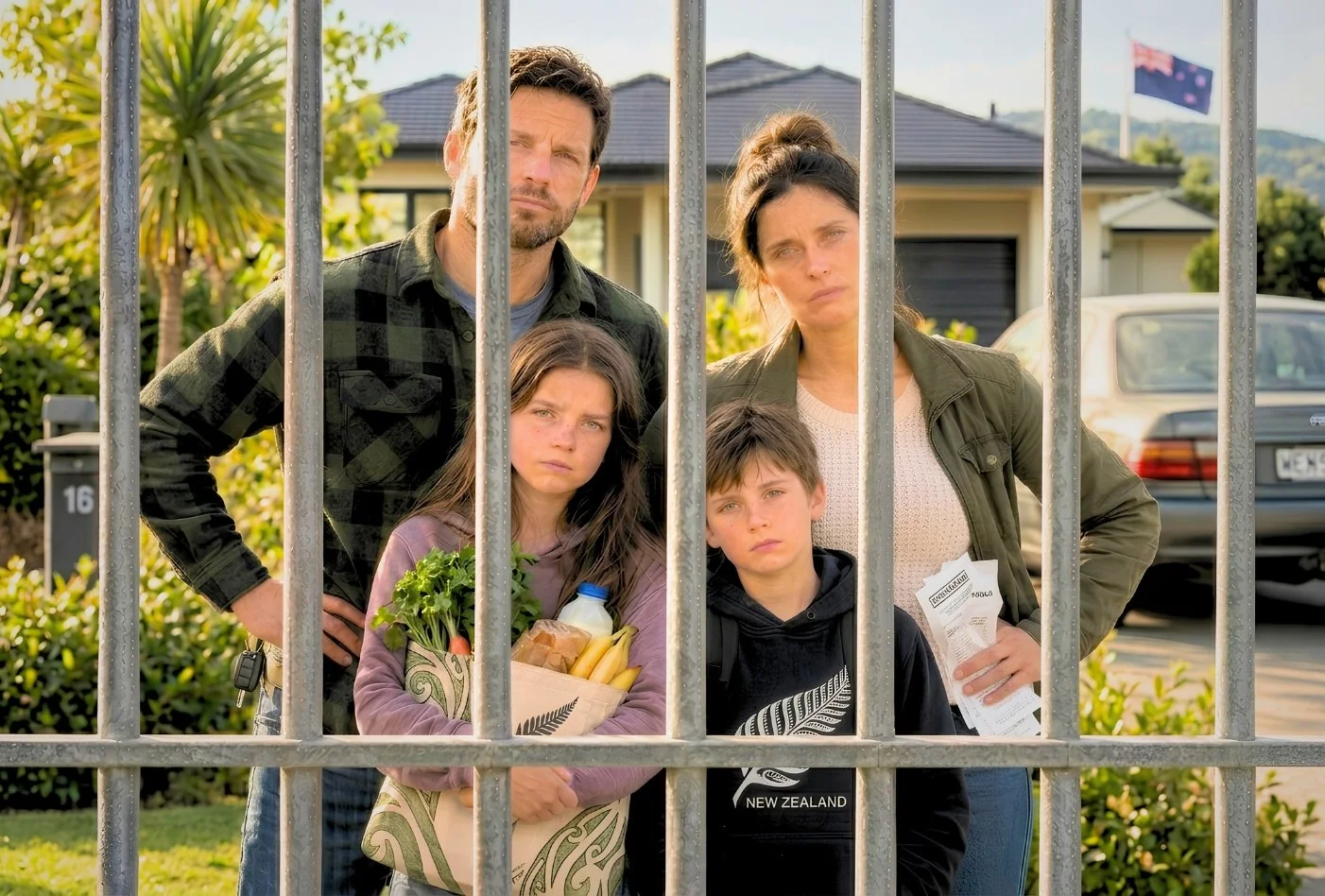
Some have-nots have far more than others. Some haves are one interest rate reset from the wrong side of the ledger. The surface tells you little. The four-wheel drive is a liability with a registration plate. The holiday home is a security instrument with a view. Wealth, for many New Zealanders, is illusory: a number on a valuation notice that funds nothing but demands payment every month.
The people trapped by that illusion are not the poorest New Zealanders. They are the battlers; around 1,200,000 households on Pita Alexander's count, roughly 58 percent of the country's 2,072,000 households [2].
The arithmetic of the squeeze
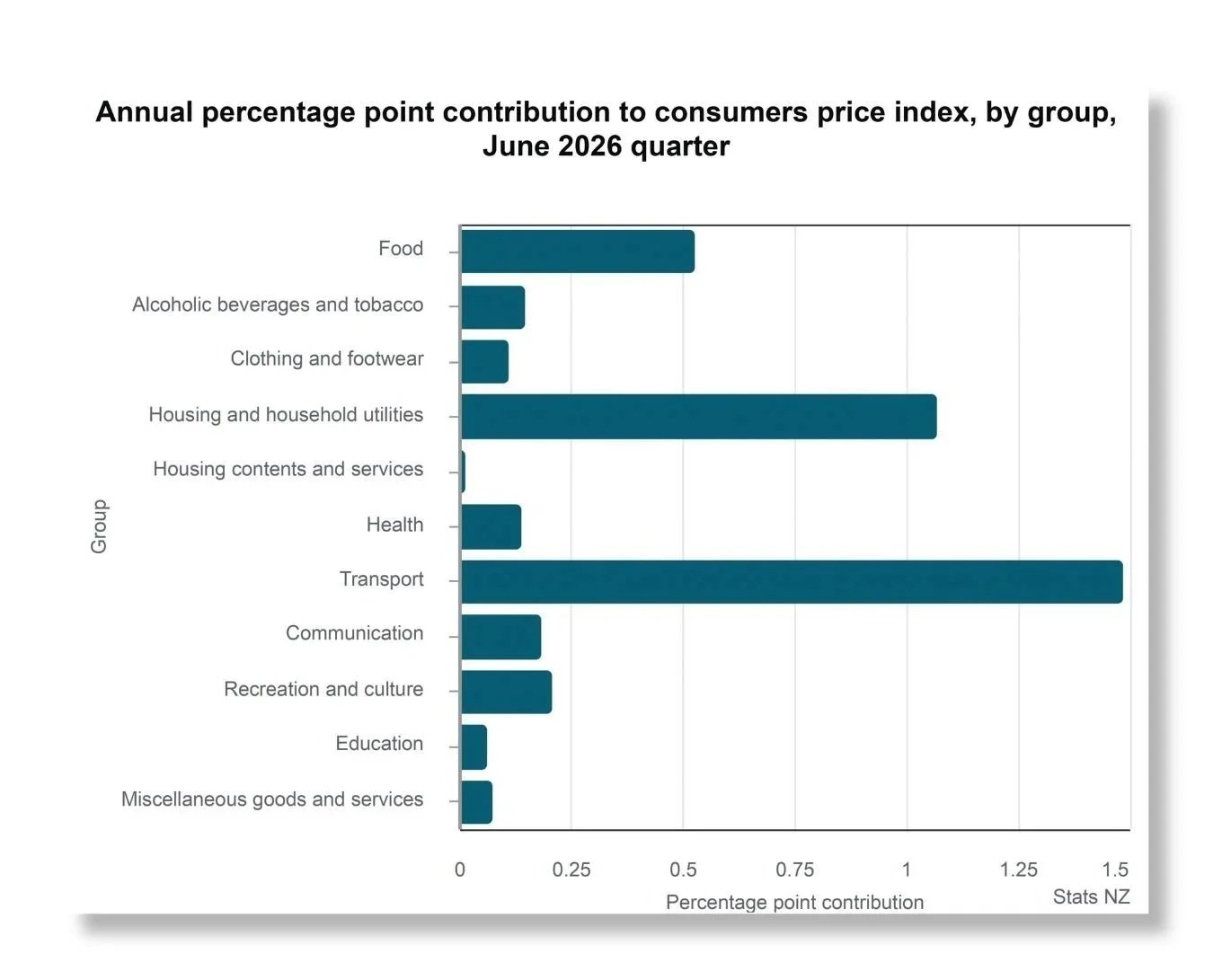
Take a Hastings household on two incomes, two cars and a mortgage. Run the last twelve months across it. Petrol up 27.5 percent. Tertiary education up 22.6 percent. Electricity up 12.0 percent. A GP visit up 10.3 percent [3].
Then add the line no minister has to sign. The average proposed council rates rise for 2026/27 is 6.9 percent, against annual inflation of 4.1 percent [4]. Petrol was the largest single contributor to that 4.1 percent [3]. Rates were the quiet one, up 34.4 percent across the last three-year council term while general inflation ran at 13.7 percent [5].
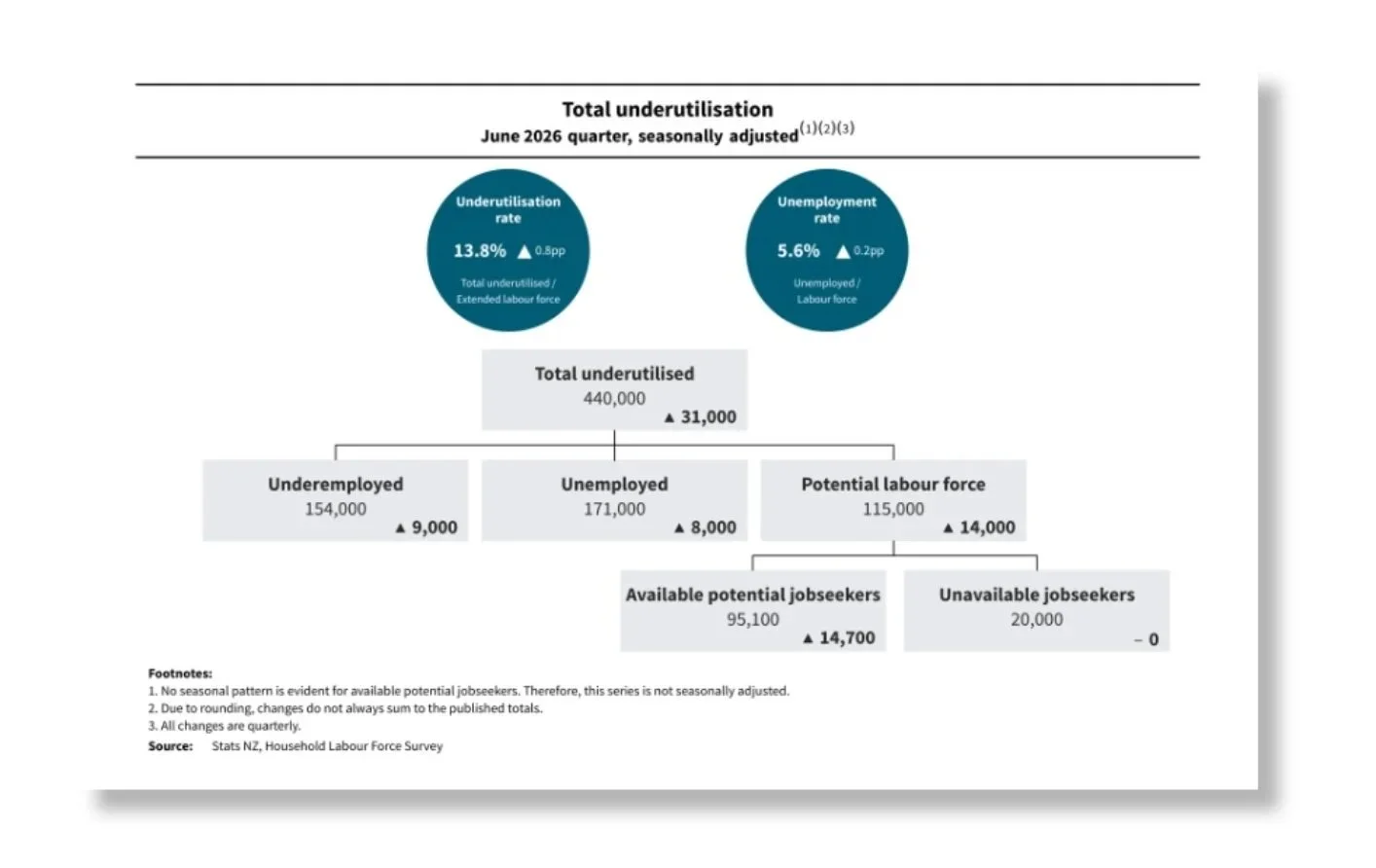
At $1.25 per kilometre on a full running-cost rate, those two cars eat $19,500 a year [2]. Before the mortgage. Unemployment has reached 5.6 percent, the highest since 2015, with underutilisation at 13.8 percent [6]. Both adults still work, both cars move, and the 3 percent pay rise was gone before it arrived. On those two Hastings incomes the surplus this year is a few hundred dollars, if the hot water cylinder holds. That is not a lifestyle. It is the hire that does not happen.
Source: Stats NZ
Source: Stats NZ
None of this is attitude. When Rotorua business owners told the Prime Minister they could not pass their costs on, he called the framing negative and said the country had a parent-child mentality. He apologised days later. The apology was the right instinct; the original answer treated arithmetic as mindset [7].
The evidence is in the withdrawals
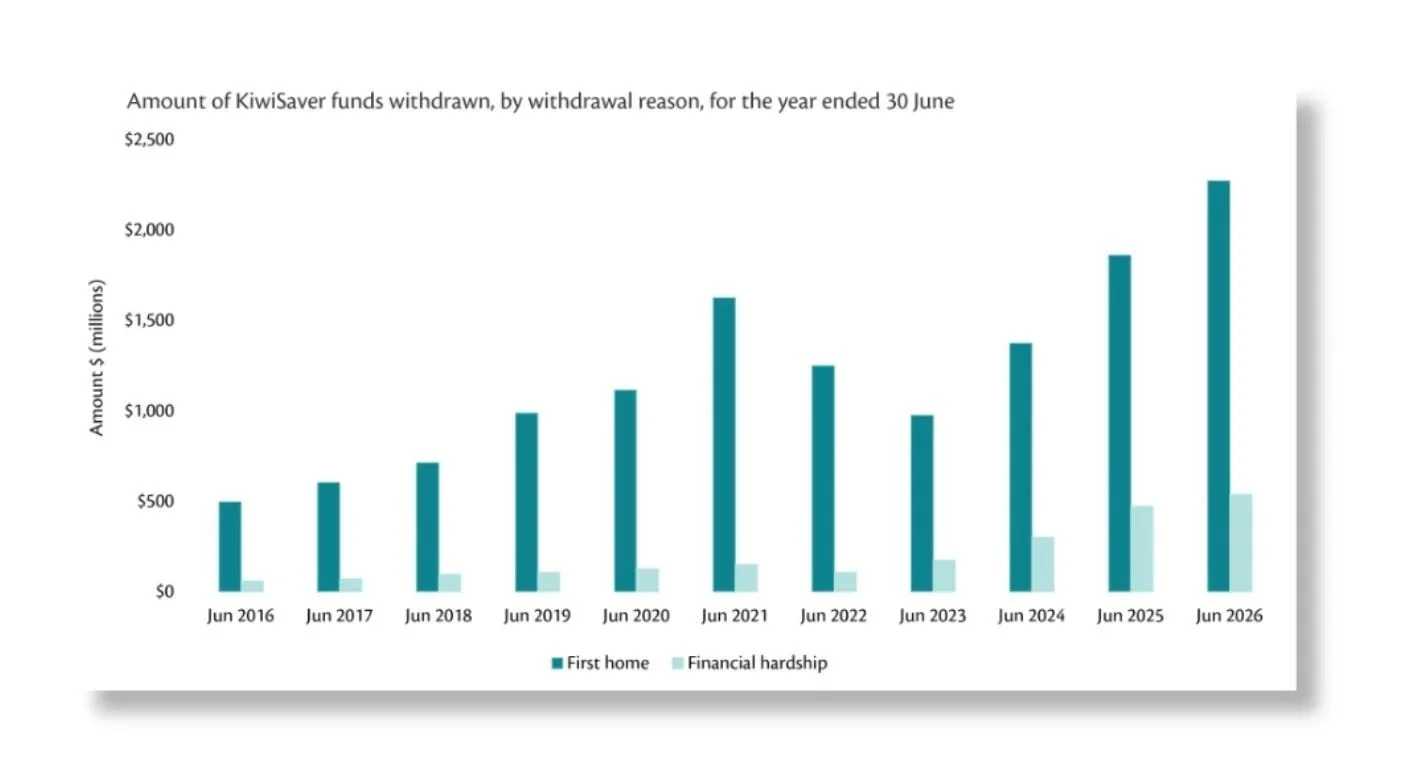
Ignore the rhetoric; look at what people do with their savings. KiwiSaver hardship applications doubled in two years, passing 58,000 in 2025, and are running higher again in 2026. Inland Revenue paid out $471.2 million on hardship grounds in the June 2025 year [8] [9]. These are not people gaming a system. They are breaking open the last jar in the house.
Source: Inland Revenue
ANZ's Truckometer says the same in another language: light traffic sits below a year ago, because fewer of us drive to work [10]. Sixty thousand applications in a year is structural failure, one family at a time.
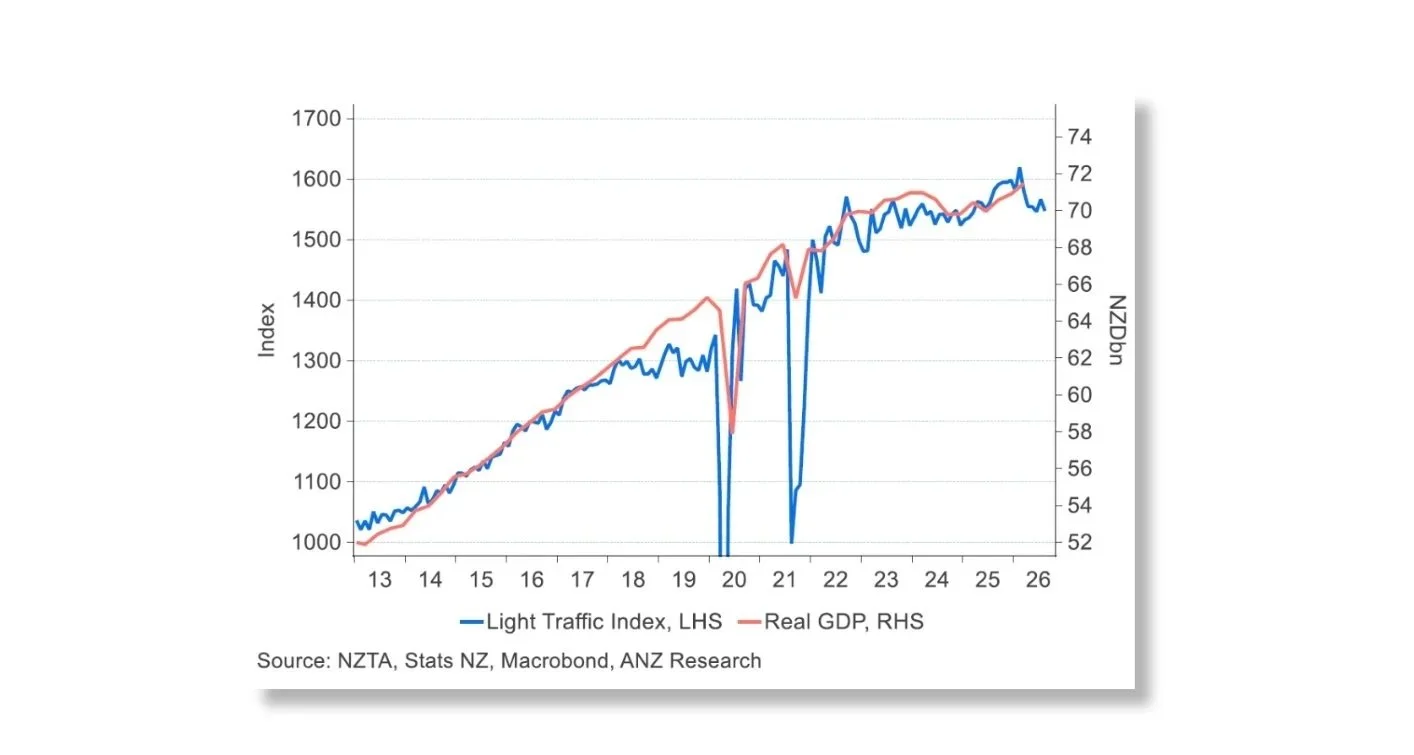
Source: NZTA, Stats NZ, Macrobond and ANZ Research
What actually lifts a country
Our best resource sits under our feet. We have an extraordinary climate and exceptional soils, and through every hard period, it is what we grow and sell abroad that sees us right. On the East Coast that comes with a payroll. Take the orchard contractor running four utes through the apple season. His fuel is up more than a quarter, his rates too. What his growers can pay him has not moved. In a normal February he would take on an extra picker. This year he runs the crew short and works the weekends himself. That wage is never offered, never spent in a Hastings shop, never taxed. Regulation that adds a form, a fee or a delay to that operation is not neutral. It comes out of the same ledger.
A healthy, aspirational middle class is not a nice-to-have in a growth economy. It is the engine. Aspiration requires surplus. Strip the surplus away and you do not get a poorer middle class, you get a stationary one: households that stop taking risks, stop hiring, and optimise for survival. That is a prison, and it has no obvious bars.
Run the Hastings household forward six years. KiwiSaver contributions drop to the minimum, to keep the mortgage current, and never go back up. Buying a rental remains a conversation. The contractor never hires the extra picker, and the business his daughter was meant to take over is still his. No single year looks like failure, but together they make a household that stopped moving.
History is blunt on this point. Rome ran on its smallholding farmers. They owned a few acres, paid their way, and filled the legions. Then the wars grew longer. Men were away for years, debts mounted, and the great estates bought the land behind them. Rome kept its wealth. It lost its middle. The century that followed was not a happy one.
No nation announces the moment its middle class stops moving upward. It finds, a generation later, that something load bearing has gone.
Look abroad and the pattern holds. Two decades ago, Poland’s income per head was a third of Britain's. It is now about 87 percent of it on a purchasing power basis and projected to draw level around 2030 [11]. Britain did not choose that; it simply let the squeeze run. We are not Britain yet, but the mechanism that took it there is the one running here now.
Where this is heading
Very little suggests relief. Both major parties are working at the fringes.
The Reserve Bank lifted the official cash rate to 2.75 percent on 2 September, a second consecutive rise, and has said it may need to go further this year [12]. For a household already one reset from the wrong side of the ledger, that is not a forecast. It is a repayment. A rates cap begins its transition on 1 January 2027, after the election [13]. Pita Alexander puts the Crown $10 to $12 billion short of fiscal income and reckons that group needs about $4,000 a year more, $2,800 after tax, to restore a buffer [2]. Neither is on offer.
The battlers are not asking to be rescued. They are asking for the arithmetic to work again.
The arithmetic from Wellington is not yours to change. The arithmetic at your kitchen table is. Know those numbers as precisely as you would demand of a council to know its own, and get a clear-eyed view of a position a valuation notice will flatter, and a mortgage statement will not. Take good counsel on it.

Nick Stewart
(Ngāi Tahu, Ngāti Huirapa, Ngāti Māmoe,
Ngāti Waitaha)
Financial Adviser and CEO at Stewart Group
Stewart Group is a Hawke's Bay and Wellington based CEFEX & BCorp certified financial planning and advisory firm providing personal fiduciary services, Wealth Management, Risk Insurance & KiwiSaver scheme solutions.
The information provided, or any opinions expressed in this article, are of a general nature only and should not be construed or relied on as a recommendation to invest in a financial product or class of financial products. You should seek financial advice specific to your circumstances from a Financial Adviser before making any financial decisions. A disclosure statement can be obtained free of charge by calling 0800 878 961 or visit our website, www.stewartgroup.co.nz
References
[1] Prime Minister of Canada. (2026, January 20). "Principled and pragmatic: Canada's path" Prime Minister Carney addresses the World Economic Forum Annual Meeting. https://www.pm.gc.ca/en/news/speeches/2026/01/20/principled-and-pragmatic-canadas-path-prime-minister-carney-addresses
[2] Alexander, P. "The Cost of Living is a Core Problem in New Zealand". Pita's Perspective, 6 August 2026.
[3] Stats NZ. Consumers price index: June 2026 quarter. 21 July 2026. https://www.stats.govt.nz/information-releases/consumers-price-index-june-2026-quarter/.
[4] New Zealand Taxpayers' Union. Rates Dashboard 2026. 9 July 2026. https://www.taxpayers.org.nz/rates2026.
[5] New Zealand Taxpayers' Union. “2025 Rates Dashboard Exposes Out of Control Rates Burden”. 14 July 2025. https://www.taxpayers.org.nz/2025_rates_dashboard_exposes_rates_burden.
[6] Stats NZ. Labour Market Statistics: June 2026 quarter. 5 August 2026.
[7] Moir, Jo. “Prime Minister Christopher Luxon's ‘parent-child mentality’ description of NZ businesses ‘valid’ in some cases: Seymour”. RNZ, 2 August 2026. https://www.rnz.co.nz/news/politics/858368/prime-minister-christopher-luxon-s-parent-child-mentality-description-of-nz-businesses-valid-in-some-cases-seymour. RNZ. “Watch: PM Christopher Luxon apologises for ‘parent-child mentality’ comments”. 3 August 2026. https://www.rnz.co.nz/news/politics/874803/watch-pm-christopher-luxon-apologises-for-parent-child-mentality-comments
[8] Inland Revenue. Statistics on KiwiSaver funds withdrawn, by amount. Updated 24 August 2026. https://www.ird.govt.nz/about-us/tax-statistics/kiwisaver/withdrawals/amount.
[9] Edmunds, Susan. “Exhaust other options first, withdrawing KiwiSavers told”. RNZ, 25 June 2026. https://www.rnz.co.nz/news/business/620439/exhaust-other-options-first-withdrawing-kiwisavers-told.
[10] ANZ Research. ANZ Truckometer: August 2026 data. 10 September 2026. https://www.anz.co.nz/content/dam/anzconz/documents/economics-and-market-research/2026/ANZ-Truckometer-20260910.pdf.
[11] International Monetary Fund. World Economic Outlook Database, April 2026: GDP per capita, current prices, purchasing power parity. https://www.imf.org/external/datamapper/PPPPC@WEO.
[12] Reserve Bank of New Zealand. Monetary Policy Statement September 2026. 2 September 2026. https://www.rbnz.govt.nz/monetary-policy/monetary-policy-statement/monetary-policy-statement-filtered-listing-page/2026/sep-0209/monetary-policy-statement-september-2026.
[13] New Zealand Government. “Government to cap rates”. 25 August 2026. https://www.beehive.govt.nz/release/government-cap-rates. New Zealand Government. “Rates Capping Bill passes first reading”. 1 September 2026. https://www.beehive.govt.nz/release/rates-capping-bill-passes-first-reading.