
Article #478
Buying in Christchurch because you can't afford Auckland sounds like a canny move. But renting where you live while your investment sits somewhere else carries a risk most people never properly account for.

The logic is seductive, and on the surface it looks almost elegant. You live in Auckland. You want to get into the property market. The Auckland median house price currently sits at $950,000 [1], a figure that has made entry feel like a cruel joke for first-time buyers for years. But Christchurch? Christchurch you can manage. The average Christchurch property value is $804,850 as of August 2026 [2] — a meaningful gap. So you buy there, tenant it out to cover the mortgage, and rent yourself in Auckland. Rentvesting, they call it, and the strategy has a growing number of advocates.
The trouble is, a surprising number of people who adopt it are making a subtler mistake than they realise. They think they are hedging their exposure to the property market. They are not. They are placing two separate bets, and one of them is quietly working against them.
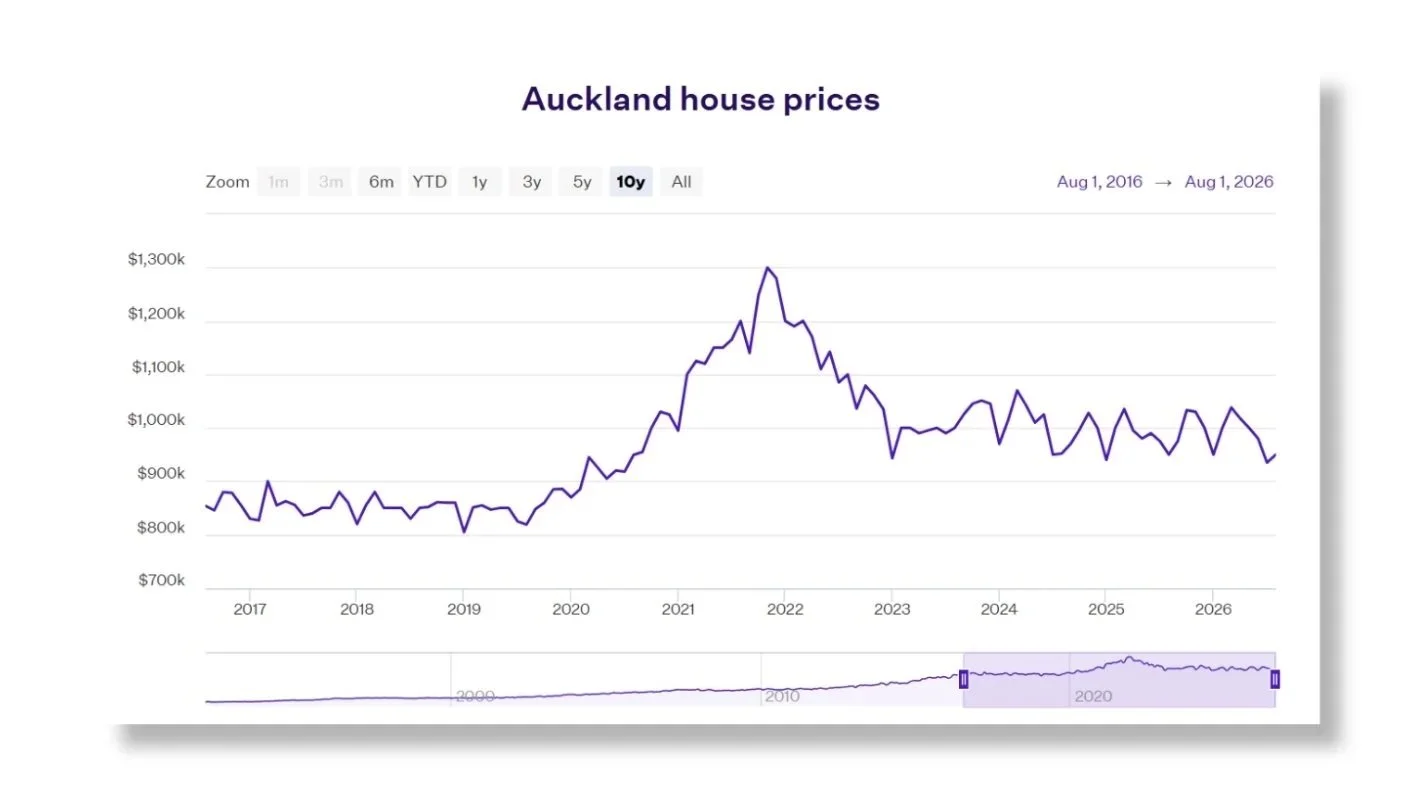
Source: Opes Partners
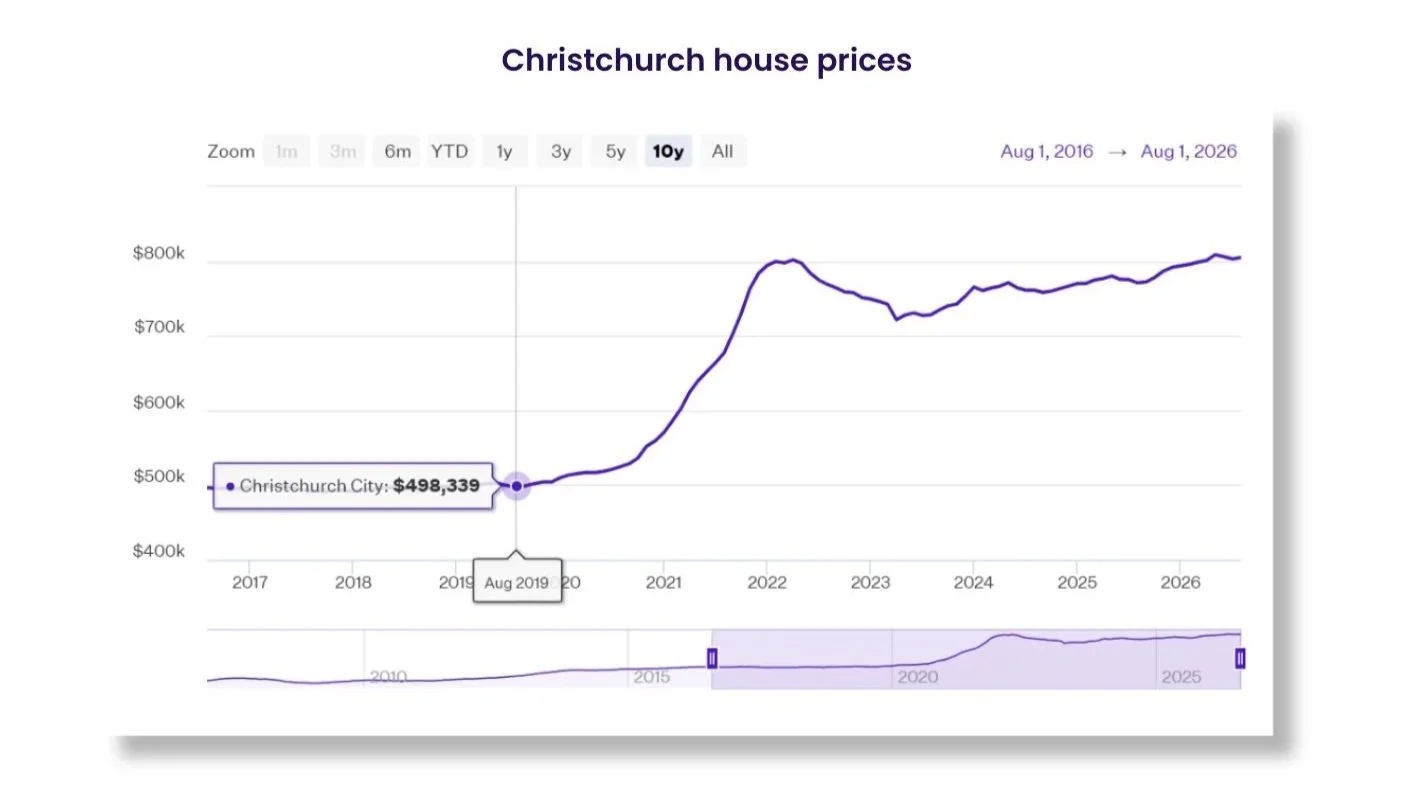
Source: Opes Partners
The wrong side of the TAB
With the Bledisloe Cup kicking off at Eden Park this weekend, the TAB odds tell an interesting story: All Blacks at $1.22, the Wallabies at $4.00 [3]. The ABs are overwhelming favourites and almost unbackable; you'd need to stake nearly five dollars just to make one. So you eye the Wallabies instead. Both tier one nations. Same corner of the world, same game, broadly similar talent. The Wallabies have been improving. At $4.00, they start to look tempting. The potential payoff is larger, the narrative is compelling, and it feels like genuine value, a smart contrarian bet on a credible alternative.
But rugby doesn't do partial results. One team wins, one team loses. There is no credit for geographic proximity, no points for picking the right hemisphere. If the All Blacks win and you backed the Wallabies, you have not hedged anything. You have simply lost.
"Christchurch is not a proxy for Auckland. It is a different market running its own race on its own fundamentals."
Property works the same way. As an Auckland renter, rising prices hurt you directly: every time the market runs, the gap between what you can afford and what you need widens. Your Christchurch investment is not tracking that exposure. It runs on its own fundamentals: a different local economy, different employer base, different migration pressures, and the long-unfolding story of the post-earthquake rebuild.
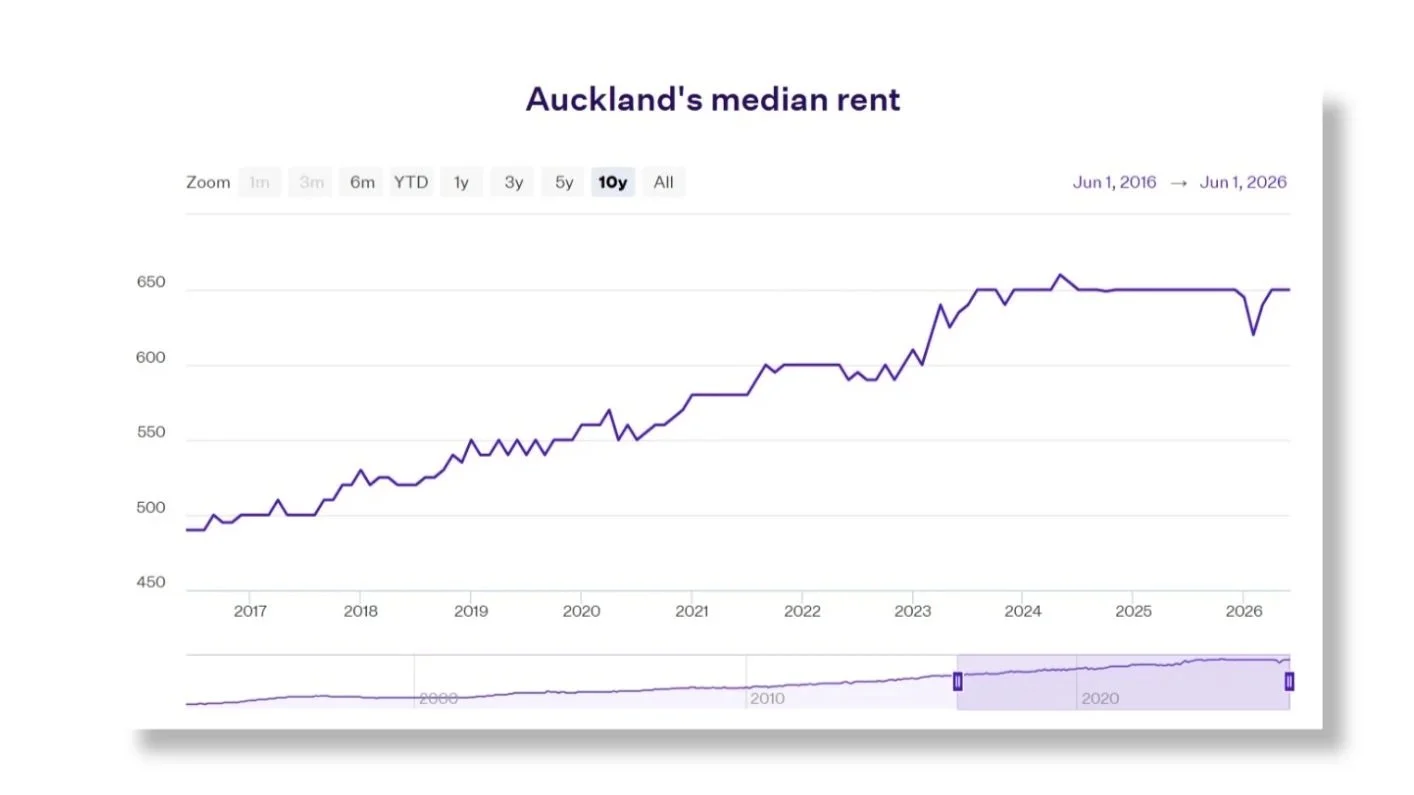
Source: Opes Partners
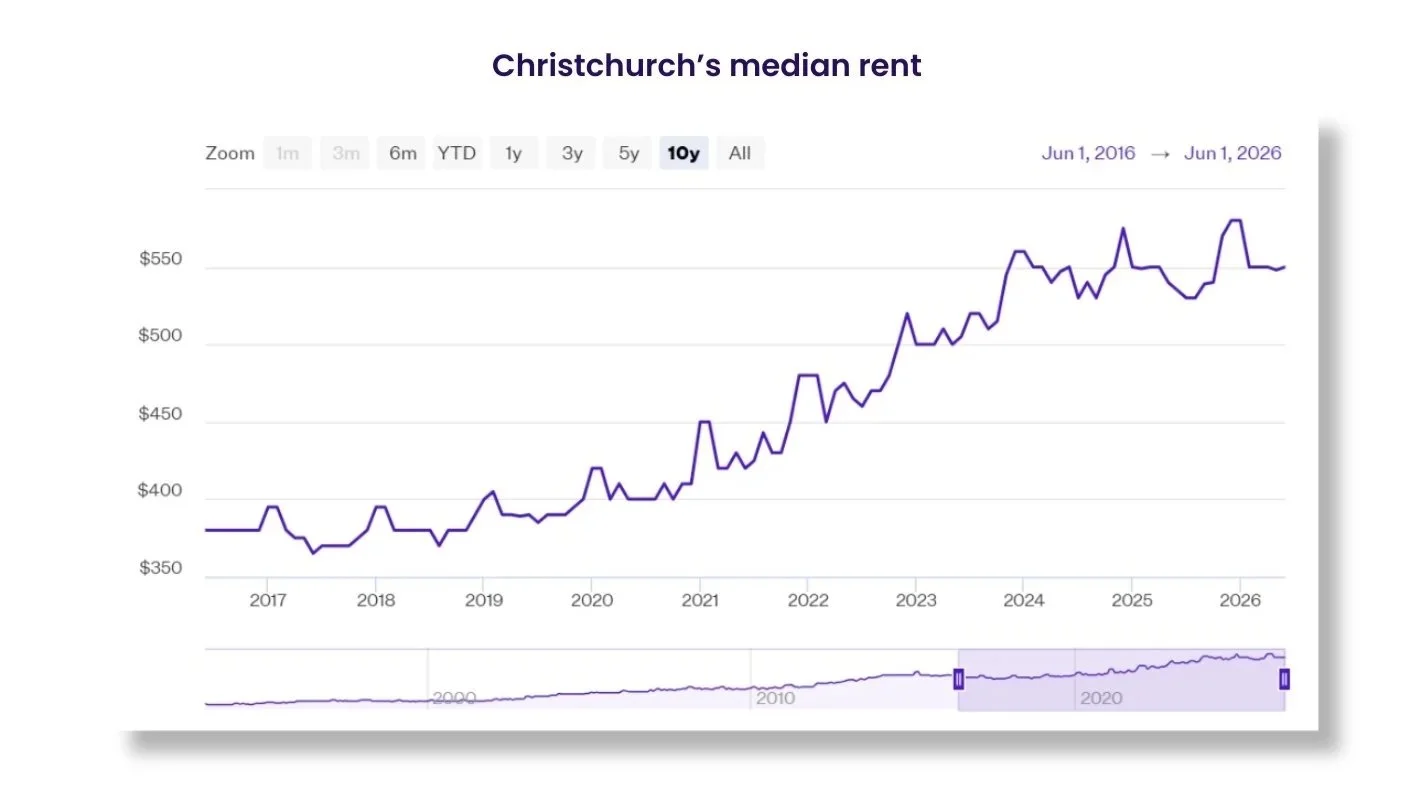
Source: Opes Partners
The correlation problem
In investment terms, a hedge only works if the two positions are genuinely correlated. Auckland and Christchurch property are not that. Median Auckland values are down 26.9% from their peak, while Christchurch is down 1.32% and has been edging upward [1,2]. The two markets are moving on different timetables, driven by different forces. The correlation between them is low enough that owning one does not reliably protect you against the other; both can work against you simultaneously.
Over the past two decades, Auckland has experienced extraordinary price appreciation driven by supply constraints, population growth, and land scarcity that simply do not apply in Christchurch. The Canterbury rebuild added significant housing stock to the city. The dynamics are different. The risk profile is different. Buying one as a proxy for the other is, at best, a partial solution and, at worst, a false sense of security.
The real cost of remote landlording
Being a landlord costs more than being an owner-occupier. Significantly more. And doing it from another city costs more still. Property management fees typically run at eight to ten percent of rental income before letting fees, which can add another week or two of rent each time a tenant turns over [4]. A leaking tap in your own home costs you an hour. The same tap in a Christchurch rental managed from Auckland costs a callout fee, a plumber's rate, and a property manager's coordination time.
Add landlord insurance, rates, body corporate levies if applicable, and the compliance obligations under the Healthy Homes Standards [5]. Meeting insulation, heating, and ventilation requirements in older rental stock can run to several thousand dollars. These are not optional, and they are not cheap.
Then there is the tax asymmetry that catches many people off guard. Net rental income is taxable at your marginal rate [6]. The rent you pay in Auckland is not deductible in any form; it comes straight out of after-tax dollars. The average weekly rent is $650 in Auckland and $550 in Christchurch [1,2]. The real comparison is not $550 received versus $650 paid. It is $550 received, less expenses and tax, versus $650 paid from net income with no relief whatsoever. That gap is wider than most spreadsheets suggest.
Vacancy is the silent killer. Every week the property sits empty, the mortgage runs without the rent. From Auckland you cannot simply drive past, tidy the garden, and get it listed. You wait. Your property manager moves at their pace, not yours.
The risk nobody puts in the plan
The most underappreciated risk is personal circumstance, and the risk nobody likes to plan for. Life changes. Relationships shift. Jobs move. Children arrive and schooling zones start to matter. When the day comes that you need to own the roof over your head, you will be selling a Christchurch asset into whatever market conditions exist at that moment, then trying to buy into an Auckland market that has been doing its own thing for years. The timing is entirely outside your control.
None of this means rentvesting is a bad idea. For some people, in some situations, it remains a perfectly sensible first step onto the ladder; better to build equity somewhere than nowhere. But it should be entered as what it actually is: an investment position with real, specific, and knowable risks. Not a clever workaround that sidesteps the hard questions.
The property market does not reward good intentions. It rewards good planning. And good planning starts with being honest about which team you are actually backing, and whether the odds genuinely make sense for the result you need.

Nick Stewart
(Ngāi Tahu, Ngāti Huirapa, Ngāti Māmoe,
Ngāti Waitaha)
Financial Adviser and CEO at Stewart Group
Stewart Group is a Hawke's Bay and Wellington based CEFEX & BCorp certified financial planning and advisory firm providing personal fiduciary services, Wealth Management, Risk Insurance & KiwiSaver scheme solutions.
The information provided, or any opinions expressed in this article, are of a general nature only and should not be construed or relied on as a recommendation to invest in a financial product or class of financial products. You should seek financial advice specific to your circumstances from a Financial Adviser before making any financial decisions. A disclosure statement can be obtained free of charge by calling 0800 878 961 or visit our website, www.stewartgroup.co.nz
References
Opes Partners, Auckland Property Market (2026): Average House Prices, 16 September 2026. https://www.opespartners.co.nz/property-markets/auckland
Opes Partners, Christchurch Property Market (2026): Average House Prices, 22 September 2026. https://www.opespartners.co.nz/property-markets/canterbury/christchurch
TAB New Zealand, Bledisloe Cup match odds.
RentManager, How Much Do Property Managers Charge in NZ? (2026 Fee Breakdown), updated 14 August 2026. https://rentmanager.nz/blog/how-much-do-property-managers-charge-nz
Tenancy Services, Healthy homes compliance. https://www.tenancy.govt.nz/healthy-homes/healthy-homes-compliance/
Inland Revenue, Pay tax on your rental income, updated 1 April 2026. https://www.ird.govt.nz/property/renting-out-residential-property/residential-rental-income-and-paying-tax-on-it/pay-tax-on-your-rental-income