Article #475
This week Canny View rolls into its tenth year under that masthead. I had been writing and being interviewed for a good while before the name went up in print, but the masthead has its own anniversary, and this is it. Ten years is also the period our industry uses to judge anything worth judging, so rather than mark the occasion with sentiment, let us mark it by looking at the decade just gone.

Rewind to 2016. John Key was Prime Minister and would resign within three months. The Official Cash Rate had just been cut to 2 percent, a record low at the time. Bitcoin was about US$600. KiwiSaver held roughly $35 billion. New Zealand, after a remarkable run, had been one of the best performing developed sharemarkets in the world over the preceding decade.
AI was a research topic, not an investment theme, and rockets were the business of governments. Had you suggested the most talked about launch company of the coming decade would be firing satellites into orbit from a paddock at Mahia, you would have been humoured and offered another drink.
The settled view then was that returns would be thin for years. It was wrong, as it usually is. The scoreboard since then is a useful reminder of how poorly certainty ages.
The scoreboard
Including dividends, a dollar invested in United States shares in September 2016 is worth roughly four times what it was. Morningstar puts the return of US equity funds at 13.3 percent a year over the decade to December 2025, the most profitable ten years in the category's history.
Source: Trading View
The NZX 50 almost doubled, reaching 13,757 at last close*. Respectable. But the market that led the developed world to 2016 spent the ten years after it well behind.
Then there is Rocket Lab. Launching from Mahia, listed on the Nasdaq, and worth around NZ$80 billion. One company, built here and launching from here, is worth two fifths of every company on our own sharemarket combined, while sitting outside it.
Leadership rotates without warning and never announces the handover. That is the whole argument for owning the world rather than the paddock you happen to live in.
Source: Stuff
What we lived through to get there
Four times your money looks serene on a chart, yet it was not serene to live through: the late 2018 slide, the 2020 crash that took a third off global markets in thirty-three days, the 2022 bear market when shares and bonds fell together, and this year’s crypto unwind and Middle East tension. Each one was a headline. Not one was a reason to dismantle a properly built portfolio.
Source: CRSP Market Deciles 1-10 Cap-Based Portfolio (total returns in USD). All US exchanges rebalanced quarterly.
Data provided by the Center for Research in Security Prices (CRSP), University of Chicago.
Edmund Burke wrote in 1790 that because half a dozen grasshoppers make the field ring with their importunate chink, while thousands of great cattle chew the cud in silence, we should not imagine that those who make the noise are the only inhabitants of the field.
Two hundred and thirty six years on, the grasshoppers have a podcast and a following. The cattle still say nothing.
The habit gap
Here is the finding that should stop every investor cold. Morningstar examined 23,000 American funds over the same ten years. The funds returned 9.9 percent a year; the average dollar invested in them earned 8.7 percent. That gap is not fees and not fund performance. It is timing: buying after the good news and selling after the bad. Across the decade, it cost investors about US$3.8 trillion.
The encouraging half is that the gap shrank wherever temptation was hardest to indulge. Investors in broadly diversified all-in-one funds captured almost all of their return; those in index funds gave up 0.1 of a percentage point. That is not evidence that advisers rescue people mid-panic. It is evidence that the gap was smallest where the structure had already removed the decision: broad diversification, rebalancing on a date rather than a feeling, and contributions that arrive whether or not you fancy investing.
Architecture, not heroics. Less doing, more owning.
Bitcoin, meme coins and the black dog
Bitcoin has been the decade's most spectacular chart, from about US$600 to a peak of US$126,209 in October 2025, and its clearest lesson in the gap between an asset's return and an investor's return. Crypto ETFs listed since January 2024 returned 8.5 percent a year to 30 June 2026, yet the average dollar in them lost 5.8 percent a year, a gap of more than fourteen points. Money arrived after Bitcoin had climbed and left after it had fallen. Beneath it sits the meme coin, priced on nothing but the hope that the next person is willing to pay more.
Chasing it has been like chasing a black dog in the night: money pouring after something you cannot quite see, arriving after the climb and leaving after the fall. Calling something digital gold does not make it gold.
Where I got it wrong, and where the design spared me
Very few of our macro calls have gone badly wrong across the decade, and that is not luck dressed as skill. Do not mistake us for a passive firm. We work very hard, but the work goes into engineering, not forecasting. The plan is engineered on evidence, tested and rebuilt, and everything flows from it.
Nor are the portfolios index trackers. They lean deliberately on the dimensions the research has borne out over decades: company size, relative price, and profitability, the work of Fama and French and what followed it. That is a design decision, made on evidence and held, rather than a view on next quarter. We are active in the design and the planning, not in the stock picking or the market timing. My job is to engineer, not to predict.
The errors that cost were process errors. Choosing who you build your business with is pivotal, and I have twice chosen badly: one supplier over-promised, one developer under-delivered. Neither cost much money, but both cost time, and time compounds into the money you never got around to making. The lesson is the old one: it is either up to standard or down to price.
Then two judgement calls, neither about markets.
I hoped our love affair with residential property would cool. It has not, despite the asset delivering one of its more sobering decades. The average New Zealand house is down 15 to 17 percent from its 2021 peak in dollar terms and 28 to 31 percent adjusted for inflation, twice as deep as the post-global financial crisis trough of 16 percent. Here is the part that stopped me: in real terms, Cotality has the average house worth about what it was in mid-2016. A full decade, and in purchasing power the family home has gone precisely nowhere. And still we treat one leveraged, undiversified, illiquid asset in one small corner of the world as a retirement plan.
Source: CoreLogic
The House Price Index (HPI) measures the movement in house prices throughout New Zealand, providing an indicator of capital growth. The data is compiled and published by CoreLogic. Data from 1990 is available in the key graph data file.
The second was not a market call at all. I assumed my father would age gracefully. He died at 76. Every retirement plan I build carries a longevity assumption, and I had quietly applied a generous one to my own family without examining it. I see the same blind spot in households: people can often recite every detail of the money: salaries, perks, KiwiSaver contributions, cover held through work, yet cannot say when they last had a check-up, or what their cholesterol, PSA, or calcium heart score might be. We measure what is easy to measure and quietly assume the rest will hold, but the plan assumes years you may not be given, so spend some of them while you can.
Beyond those, I have been fortunate to take counsel from some beautiful minds with big hearts, which is rather the point of this column.
What has not changed
A client without a documented plan is a client without a map: the journey is perhaps exciting, but the destination is unknown and chosen by no one. When the values are known, the decisions are easy. Clients who could tell me what the money was for held their nerve in March 2020; those who could only tell me what it was worth generally did not. We are in the goal achievement business, not the market beating business, and beating the market while missing your goals is a poor trade.
A fiduciary's job is not to keep you comfortable. It is to speak the unspoken truth and sit opposite you when the noise is loudest. Some of the most valuable advice of the past decade fitted into two words: do nothing.
Evidence favours patience. Like a freshly poured beer, you do not drink it while it is all head. Let the froth settle. The investors who did best over the decade were rarely the cleverest in the room. They were the ones who repeatedly did the dull thing when it felt wrong.
Whatever you have built so far is the smaller half of the story. What matters is what is still in front of you, and whether it is engineered rather than merely hoped for.
* NZX 50 as at close on Thursday, September 17 2026 = 13,756.59
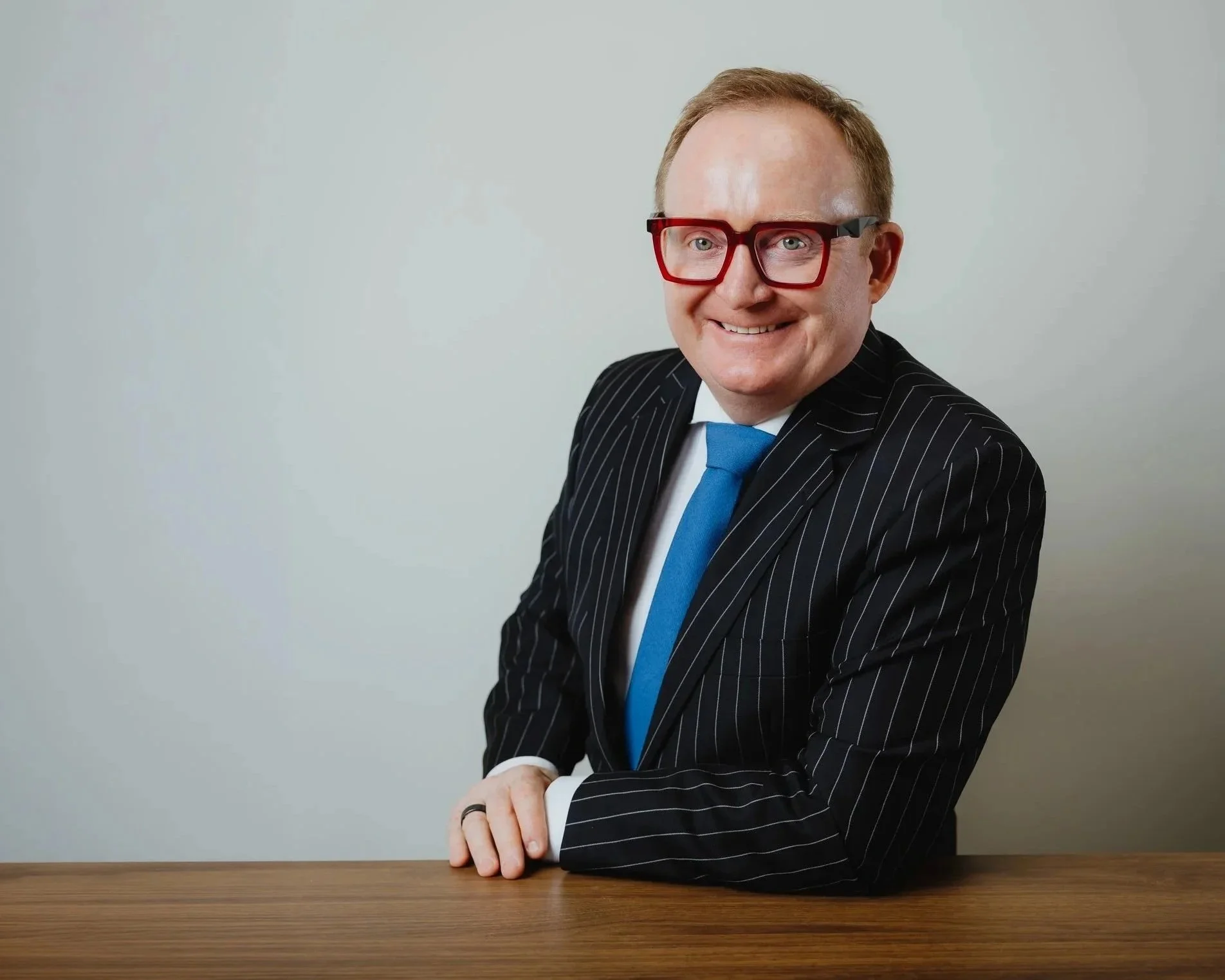
Nick Stewart
(Ngāi Tahu, Ngāti Huirapa, Ngāti Māmoe,
Ngāti Waitaha)
Financial Adviser and CEO at Stewart Group
Stewart Group is a Hawke's Bay and Wellington based CEFEX & BCorp certified financial planning and advisory firm providing personal fiduciary services, Wealth Management, Risk Insurance & KiwiSaver scheme solutions.
The information provided, or any opinions expressed in this article, are of a general nature only and should not be construed or relied on as a recommendation to invest in a financial product or class of financial products. You should seek financial advice specific to your circumstances from a Financial Adviser before making any financial decisions. A disclosure statement can be obtained free of charge by calling 0800 878 961 or visit our website, www.stewartgroup.co.nz