Article #482
The fireworks went up on Thursday night to commemorate a plot that failed 421 years ago but is retold every year anyway. Some stories outlive the records that contradict them.
On 25 October 1415, Henry V's army stood across a narrow valley near Agincourt in northern France. It had marched for more than two weeks from Harfleur, thinned by dysentery and short of food. It had rained hard through the night. The field in front of them had been freshly ploughed.
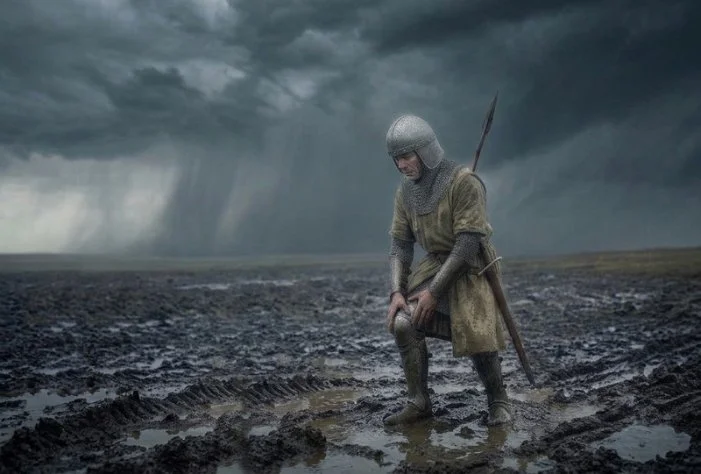
By nightfall the French nobility lay defeated in the mud. Six hundred and eleven years later, Agincourt is still celebrated as an astonishing victory. But the version most people know owes as much to Shakespeare's play as it does to the surviving historical record. The trouble is which story we are telling.
The play and the paperwork
In Shakespeare's Henry V, written nearly two centuries after the battle, his King Henry reads out a herald's note: ten thousand French dead against only twenty-nine English [1]. And it's Shakespeare who gives him the famous rallying cry: "We few, we happy few, we band of brothers." It is magnificent theatre.
But it is theatre. Professor Anne Curry of the University of Southampton was the first historian to work systematically through the surviving muster rolls and pay records. She put Henry's army at around 8,500 to 9,000, against roughly 12,000 French [2]. Other historians, Professor Clifford Rogers at West Point among them, still argue for something nearer four to one [3].
Six centuries on, with the paperwork in front of them, the experts still disagree.
One detail from Curry's work says a great deal. When English newspapers began marking the anniversary in 1757, they printed Shakespeare's speeches rather than anything written at the time [4]. The better story beat the better record. It usually does.
Falstaff, Oldcastle and the real Sir John
Falstaff, Shakespeare's charming but dishonest rogue, was first called Sir John Oldcastle, after a real knight and Lollard religious martyr. The family objected, and the name was changed. The new one echoed Sir John Fastolf, a real soldier of Henry's French wars who carried a coward's reputation after the rout at Patay in 1429. Britannica calls Shakespeare's treatment of him libellous [5]. A real man's name, borrowed for a fictional character.
Falstaff is wonderful company. At Shrewsbury he plays dead to escape danger, declares that "the better part of valour is discretion", then stabs the corpse of rebel leader Hotspur and claims the kill. He admits to misusing the king's press, taking money from men who could afford to buy their way out of service and marching off with the poor, ill-equipped recruits who could not [6]. Falstaff's tales improve with every telling, and there is always an angle.
In a tavern scene, Falstaff and the young Prince Hal play pretend. Falstaff, speaking in his own defence, pleads: "Banish plump Jack, and banish all the world." Jack is Falstaff himself. Hal, who later becomes Henry V, answers quietly: "I do, I will" [6].
And he does. Newly crowned, he meets Falstaff in the street. "I know thee not, old man" [6]. In Henry V the old knight dies offstage, and the Hostess says it plainly. The King has killed his heart [1].
It is harsh. It is also the moment Hal becomes Henry.
Grandad's knee
The 2019 film gives Falstaff a knee. There he is not the tavern rogue but Henry's chief strategist, and on the eve of the battle he promises rain. Asked how he can be so sure, he says his right knee is aching, and it only aches when rain is near. He feels this one in his bones [7]. The rain comes, the field turns to mud, and the mud undoes the armoured French.
That knee is the film's invention. Shakespeare gives Falstaff gout in his toe and no forecast at all, though he does know what to do with an ache: he will limp, pass it off as a wound from the wars so his pension looks the more reasonable, and turn diseases to commodity [6].
Either way, the knee is the part we remember. It was right once, and being right once is how a forecaster keeps talking.
Markets have their Falstaffs too, and most of them read the market the way grandad reads his knee.
We all know someone whose knee can feel rain coming. In 2017 Harvard researchers matched more than 11 million doctor visits by older Americans against daily rainfall from over 3,000 weather stations. They found no link between rain and joint or back pain [8]. The knee is certain. The data is not interested.
Economic forecasters fare little better. A study of 153 recessions across 63 countries between 1992 and 2014 found the consensus of private-sector economists had called just five of them by April of the year before [9].
The cost of following the story is measurable. Morningstar estimates the average dollar invested in US funds earned 8.7% a year over the decade to December 2025, against 9.9% for the funds themselves [10]. That 1.2% a year gap came from buying and selling at the wrong times. Not from the market. From the story.
Every family has its Falstaff. Usually, he is the brother-in-law at the barbecue with a fund, a stock, or a reason to get out before the rain. He is charming, and there is always an angle. On a $200,000 KiwiSaver balance, that 1.2% a year gap is $2,400, every year, paid to the story. Hal had the right answer for him: "I know thee not, old man."
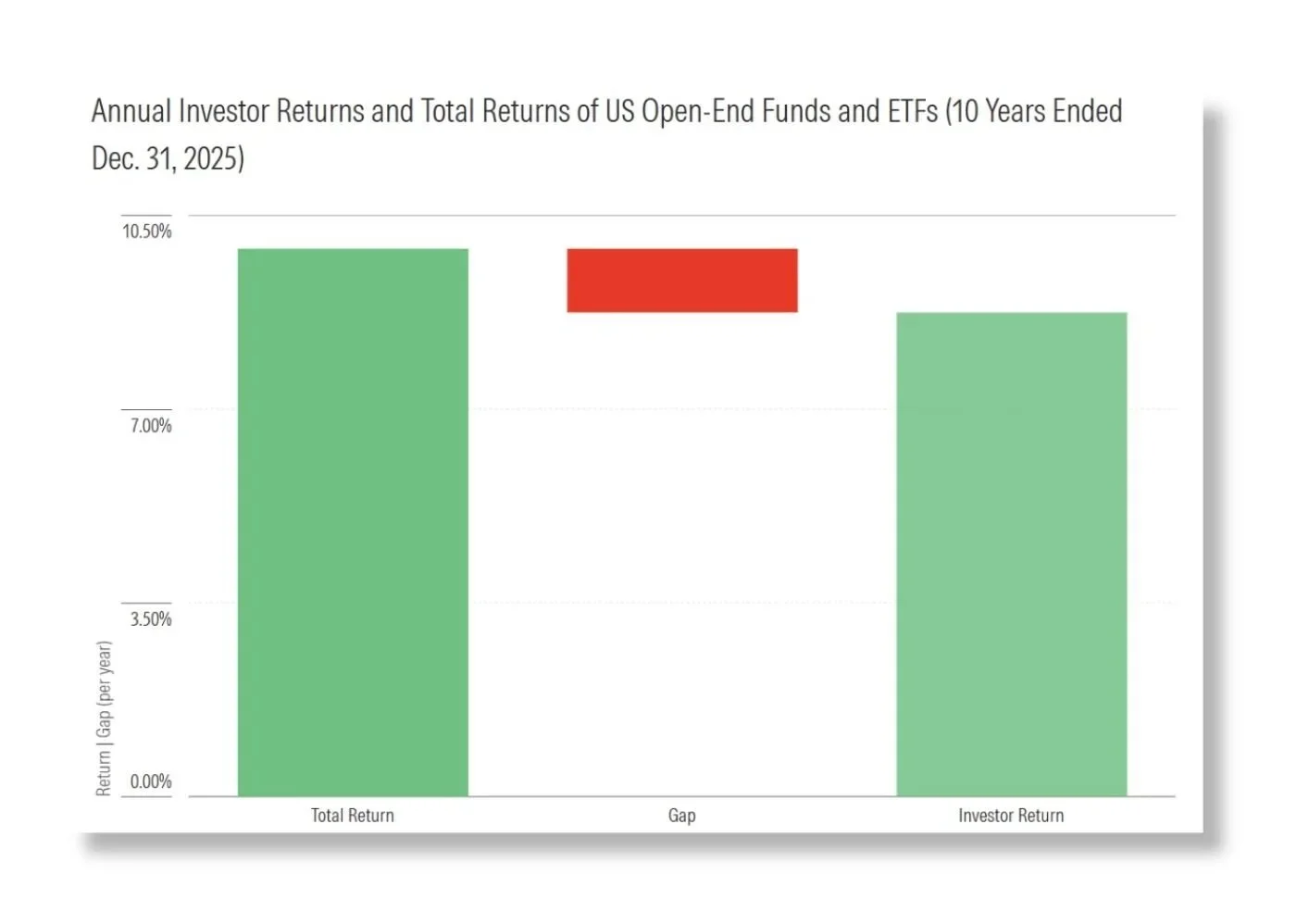
Source: Morningstar, author's calculations. Data as of Dec. 31, 2025. Excludes "commodities" category group and funds of funds.
The grain of truth
The knee deserves a fair hearing. A University of Manchester study of more than 2,600 people with chronic pain found a modest link to humid, windy, low-pressure days. Professor Will Dixon put it simply: if your chance of a painful day was 5 in 100, it rose to 6 in 100. Rainfall itself showed no link at all [11].
Markets are similar. There are real, modest patterns in the evidence. They are worth knowing and worth building a portfolio around. They are not a forecast of next Tuesday.
The speech deserves its due too. Men hold the line because someone they trust gives them a reason to. A sound plan with nobody to keep you in it will not survive the first wet morning. Leadership and conviction matter.
What actually won the day
But the speech did not win Agincourt. Ground chosen with care did. So did a narrow frontage between two woods, sharpened stakes, massed archers, and a French command divided against itself [2]. Henry advanced just far enough to bring his archers into range and forced the French to come to him through the mud.
The mud was real. The knee that called it was not, and nor was the battle plan: that was Henry's, not Falstaff's. He could not forecast the weather. He could choose ground where the weather hurt his enemy more than it hurt him.
That is the job with money. You cannot forecast the market. You can choose your ground: what you pay, how widely you are spread, a level of risk that matches your goals and your capacity to bear it. Then you hold the line when the weather turns.
Whose interest
The fiduciary question is Falstaff's in reverse. Who is being paid, by whom, and for what?
Falstaff was commissioned to raise a fighting force and sold exemptions to the fit. The king paid for soldiers and got scarecrows. That is not a conspiracy. It is just how incentives work when nobody checks them.
So ask the plain questions. How is your adviser paid? What is the all-in cost across every layer? Are they selling you exemptions from the hard parts - the saving, the patience, the dull discipline - or keeping you in the line? The answers should be plain and confident. If they are not, that itself is information.
Banish plump Jack
Your portfolio is not a medieval battle with fictitious characters. It needs no hero, no villain and no rousing speech. It needs a plan, evidence, and someone whose interest is tied to yours.
Falstaff will always be better company than the spreadsheet. That is why Henry had to "banish plump Jack". The person who keeps you in the line is not the one with the better story. It is the one who already chose the ground with you, in writing, while it was still dry.
Nick Stewart
(Ngāi Tahu, Ngāti Huirapa, Ngāti Māmoe,
Ngāti Waitaha)
Financial Adviser and CEO at Stewart Group
Stewart Group is a Hawke's Bay and Wellington based CEFEX & BCorp certified financial planning and advisory firm providing personal fiduciary services, Wealth Management, Risk Insurance & KiwiSaver scheme solutions.
The information provided, or any opinions expressed in this article, are of a general nature only and should not be construed or relied on as a recommendation to invest in a financial product or class of financial products. You should seek financial advice specific to your circumstances from a Financial Adviser before making any financial decisions. A disclosure statement can be obtained free of charge by calling 0800 878 961 or visit our website, www.stewartgroup.co.nz
References
1. Shakespeare, W. (1599). Henry V, Acts 2 and 4. Folger Shakespeare Library edition. https://www.folger.edu/explore/shakespeares-works/henry-v/
2. Curry, A. (2005). Agincourt: A New History. Tempus Publishing. See also University of Southampton, REF impact case study: The Soldier in Later Medieval England, and the Battle of Agincourt. https://impact.ref.ac.uk/casestudies/CaseStudy.aspx?Id=44190
3. Johnston, I. (26 October 2009). Agincourt was an even fight, claim historians. The Telegraph. https://www.telegraph.co.uk/news/newstopics/howaboutthat/6434582/Agincourt-was-an-even-fight-claim-historians.html
4. University of Southampton (May 2016). The truth about Agincourt. https://www.southampton.ac.uk/news/2016/05/the-truth-about-agincourt.page
5. Encyclopaedia Britannica. Sir John Falstaff. https://www.britannica.com/topic/Sir-John-Falstaff
6. Shakespeare, W. (c.1597). Henry IV, Part 1, Acts 2, 4 and 5; Henry IV, Part 2, Acts 1 and 5. https://www.folger.edu/explore/shakespeares-works/henry-iv-part-1/; https://www.folger.edu/explore/shakespeares-works/henry-iv-part-2/
7. The King (2019). Directed by David Michod. Written by David Michod and Joel Edgerton. Netflix.
8. Jena, A.B., Olenski, A.R., Molitor, D. and Miller, N. (2017). Association between rainfall and diagnoses of joint or back pain: retrospective claims analysis. BMJ 359:j5326.
9. An, Z., Jalles, J.T. and Loungani, P. (2018). How well do economists forecast recessions? International Finance 21(2). doi:10.1111/infi.12130
10. Morningstar (2026). Mind the Gap 2026 - investor returns versus total returns, 10 years to 31 December 2025. https://www.morningstar.com/en-us/business/insights/research/mind-the-gap
11. Dixon, W.G. et al. (2019). How the weather affects the pain of citizen scientists using a smartphone app. npj Digital Medicine 2:105. University of Manchester media release, 24 October 2019.