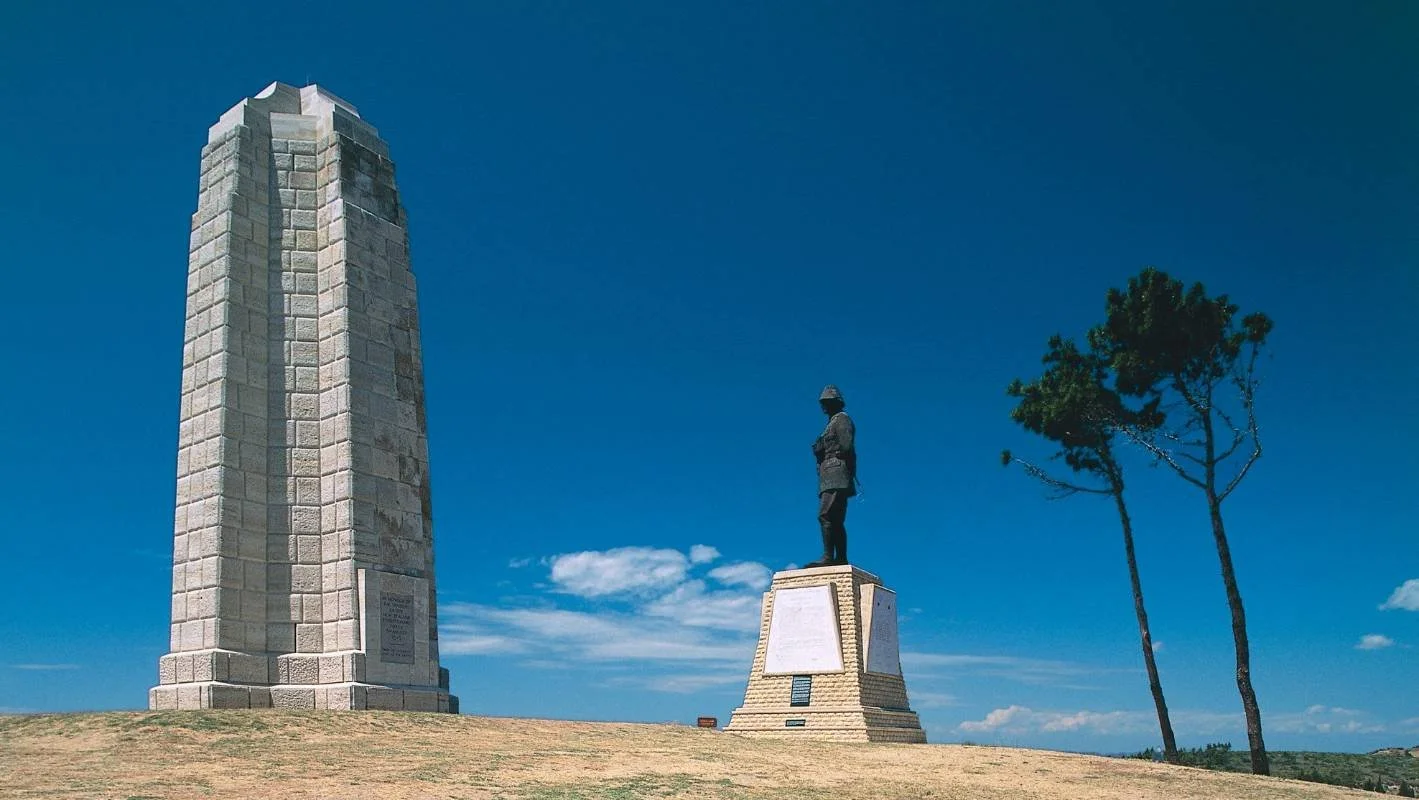
Chunuk Bair New Zealand Memorial to the Missing, Gallipoli,Turkey.
ANZAC DAY 2026
Anzac Day is a time for remembrance, reflection, and connection across generations. At Stewart Group, this day holds deep personal meaning for members of our team, as we honour the service and sacrifice of those from our own families who served during the First World War.
As these family stories are shared and researched, history becomes personal. Records, memorials, and correspondence help bring clarity to events more than a century past, while also revealing the courage and losses carried by families across New Zealand. This page brings together those personal connections, not only to remember individual lives, but to acknowledge how closely our histories are interwoven.
Nick Stewart’s Family

ARNOLD JOHN “JIM” STEWART

JIM STEWART (BOTTOM LEFT)
ARNOLD JOHN “JIM” STEWART
Nick’s grandfather.
Jim was an Air Force Mechanic in the Pacific theatre of operations in WWII.
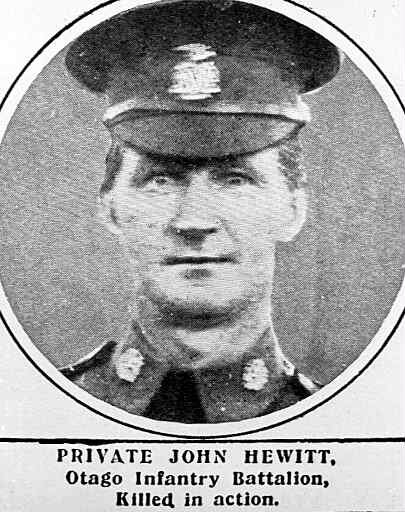
PRIVATE JOHN HEWITT
PRIVATE JOHN HEWITT
Nick’s maternal great-great uncle, Otago Infantry Battalion. John was killed in Gallipoli 1915 – the day of the landings at Anzac Cove.
John was a farmer.

PRIVATE HERBERT WHITTWORTH GALLOWAY
PRIVATE HERBERT WITTWORTH GALLOWAY
Nick’s maternal great-great uncle. Farmer, then sniper and then machine gunner. Herbert was killed in France, July 1916.
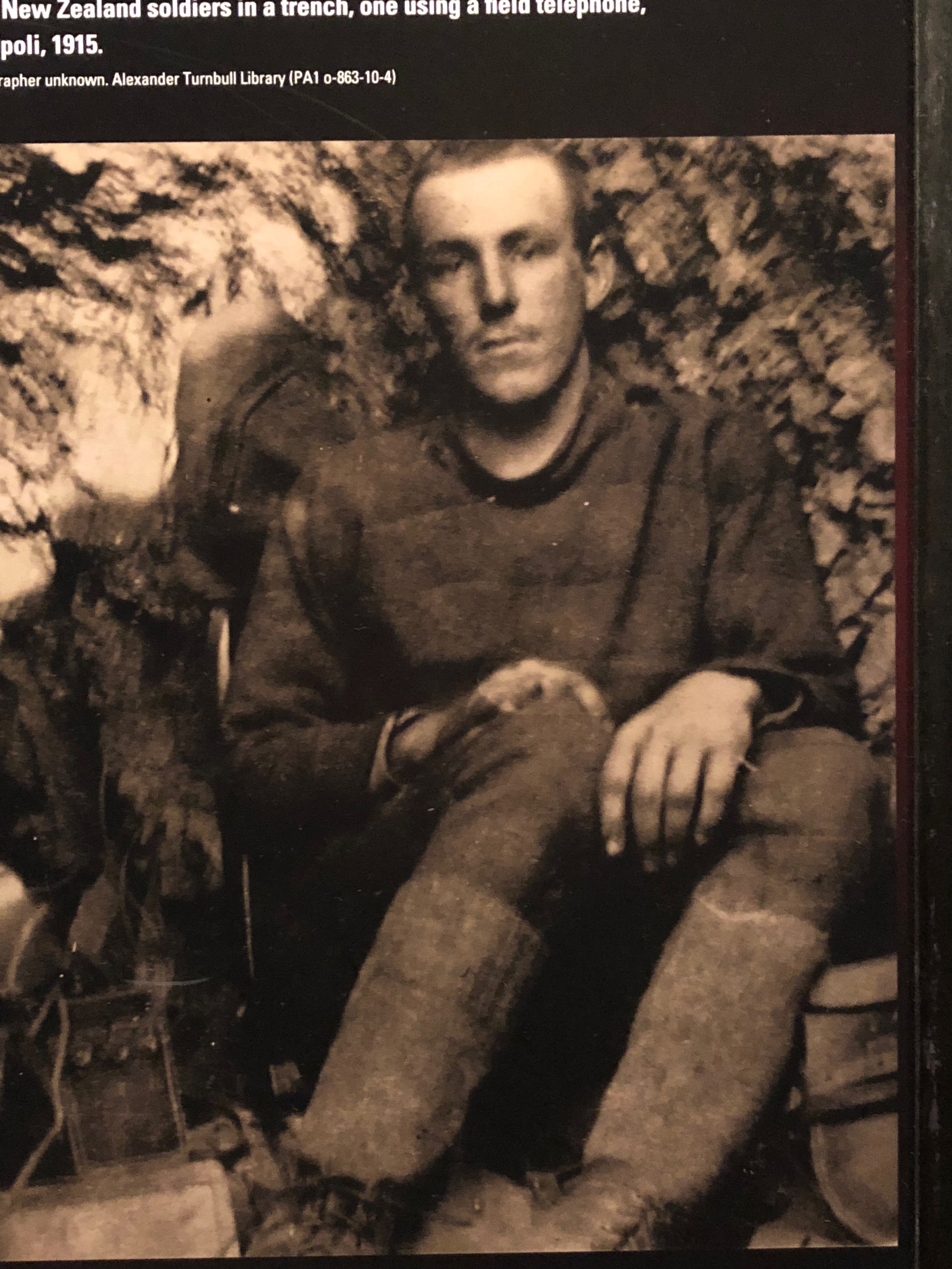
JOHN BLAIR THOMPSON

JOHN (RIGHT) - FULL IMAGE
“UNKNOWN SOLDIER” - PRIVATE JOHN BLAIR THOMPSON
Nick’s paternal great-great uncle, John Blair Thompson, Otago Infantry Battalion. The photo was taken on the morning of the assault on Chunuk Bair, August 6, 1915. John was killed later that morning.
When Nick went to see the Gallipoli exhibition at Te Papa, he found this image of John, where he was listed as “Unknown Soldier.” He was able to identify John later from family photos, and the display has since been updated to name him.
John was a cheesemaker from Edendale.
A shared moment in history
During research for this page, a remarkable connection emerged. Susan’s great uncle, Private Sydney Robert Ellis, and Nick’s paternal great‑great uncle, John Blair Thompson, served in the same battalion and both fell during the assault on Chunuk Bair on 8 August 1915. With the Otago Infantry Battalion going into the attack with around 760 men, and only a small number still standing by nightfall, it is highly likely these two young men knew one another.
Discovered more than a century later through careful examination of family records and historical detail, this shared moment speaks to the closeness of those who served, and to how acts of remembrance can still uncover meaningful connections today.
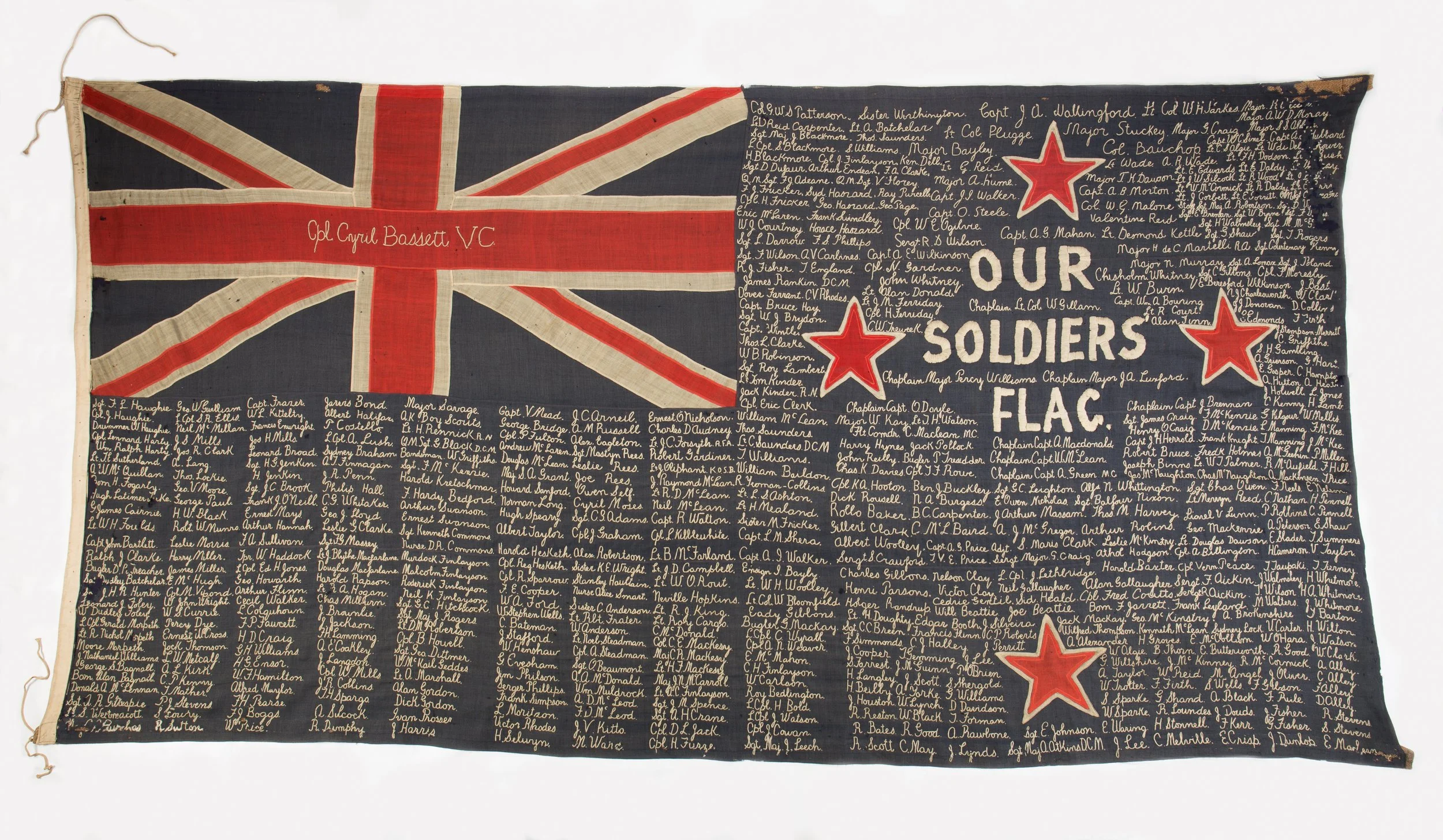
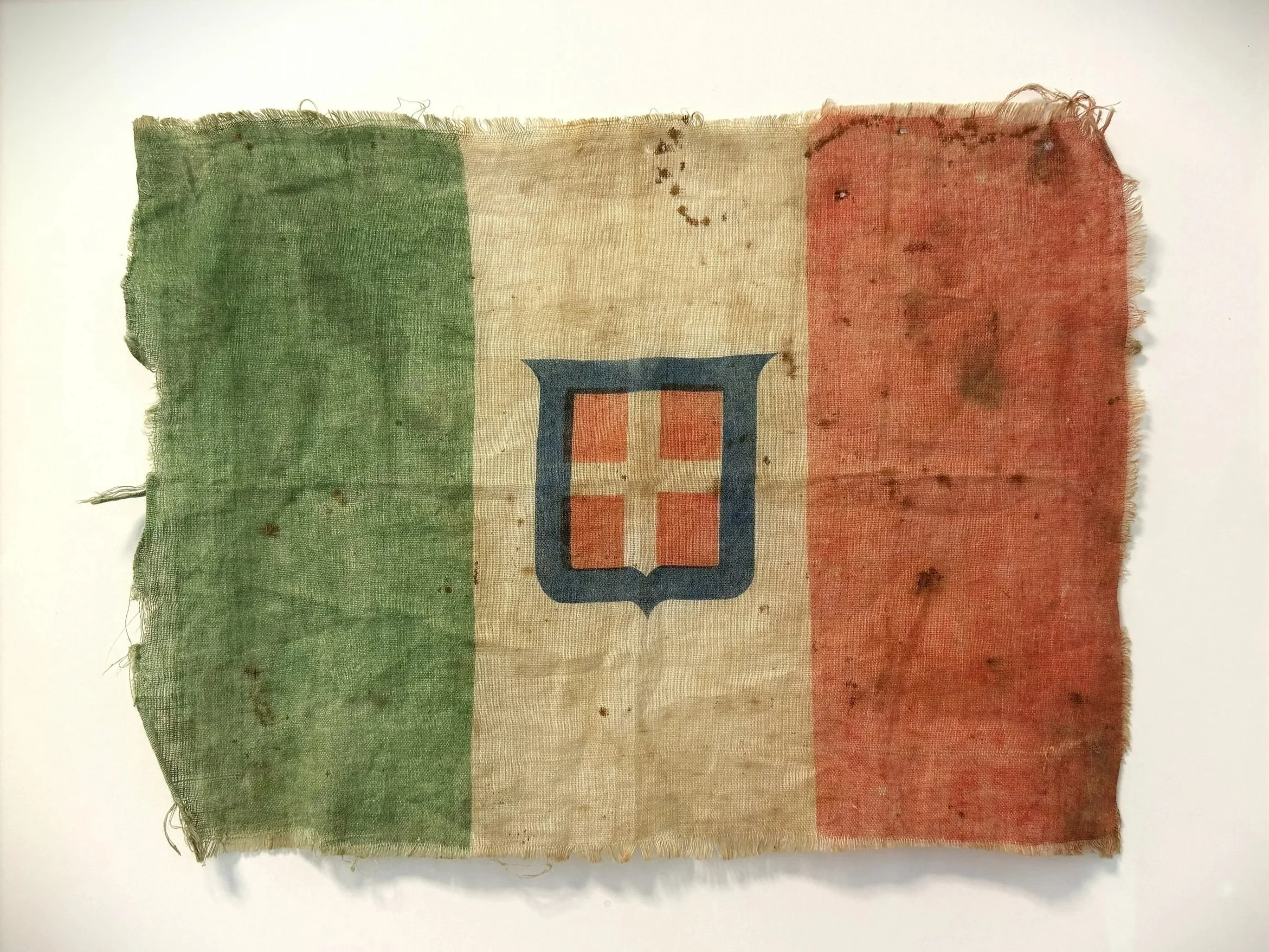
Our Soldiers Flag, New Zealand Ensign fundraising flag (1914-1918). Auckland War Memorial Museum
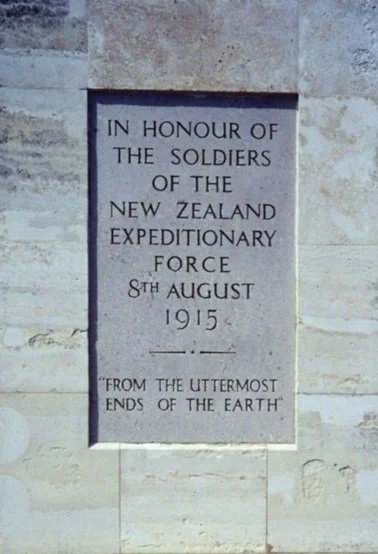
Words on Chunuk Bair New Zealand Memorial to the Missing, Gallipoli.
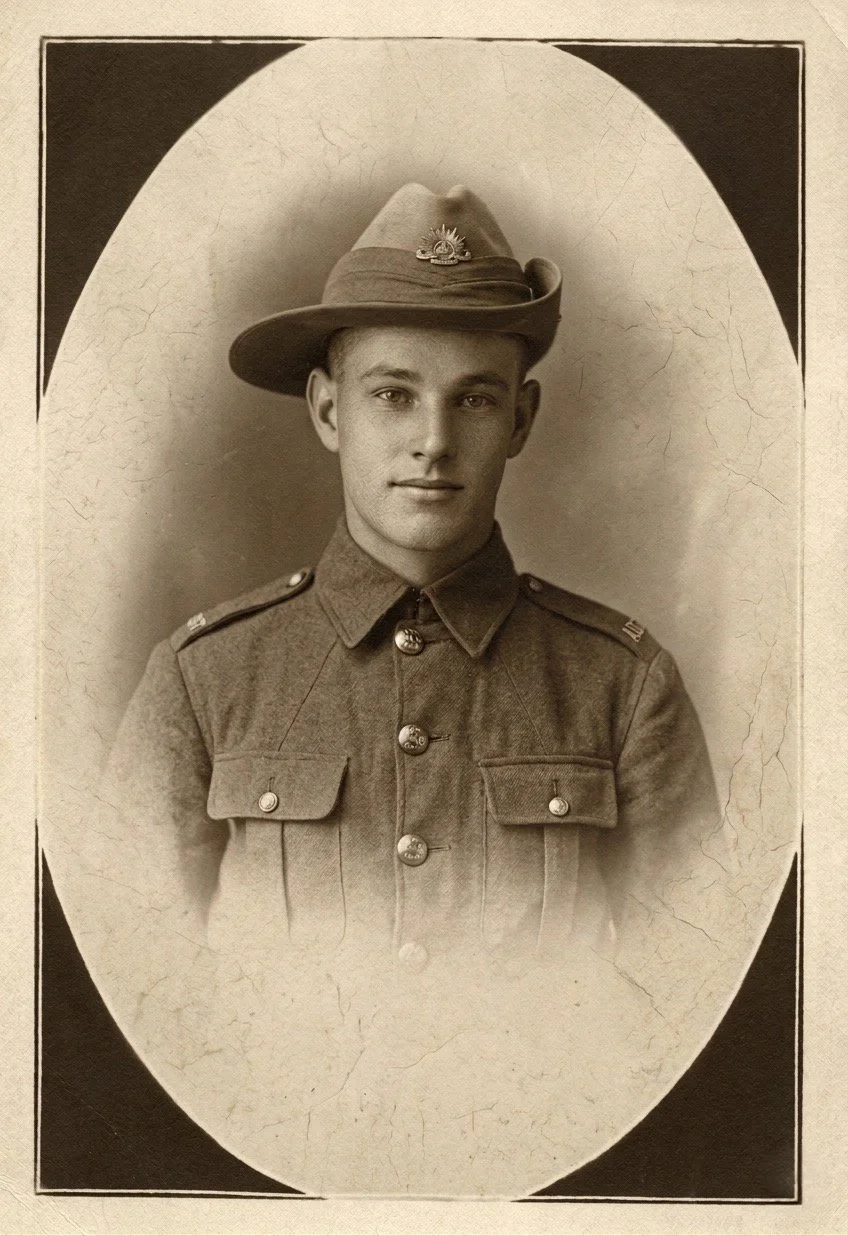
Susan Johanson’s Family
PRIVATE SYDNEY ROBERT ELLIS
Susan’s paternal great-uncle served in the Otago Infantry Battalion in WW1.
Sydney was from Wellington and attended Wellington College, matriculating in 1912, before going on to study for a BCom degree. He took a keen interest in the sporting and social life of the University, serving as vice‑captain of one of the football teams and as an accomplished long‑distance runner.
Sydney enlisted upon the outbreak of WWI aged 19, serving initially in Samoa, then sailing with the 4th Reinforcements for Egypt, thence for Gallipoli.
Sydney fell in the battle at Chunuk Bair on August 8th, 1915. Sydney’s service and sacrifice is commemorated for all time with his name inscribed on the Chunuk Bair New Zealand Memorial to the Missing Gallipoli Turkey.

Rory O’Neill’s Family
A different Anzac story: Ireland and the Great War
Rory’s great‑grandfather, James O’Neill, offers a different perspective on wartime service. An Irishman from Dublin, James enlisted as a Sapper with the Royal Engineers and served on the Western Front across France and Flanders. Like many Irish soldiers of his generation, his service was largely unspoken within the family for decades. In the years following the war, and particularly after the 1916 Easter Rising and Ireland’s move towards independence, association with the British Army was often frowned upon.
Only recently, following the release of the 1926 Irish Census and further research through pension and medal records, did James’s war service come to light. To his family, he was remembered simply as a hardworking plasterer and father of eight. The records reveal a skilled engineer who survived four years of war, returned home in 1919, and went on to help rebuild Dublin during the turbulent years that followed. His story is a reminder that remembrance takes many forms, and that not all service was openly acknowledged, even within families.
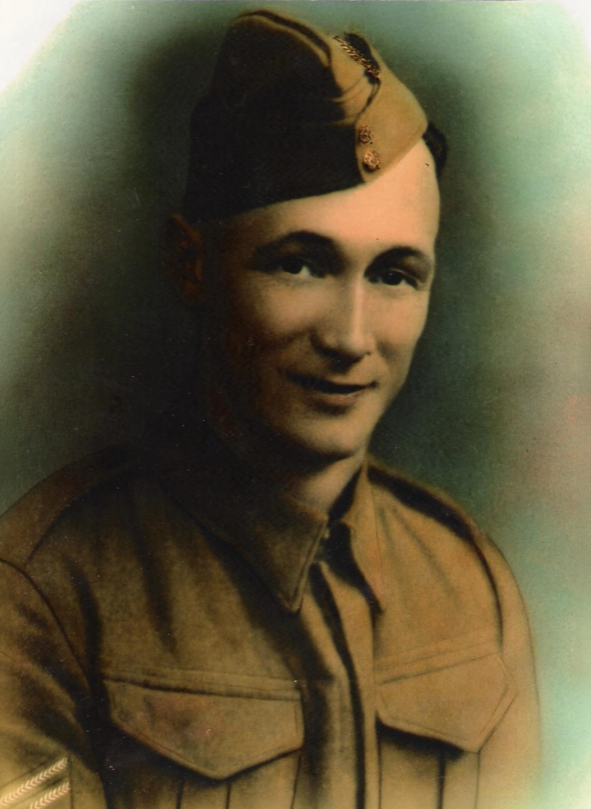
HIRINI TARAPEHU MCILROY (SID)
Taraia Robin’s Family
CORPORAL HIRINI TARAPEHU “SID” MCILROY
Taraia’s maternal grandfather joined the 28th Māori Battalion - C Company (Infantry) in January 1940.
Most of the Māori Battalion was evacuated from the Athens area to Crete aboard the Glengyle on the 24th April 1941. They left behind 81 prisoners of war - one of which was, unfortunately, Hirini.
Prisoner of War: PW NO. 23327
Captured Greece: 26/4/1941
Hirini spent 18 days as a POW (Stalag 334 and then Stalag IIIA). He was then evacuated to the UK by air.

“In Flanders fields the poppies blow
Between the crosses, row on row,
That mark our place; and in the sky
The larks, still bravely singing, fly
Scarce heard amid the guns below.
We are the Dead. Short days ago
We lived, felt dawn, saw sunset glow,
Loved and were loved, and now we lie,
In Flanders fields.
Take up our quarrel with the foe:
To you from failing hands we throw
The torch; be yours to hold it high.
If ye break faith with us who die
We shall not sleep, though poppies grow
In Flanders fields.
”
Brent Allcock’s Family

LANCE CORPORAL W.F. SNELLEKSZ
LANCE CORPORAL WILFRED FRANK “BILL” SNELLEKSZ
Brent’s grandfather Wilfred Frank “Bill” Snelleksz was an orphan boy who, along with his two brothers, was found in the slums of Mumbai, India.
He and his brothers were rescued and given an education at Dr Graham’s Homes in Kalimpong, Darjeeling near the Kingdom of Sikkim.
Aged 15 he was enlisted in the Anglo-Indian Army and sent to Mesopotamia; his brother Edward was sent to the Somme in France.
For his service, Bill was awarded the Victory Medal 1914-1918, and British War Medal 1914-1918.
Surviving the Great War, he and his two brothers were sponsored to a better life in New Zealand as “Kalimpong Kids” in 1920/21.
Bill settled in Dunedin, married, and started a family.

SCHOOL HONOURS

RIBBONS & PIPS

LETTER FROM THE KING
From 1940 he served in the Otakou Battalion of the Home Guard. In 1942 he suffered an accident whilst on duty, and his leg was amputated above the knee.
Following WW2 he worked for the rehabilitation of soldiers returned from service. He died in 1977 of natural causes.
LETTER TO BILL, FOLLOWING HIS AMPUTATION


NED BOB SNELLEX
(ALSO KNOWN AS EDWARD SNELLEX)
Brent’s great uncle served in the Wellington Infantry at the Battle of the Somme and was invalided out with shrapnel wounds in 1916.
He re-enlisted and returned to the War in 1917 under a different name with the Canterbury Infantry Regiment.
His story is told in the recent Passengers program on TVNZ on demand.

LETTER FROM THE SECRETARY - CANTERBURY PROVINCIAL PATRIOTIC COUNCIL
“They shall grow not old, as we that are left grow old:
Age shall not weary them, nor the years condemn.
At the going down of the sun, and in the morning,
We will remember them
We will remember them.”
Rita Lennon’s Family

ERNEST WILLIAM FLANAGAN
CORPORAL ERNEST WILLIAM FLANAGAN
Rita’s maternal great-grandfather Ernest Flanagan was a Corporal with the 27th Machine Gun Battalion (Army) in North Africa. During his time there, he escorted prisoners of war from Cairo down the coast to Durban, South Africa on the ship SS Nieu Zeeland.

SS NIEU ZEELAND, LATER TORPEDOED AND SUNK
Following his service in North Africa the 27th Machine Gun Battalion was stationed in Italy where, if the family lore is correct, the Battalion was broken up with some going to other Battalions and some returning to New Zealand.
Upon returning to Napier, Ernest took up employment with New Zealand rehabilitation service.

JOSEPH LENNON
JOSEPH LENNON (RANK UNKNOWN)
Not a lot is known about Rita’s paternal great-grandfather’s service, as he didn’t speak of it once he was home.
He fought in WWI and was shot in the head in battle, which he survived. Upon return to NZ he suffered debilitating migraines and focus issues the rest of his life, which led to his son Tony having to take up the “man of the house” mantle from a young age.
When he later passed of natural causes, Joseph’s autopsy revealed his field surgeons from all those years ago had left wadding inside his head - explaining his issues from that point on.